


The first encyclical of Pope Leo XIV, Magnifica Humanitas (“On Safeguarding The Human Person In The Time Of Artificial Intelligence”) should of course be of interest to everyone. But it is of special interest to certain people like myself because it invokes Pope Leo XIII’s great encyclical Re rum Novarum, which is the basis for Localism, which is the new name we have given to Distributism—the social and economic ideal of G.K. Chesterton and Hilaire Belloc.
As you likely know, our current pontiff chose the name Leo specifically in recognition of that 1891 papal letter, which is rightly considered the foundational document of modern Catholic social teaching. Our Holy Father builds on Rerum Novarum to address the present challenge posed by Artificial Intelligence.
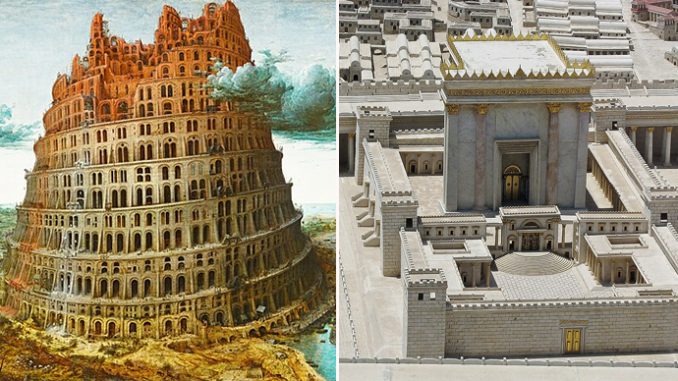
There is much to be praised in Magnifica Humanitas, starting from its opening comparison of two biblical events: the building of the Tower of Babel and the rebuilding the walls of Jerusalem after they had been destroyed by the (similar-sounding) Babylonians.
The former was an act of arrogance, a show of power, and a grand exercise in conformity to one idea that turned out to be a bad one, which ended in astounding confusion. The latter was a humble, local effort of families and artisans helping each other protect their homes in an act of solidarity rather than conformity, harmony rather than uniformity.
It is easy to envision AI becoming a Tower of Babel. But it doesn’t have to be. AI can certainly be used for evil. But it can also be used for good. That is the hope. It offers great benefits. But with great dangers. Great achievements. But at great cost (where are we going to get the energy to run all those data centers? And who’s going to pay for it?)
Pope Leo rightly (and refreshingly) cautions us that efficiency and progress are not ends in themselves. “When efficiency becomes the ultimate measure of value, human beings are tempted to see themselves as a project to be optimized rather than as persons.” And “certain currents of thought that interpret progress as surpassing the human condition . . . are often grouped under the labels of transhumanism and posthumanism” [emphasis mine].
He goes on to say that trans-humanism and post-humanism are “difficult to define . . .in a single, unambiguous way.” But “If the human being is treated as something to be perfected or surpassed, it becomes easier to accept that some lives are less useful, less desirable or less worthy. In the name of progress, ‘necessary sacrifices’ may begin to be justified.”
Thus, the title of the encyclical, referring to magnifying the dignity of every human being.
In this vale of tears, humans cannot be endlessly improved. They have very human limitations. And in this vale of tears. . . there are tears. There is suffering. Sometimes our dignity is best demonstrated in our suffering. The only thing that makes us “more human” is love.
That much-maligned modern pope, St. Paul VI, called for a “civilization of love.” It can’t be built by technology, only by humans, and only “a piece at a time.” It can only be done locally, from the bottom up. The danger of AI is Centralization, that it would be controlled by a powerful few who are accountable to no one. The safeguard is Localism. It is Nehemiah and his neighbors.
Other good things of note in this new encyclical include concise explanations of subsidiarity and solidarity. And, in his emphasis on human dignity, the Pope points to the central role of the family and of the school. He says, “parents have the primary and inalienable right to choose the kind of education and formation for their children, in a manner consistent with their moral, cultural and religious convictions.”
He says that truth is a common good and warns that “without careful attention, an educational system lacking in a love for truth may emerge.” AI can only supply information, but it is the human task to reflect and discern:
As knowledge becomes increasingly fragmented, it becomes difficult to grasp reality as a whole, to ask profound questions about meaning, or to develop authentic, critical and creative thought. Many educators already report signs of dehumanization, where people may ‘know many things’ but struggle to find direction in their lives, partly due to an inability to connect information with deeper knowledge or maintain a sense of purpose.
And very importantly, he says, “Schools are not called to follow the pace of the digital world, but to offer that which the digital sphere by itself cannot provide, namely a shared time for learning and developing trustworthy relationships.” (At our Chesterton Academies, we have no screens in the classrooms, and our students thrive intellectually and spiritually.)
Pope Leo also affirms that people are responsible for their own decisions and that every choice has moral consequences.
It is good to see a pope say these things.
However, I think there are two main omissions in Magnifica Humanitas.
First, while Pope Leo points out that our great technical advancements have created new forms of slavery, he misses the main form of slavery condemned by his namesake: wage slavery. One could argue that the main point of Rerum Novarum is that “more workers should become owners.” Leo XIV does not mention this at all. He does not acknowledge the importance of widespread ownership, which for Chesterton and Belloc was the key solution to modern social and economic problems. Subsidiarity is the small shop. Solidarity is the seed planted in the earth.
While Pope Leo XIV admits a “right” to private property, he says, “In the Church’s tradition, property has been viewed as a means of protecting and managing goods so that they may better serve the common good.” Then he quotes Pope Francis, who said, “The Christian tradition has never recognized the right to private property as absolute or inviolable.” But then he quotes that same pope again as saying that solidarity—when lived to its fullest sense—means “to restore to the poor what belongs to them.”
Well, if the poor are entitled to it, doesn’t that mean that property is an absolute and inviolable right?
Leo XIV focuses on the problem of unemployment, but only says that the jobless should be given jobs with fair wages, rather than that workers should become owners. While he affirms the family as fundamental to society, he then talks about “job security”—again reinforcing a wage mentality.
AI could replace human beings. Well, technology has been doing that for two centuries. Big business would rather invest in machines than in people. Only big companies can afford big technology, but only with the cooperation of the state that underwrites them with tax incentives. And why does the State do that? Because it is looking to “bring in more jobs.”
Hudge and Gudge still have Jones as their slave. Their wage slave.
Pope Leo bemoans the great disparity in wealth and urges responsibility for those in “finance,” but he does not mention usury, which is largely responsible for that disparity. No one else ever mentions it either.
The other omission is, well, it’s not just one; it’s all the missed opportunities Leo has to quote G. K. Chesterton! I read the whole encyclical (the irony is that people will use AI to summarize it for them.) There were dozens of times when a brilliant GKC epigram would have bolstered a papal point.
Such as Chesterton’s warning against the danger of information being controlled by only a few and the power they have: “People will line up for information like men in a besieged city will line up for bread.”
If you value the news and views Catholic World Report provides, please consider donating to support our efforts. Your contribution will help us continue to make CWR available to all readers worldwide for free, without a subscription. Thank you for your generosity!
Click here for more information on donating to CWR. Click here to sign up for our newsletter.


Really, Leo XIV falls short on “wage slavery” and on “G.K. Chesterton epigrams”?…
What if AI is (!) wage slavery on steroids, and what if Magnifica Humanitas upstages any Chestertonian paradox?
Three comments and a concession:
FIRST, somewhere in Centesimus Annus, John Paul II refers to a “compact” world, such that subsidiarity and solidarity are contained within each other, neither to be reduced to the other. The local neighborhood now includes all that stuff we hear about from all over the shrunken world, on a daily basis… Given the internet, what if “localism” is also compactly global?
SECOND, where is the AI algorithm that avoids de-facto triage? Take for example the International Monetary Fund (IMF)….As crises continue to multiply, of one sort or another, together with blindside disasters, of one sort or another—the IMF has a crisis-management account of less than a mere half-trillion dollars (equivalent to less than two percent of the U.S. annual GNP, or one percent of the U.S. national debt, or about twice the annual interest payment on this debt). How much of fingertip AI is wage-slave and fiat currency converted into electrons on a virtual monitor?
THIRD, how, exactly, will AI be constrained from awarding crisis management toward, say, the northern hemisphere at the expense or simultaneous crises in the southern hemisphere? How will the localist farmer Brown, outstanding in his field, manage the managers?
CONCESSION, but yes, with Chesterton:
“The madman is not the man who has lost his reason. The madman is the man who has lost everything except his reason [.…] the most unmistakable mark of madness is this combination between [data-driven] logical completeness and a spiritual contraction.”
Dale, well said! Thank you for reading the whole encyclical and for offering your analysis.
In my possible ignorance, I thought worker ownership of the means of production was a tenet of Marxism. Perhaps your view and that of Marxism are at least similar in this. Of course, if that is so, that does not mean that your view is wrong or evil.
Astonishing “ignorance”, yours, to think that personal ownership of property (Distributism or Subsidiarity) and therefore responsibility for one’s own life and personal future is part of ideological Marxist class warfare and the dictatorship of the proletariat.
Where even to begin? How about Natural Law as apart from all such ideology of whatever stripe…
Vatican II brought in the Tower of Babel. Most of what its leaders have said is gobblygook and uses a language that only the initiated understand. Ambiguity and contradiction are the hallmark of this conciliar/synodal church.
Chesterton would have a difficult time trying to help us understand this babel. I sincerely doubt he could understand it himself.
It turns out that tolerance of ambiguity is correlated with higher intelligence.
According to whom?
Why does Jesus say at Matthew 5:34-37?
Is ambiguity good when one teaches? Should the church teach with ambiguity? Did God teach with ambiguity? If so, when?
Satan missed the boat of course, but in other ways he’s portrayed as being intelligent. It sounds like he was pretty skilled in ambiguity also.
“Now the serpent was more cunning than any beast of the field which the LORD God had made. And he said to the woman, “Has God indeed said, ‘You shall not eat of every tree of the garden’?”
Genesis 3:1
Always sowing a little confusion & ambiguity into our lives…
Without spelling it all out, yours truly cannot help but notice the similarity between the global and siren call of AI and its fabulous riches, and the international allure of the Alaskan gold rush of 1897. Both even involve explicit mention of the Tower of Babel…
This, below, about the call of the more traditional gold fields of yesteryear reached not through digital dexterity, but on foot through Skagway, Alaska, and the forbidding route through Chilkoot Pass and beyond…
“The Chilkoot Trail was truly an international settlement. There were people from nearly every nation in the Western Hemisphere and a few from the Far East. Ate times it was something of a TOWER OF BABEL [caps added] as the people included Maoris from New Zealand, former slaves from the American South, taciturn cowboys from Texas, Swedes, Norwegians, Germans, Swiss, South African Boers, South Americans, Australians, and prostitutes from each ethnic group [….] Mattie Silks, Denver’s most famous and successful madam, took eight girls over the pass and down to Dawson City. Missionaries went in hopes men would remember they had souls….” (Archie Satterfield, “Chilkoot Pass,” Alaska Northwest Books, 1973/2005, p. 109).
Not many millionaires. And “the rest is ‘history’”—which is said to rhyme if it doesn’t actually repeat itself.
Ahlquist perceives what’s lacking can be described as a Christian socialism, perhaps better said a Christian humanism that acknowledges drudgery and suffering, the menial need for a decent wage property ownership.
Conversely, his assessment reveals a streak of secular humanism in Pope Leo. Although I’m not convinced Leo XIV doesn’t emphasize love as a strong point in Humanitas. Others have identified Justice as his main theme. Justice ultimately in giving the other their due is love.
“Pope Leo bemoans the great disparity in wealth and urges responsibility for those in “finance,” but he does not mention usury, which is largely responsible for that disparity. No one else ever mentions it either.”
Usury may contribute to the “disparity of wealth”, but what about government programs that promise liberation from poverty, but entrap people in endless intergenerational cycles of demoralizing dependency and despair, immobility, indolence.
A perfect example:
“When food stamps were first introduced in 1964, the program served fewer than 400,000 people, less than one fifth of one percent of the American population. Applicants had to appear in person at state welfare offices, pass strict income and asset tests, and have their eligibility certified by state caseworkers.
Today, nearly 42 million Americans receive SNAP benefits, roughly one in eight people in this country, at a cost to taxpayers of over $100 billion in 2025 alone.”
I’m in “finance”. It’s unfortunate Leo doesn’t understand finance is a staff function. We advise, plan and score-we don’t make such decisions. Francis 1.0 blamed his allergy to economics on his accountant father’s long hours, Francis 2.0’s father was a school superintendent and his mother a librarian-those aren’t professions associated with hours imposing on family time.
“Applicants had to appear in person at state welfare offices, pass strict income and asset tests, and have their eligibility certified by state caseworkers.”
*******
That was still the case in our state a few years ago when an unemployed family member applied. However when I filled out the forms for state-sponsored children’s health insurance with premiums based upon income level, I automatically was put on Medicaid which I never asked for & didn’t want.
So, yes sometimes the State’s pretty free & easy with taxpayer funds. Other times, not so much.