


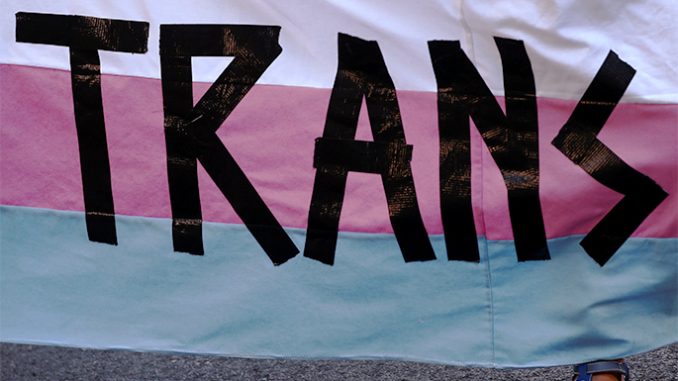
For more than a decade, the United States and much of the Western world witnessed a dramatic rise in transgender identification, especially among female adolescents and young adults. The speed, the scale, and the demographic concentration of this shift were unprecedented. Between 2013 and 2023, referrals to gender clinics in the U.K. rose twenty‑fold or more in some regions; Sweden’s Astrid Lindgren Children’s Hospital reported an annual doubling of cases for several years; Australia saw referrals jump from 18 in 2012 to 200 in 2017. In the United States, elite campuses such as Brown University reported a 793 percent increase in LGBTQ+ identification since 2010, with the steepest growth in the newest identity categories.
These patterns were not evenly distributed across geography or age. They clustered—tightly—around specific social environments: elite schools, progressive cities, online communities, and peer groups.
The Church’s fidelity in the face of social contagion
It is no longer possible to deny that the most plausible explanation for this pattern is social contagion. Not contagion in the medical sense, but in the sociological one: the spread of ideas, identities, and behaviors through imitation, visibility, and the desire for belonging. When a new identity becomes highly visible and socially rewarded, it becomes easier for others—especially adolescents—to imagine it as a meaningful framework for understanding their own distress.
Throughout it all, the Catholic Church was one of the few sources of reason—an institution willing to say what much of our culture rejects: that the human person is a unity of body and soul, and that the body is not a mistake to be corrected but a gift to be received. While nearly every institution—from medicine to media to education—has capitulated to the claim that a person can “change” his or her sex, the Church continued to proclaim the biological and theological truth that sex is not self‑created or socially assigned.
This is not a position of hostility but of fidelity. It is faithfulness to the created order and faithfulness to the belief that truth ultimately liberates rather than harms. The Church stood almost alone in insisting that compassion cannot require the denial of reality.
This is not an argument about sincerity. The young people swept up in the social contagion at their schools or online peer groups who adopted transgender identities over the past decade were not “pretending” anything. They were interpreting their experiences through the most available and culturally powerful script. And for a time, that script was everywhere: on TikTok, in classrooms, in friend groups, in media coverage, and in the political sphere.
The transgender identity became a widely shared cultural template for explaining discomfort, anxiety, or alienation—especially among adolescent girls, who historically have been more susceptible to socially transmitted forms of distress, from eating disorders to self‑harm.
The trend is reversing
But after a decade of expansion, the trend is now reversing.
A new data analysis titled The Decline of Trans and Queer Identity among Young Americans, by Professor Eric Kaufman, a political scientist at the University of Buckingham in the UK, demonstrated dramatic changes in transgender identity. While based in the United Kingdom, Kaufman analyzed data from the United States collected in 2025 through three sources: a survey administered by the Foundation for Individual Rights and Expression (FIRE), 2025 student surveys from Brown University, as well as data from a 2025 survey at Andover Phillips Academy.
In his analysis, Kaufman found that both trans and queer identification have fallen sharply among young Americans during the past two years. FIRE had surveyed over 60,000 undergraduates on college campuses throughout the country and found that about 3.6 percent of college students identified as “non-binary.” That figure was 5.2 percent in 2024, and 6.8 percent in 2022 and in 2023.
In effect, the number of non-binary students has been halved in just two years. The decline is even more pronounced in elite educational environments—precisely the settings where the earlier surge was most concentrated. At Andover Phillips Academy, 9.2 percent of students identified as neither male nor female in 2023. In 2025, that number had fell to only 3 percent. Brown University showed a similar pattern: 5 percent of students identified as non‑binary in 2022 and 2023, but by 2025, that share had fallen to only 2.6%.
These sharp declines in transgender or non-binary identification among both adults and young people mark a turning point in the cultural arc described earlier.
But the question remains: what is driving this reversal? If social contagion helped drive the rise, what is driving the fall? Two forces stand out.
The visibility of de-transitioners
For years, “de-transitioners”—those who reverse course after medical or social transition—were nearly invisible. Many feared stigma, backlash, or accusations of betrayal. But in the last several years, their stories have become impossible to ignore.
Young adults—here and abroad—who transitioned as minors are now filing lawsuits against doctors, hospitals, and therapists, alleging that they were rushed into irreversible medical interventions without adequate psychological evaluation. These lawsuits, now appearing in multiple states, have reshaped the conversation that transition is not always the right answer and that the medical system may have been too quick to affirm rather than explore underlying distress.
For a generation raised to believe that transition was a one‑way path to authenticity, the emergence of de-transitioners has created a counter‑script—one that complicates the earlier certainty.
Social contagion works in both directions. When the dominant cultural story shifts from “transition is liberating” to “transition can cause harm if misapplied,” the social contagion that once propelled the movement begins to dissipate. Adolescents who might once have interpreted their discomfort through the lens of gender now see alternative explanations modeled for them: trauma, anxiety, autism, depression, social pressure, or ordinary adolescent confusion.
High‑profile violent incidents
A second factor contributing to the decline is more controversial, but cannot be ignored. There have been several high‑profile violent incidents involving perpetrators who identified as transgender or nonbinary.
These cases—including the transgender perpetrator who shot school children while they were attending Mass in a Catholic Church in Minneapolis, and the transgender shooter at the Christian Covenant School in Nashville, as well as the transgender perpetrator at STEM School Highlands Ranch in Colorado—are rare, but they have been increasing. The media reported that the suspected assassin of Charlie Kirk was in a romantic relationship with a transgendered partner, Nicholas Roske, the 26-year-old man convicted of attempting to assassinate Supreme Court Justice Brett Kavanaugh, identified as transgendered—and called himself “Sophie”—but was sentenced to eight years in a male-only prison.
In the age of social media, rare events can have a powerful cultural impact. When a school shooter, mass attacker, or attempted assassin identifies as transgender, the story spreads instantly and becomes part of the public imagination and perception. In earlier years, the transgender movement benefited from a narrative of vulnerability. Transgender individuals were framed primarily as victims of violence, discrimination, and marginalization. They were viewed as innocent individuals who needed protection.
But when even a small number of perpetrators emerge from a group previously understood only as victims, the cultural meaning of the identity shifts, and the transgender identity itself becomes less mimetically attractive. No one wants to imitate a flawed cultural narrative once it loses its moral clarity and starts looking complicated and compromised.
This is not about blaming a group for the actions of individuals. It is about understanding how social contagion operates. Identities spread when they are associated with prestige or moral clarity. They contract when they become associated with controversy or risk. The visibility of violent incidents—however statistically rare—has introduced a new emotional charge into the cultural conversation, one that dampened the earlier enthusiasm.
Time for honesty
The flattening of the curve of the spike of social contagion of gender transitioning is most visible in the same places where it once escalated the most quickly: elite campuses, progressive cities, and online communities. The cultural prestige that once surrounded transgender identity—bolstered by celebrity transitions and media celebration—has begun to wane. The script is no longer transgressive and no longer the cutting edge of identity politics.
Without that cultural energy, the contagion loses momentum. This means that the truth of Catholic teachings on sex and gender is validated. No one can honestly believe that the extraordinary spike in gender identity disorders in adolescents over the past decade can be explained by biology. Social forces played a central role in the rise, and they are now playing a central role in the decline.
The challenge ahead is to create a cultural environment where adolescents are neither swept up into identity waves nor shamed for exploring who they are. That requires acknowledging the role of social contagion honestly. It requires listening to de-transitioners without weaponizing their stories. And it requires recognizing that cultural scripts—whether affirming or cautionary—shape young people far more powerfully than we often admit.
The transgender moment is not ending because people have suddenly become less compassionate and understanding. It is ending because the cultural conditions that once made it compelling have changed. The truth is breaking through the once-dominant narrative. Social contagion promoted the movement, and social contagion is now letting it go.
If you value the news and views Catholic World Report provides, please consider donating to support our efforts. Your contribution will help us continue to make CWR available to all readers worldwide for free, without a subscription. Thank you for your generosity!
Click here for more information on donating to CWR. Click here to sign up for our newsletter.

Leave a Reply