No Picture
News Briefs

Judge killed by mafia 30 years ago is a candidate for sainthood
September 21, 2020 CNA Daily News 0

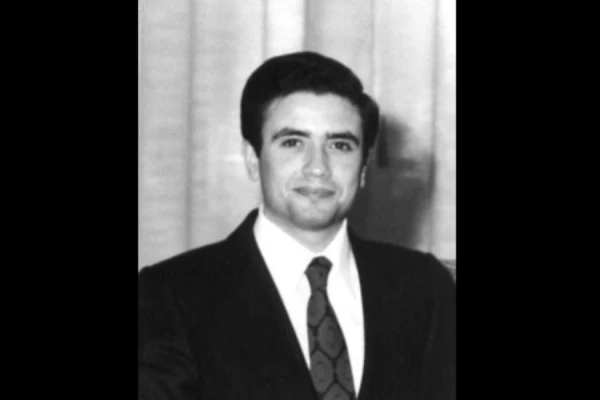
Rome Newsroom, Sep 21, 2020 / 12:00 pm (CNA).- Thirty years ago Judge Rosario Livatino was brutally killed by the mafia on his commute to work at a courthouse in Sicily. Today he is recognized in the Catholic Church as a Servant of God and a candidate for sainthood. 

Before his murder at the age of 37 on Sept. 21, 1990, Livatino spoke as a young lawyer about the intersection between the law and faith. 

“The duty of the magistrate is to decide; however, to decide is also to choose… And it is precisely in this choosing in order to decide, in deciding so as to put things in order, that the judge who believes may find a relationship with God. It is a direct relationship, because to administer justice is to realize oneself, to pray, to dedicate oneself to God. It is an indirect relationship, mediated by love for the person under judgment,” Livatino said at a conference in 1986.

“However, believers and non-believers must, in the moment of judging, dismiss all vanity and above all pride; they must feel the full weight of power entrusted to their hands, a weight all the greater because power is exercised in freedom and autonomy. And this task will be the lighter the more the judge humbly senses his own weaknesses,” he said. 

Livatino’s convictions about his vocation within the legal profession and commitment to justice were tested at a time when the mafia demanded a weak judiciary in Sicily. 

For a decade he worked as a prosecutor dealing with the criminal activity of the mafia throughout the 1980s and confronted what Italians later called the “Tangentopoli,” or the corrupt system of mafia bribes and kickbacks given for public works contracts. 

Livatino went on to serve as a judge at the Court of Agrigento in 1989. He was driving unescorted toward the Agrigento courthouse when another car hit him, sending him off the road. He ran from the crashed vehicle into a field, but was shot in the back and then killed with more gunshots.

After his death, a Bible full of notations was found in his desk, where he always kept a crucifix. 

On a pastoral visit to Sicily in 1993, Pope John Paul II called Livatino a “martyr of justice and indirectly of faith.” 

Cardinal Francesco Montenegro, the current archbishop of Agrigento, told Italian media on the 30th anniversary of Livatino’s death that the judge was dedicated “not only to the cause of human justice, but to the Christian faith.”

“The strength of this faith was the cornerstone of his life as an operator of justice,” the cardinal told the Italian SIR news agency Sept. 21.

“Livatino was killed because he was prosecuting the mafia gangs by preventing their criminal activity, where they would have demanded weak judicial management. A service that he carried out with a strong sense of justice that came from his faith,” he said. 

The courthouse where Livatino used to work in Agrigento also organized a conference over the weekend marking the anniversary of his death.

“Remembering Rosario Livatino … means urging the whole community to join forces and lay the foundations for a future no longer burdened by mafia loans,” Roberto Fico, president of the chamber, said at the event Sept. 19, according to La Repubblica. 

“And it means strengthening the determination — which continues to animate so many judges and members of the police on the front line against organized crime — to want to do their duty at all costs.” 

Pope Francis expressed his support this year for an initiative aimed at countering mafia organizations’ use of the figure of the Blessed Virgin Mary to promote submission to the will of the mafia boss.

A working group organized by the Pontifical International Marian Academy will bring together about 40 Church and civil leaders to address the abuse of Marian devotions by mafia organizations, who use her figure to wield power and exert control.

The pope previously met with the Anti-Mafia Parliamentary Commission on the anniversary of Livatino’s death in 2017. On that occasion, he said that dismantling the mafia begins with a political commitment to social justice and economic reform.

The pope said that corrupt organizations can serve as an alternative social structure which roots itself in areas where justice and human rights are lacking. Corruption, he noted, “always finds a way to justify itself, presenting itself as the ‘normal’ condition, the solution for those who are ‘shrewd,’ the way to reach one’s goals.”

The diocesan phase of Livatino’s cause closed in September 2018. There are two alleged miracles attributed to his intercession that need to be verified by the Vatican.

“Justice is necessary, but not sufficient, and can and must be overcome by the law of charity which is the law of love, love of neighbor and God,” Livatino said. 

“And once more it will be the law of love, the vivifying strength of faith, that will solve the problem at its roots. Let’s remember Jesus’ words to the adulterous woman: ‘Let him who is without sin cast the first stone.’ By these words, he indicated the deep reason of our difficulty: sin is shadow; in order to judge there is need of light, and no man is absolute light himself.” 


[…]

No Picture
News Briefs

Spanish cardinal: Passage of euthanasia bill would be ‘historic defeat’ for society

September 17, 2020 CNA Daily News 0

CNA Staff, Sep 18, 2020 / 12:00 am (CNA).- The Archbishop of Valencia said Sunday that if Spain’s euthanasia and assisted suicide bill is passed, it would be a “major and historic defeat for all of Spain, for Spanish society.”

“It is a defeat also for humanity, for man himself, for the legislature to take up the bill on euthanasia, assisted suicide, and to reject other proposals on palliative care that improved the current legislation,” Cardinal Antonio Cañizares Llovera wrote Sept. 13.

The prelate also called the proposed euthanasia law “monstrous” and an “injustice.”

Directly addressing the country’s president, government officials, department heads, and legislators, Cañizares challenged: “Realize that you as a government or as parliamentarians should defend, protect, and guard the common good, based on fundamental rights and duties of the society you represent, the first of which is the right to life.”

But in reality “you have become enemies, who oppose society, ready to defeat that society you represent and must protect, by advocating such a bill, which spreads and expands a culture of death,” he said.

The Archbishop of Valencia pointed to the fact that the bill is being advanced through the legislative process amid the Covid-19 pandemic, so “what credibility can you hold on to in the face of that pandemic? With what moral authority can you address this people and ask us what is being asked of us? Aren’t you seen as a sign of contradiction?”

The cardinal said there’s still time left, and appealed to the authorities to make corrections to the bill, “as is so often done in government management or in parliamentary tasks and responsibilities.”

Cañizares stressed that he’s not “interfering in politics” but that his “responsibility as bishop and as a citizen doesn’t allow me to remain silent.”

The Archbishop of Valencia faulted the media for concentrating on unrelated side issues and giving scant attention to the euthanasia bill.

“Euthanasia, which does not constitute an historical defeat of a government, but a defeat of an entire state, and which is an infinitely greater and serious problem, even if you don’t see it that way, and I respect you,” he pointed out.

“Legislation like that doesn’t make for a true fraternity of authentic brothers of a new civilization of love that builds peace and is capable of facing the pandemic,” the cardinal concluded his exhortation.

The Spanish bishops’ conference issued a statement Sept. 14 calling instead for a palliative care law because “there are no patients who cannot be cared for, even if they are incurable.”


A version of this story was first published by ACI Prensa, CNA’s Spanish-language news partner. It has been translated and adapted by CNA.


[…]

No Picture
News Briefs

Italian bishops’ conference newspaper defends Netflix’s ‘Cuties’

September 17, 2020 CNA Daily News 4

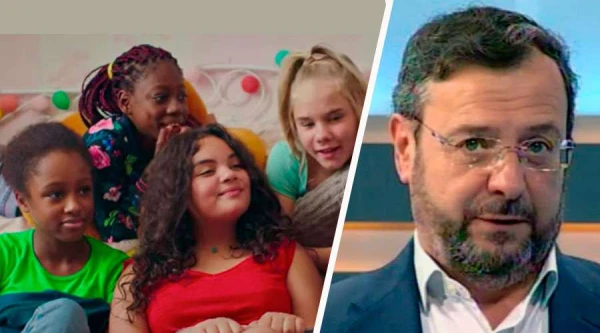
CNA Staff, Sep 17, 2020 / 07:25 pm (CNA).- According to L’Avvenire, the official newspaper of the Italian bishops’ conference, those who have criticized the controversial French movie “Cuties,” released by Netflix last week “have not seen it or have really limited themselves to the poster. Otherwise they have not understood it or have looked at it with the wrong eyes.”

A review of the film, entitled “The boycott: Cuties is a hard, but educational movie,” and written by the newspaper’s TV critic Andrea Fagioli, claims that the film “does not revolve around a ‘scandalous sexualization of adolescents’ nor does it obviously ‘simulate pedophilia,’ as some of the more than 600,000 signatories of a petition against (Netflix) have claimed.”

In his review, Fagioli describes the story of Amy, the film’s main character, her struggles to integrate into Western culture and her eventual introduction to a provocative dance troupe, at age 11.

In Fagioli’s words, “Amy will become the leader, pushing the group towards an ever more daring dance. And here lies the controversial point, because the director absolutely does not force her hand on the sensual aspect. On the contrary: she tries to highlight, albeit in a contradictory picture, their innocence.”

“The problem, therefore, is not these kids who grow up too fast for certain things without having sufficient maturity or the necessary immune defenses. The problem is the world we have created around it,” with absent parents and too much social media, he argues.

“All this the director makes clear, even if the film cannot be presented to everyone. But when read correctly and presented well, ‘Mignonnes’ (‘Cuties’) can become an educational film,” Fagioli wrote.

The L’Avvenire review does not contain criticism of elements that have been lambasted across in the United States and Latin America, including long scenes of provocative dances, scantily clad 11-year-old girls performing in front of adults, camera movements deliberately focusing on private parts, or the inclusion of the naked breasts of a teenager.

Criticism of those aspects of the film have come not only from conservatives or religious groups, but also from moderates and liberals, among the U.S. Democratic Congresswoman Tulsi Gabbard.

Gabbard wrote on Twitter: “child porn ‘Cuties’ will certainly whet the appetite of pedophiles & help fuel the child sex trafficking trade. 1 in 4 victims of trafficking are children. It happened to my friend’s 13 year old daughter. Netflix, you are now complicit.”

The Washington Post’s Alyssa Rosenberg, in a mostly positive review of the movie, acknowledged that “I can see how viewers might be turned off by the way Doucouré shoots the dance routines, using close-ups of her young actors’ bodies both to show us their abilities as dancers and to make us deliberately queasy.”

British journalist Izzy Schifano is another non-conservative critic. At UK website The Tab, Schifano wrote that the dancing throughout the film is about “biting their lips, twerking, squatting down and bouncing on their knees…Some of the dancing was so graphic I genuinely couldn’t watch.”

Schifano, who has positvely reviewed several risqué movies for The Tab, complained that in “Cuties,” “the camera panned up and down the girls’ bodies multiple times in the film, at points literally just zooming in” on the posteriors of children.

The analytics firm YipitData told Variety Magazine that on Saturday, Sept. 12, Netflix’s cancellation rate in the U.S. “jumped to nearly eight times higher than the average daily levels recorded in August 2020,” reaching a multiyear high, most likely as a consequence of the #CancelNetflix hashtag campaign.


[…]

No Picture
News Briefs

Irish priest refuses submission to Vatican’s doctrinal propositions

September 17, 2020 CNA Daily News 7

CNA Staff, Sep 17, 2020 / 12:10 pm (CNA).- Fr. Tony Flannery, a Redemptorist priest from Ireland who was barred from public ministry by the Congregation for the Doctrine of the Faith, has declined to submit to four doctrinal propositions as a condition of returning to ministry.

“Fr Flannery should not return to public ministry prior to submitting a signed statement regarding his positions on homosexuality, civil unions between persons of the same sex, and the admission of women to the priesthood,” the CDF wrote to the Redemptorists, The Irish Times reported Sept. 16.

Fr. Flannery told the Irish daily, “I could not possibly sign those propositions.”

He was barred from public ministery in 2012 for his views on the nature of the sacramental priesthood and human sexuality. He had helped to found the Association of Catholic Priests, a group whose constitution places a special emphasis on “the primacy of the individual conscience” and “a redesigning of Ministry in the Church, in order to incorporate the gifts, wisdom and expertise of the entire faith community, male and female.”

Redemptorist leadership in Ireland had written to the order’s superior general, who in turn wrote to the CDF, seeking for Fr. Flannery to be allowed to minister again.

According to the Association of Catholic Priests, the CDF asked that Fr. Flannery, to return to ministry, sign a proposition that “according to the Tradition and the doctrine of the Church incorporated in the Canon Law (c. 1024), a baptized male alone receives sacred ordination validly.”

This proposition regarding the reservation of priesthood to men was supported by excerpts from St. John Paul II’s 1994 apostolic letter Ordinatio Sacerdotalis and Pope Francis’ 2020 apostolic exhortation La querida Amazonia.

Regarding the moral liceity of homosexual acts, Fr. Flannery was to submit to the proposition that “Since the homosexual practices are contrary to the natural law and do not proceedfrom a genuine affective and sexual complementarity, they are not approved by the moral teaching of the Catholic Church,” supported by a quote from the Catechism of the Catholic Church.

The priest was also asked to assent to the proposition that “The Marriage covenant, by which a man and a woman form with each other an intimate communion of life and love, has been founded and endowed with its own special laws by the Creator (CCC 1660). Other forms of union do not correspond to God’s plan for marriage andfamily. Therefore, they are not allowed by the Catholic Church.”

This proposition on marriage was supported by the Catechism of the Catholic Church and by Amoris laetitia, Pope Francis’ 2016 apostolic exhortation on love in the family.

Finally, Fr. Flannery was invited to submit to the proposition that “In so far as it contradicts the foundations of a genuine Christian anthropology, gender theory is not accepted by Catholic teaching,” supported by the Congregation for Catholic Education’s 2019 document “Male and female he created them”.

The priest told The Irish Times that he has long supported and emphasized “the necessity, of full equality for women, including ordination. How could I possibly sign that first proposition.”

He called the proposition regarding homosexual acts “appalling” and said, “I could not submit to it.” He noted that he voted in favor of same-sex marriage, and that “I don’t know enough about Gender Theory to have any strong views on it, and I don’t know where that one came from.”

We Are Church Ireland, a group that supports, among other things, women’s priestly ordination, said Sept. 17 that they “fully support and applaud Fr Tony Flannery’s decision not to sign the CDF document.”

They said the propositions of the congregation “are currently being widely discussed in the Catholic Church around the world, for example at the German Synodal Way.”

“We thought that under Pope Francis dialogue was being encouraged and that “silencing” would no longer be the tool of engagement,” the group stated.

In June 2018, Pope Francis sent a 28-page letter to German Catholics urging them to focus on evangelization in the face of a “growing erosion and deterioration of faith.”

“Every time an ecclesial community has tried to get out of its problems alone, relying solely on its own strengths, methods and intelligence, it has ended up multiplying and nurturing the evils it wanted to overcome,” he wrote.

Pope Francis said that participants in the “Synodal Way” faced a particular “temptation”, at the basis of which “is the belief that the best response to the many problems and shortcomings that exist, is to reorganize things, change them and ‘put them back together’ to bring order and make ecclesial life easier by adapting it to the current logic or that of a particular group.”


[…]