No Picture
News Briefs

Apostolic nuncio to Belarus consecrated a bishop

September 16, 2020 CNA Daily News 1

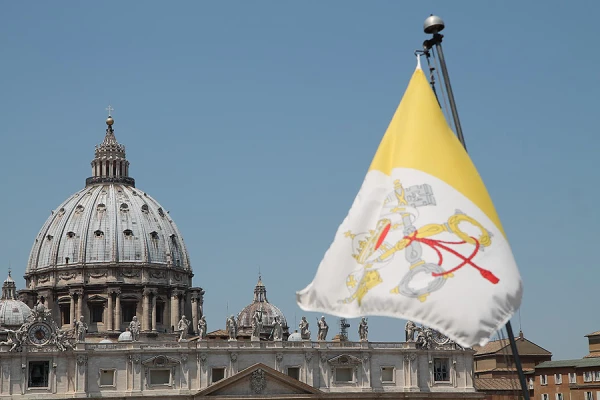
CNA Staff, Sep 16, 2020 / 01:01 pm (CNA).- The Vatican Secretary of State on Wednesday consecrated as a bishop Ante Jozić, who was appointed apostolic nuncio to Belarus in May. Archbishop Jozić was welcomed by the president of the Belarusian bishops’ conference, who has been exiled.

Belarus has seen widespread protests in recent weeks following a disputed presidential election. Protests began Aug. 9 after president Alexander Lukashenko was declared to have won that day’s election with 80% of the vote. Lukashenko has been president of Belarus since the position was created in 1994.

Relations between the Holy See and Belarus are strained by the invalidation of the passport of Archbishop Tadeusz Kondrusiewicz of Minsk-Mohilev. He was blocked from returning to Belarus from Poland by border guards Aug. 31.

Archbishop Jozić, 53, was appointed apostolic nuncio to Belarus May 21.

He was consecrated a bishop Sept. 16 by Cardinal Pietro Parolin in Solin, Croatia, just outside Split.

Archbishop Kondrusiewicz wrote to the nuncio, saying: “Your Excellency, on the day of your episcopal ordination, I cordially greet you on my own behalf, as well as on behalf of the Conference of Catholic Bishops in Belarus and all Catholics of our country … For the development of our pastoral and social activities, as well as relations with the state at this turning point in our history, we need your support as a representative of the Holy See.”

“Therefore, we look forward to your arrival in Belarus, where you will perform the ministry entrusted to you by the Holy Father Francis,” the Minsk-Mohilev archbishop added.

Archbishop Jozić was born in Trilj, about 25 miles northeast of Split, in 1967. He was ordained a priest of the Archdiocese of Split-Makarska in 1992, and began preparing for diplomatic service to the Holy See in 1995 at the Pontifical Diplomatic Academy, studying canon and civil law.

Beginning in 1999 he served at the nunciatures in India and Russia. He is also reported to have worked in Hong Kong and as an adviser to the Filipino nunciature.

He was appointed apostolic nuncio to Ivory Coast and Titular Archbishop of Cissa in February 2019. He was to have been consecrated a bishop that May, but he was hospitalized in critical condition after a car accident in early April.

Archbishop Kondrusiewicz’ passport will no doubt play an important role in Archbishop Jozić’s early days as nuncio to Belarus.

Archbishop Paul Richard Gallagher, the Vatican’s Secretary for Relations with States, met with Vladimir Makei, the Belarusian foreign minister, Sept. 11, on the first of a four-day visit to Belarus.

During the talks, Makei renewed an invitation to Pope Francis to visit Belarus. The Vatican has asked that Archbishop Kondrusiewicz be permitted entry to the country.

Last week, Archbishop Kondrusiewicz received a reply signed by Anatoly Lappo, chairman of the border committee, stating that the archbishop was blocked from entering the country “in connection with the decision made by the internal affairs bodies to invalidate the passport of a citizen of the Republic of Belarus.”

The archbishop is appealing to the Belarusian interior ministry over the invalidation of his passport.

Archbishop Kondrusiewicz was born in 1946 in Odelsk, in what was then the Byelorussian Soviet Socialist Republic (part of the USSR), to an ethnic Polish family. The Byelorussian SSR was succeeded in 1991 by the Republic of Belarus.

Archbishop Kondrusiewicz traveled last weekend to Lithuania, preaching Sept. 13 at the Marian shrine of Šiluva, thanking Catholics there for their prayers for Belarus.

The archbishop has spoken in defense of protests following last month’s presidential election, and demanded an investigation late in August into reports that riot police blocked the doors of a Catholic church in Minsk while clearing away protesters from a nearby square.

He met with Interior Minister Yuri Karaev Aug. 21 to express his concerns about the government’s heavy-handed response to the protests, and he outside a prison Aug. 19 where detained protesters were reported to have been tortured.

Archbishop Kondrusiewicz told CNA Sept. 1 that “at the present time, we are asking for prayer, not only for the Catholic Church, but for a peaceful solution for the situation in Belarus because I’m very much afraid of civil war. The situation is very, very difficult, very critical.”

Lukashenko visited Russian president Vladimir Putin Sept. 15, securing a $1.5 billion loan.

Protests have taken place across Belarus since the August election, and thousands of protesters have been detained. At least four people have died in the unrest.

US Secretary of State Mike Pompeo has said the election “was not free and fair,” citing “severe restrictions on ballot access for candidates, prohibition of local independent observers at polling stations, intimidation tactics employed against opposition candidates, and the detentions of peaceful protesters and journalists.”

Electoral officials said that the opposition candidate, Sviatlana Tsikhanouskaya, earned 10% of the vote. She was detained for several hours after complaining to the electoral committee, and has fled to Lithuania.

After the reciting the Angelus Sept. 13, Pope Francis appealed to governments around the world to respect the “just aspirations” of protesters.

While the pope did not mention any countries by name, Bishop Aliaksandr Yasheuski, an auxiliary bishop of Minsk-Mohilev, noted that the pope’s appeal was relevant to Belarus.

The pope said: “While I urge the demonstrators to present their demands peacefully, without giving in to the temptation of aggression and violence, I appeal to all those with public and governmental responsibilities to listen to the voice of their fellow citizens and to meet their just aspirations, ensuring full respect for human rights and civil liberties.”


[…]

No Picture
News Briefs

Spanish bishops call for palliative care instead of euthanasia and assisted suicide

September 15, 2020 CNA Daily News 1

CNA Staff, Sep 15, 2020 / 01:00 am (CNA).-  

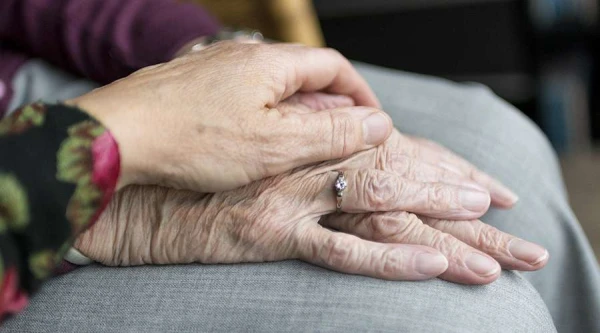
In response to an assisted suicide bill that could soon be passed in Spain, the Spanish bishops’ conference called Monday for a palliative care law, saying that “there are no patients that cannot be cared for, even if they are incurable.”

“It’s bad news, because human life is not a good anyone can dispose of,” the bishops said in a Sept. 14 statement, of a bill to offer broad legal protections to some forms of euthanasia and assisted suicide, now under debate in the Spanish legislature.

The statement noted that “insisting on” the right to euthanasia “is typical of an individualistic and reductionist vision of the human being” and a concept of  “freedom unrelated to responsibility.”

Proponents of euthanasia affirm “a radical individual autonomy and at the same time call for ‘compassionate’ intervention by society by means of medicine, stemming from an inconsistent anthropology.”

“On the one hand, the social dimension of the human being is denied, ‘saying my life is mine and only mine and I can take it myself’ and on the other it puts others in charge, organized society, of legitimizing the decision, or appropriating the decision for itself ‘to eliminate suffering or its senselessness,’ thus ending the person’s life,” the bishops said.

“The epidemic that we continue to suffer from has made us realize that we are responsible for each other and has relativized proposals for individualistic autonomy.”

“So many patients dying all alone and the situation of the elderly challenge us” the bishops said, adding that during the pandemic ”Spanish society has applauded their dedication and has called for greater support for our healthcare system to increase the level of care so that ‘no one is left behind.’”

They stressed that ”the legalization of forms of assisted suicide” will not help when trying to persuade those who are tempted to commit suicide that death is not the right way out” of their problems.

The bishops emphasized that the law, which should be guided by ethical criteria, “cannot propose death as a solution to problems,” because “it belongs to medicine to cure, but also to provide care and relief and especially to console at the end of this life.”

“Palliative medicine,” they said, “aims to bring humanity to the process of dying and accompany the person to the end.” The prelates pointed out that “there are no patients that cannot be cared for even if they are incurable.”

The bishops’ conference advocated for “appropriate legislation on palliative care that responds to current needs that aren’t being fully met.”

“The fragility of life that we are experiencing during this time constitutes an opportunity to reflect on life’s meaning, fraternal care and the meaning of suffering and death,” they said.

“Proposing a law to put in the hands of others, especially doctors, the power to take the lives of the sick” does not make sense, the bishops said.

“Saying yes to the dignity of the person, even more so during the moments of greatest defenselessness and fragility, obliges us to oppose this law which, in the name of supposed death with dignity, denies the dignity of every human life at its very roots.”

A version of this report was initially published by ACI-Prensa, CNA’s Spanish-language news partner. It has been translated and adapted by CNA.


[…]

No Picture
News Briefs

English bishop urges Catholics to come back to churches

September 14, 2020 CNA Daily News 2

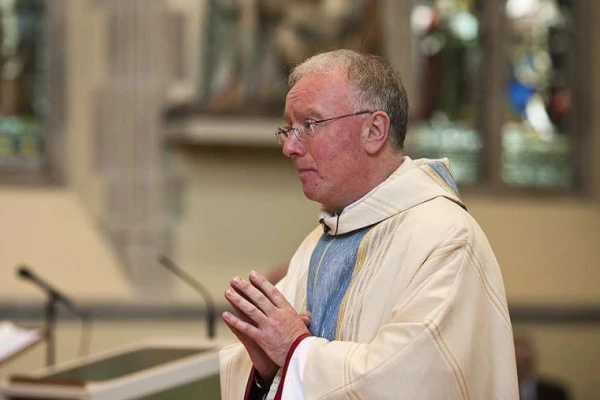
CNA Staff, Sep 14, 2020 / 01:01 pm (CNA).- Bishop Philip Egan of Portsmouth wrote Sunday to the people of his diocese encouraging them to return to churches for Mass and private prayer.

He wrote to Catholics and “to everyone of good will, to those ‘with ears to hear’, to anyone searching for God, and to all who wish to meet His Son, Jesus Christ and to know more about His Gospel. I say to you all: Come back! Come back to Mass! Come back to church for private prayer! Come back to visit Jesus in the Blessed Sacrament! You are truly welcome – we have missed you!”

Bishop Egan’s pastoral letter, ‘Come back to me’ says the Lord, was issued Sept. 13.

He called the recent months of the coronavirus pandemic ‘extraordinary’, and noted the hard work of medical staff and key workers, as well as what has been done in the Diocese of Portsmouth by priests, parishioners, and chaplains.

“Now that schools and many others are returning to work, let us keep up this good work,” he exhorted. “Let us keep safe. And let us ask the Lord for an end to the pandemic, the invention of a vaccine and the restoration or ordinary life.”

Bishop Egan wrote that “in inviting you back to Mass, I am aware that in some places and for some of you – those self-shielding, the sick, the vulnerable – this will not yet be possible. Moreover, we are aware too that the infection-rate is varying, and we might even face a local lockdown. Indeed, for everyone it will require care, prudence and adjustments. It might mean attending Mass on a weekday instead of a Sunday.”

He indicated that most of the churches in the diocese are now open, with “stringent safety procedures,” and asked for volunteers to assist in these efforts.

“The pandemic has shown us how fragile modern life is,” he reflected. “It has caused us to review our priorities. It has made us face our mortality and the question of God.”

The bishop said that “it is in our churches that the Lord sanctifies, teaches and guides us, uniting us together, giving us the Sacraments of eternal life, and sending us out on mission and service.”

While many “followed Mass online,” he noted that “online has its place and we thank God for all the work done to enable this. But online is not the same as ‘inline’ and being there. It’s not the same as actually receiving Jesus in Holy Communion. It’s not the same as participating in the presence of the eucharistic community.”

“This is why I say: Come back to the Lord to be nourished by His Word and His Sacraments,” Bishop Egan exclaimed.

While the canonical obligation to assist at Mass on Sundays and Holy Days is suspended in the Portsmouth diocese, he asked, “surely, we do not follow Jesus our Lord and Master simply out of habit or duty? No, we follow Him because we love Him. We follow Him because He has called us. We follow Him because He is our Saviour: He has laid down His life for us.”

Beginning Sept. 14, England has imposed a “rule of six” on both indoor and outdoor social gatherings, including in private homes. Gatherings of more than six persons are not allowed, though the rule to not apply to places of worship, as well as schools, workplaces, gyms, and organized team sports.

Individuals participating in gatherings of seven or more face a fine, starting at GBP 100 ($129). The UK police minister has encouraged people to report their neighbors who have had gatherings of more than six.

The government permitted public Masses to resume in England beginning July 4. Masses had been suspended March 20, and churches were closed beginning March 23.

The UK bishops ordered the closing of churches in March, even though houses of worship were exempted from the government’s stay-at-home order. Churches were allowed to reopen for private prayer from June 15.

In a March 19 pastoral letter, Bishop Egan had written to his flock saying, “let us keep our churches open for prayer,” while suspending the public celebration of Mass. He issued a decree that day stating that “all churches should be kept open during the day for the faithful to visit and to pray before the Blessed Sacrament.”

In a March 24 decree “in response to new government restrictions” he stated that “all churchesand chapels in the Diocese of Portsmouth are to be closed with immediate effect until further notice.”

According to the World Health Organization, as of Sept. 6 the UK had 344,168 cumulative cases of Covid-19, and 41,549 deaths.


[…]