No Picture
News Briefs

New Zealand to hold referendum on euthanasia, assisted suicide

November 13, 2019 CNA Daily News 0

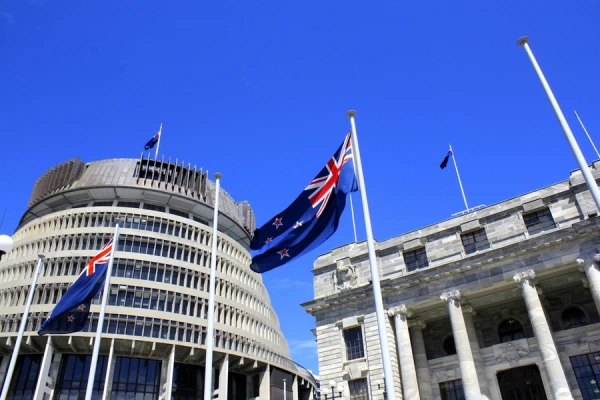
Wellington, New Zealand, Nov 13, 2019 / 10:52 am (CNA).- The New Zealand Parliament voted in favor of legalizing euthanasia and assisted suicide Wednesday, sending the bill to a referendum next year.

The End of Life Choice Bill was passed Nov. 13 by a vote of 69-51.

It would allow terminally ill persons who have six months or fewer to live to be euthanized or to themselves take a lethal dose of prescribed drugs, on the condition that two doctors agree the person is well-informed.

An earlier version of the bill would have allowed those with severe or incurable conditions to seek euthanasia or assisted as well.

The bill was introduced by David Seymour of ACT New Zealand, a crossbench, libertarian party.

It is supported by Prime Minister Jacinda Ardern of the New Zealand Labour Party.

Maggie Barry, a member of parliament of the opposition New Zealand National Party, said the bill is “dangerous and permissive,” according to Reuters.

A 2017 inquiry prepared by the health committee of the 51st New Zealand Parliament (which was controlled by the National Party) did not recommend the legalization of assisted suicide and euthanasia.

“We’ve tried to distil all the arguments and our recommendation to both the Parliament and the people of New Zealand is to read this report and come to a deeper understanding of what’s been asked around assisted suicide and euthanasia,” Simon O’Connor, then-chair of the health committee, said in August 2017.

When the National Party was governing, it concluded that “the public would be endangered” by legalization of the practices.

Submissions “cited concern for vulnerable people, such as the elderly and the disabled, those with mental illnesses, and those susceptible to coercion. Others argued that life has an innate value and that introducing assisted dying and euthanasia would explicitly undermine that idea. To do so would suggest that some lives are worth more than others. There were also concerns that, once introduced, eligibility for assisted dying would rapidly expand well beyond what was first intended,” the report of the health committee of the 51st parliament read.

[…]

No Picture
News Briefs

As SCOTUS hears DACA arguments, bishop calls for congressional action

November 13, 2019 CNA Daily News 2

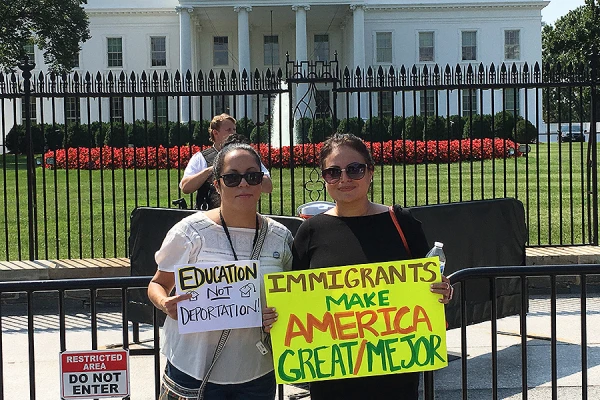
Baltimore, Md., Nov 13, 2019 / 09:44 am (CNA).- The USCCB’s migration committee chairman hopes that Congress can come to a solution regarding the situation of Deferred Action for Childhood Arrivals policy recipients, as the Supreme Court hears oral arguments in a case seeking approval to eliminate the program altogether.

Bishop Joe Vasquez of Austin told CNA Nov.12 that while he and his brother bishops have been advocating for a congressional solution to DACA, their main concern now was the situation of the approximately 700,000 DACA recipients.

“Those people need also to have someone advocate for them. So the bishops need to speak up and say very clearly that these people, we don’t want separation of families,” said Vasquez. About 256,000 children have at least one parent with DACA status.

There are fears that if DACA were to be repealed, these people would then be deported, splitting up the family. This is “a big concern for the Church,” said Vasquez.

“The Church is always going to advocate on the side of the family, because the family is very important,” he added.

DACA recipients, he said “already are…part of the fabric of this country” and contribute to the economy and to their communities.

“They’re leaders already in many of our parishes and churches,” said the bishop.

On Tuesday, the Supreme Court heard oral arguments in three cases – Department of Homeland Security v. Regents of University of California; McAleenan, Secretary of Homeland Security v. Vidal; Trump, President of U.S. v. NAACP – which concern whether the Trump administration may end DACA outright.

President Barack Obama introduced DACA via executive memorandum in June 2012. It permits people who were brought to the United States illegally as children to apply for temporary protection from deportation and work permits. The program was set to expire in 2017, but this has been delayed after Congress was given a chance to codify parts of DACA into law.

Congress failed to pass DACA into law, and the partisan-based debate over immigration and border security has continued.

The Supreme Court is expected to make a decision about whether President Donald Trump would be permitted to end DACA in the spring or early summer of 2020.

As for Vasquez, he will continue to hope that Congress can come to a solution.

“My hope and prayer is that they would be able to do something, they’d be able to reconcile and come together and take care of these people,” he said. “I think deporting them is the wrong answer. It’s not the way to address this issue.”

[…]

No Picture
News Briefs

Record floods in Venice damage St. Mark’s Basilica

November 13, 2019 CNA Daily News 0

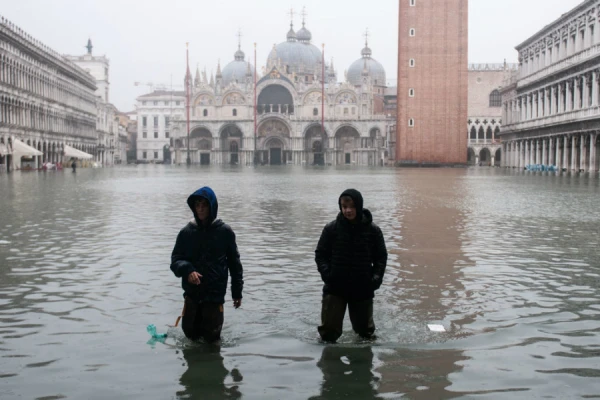
Venice, Italy, Nov 13, 2019 / 08:05 am (CNA).- The crypt of S. Mark’s Basilica is left completely flooded Wednesday after Venice’s water levels hit the highest level in more than 50 years.

Local authorities have called for a state of emergency after one man died in the worst flooding in Venice in decades. The high water mark reached over 6 feet, the highest level since 1966.

The Patriarch of Venice Francesco Moraglia and the city’s mayor, Luigi Brugnaro, inspected the damage at St. Mark’s Basilica together on Nov. 13, the morning after the heavy rains subsided.

“St. Mark’s Basilica has suffered serious damage, as has the entire city and the islands,” Venice mayor Brugnaro confirmed after the visit.

“Venice is on its knees,” Brugnaro wrote in a Twitter Nov. 13 post with photos of him and the patriarch at the basilica.


#Venezia è in ginocchio. La Basilica di San Marco ha subito gravi danni come l’intera città e le isole.
Siamo qui con il Patriarca Moraglia per portare il nostro sostegno ma c’è bisogno dell’aiuto di tutti per superare queste giornate che ci stanno mettendo a dura prova. pic.twitter.com/3Qy7070hZn

— Luigi Brugnaro (@LuigiBrugnaro) November 13, 2019


Patriarch Moraglia said he is concerned above all for those who sleep on the streets of Venice, and said that he hopes that Venice parishes will be the first to open their doors to them.

“To my Venetians, so much closeness, I have asked Caritas to be active in all possible ways, and I also make available emergency funds for charity,” Moraglia said, according to ACI Stampa.

In St. Mark’s Basilica’s 926 year history, there have been only six floods of similar severity. In October 2018, flood waters inside the basilica damaged part of the marble mosaic floor of the Madonna Nicopeia chapel.

Church staff cleared water and mopped the floors of the flooded basilica Nov. 13 to avoid repeating the damage caused last year when part of the nearly 1,000 year old marble floor of the basilica was left under flood water for 16 hours.

“We are here with Patriarch Moraglia to show our support, but we need everyone’s help to overcome these days that are putting us to the test,” Mayor Brugnaro said after his visit to the basilica.

[…]

No Picture
News Briefs

Pope Francis denounces rise in anti-Semitism 

November 13, 2019 CNA Daily News 0

Vatican City, Nov 13, 2019 / 04:30 am (CNA).- Pope Francis denounced rising anti-Semitism Wednesday as an attitude that is inhumane and unchristian.

"The Jewish people have suffered so much in history … And, in the last century, we saw so … […]

No Picture
News Briefs

This Japanese painter found the faith through sacred art

November 13, 2019 CNA Daily News 0

Rome, Italy, Nov 13, 2019 / 03:01 am (CNA).- Osamu Giovanni Micico had never read the Bible, knew nothing of the stories of Christ in the gospels, and had never heard of the apostles, when his experience studying sacred art in Italy brought him to the Catholic faith.

“When I came to Italy, painting was the only street for me as far as my profession goes. Thank God, that is also where God gave me my spiritual rebirth,” Micico told CNA.

Catholicism “transformed my life. The way I relate to others, the way I view the world. And the direction I’m taking in my life. The meaning of suffering. It all changed. My conversion gave life to death.”

From his childhood and adolescence in Tokyo, Micico was interested in drawing and painting, but he originally pursued a science-based career to please his parents.

During university, however, he encountered an artist who inspired him to pursue his passion for painting.

The 37-year-old artist moved to Florence in 2008 to study the paintings of the Old Masters, such as Michelangelo and Leonardo da Vinci.

He told CNA that at the time he mostly painted landscapes or portraits, except when he copied the great masterpieces to learn from them. But he did not know what he was looking at.

“I was with my Catholic friend, asking my friend, who are those fishermen?” the artist said. In a way, he noted, he encountered the gospel the same way it was encountered by people in the Middle Ages who could not read, through the symbols of art.

“I was ‘reading’ those paintings before I knew the gospel. I didn’t know what stories they represented,” he explained.

“I think like music, those paintings spoke to me with harmony and it animated my soul. It was not just technique – that they made a realistic painting – but there was something else that was very holy there.”

Another personal encounter was influential in Micico’s conversion: his friendship with Irish religious artist and Catholic Dany MacManus, who was then living in Florence.

While Micico still knew nothing about the Bible, MacManus invited him to a lecture he was giving on St. John Paul II’s Theology of the Body. “That left an impression,” Micico said.

MacManus became Micico’s godfather at his baptism in 2010.

“Art was the entrance. I think that even without words, like with the music of Bach, one can intuit the beauty of a creator,” he said. “Ultimately, God the merciful was represented in the painting … That’s what spoke to me.”

Micico now creates sacred art himself.

“I wanted to spread this Good News using the same medium,” he said. “I’m sure there are a lot of people who will be touched by contemporary sacred art. And if I can give my hand to this beautiful mission, by my profession, that’s fantastic. It was very natural.”

In November 2018, one of Micico’s paintings was gifted to the Archdiocese of Nagasaki. Micico’s “Holy Mother of Sorrow and Hope” was hung in Nagasaki’s Immaculate Conception Cathedral in the Marian chapel, which is dedicated to the victims of the 1945 atomic bomb.

It shows Our Lady of Sorrow in the foreground, with the background depicting the exploding atomic bomb and the burning city beneath.
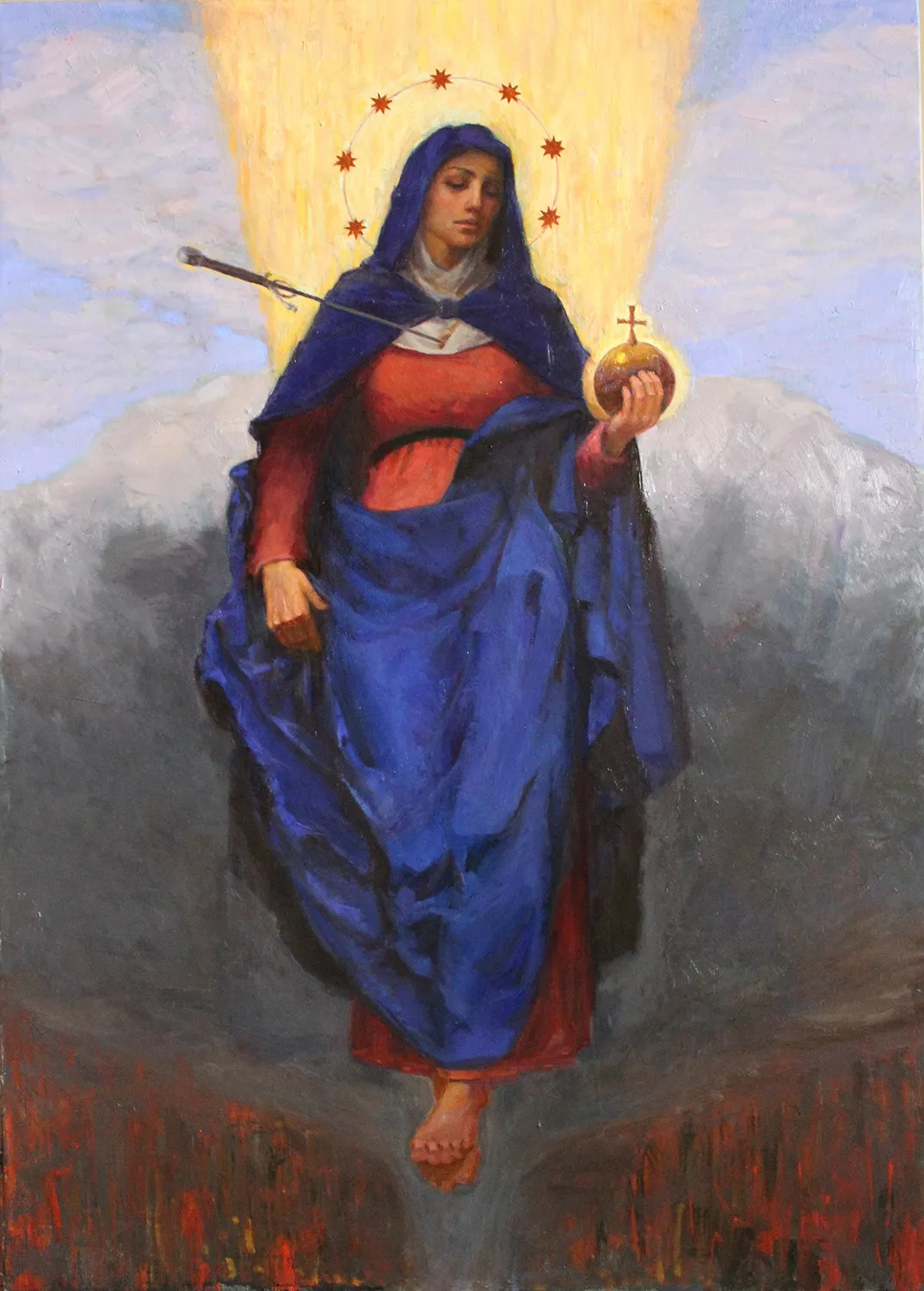
“I experienced that painting can be an instrument, very useful, very strong,” the painter said. “And it goes directly to the heart, like music. Even without understanding it people can stand in front of it with mouth wide open, looking at it, contemplating it.”

After his conversion, Micico learned more about the history of Christian persecution in Japan. Christianity was outlawed starting around 1600 until 1873. In the late 16th century, military ruler Toyotomi Hideyoshi expelled the missionaries who had brought the faith to Japan, had religious objects and Bibles destroyed. There were thousands of martyrs.

The few Catholic lay people who survived preserved the faith orally and through baptism, the only sacrament they had, for hundreds of years. During this period, they created their own sacred art, Micico said.

Some pieces were visibly religious, such as “Ecce Homo” style images of Christ. In many others, however, the Christian symbolism, for safety, was hidden in a Buddhist or Shinto style. For example, they would paint a traditional Buddhist female figure, but add a baby to her arms to create an image of the Madonna and Christ child.

“This clandestine art is so beautiful to see, as their devotion took form in this visible form,” Micico said.

“When I think of myself in that situation, I think, why would someone risk their life by painting sacred pictures? I mean, it would have been easier for them to survive without painting those pictures, but they wanted to manifest their love for the Lord.”

“Sacred art,” he said, “is not for one person, or one group of people, but for everybody, for all the generations.”

[…]

The Dispatch

The “synodality” masquerade

November 13, 2019 George Weigel 32

During the 2001 Synod of Bishops, Cardinal Francis George of Chicago, who’d suffered through a lot of synodal speechifying and small-group discussions over the years, made a trenchant observation: “Jesus Christ didn’t intend his Church […]