


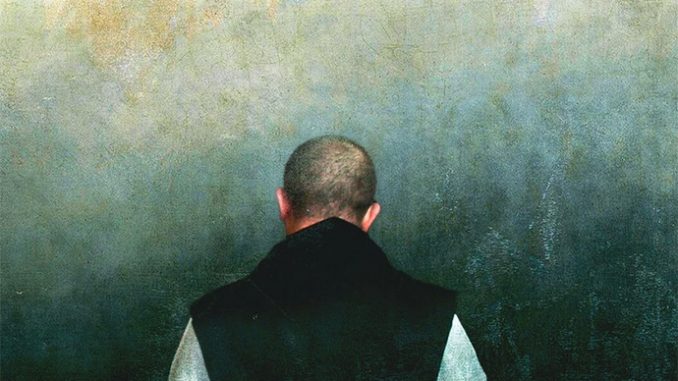
Our culture has a strange fascination with monks. Perhaps there is something about a man being willing to reject the world and enter religious life, or the mysterious, almost secrecy of the cloister, or the sense that monks are somehow an anachronistic holdover from the Middle Ages.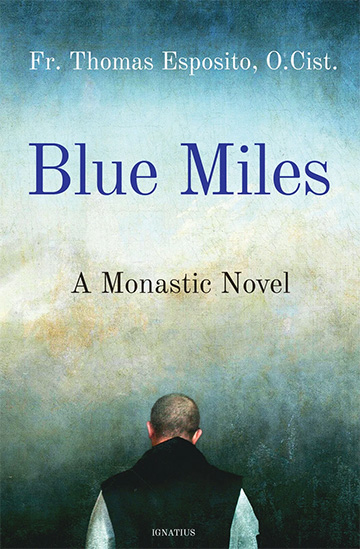
Whatever it is, stories about monks tend to capture our imaginations.
In Blue Miles: A Monastic Novel (Ignatius Press, 2026), the author takes this to heart. The author is Father Thomas Esposito, O.Cist., a priest and monk of Our Lady of Dallas Cistercian Abbey, where he currently serves as junior master and subprior. He is also an associate professor of theology at the University of Dallas, and teaches theology at Cistercian Preparatory School.
The novel is the fictional memoir of Padre Samuel, a Cistercian monk, and weaves together his tumultuous life story with reflections on his life in a monastic community.
Padre Samuel reflects on his life in both comedic and tragic ways. What is it that attracts someone to the cloister, and what sort of person would be drawn to the monastic vocation? He explores the challenges of community life, as well as the blessings.
Father Esposito recently spoke with Catholic World Report about his new novel, its origins in his own life, and how the life of a monk can inform the lives of laypeople.
Catholic World Report: How did the book come about?
Fr. Thomas Esposito, O.Cist.: I had mused for years about a novel chronicling a day in the life of a monk, with the monastic schedule structuring the narrative.
I couldn’t write a novel about a monk, though, until I acquired more real-life experience! Only when I entered “middle age” did I feel that I had gained enough wisdom to write credibly about the monastic life.
Each chapter features the old monk, Padre Samuel, sharing anecdotes and meditations about each event in the monastic day, with the memoirs of his own life packaged in between. His alcoholism emerged as a “necessary” feature that allowed me to ponder how a particular arc of sin and redemption comes about, thanks to the help of one’s monastic brothers.
CWR: Tell us a little about your own vocation story and your life as a Cistercian.
Fr. Esposito: I grew up in Omaha, Nebraska, in a very happy Catholic family; we lived about two miles from Boys Town, which features prominently in the novel. I got to know the monks of Our Lady of Dallas Cistercian Abbey during my undergrad years at the University of Dallas.
Near the end of my senior year, I discerned that the Lord was calling me to the Abbey; the combination of monastic life, priestly ministry, and teaching was tailor-made for me. After finishing my biblical studies in Rome, I returned to Dallas and began teaching at our prep school and the University of Dallas.
I currently serve in the Abbey as the subprior of the community and the junior master responsible for the formation of the brothers in temporary vows.
CWR: Why tell this story as a work of fiction, and not a non-fiction record or reflection of your own monastic life?
Fr. Esposito: Well, the monks who are forced to live with me would probably not appreciate my non-fiction reflections about them!
I chose the form of a fictional novel because I wanted to share real experiences of our Cistercian monastic life without putting my confreres under the microscope, so to speak. I also did not want to be the subject of my own story.
The fictional account of Padre Samuel’s life allows his story to be a universal lens through which readers can view the challenges of our lives and apply his insights to their own journey with the Lord.
CWR: It is interesting how the book’s structure reflects the monastic life, the rhythm of prayer, work, adoration, recreation, and so forth. Why did you choose this as the structure, and is there a deeper meaning there?
Fr. Esposito: I initially wanted the book’s title to be The Life of a Monk, but I was rightly told that such a title wasn’t sufficiently attention-grabbing! But the structure of the book is indeed a twofold “life of a monk”–the chapter titles are the daily schedule of events in Padre Samuel’s monastery, and he weaves the adventures of his life into that framework.
I hope that my readers will enter into the rhythm of the monastic day, with its alternations of silence, speech, and noise from the outside world integrated into the gradual unfolding of prayer and work throughout each day.
I loved how the movie Of Gods and Men introduced viewers to the mystery of the French monks’ life in Algeria through depictions of their work and prayer; my novel is a portrait of the monastic life in words.
CWR: Is this a story that would only speak to priests, or will laypeople get something out of it as well?
Fr. Esposito: I think the story has something for everyone! Priests, monks, and nuns will likely appreciate the meditations on the religious life and certain aspects of prayer that are essential to their lives as consecrated men and women.
The details of Padre Samuel’s life, however, contain lessons that are applicable to everyone. His story touches on the great themes of life: trials of faith, the mentors who teach us how to live and love, the burdens of community life, the joys and sorrows that must be shared to be fully understood, humor as an unexpected form of grace, the mysterious interplay of sin and grace, etc.
CWR: How personal a story is this?
Fr. Esposito: An author can only write about what he knows. My own upbringing in Nebraska and my Cistercian vocation, therefore, made this novel possible.
But the lives of Padre Samuel and the monks of Presentation Abbey are fundamentally different from my own journey and those of my confreres.
CWR: What do you hope people will take away from the book?
Fr. Esposito: I hope that my readers will laugh at the hilarious anecdotes that Padre Samuel recounts, cry at the tragedies that he articulates, and ultimately love the story of anguish and grace that he relates.
This novel is, in many ways, an introduction to the monastic life for 21st-century readers. As I wrote in the preface to the novel, I hope that “these pages will allow those living outside the cloister to perceive some hint of the fierce demands and consoling mercies of the monastic life.”
If you value the news and views Catholic World Report provides, please consider donating to support our efforts. Your contribution will help us continue to make CWR available to all readers worldwide for free, without a subscription. Thank you for your generosity!
Click here for more information on donating to CWR. Click here to sign up for our newsletter.

Thanks for the article and the heads up on this book. It sounds very much like the kind of book I would deeply enjoy reading. I will pick it up today.