No Picture
News Briefs

Catholic group to start holistic addiction recovery home in Kentucky 

November 14, 2019 CNA Daily News 0

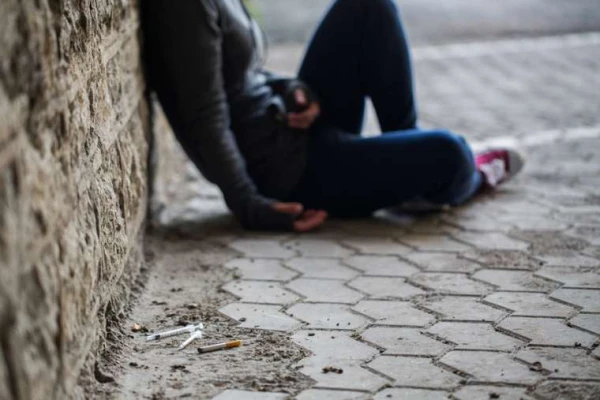
Lexington, Ky., Nov 14, 2019 / 03:12 am (CNA).- A Kentucky diocese is leasing a tenantless building to a Catholic charity to create a holistic recovery program for people in the area struggling with drug addictions.

“It’s an exciting possibility,” said Jenny Ramsay, co-founder and director of Catholic Action Center (CAC), the homeless service agency in Lexington which will be helping run the new program.

“Our [clients] need it so desperately … This place is welcoming, and it includes the holistic approach with environmental sustainab[ility],” she told CNA.

The Diocese of Lexington announced Friday that the Catholic Action Center is beginning a three-year lease on the Cliffview Retreat and Conference Center in Lancaster. The facility will be known as Divine Providence Way at Cliffview, and CAC will have an opportunity to purchase the property at the end of the lease.

The Catholic Action Center will be in charge of developing a holistic environment for the addiction recovery center. This will include recreational therapy, such as music and art. The medical side of the recovery efforts will be run by Mountain Comprehensive Care, a mental health and addiction center based in eastern Kentucky that has partnered with CAC for the past two years.

The program will also offer job training through Bluegrass Community and Technical College, which will take place at a specific satellite campus for the beneficiaries. There, the clients will have access to educational opportunities including culinary art, sustainable living, building and maintenance, and information technology.

Ramsay said the building and maintenance program will focus on skills like carpentry and solar panel installation. She said the IT program will teach some basic coding and other entry-level IT skills.

The program will be environmentally sustainable, Ramsay said, relying on green energy from solar panels and incorporating beehives, chicken coops, and greenhouses.

“We are creating the environment at Cliffview, which will include sustainable agriculture. Holistic care of the people includes the fact that their environment needs to be something that renews them,” she said.

“We’re human beings and we all have different brokenness, but we all relate and can be healed through [a holistic approach] … We’re not going to say that one size fits all, but when we engage with the earth and engage the mind, body, and spirit, then changes happen,” she added.

The idea for Divine Providence Way was developed after staff members at the Catholic Action Center witnessed a need for greater addiction care among the homeless population.

The initiative comes amid an ongoing opioid crisis in the United States. Kentucky has been among the states hit hardest by the epidemic. From 2012-2017, more than 6,700 overdose deaths were reported in the state, according to data from the Kentucky Office of Drug Control Policy. In 2017,  Kentucky had a drug overdose rate of 37.2 deaths per 100,000 people, the fifth-highest in the country, according to the Centers for Disease Control and Prevention.

“We see the individuals, we see the overdoses, we see the challenges,” said Ramsay, when asked about the opioid crisis.

Founded in 2000, the Catholic Action Center is an initiative inspired by Dorothy Day and the Catholic Worker Movement. According to its website, the organization has served more than 5.5 million meals and distributed over 2.5 million items of clothing. The agency has also covered 90 funerals for clients who had no families.

Ramsay stressed that it is a Christian’s duty to care for all people, even those struggling from addiction and currently abusing drugs. She said it is an example set by Christ.

“As Catholic Christians, we’re called to address [this] and to…help those in need,” she told CNA. “Knowing that we may have the opportunity to help others in a unique situation, we couldn’t turn our back on [them].”

“Jesus said feed the hungry, give drink to the thirsty. He didn’t say feed the hungry who are sober,” she added.

[…]

No Picture
News Briefs

What people with intellectual disabilities can teach us about friendship

November 13, 2019 CNA Daily News 0

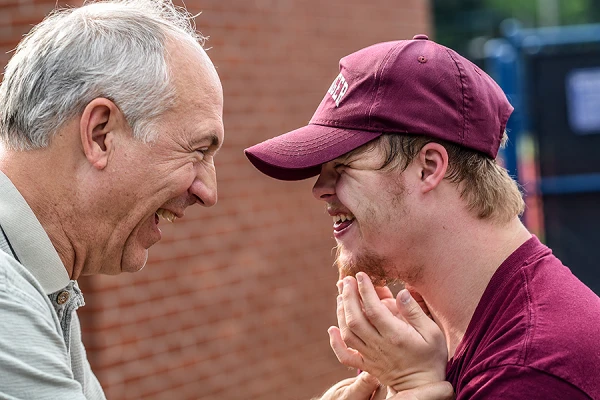
South Bend, Ind., Nov 14, 2019 / 12:38 am (CNA).- When French Catholic Jean Vanier brought two men with intellectual disabilities to live with him in his home, he did so more out of a sense of religious duty than anything else.

But as time went on, he began to realize that what the men needed was not help, but friendship. In the founding of his L’Arche (The Ark) homes for people with intellectual disabilities, friendship became the pillar of what those communities were and are all about.

“In short, Vanier had discovered they shared a common world,” Professor Stanely Hauerwas said in his keynote address on Nov. 8 at the University of Notre Dame’s annual conference sponsored by the De Nicola Center for Ethics and Culture.

Hauerwas, a theologian and the Gilbert T. Rowe professor emeritus with joint appointments at Duke divinity school and Duke law school, was a personal friend of Vanier, who died at the age of 90 earlier this year.

“I don’t know where we would be without such witnesses today. It’s remarkable,” Hauerwas said of his friend.

In L’Arche homes, core members are permanent residents who have intellectual and other disabilities, while assistants are adults and trained caregivers who live in L’Arche communities with the core members, typically for a one-year commitment at a time.

As the L’Arche website states, being an assistant is primarily about being a friend.

“In the communities of L’Arche, we live and journey together, men and women with disabilities and those who feel called to share their lives with them,” Hauerwas said.

“We are all learning the pain and joy of community life where the weakest members open hearts to compassion and lead us into deeper union with Jesus. We are learning to befriend them, and through and with them to befriend Jesus.”

Friendship with people with disabilities is often hindered by fear and false perceptions on the part of non-disabled people, Hauerwas noted.

“We are fragile creatures whose vulnerabilities produce fears that make our being befriended by the disabled frightening,” Hauerwas said.

This is in large part because people with disabilities have the gift of honesty, Hauerwas said – they are unimpressed by accolades and accomplishments, and are only interested in you as yourself.

“Such fears do not go away, even if we have been befriended by the disabled. That is why, as I will suggest, that friendship must be communal because only a community who is made of those aware of their limits can create the peaceful space for all to flourish, disabled and abled alike.”

The false assumption that people with disabilities are suffering can hinder friendship with these people, Hauerwas noted.

“As (Brian Brock, an author on disability) points out, ironically, those who are severely intellectually disabled do not struggle with their disability because they’re wondrously free from pondering what others suppose them to lack,” Hauerwas said.

“Brock is challenging the presumption that those who are labeled intellectually disabled suffer from being intellectually disabled. They suffer from the attitudes and behaviors of those who imagine how they would feel if they were intellectually disabled. In short, we project on the disabled how we think we would regard our lives if we were them,” he said.

“But because people who are mentally disabled are not people other than who they are, they accordingly can and do enjoy who they are,” he added.

Brock, whose own son Adam has Down syndrome and is autistic, notes in his writings that knowing Adam has led him to a deeper theological understanding of what it means to accept the gift of people with intellectual disabilities.

“(Brock) understands the Christian Gospel to offer a way of life that enables our ability to live as vulnerable beings who have made peace with our limits and are able to delight in the unexpected,” Hauerwas said.

“Such a way of life can be joyous and free because we seek no longer to be gods, but to be content, to be creatures whose flourishing does not mean we will not suffer, but as the stories of scriptures often make clear, it is through suffering and vulnerability that we discover our place in God’s story.”

Throughout his life, Vanier testified to the real friendships he had with his friends with disabilities. Some people still doubt whether such friendships were possible, because they believe that friendship necessitates an equality in agency, Hauerwas noted. He then provided several examples of stories of friendship between assistants and core members, or the family members of the disabled, to show how such friendships are possible.

“Vanier’s friendships with the core members with whom he lived stands as a stark reminder that friendship between people who are intellectually disabled, and those that are not, is an actual reality,” Hauerwas said.

Hauerwas drew several examples from Patrick McInerney, an English anthropologist who lived for 15 months in a L’Arche home and wrote of his experiences in a paper entitled: “Receiving the gift of cognitive disabilities: recognizing agency in the limits of the rational subject.”

McInerney, not unlike Vanier at the beginning of his work, started at L’Arche presuming that the core members did not have agency like non-disabled people.

“He encountered Rachel who was making random hand gestures. Sarah who was rolling herself around and around in her wheelchair. And Martha, who spoke constantly but did not seem to make sense. McInerney assumed such women were incapable of active engagement with the world,” Hauerwas said.

But he eventually came to see these women in a different light, and realized that their agency comes from their own acknowledgment of their vulnerabilities and dependency on others.

In one example, Maria, a long-term assistant, told McInerney about an experience with core member Sarah, who could not communicate verbally. Maria was given the task of bathing Sarah, but was having difficulties.

“Maria confesses she did not know what she was doing. But she assumed that neither did Sarah know what she was doing. Finally, however, after some time, Maria figured how to help Sarah bathe herself. She (later said) to Sarah: ‘And you just sat there very patiently and quietly letting me make error after error. When I finally worked out what the right thing to do was, you looked at me dead in the eye and then you laughed at me,’” Hauerwas said.

“Through these exchanges, the core members’ gifts of the heart are discovered,” he added.

In another story of friendship and encounter, Hauerwas recalled Hilary, an assistant who watched a core member smiling and swaying and enjoying herself in front of a full-length mirror. Hilary said she realized that Sarah was not able to care whether other people might consider this behavior self-obsessed, and so she was free to love and enjoy herself.

“Sarah really loves herself and she helps me to start loving myself,” Hilary told McInerney.

The lessons learned from accepting one’s life as a gift, and accepting others’ lives – including those with disabilities – as a gift, leads to a system of ethics that stands in stark contrast to ethicists like Peter Singer, who believes that people with disabilities are of limited moral value to society, Hauerwas noted.

The lives of people with intellectual disabilities “have more in common with unruly saints of the Church, according to McInerney, than the rational agents such as Peter singer assumes. Those who have learned to be their friends, friends with people like Sarah, value the way they transgress assumed norms of behavior and express the value of a liminal community.”

“I think that my own view is that if in a hundred years Christians are identified as those people who do not kill their children or their elderly, we’ll have done a pretty good job, but that’s the challenge,” Hauerwas said.

In one final example of friendship, Hauerwas recalled the friendship between a core member Eric and Vanier. Eric was blind, deaf and could not speak, but Vanier knew he could still communicate through touch.

“That is what they did day after day. They held and washed his body with respect and love. Slowly but surely they were able to communicate with him and he communicated with them,” he said.

Vanier reflected on this friendship “by suggesting what Jesus commands us to do is to be befriended by the weak those in need, the lonely.”

“For when the poor, the weak and the lonely claim us as friends, they prevent us from falling into the trap of power, especially the power to do good,” Hauerwas said. “To be befriended by the poor and the disabled saves us from the presumption we must save the savior and the church.”

[…]

No Picture
News Briefs

CRS provides relief to Bangladeshis affected by Cyclone Bulbul

November 13, 2019 CNA Daily News 0

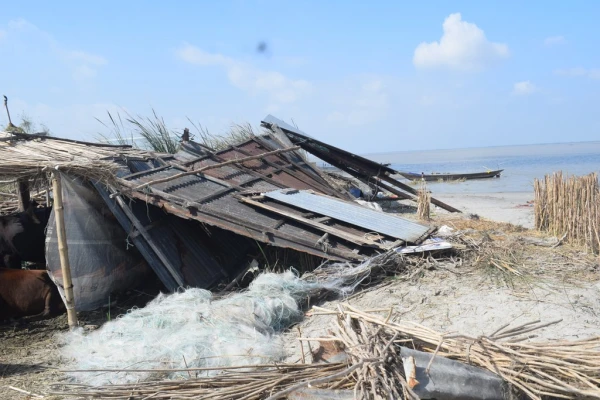
Dhaka, Bangladesh, Nov 13, 2019 / 11:01 pm (CNA).- After the dissipation of Cyclone Bulbul, Catholic organizations have provided aid to the victims in Bangladesh, and assessed the immediate and long term needs of those recovering from the storm.

The cyclone made landfall in India’s West Bengal state Nov. 9. It has heavily affected the coastal areas of Bangladesh and India, claiming at least 20 lives, according to the Guardian.

Authorities said more deaths would have occurred if it was not for the sake of increased evacuation efforts, the BBC reported.

Snigdha Chakraborty, Catholic Relief Services’ manager for Bangladesh, commended the efforts but said victims are still in need of more aid.

“While there are many people who will need significant support following this storm, the government’s robust preparedness activities have paid off. Most people were able to get into evacuation shelters and out of harm’s way,” she said Nov. 10.

The storm has damaged thousands of homes and nearly 500,000 acres of crops, Al Jazeera reported. It had also shut down the Kolkata airport in India and Bangladesh’s two largest ports, Mongla and Chittagong.

After evacuation efforts, more than 2 million people were forced to spend a night in a shelter.

Chakraborty expressed concern that the shelters will not be a sufficient fix for the long run, noting that some of these places do not have a safe water source. CRS said people need shelter repair support and farmers will need compensation for their damaged crops.

“We are concerned that the cyclone shelters are not sufficient for anything more than a very short stay. People are eating snack food and bread as the shelters have no facilities to cook,” Chakraborty said.

“Families will be in the shelters at minimum another two days under heavy rains, and for the people who return to find their homes damaged or destroyed, they are looking at even longer displacement … Caritas Bangladesh has provided their shelters with water jars sufficient through today, but this will be a critical need for the next few days.”

CRS has partnered with Caritas Bangladesh, both of which helped with evacuations. Among the 300 operational shelters, Caritas Bangladesh opened 40 cyclone shelters.

Chakraborty said that while CRS has continued efforts along the coasts, there are territories that are hard to reach inland. She said some damages have yet to be assessed.

“Right now, we are very focused on the badly affected Sathkhira and Khulna districts on the coast, which continue to experience heavy rain and high winds,” she said.

“Staff have not yet been able to reach some of the remotest locations due to ongoing rains, heavy winds and damaged roads. Initial reports in Khulna indicate significant crop losses and partial or total damage to poorly constructed houses. And we have early information about significant seas surges in remote areas of Sathkhira, but hope to get confirmation tomorrow.”

Chakraborty applauded the evacuation efforts on behalf of the government and volunteers. She said more needs to be done to support victims but lives were saved by following the evacuation protocol.

[…]

No Picture
News Briefs

Hong Kong protesters arrested at Catholic church

November 13, 2019 CNA Daily News 1

Hong Kong, China, Nov 13, 2019 / 04:39 pm (CNA).- Pro-democracy protests in Hong Kong have continued to escalate into violence, with many apparent incidents of forceful police tactics, including at a Catholic church, caught on camera and uploaded to social media.

A bystander video widely circulated on social media shows at least four riot police officers entering what appear to be offices at Holy Cross Church in Hong Kong and violently subduing a protestor.

Another angle of the incident seems to show a police officer planting a hammer in the backpack of the prostrate protester. The police arrested several protesters at the church.

Some social media users implicated Deacon Simon Chan, who works at Holy Cross Church, as having called the police to come and arrest the protesters, or at least having allowed the police to enter the church compound.

The Diocese of Hong Kong released a statement Nov. 11 countering this narrative, saying that Deacon Chan hurried to the scene as soon as the police began making their arrests.

“On his arrival, however, those protesters were already under arrest and shortly later they were escorted to the police car and taken away. Therefore, it was in fact not Deacon Simon Chan himself who allowed the police to enter the church compound,” the diocese said.

In response to queries as to why the church allowed the police to enter to arrest the protesters, the diocese stated “there is no way for a church to guarantee that those who enter it will not be arrested according to the law. We deeply regret that the above incident has taken place.”

“It is our earnest hope that the current turmoil in Hong Kong will come to an end and that the local situation will be back to normal as soon as possible,” the diocese concluded.

The protests in Hong Kong began earlier this year as mostly peaceful, large scale demonstrations against a proposal in the Hong Kong legislature that would have allowed mainland China to extradite alleged criminals from Hong Kong.

The impetus for the bill was a case involving a young Hong Kong man whom Taiwan requested be extradited for an alleged murder. Hong Kong previously has no formal extradition agreements with mainland China or Taiwan.

Christians and advocates widely opposed the bill, fearing that the Chinese government, which already seeks to control and suppress Chistianity on the mainland, would use it to further tighten its grip on free exercise of religion in Hong Kong.

Beijing has for years sought to control religion in China, leading to widespread persecution. The U.S. Commission on International Religion wrote in its 2018 report that last year China “advanced its so-called ‘sinicization’ of religion, a far-reaching strategy to control, govern, and manipulate all aspects of faith into a socialist mold infused with ‘Chinese characteristics.’”

Christians, Muslims, Tibetan Buddhists, and Falun Gong practitioners have all been affected. In September, reports emerged that churches belonging to the state-run “Three-Self Patriotic Movement” ecclesial community have been ordered to replace displays of the Ten Commandments with sayings of Chinese president Xi Xinping.

Hong Kong is a special administrative region of China. Hong Kongers enjoy freedom of worship and evangelization, while in mainland China, by contrast, there is a long history of persecution for Christians who run afoul of the government.

An estimated 1 million protesters turned out at the first major demonstration June 6. Catholics have played a major role in the protests since then.

Bishop Joseph Ha Chi-shing, an auxiliary bishop of Hong Kong, has called for prayer, asking that the faithful pray the rosary.

Bishop Ha has taken part in ecumenical prayer rallies with protesters in the past, urged an increase in prayer and said he is concerned for the safety of the many young people involved in the protests. He told CNA in September that he urges “Friday fasting” as part of the prayer for peace in Hong Kong.

Though Chief Executive Carrie Lam in October withdrew the extradition bill, protests have continued, with the most recent violent clashes taking place around the Chinese University of Hong Kong.

An unidentified protester recently told the National Catholic Register that protesters have become divided into two camps, “the so-called ‘peaceful group’ and the so-called ‘fighting group,’” noting that the extradition bill was first suspended only after the fighting group engaged the police in a major conflict June 12.

Another young Hong Konger told the Register that his decision to join the protests was guided by his Catholic faith and his sense of civic duty as a Chinese citizen in Hong Kong.

“The most fundamental concern for me is the freedom of religion, followed by the freedom of thought and speech,” he said.

“We protest because we do not trust the Chinese Communist Party. The CCP has a pretty nasty history of suppressing Christianity and other religions in China. Also, there is virtually no freedom of speech in China.”

Since the protests have gone on, Beijing has instituted a travel ban for some Catholics seeking to enter the island, and Chinese officials are reportedly concerned that Catholics on the mainland could work with the Catholic Church in Hong Kong to inspire similar resistance.

Protesters are demanding that Lam resign for her failure to respond to their demands, as well as an independent inquiry into police tactics and universal suffrage throughout the island territory.

Late into Tuesday evening, protesters at several locations around Hong Kong hurled Molotov cocktails at police who fired back volleys of tear gas, the Financial Times reports.

Another video released Nov. 10 showed a police officer shooting a masked protester in the chest at point-blank range in the street while grappling with another protester. Authorities reported that the protester who was shot is in hospital in critical condition.

Another video seems to show a masked assailant dousing a man on the street in flammable liquid and setting him on fire.

Last Friday, a 22-year-old protester died from injuries related to a fall.

Catholic leaders have continued to echo protesters’ calls for an independent inquiry into alleged police brutality.

“I ask the Lord to move the government of the special administrative region to respond to the public opinion, and set up an ‘Independent Commission of inquiry’ so that the community can begin with the truth and begin the path of real reconciliation,” Bishop Ha wrote on Facebook Oct. 21.

Legislation has been introduced in the US Senate to support the protesters, drawing veiled threats from a Chinese Foreign Ministry spokesman that passing such a measure “will seriously harm the United States’ own interests.”

The “Hong Kong Human Rights and Democracy Act” has 37 Republican and Democratic co-sponsors in the 100-member Senate, and backers say it is expected to pass easily if Majority Leader Mitch McConnell schedules a vote, CNBC reports.

[…]

No Picture
News Briefs

Ohio bill would target proposal on abortion reversal notification

November 13, 2019 CNA Daily News 0

Columbus, Ohio, Nov 13, 2019 / 03:20 pm (CNA).- Two Democratic lawmakers in Ohio have introduced legislation that would prohibit the state from requiring doctors to provide patients with information that is not recognized by expert medical associations or supported through peer-reviewed research.

The bill challenges another piece of proposed legislation in the state, which would require physicians to inform patients seeking a medication abortion about the possibility of an abortion reversal. Supporters of the abortion reversal protocol argue that initial research indicates it increases the survival rate of a baby after the first part of a two-pill medical abortion regimen has been administered, without risk of harm to the mother or baby.

On Nov. 12, State Reps. Beth Liston (D-Dublin) and Allison Russo (D-Upper Arlington) introduced a bill that would prevent the state from requiring doctors to give patients information that they deem to be lacking evidence-based support, peer-reviewed research, or backing from medical organizations, as well as information they consider inappropriate for the patient’s circumstances.

“Government shouldn’t force healthcare providers to lie to their patients,” Liston said. “People should be able to trust their doctors and nurses to give them accurate and complete information.”

Earlier this month, the Ohio senate passed a bill that would require doctors administering medication abortions to inform women about the option to pursue an abortion reversal if they changed their minds.

Liston criticized that legislation in May, saying it was based on inaccurate medical information and “an extreme ideology.”

“Abortion pill reversal is not true medicine,” Liston said at the time. “This is legislation that interferes with standard practice and inappropriately puts politicians between doctors and patients.”

Other states – including Arkansas, Idaho, Kentucky, South Dakota, Oklahoma, Nebraska and Utah – have passed laws requiring that patients undergoing medication abortions receive information about the possibility of a reversal. These laws have frequently been met with legal challenges.

Medication abortions have become an increasingly common method of abortion in the United States, making up 30-40% of all abortions.

Medical abortions involve the taking of two pills – the first pill, mifepristone (RU-486) blocks the progesterone hormone, which is essential for maintaining the health of the baby. The second pill, misoprostol, is taken 24 hours after mifepristone and works to induce contractions in order to expel the baby.

Some women, after taking the first pill (mifepristone), experience regret and do not want to follow through with the abortion by taking misoprostol.

The abortion reversal protocol, administered after the mifepristone is taken, floods a woman’s system with more progesterone, in the hopes of overriding the progesterone-blocking effects of the drug she has in her system.

A study published in April 2018 in Issues in Law and Medicine, a peer-reviewed medical journal, examined 261 successful abortion pill reversals, and showed that the reversal success rates were 68% with a high-dose oral progesterone protocol and 64% with an injected progesterone protocol.

Both procedures significantly improved the 25% fetal survival rate if no treatment is offered and a woman simply declines the second pill of a medical abortion. The case study also showed that the progesterone treatments caused no increased risk of birth defects or preterm births.

The study was authored by Dr. Mary Davenport and Dr. George Delgado, who have been studying the abortion pill reversal procedures since 2009. Delgado also sits on the board of the American Association of Pro-Life Obstetricians and Gynecologists.

Delgado told the Washington Post that he thinks more research should be done on abortion pill reversal, but that he believes there should be nothing to stop doctors from using the progesterone protocol in the meantime.

“(T)he science is good enough that, since we have no alternative therapy and we know it’s safe, we should go with it,” he said.

Advocates of the abortion reversal protocol stress that progesterone is a naturally occurring hormone in pregnant women that has been used for decades to treat women at risk of miscarriage.

Nurse practitioner Dede Chism, co-founder and executive director of Bella Natural Women’s Care in Englewood, Colo., stressed that hundreds of successful abortion pill reversals that have been documented in the U.S., without evidence of risk to the mom or baby.

Chism told CNA last year that it is common practice in medicine to share information about protocols that have yet to undergo even more rigorous prospective studies, if they have been shown to be safe and effective in case studies.

“We’re not causing harm, and even if the possibility of saving a baby is small, even if the population who desires it is small, is it not worth it to recognize it?” she said. “Isn’t it beautiful that there could be a possibility that just maybe could change and help you out when you’ve made a decision that you’ve regretted?”

“To be able to tell a patient that it may be possible in some circumstances to reverse an abortion pill, I think that is simply informed consent,” she added.


[…]