No Picture
News Briefs

Chilean churches looted during protests
November 12, 2019 CNA Daily News 0

Santiago, Chile, Nov 12, 2019 / 11:01 pm (CNA).- Several churches across Chile have been attacked and looted amid anti-government protests in the country.

The demonstrations began in mid-October in Santiago over a now-suspended increase in subway fares.
Other regions joined in the protests, expanding their grievances to inequality and the cost of healthcare.

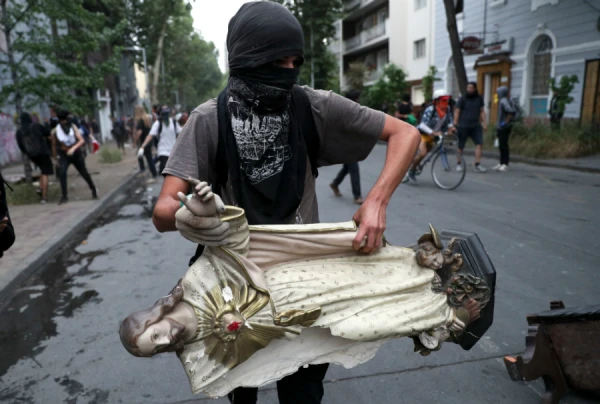
Protesters broke into Santiago’s La Asuncion parish Nov. 8, hauling out pews, confessionals, and statues – which they defaced – to build a barricade. They set the barricade on fire before clashing with police, and sprayed anti-Catholic graffiti on the walls, pillars, and altar of the church.

The next day, the Chilean bishops said that “with many Chileans we are radically opposed to injustice and to violence, we condemn them in all their forms and we hope that the tribunals will identify those responsible and sanction them.”

“The violent protesters only prevent us from looking with due attention to the just claims of the majority of the Chilean people who yearn for real and peaceful solutions … the people are not only tired of injustice, of also of violence, and the great majority hope for dialogue with respect to the reconstruction of the social fabric.”

On Nov. 10, attackers in Talca forced open the doors of the Mary Help of Christians shrine, where they destroyed religious  images and then carried them into the streets along with the church’s pews to set them on fire and erect barricades. Before the Carabineros de Chile arrived at the scene, the attackers desecrated the tabernacle.

At a Nov. 12 press conference, Fr. Pedro Pablo Cuello, director of the Salesian presence in Talca, said that “Chile needs to grow, needs to be reconciled, with peace, with justice and equity … This is a desecration of the very face of Jesus.”

Bishop Galo Fernández Villaseca, auxiliary bishop of Santiago and apostolic administrator of Talca, said he was “impacted and moved by the violence one is experiencing which is intensifying  in the country and among us. These are not just material damages, it’s an attitude of discord and which attacks the deepest sentiments of a person, our religious sentiments. The desecration of the Blessed Sacrament hurts us deeply.”

“It hurts me that the soul of Chile is wounded, is incapable of dialogue, that the soul of Chile claiming legitimate things that we share to a great extent, is walking down a path that is counterproductive,” Bishop  Fernández said.

He encouraged the practice of “peace, dialogue, to value what is true in the different person and to walk down a path that means progress for all women and men in Chile.”

The Salesian community in turn asked that Chileans “seek peace and the ways of understanding and dialogue … convinced that the great challenge of every society is to achieve a good integration in which all people have a decent life, especially the elderly and children.”

“It’s a matter of respecting one another, of working together. We all want to build a new Chile, a Chile truly just and solidary and we will continue working according to our responsibilities as priests and as a Salesian School,” they said.

Bishop Fernández said a Mass of reparation in the church Nov. 12.

Also on Nov. 10, a mob attacked Our Lady of the Angels parish in Viña del Mar, immediately northeast of Valparaiso.

The attackers pulled out statues of Saint Expeditus and Saint Teresa of the Andes from their glass enclosures and destroyed them. They also destroyed some stained glass windows and other windows, sprayed graffiti, and tried to enter the church.  

“This violent action hurts us deeply since the Shrine of Saint Expeditus has always been a refuge for those who suffer and need a place of peace and hope. Not only has a sacred image been broken, but also the home has been violated that welcomes thousands of pilgrims who with faith give over their yearnings and hopes,” the parish said.

Along with expressing their support for the legitimate demands of society, the parish condemned the vandalism and violence and said it is “time for a true constructive dialogue and to seek paths of unity for all of us who live in this land.”

In recent days, the Cathedral of St. James in Valparaiso and Saint Teresa of the Andes parish in Punta Arenas have also been attacked.

More than 20 people have been killed in the protests. Many of the protests are peaceful, but some have included looting and arson, and attacks on public and private property, national heritage buildings, and churches. More than 7,000 demonstrators have been arrested.

President Sebastian Pinera replaced several cabinet ministers last month, but it did not sate the protesters.

[…]

No Picture
News Briefs

US bishops approve hymn translations for Liturgy of the Hours

November 12, 2019 CNA Daily News 4

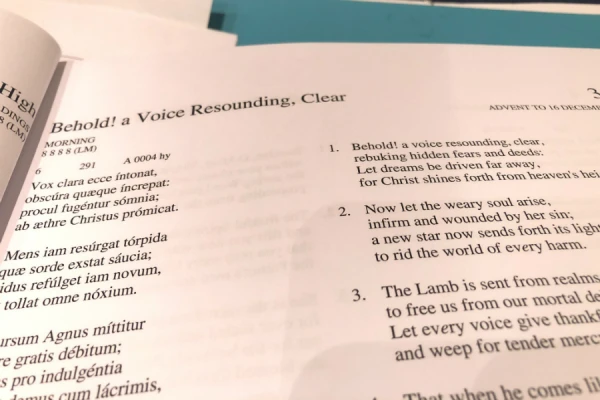
Baltimore, Md., Nov 12, 2019 / 03:01 pm (CNA).- The Latin rite bishops of the US voted overwhelmingly Tuesday morning to approve the International Commission on English in the Liturgy gray book translation of the hymns of the Liturgy of the Hours.

The Nov. 12 vote was 204 in favor, and five against.

Bishop Daniel Flores of Brownsville tweeted that “the translation of the Latin hymnody in the editio typica of the Liturgy of the Hours is a tremendous contribution to the liturgical heritage. The theological insight and aesthetic of the Latin hymns will have an English voice into the future; a work of theological transmission.”

But before the vote, the Fall General Assembly was treated to a concert performance in which the hymn translations were sung for the bishops.

The choir, which was directed by Adam Bartlett of Denver, consisted of Fellowship of Catholic University Students missionaries who live in the Baltimore area, as well as music students from the Catholic University of America. The choir sang the opening verse of the hymns, and were then joined by the bishops.

Bartlett told CNA that the choir had only just met up and rehearsed Tuesday morning before performing before the bishops. He knew some of the singers through his work with FOCUS, and he has directed the choir that performed at the organization’s national conference for the past four years.

Before ICEL did this translation, the vast majority the hymns that were printed in the English edition of the Liturgy of the Hours were translations of those found in the editio typica.

“What’s unique about this translation is that the hymns of the Latin typical edition are actually being translated, which didn’t happen the first time around,” said Bartlett.

“So we have hymns from St. Ambrose, Gregory the Great, you know, all of the great hymn writers … that are being translated and also paired with chant tunes that come from our rich tradition. In addition, of course, to modern melodies that they can be sung with,” he added. He said these translations created “great utility” as they could be sung with different tunes.

Bartlett said he found the updated hymns to be “absolutely gorgeous” and “so rich with theological imagery.” He thinks that these hymns are going to “make a really remarkable contribution to the musical life of the Church.”

“These are our hymns as Catholics,” he said. “These are the ones that come from the liturgy itself, and are put in the place where they ought to be sung, which is the Liturgy of the Hours. But I think that’s probably going to have an impact on the hymns that we sing at Mass as well.”

Valeria Lamarra, a chorister who sang on Tuesday, got involved with the ICEL hymn project through her school’s campus ministry. She had never met anyone she performed with before Tuesday morning.

“We had half an hour to practice, before getting up in front of 200 bishops,” said Lamarra. “It feels like a huge victory that the changes passed.”

[…]

No Picture
News Briefs

Bishop Barron on how to reach out to the ‘nones’

November 12, 2019 CNA Daily News 5

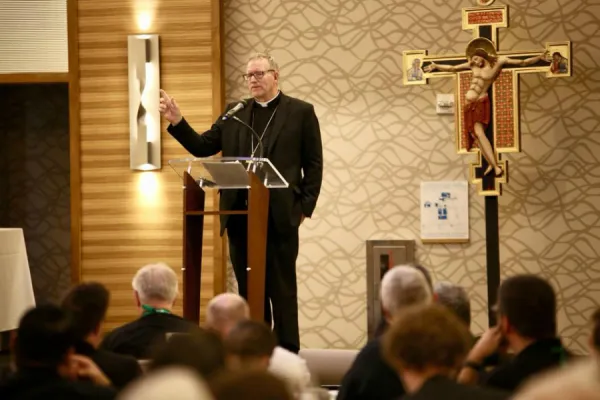
Baltimore, Md., Nov 12, 2019 / 02:38 pm (CNA).- Bishop Robert Barron, auxiliary bishop of Los Angeles and chairman of the US bishop’ committee on evangelization on Monday outlining five paths Church leaders should take to re-energize the religiously unaffiliated.

Barron’s Nov. 11 presentation was on the opening day of the USCCB’s Fall General Assembly, held in Baltimore. His presentation opened with a trailer for a new video that fully expands on how better to reach the religiously unaffiliated.

To better engage people who are not affiliated with any religion or who may be fallen-away Catholics, Barron said that the transcendentals – truth, goodness, and beauty – must be communicated to young people in order to pique their interest in religion. Barron presented five strategies and techniques that can be deployed in order to communicate these concepts to young people and the religiously unaffiliated.

These strategies highlight the Church’s teachings on justice, her beauty, her intellectualism, her missionary mission, as well as encouraging “creative use of the new media.”

Young people, said Barron, do not respond well to some of Catholicism’s teachings – particularly those on sex. What they do seem to appreciate, however, is the Church’s teachings on social justice. Barron suggested that it could be effective to lead with the Church’s teachings on social justice, referring to this as the “path of justice.”

“We have a very powerful tradition around doing the works of justice. And young people like that. They get it,” said Barron. He cited figures such as Dorothy Day, Thomas Merton, and St. Teresa of Calcutta as figures who have lived out Church teachings of social justice who should be held up as examples to the young people of today.

“We know this tradition. We should propagate it,” he said.

Barron said it was important to flex the beauty of the Church to young people, in what he called “Via Pulchritudinis,” or “The Way of Beauty.”

This beauty, said Barron, extends to more than just physical church buildings. There must also be beauty present in liturgies, as well as in things such as websites – where young people may first encounter their local parish. Barron stressed the importance of having a parish having a solid online presence, as well as engaging Catholic artists and writers and promoting their work.

“Beauty,” said Barron “is a great path to follow.”

Shifting gears to what he called the “intellectual path,” Barron was critical in how he believes the faith was currently being pitched to young people.

“We have to stop dumbing down the faith,” he said. He said there has been two generations of a “pastoral disaster” of bad formation, where key tenets of the faith were not effectively taught to young people.

This failure, said Barron, has led to people being unable to properly answer the tough questions that may be asked. When these questions go unanswered, said Barron, people may abandon faith altogether.

Despite what Barron called a “smart tradition” of Catholicism, he said it has not been properly articulated to young people through catechesis. He stressed the need for Catholic schools to better prepare their students so they are fully equipped to enter the next stage of life being able to properly defend the faith and answer those tough questions.

Next, Barron detailed his belief that it would be beneficial to “turn every parish into a missionary society,” to seek to better evangelize with young people and the religiously unaffiliated.

Barron said there must be “a dialogue with our priests and our people” regarding evangelization. He called for a change in mindset, and said that all parishes should be reaching out to the community with evangelization and mission work in mind. Parishes should “knock down the walls,” said Barron, and interact with the surrounding area.

“The young people aren’t going to come to us,” said Barron. “We have to go out to them.”

To properly execute these various techniques and strategies, Barron said priests, bishops, and parishes must embrace a “creative use of new media,” namely, social media platforms such as Reddit, Twitter, YouTube, and Facebook.

Social media is the “prime tool” to reach the young people, said Barron. He noted that young people are easily reached through social media, which are platforms that did not exist even a decade ago. The Church needs to embrace social media, which are platforms that can easily and simply reach large amounts of people, in order to reach into the world of young people, said Barron.

“It’s a tool that we can and should use to reach out to this world,” said Barron. He said that social media has a “sticky” quality about it that can draw in a user to continue to consume content. He cited an example of someone who came to embrace Catholicism after finding Barron’s videos regarding Bob Dylan and religion, which led to the person watching more and more videos on the Church.

The Church, said Barron, must invest in this, as well as hire “really good people” to work on social media.

After all, said the bishop, “young people live” online, and they must be reached where they can be found.

“Now we want to get them to parishes,” he said, “but as a first step, I think that’s one way to do it.”

[…]