No Picture
News Briefs

Argentina bishops: Abortion vote shows we have work to do
June 17, 2018 CNA Daily News 1

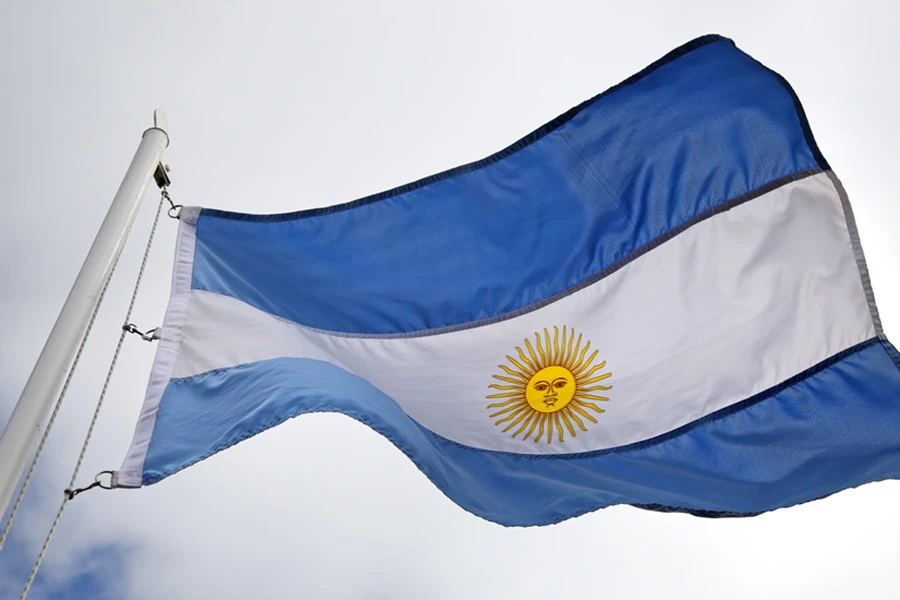
Buenos Aires, Argentina, Jun 17, 2018 / 04:13 pm (CNA/EWTN News).- The bishops of Argentina said that this week’s vote in the House of Representatives to legalize abortion shows the shortcomings of both the Church and society in accompanying women and educating people.

In a statement, the bishops said the vote calls them to recognize the “weaknesses in our pastoral efforts: comprehensive sex education in our educational institutions, a fuller recognition of the common dignity of women and men, and the accompaniment of women at risk for abortion or who have gone through that trauma.”

“These are all calls from reality that call us to a response as a Church,” they said.

By a vote of 129 to 125 with one abstention, Argentina’s House of Representatives passed a bill on Thursday that would legalize abortion through 14 weeks of pregnancy.

The bill will now be sent to the Senate, and then to President Mauricio Macri, who has encouraged “responsible” debate over the topic and said that he personally opposes the legislation but will not veto it if Congress approves it.

The current law in Argentina prohibits abortion, except when the mother’s life or health is determined to be in danger, or in cases of rape.

If passed, the bill would allow would allow abortion for any reason up to the 14th week of gestation. Minors under 16 could get an abortion without having to inform their parents.

Health care workers under the bill could be eligible for conscience-based objections to participating in an abortion if they make such a request in advance “individually and in writing” to the director of their medical center. Institutions and health care facilities as a whole would not be allowed to conscientiously object to abortion.

The Argentine bishops stressed the need for dialogue and efforts “to seek new and creative solutions so that no woman has to go for an abortion.” They pointed to the need to address the challenges facing many women experiencing unplanned pregnancies, such as poverty, social marginalization and gender violence.

Unidad Provida (Pro-Life Unity), an Argentine network representing some 100 pro-life organizations, echoed the need to address challenges facing women rather than offer abortion as a solution.

With the passage of the abortion bill in the House, the group said, “we are dangerously approaching the establishment of a throwaway policy which allows the systematic elimination of persons, without solving maternal mortality or other profound problems that harm women.”

The network charged that the House vote “took place in a context overshadowed by disinformation campaigns, political pressures and economic interests which undoubtedly influenced the vote of our representatives.”

“False figures, expressions and gimmicky slogans have been thrown around, far removed from reality… [This] blinds us from understanding the magnitude of what we are debating, which is nothing more than institutionalizing violence against women. In each abortion an innocent boy or girl dies, and a woman is destroyed,” the group said.

As debate moves to the Senate, Pro-Life Unity voiced hope, saying that the heavily-attended marches for life throughout the country show that “the Argentine people have become aware of what is at stake.”

The network renewed its commitment to work “with even greater enthusiasm, offering our representatives all our support.”
[…]

No Picture
News Briefs

Papal investigators meet with laity, priests and religious of Osorno

June 15, 2018 CNA Daily News 1

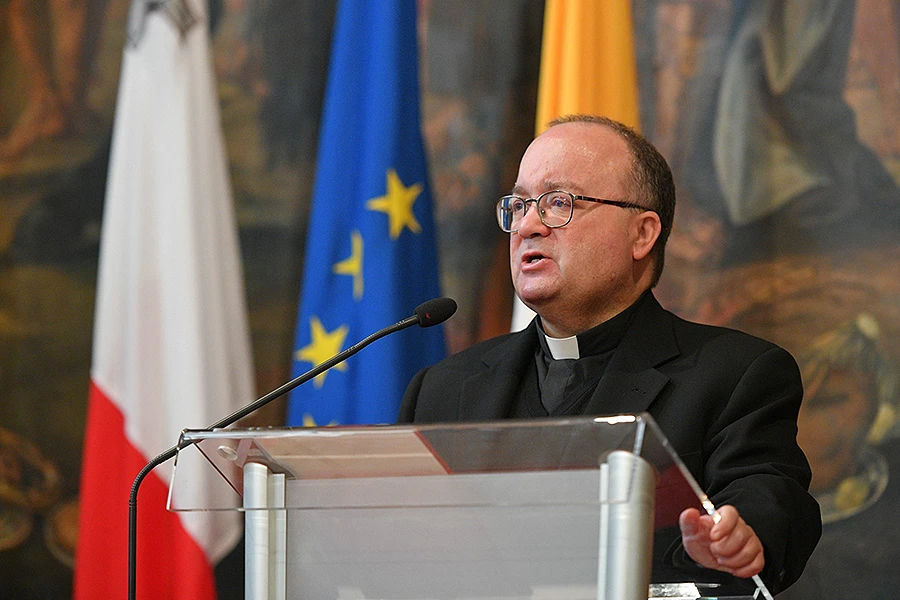
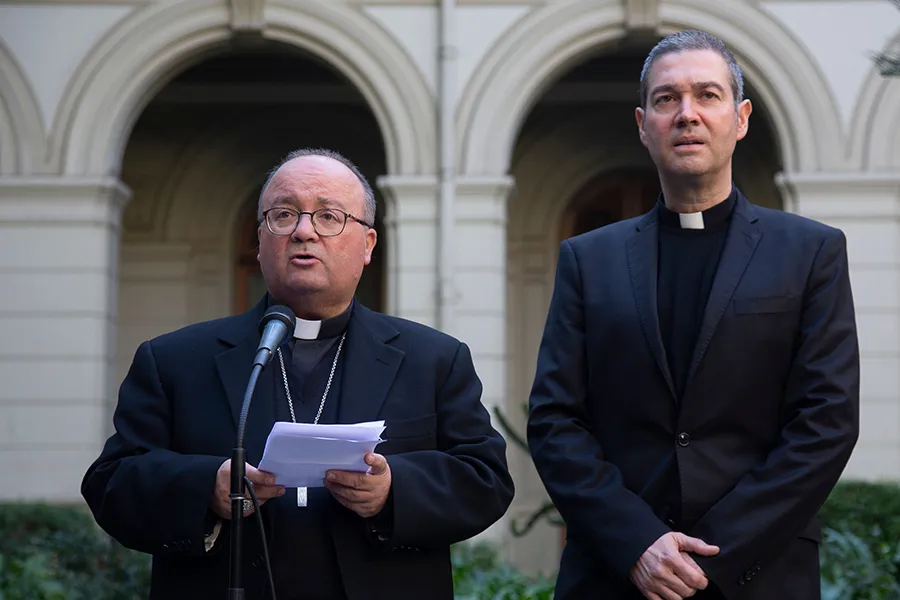
Osorno, Chile, Jun 15, 2018 / 02:51 pm (CNA/EWTN News).- As part of their special mission to help bring healing to the troubled Chilean diocese of Osorno, Archbishop Charles Scicluna and Msgr. Jordi Bertomeu are holding several pastoral meetings this week which they say are aimed at listening.

Speaking to Chilean media at the airport after landing in Osorno, Scicluna said they came “to convey the special closeness of the pope to the beloved people of Osorno. We are going to have a lot of discussion and will listen to our brothers, which is the most important [task] for us.”

Similarly, Bertomeu said they are “happy to be here in Osorno,” and voiced hope that they would be able “to communicate the Holy Father’s request for forgiveness in peace, in concord and in harmony.”

Scicluna, Archbishop of Malta and the Vatican’s former top prosecutor on cases of clerical abuse, is currently in Osorno with Bertomeu, an official of the Congregation for the Doctrine of the Faith, for a June 12-19 pastoral mission to the Chilean Dioceses of Osorno and Santiago in order to advance “the process of healing and reparation for victims of abuse” in Chile.

After spending two days in Santiago, in which they led a day of formation on the guidelines to be followed in investigations into sexual abuse in the Church, the pair arrived to Osorno June 14, where they will stay until June 17, and will hold a number of meetings with different communities in the diocese.

Immediately after landing in Osorno Thursday, Scicluna and Bertomeu held meetings with two groups of local Catholics – the “Catholic Faithful of Osorno” and a group of lay men and women from the diocese.

On Friday the pair met with clergy from Osorno, including priests and deacons, as well as the communities of Santa Rosa Parish and the Parish of the Holy Spirit.

They will meet with another parish community Saturday, and that afternoon will speak with religious men and women from Osorno. The day will close with a second encounter at a parish, after which there will be time for adoration.

On Sunday, Scicluna and Bertomeu’s last day in Osorno before heading back to Santiago, they will celebrate Mass in the Cathedral of San Mateo, after which they will meet with all parish communities in the diocese to pray for peace and reconcilation.

Scicluna and Bertomeu will then go back to Santiago for two days before returning to Rome June 19.

Osorno has been at the center of the Chilean clerical abuse crisis ever since Pope Francis’ 2015 appointment of Juan Barros Madrid as the diocese’s bishop – a move that was met with heavy opposition due to accusations he had covered up the crimes of notorious Chilean abuser, Fr. Fernando Karadima.

Francis had initially defended Barros, saying he believed the accusations against him were “calumny” during a visit to Chile in January. However, after new evidence was presented and news of old evidence resurfaced following his trip, the pope in February sent Scicluna and Bertomeu to Chile to investigate, resulting a 2,300-page report on the crisis which prompted the pope to pen a letter to Chilean bishops in April saying he had made “serious errors” in judging the case.

Since then, Pope Francis has met with all Chilean bishops and two groups of Chilean abuse survivors at the Vatican.

On Monday the Vatican announced that Pope Francis has accepted Barros’ resignation and that of two other Chilean bishops. Every active bishop in Chile had submitted his resignation at the close of a May 15-17 meeting between the pontiff and the country’s bishops, during which Francis chastised them for systematic cover-up.

Scicluna and Bertomeu, whose current visit to Santiago and Osorno coincided with the news of Barros’ resignation, have from the beginning stressed that they have come to ask for forgiveness on behalf of the pope, to provide formation on how to respond to abuse, and to listen.

In a June 13 press conference before heading to Osorno, Scicluna said that “to recognize and admit the whole truth, with all of its painful repercussions and consequences, is the point of departure for an authentic healing, both for the victim and the abuser. These brothers and sisters deserve our special attention and assistance.”

He also defended the papal nuncio to Chile, Archbishop Ivo Scapolo, who has been accused of inaction when presented with abuse allegations, saying “we have a wonderful collaboration with the nuncio.”

In comments to Chilean media after landing in Osorno, Bertomeu backed Scicluna’s defense of Scapolo, saying “the nuncio has a very complicated role, because he has a role as a representative of the Holy Father before the Chilean state and then there are also actions which can also be easily misinterpreted,” La Cooperativa reports.

“I myself am aware that in any moment of the day I can do something which can be misinterpreted, so I think that the procedures of justice must be respected before condemning someone and one must be a little more sure,” he said, adding that “until now the nuncio has acted correctly.”


[…]

No Picture
News Briefs

Papal investigators meet with laity, priests and religious of Osorno

June 15, 2018 CNA Daily News 1

Osorno, Chile, Jun 15, 2018 / 02:51 pm (CNA/EWTN News).- As part of their special mission to help bring healing to the troubled Chilean diocese of Osorno, Archbishop Charles Scicluna and Msgr. Jordi Bertomeu are holding several pastoral meetings this week which they say are aimed at listening.

Speaking to Chilean media at the airport after landing in Osorno, Scicluna said they came “to convey the special closeness of the pope to the beloved people of Osorno. We are going to have a lot of discussion and will listen to our brothers, which is the most important [task] for us.”

Similarly, Bertomeu said they are “happy to be here in Osorno,” and voiced hope that they would be able “to communicate the Holy Father’s request for forgiveness in peace, in concord and in harmony.”

Scicluna, Archbishop of Malta and the Vatican’s former top prosecutor on cases of clerical abuse, is currently in Osorno with Bertomeu, an official of the Congregation for the Doctrine of the Faith, for a June 12-19 pastoral mission to the Chilean Dioceses of Osorno and Santiago in order to advance “the process of healing and reparation for victims of abuse” in Chile.

After spending two days in Santiago, in which they led a day of formation on the guidelines to be followed in investigations into sexual abuse in the Church, the pair arrived to Osorno June 14, where they will stay until June 17, and will hold a number of meetings with different communities in the diocese.

Immediately after landing in Osorno Thursday, Scicluna and Bertomeu held meetings with two groups of local Catholics – the “Catholic Faithful of Osorno” and a group of lay men and women from the diocese.

On Friday the pair met with clergy from Osorno, including priests and deacons, as well as the communities of Santa Rosa Parish and the Parish of the Holy Spirit.

They will meet with another parish community Saturday, and that afternoon will speak with religious men and women from Osorno. The day will close with a second encounter at a parish, after which there will be time for adoration.

On Sunday, Scicluna and Bertomeu’s last day in Osorno before heading back to Santiago, they will celebrate Mass in the Cathedral of San Mateo, after which they will meet with all parish communities in the diocese to pray for peace and reconcilation.

Scicluna and Bertomeu will then go back to Santiago for two days before returning to Rome June 19.

Osorno has been at the center of the Chilean clerical abuse crisis ever since Pope Francis’ 2015 appointment of Juan Barros Madrid as the diocese’s bishop – a move that was met with heavy opposition due to accusations he had covered up the crimes of notorious Chilean abuser, Fr. Fernando Karadima.

Francis had initially defended Barros, saying he believed the accusations against him were “calumny” during a visit to Chile in January. However, after new evidence was presented and news of old evidence resurfaced following his trip, the pope in February sent Scicluna and Bertomeu to Chile to investigate, resulting a 2,300-page report on the crisis which prompted the pope to pen a letter to Chilean bishops in April saying he had made “serious errors” in judging the case.

Since then, Pope Francis has met with all Chilean bishops and two groups of Chilean abuse survivors at the Vatican.

On Monday the Vatican announced that Pope Francis has accepted Barros’ resignation and that of two other Chilean bishops. Every active bishop in Chile had submitted his resignation at the close of a May 15-17 meeting between the pontiff and the country’s bishops, during which Francis chastised them for systematic cover-up.

Scicluna and Bertomeu, whose current visit to Santiago and Osorno coincided with the news of Barros’ resignation, have from the beginning stressed that they have come to ask for forgiveness on behalf of the pope, to provide formation on how to respond to abuse, and to listen.

In a June 13 press conference before heading to Osorno, Scicluna said that “to recognize and admit the whole truth, with all of its painful repercussions and consequences, is the point of departure for an authentic healing, both for the victim and the abuser. These brothers and sisters deserve our special attention and assistance.”

He also defended the papal nuncio to Chile, Archbishop Ivo Scapolo, who has been accused of inaction when presented with abuse allegations, saying “we have a wonderful collaboration with the nuncio.”

In comments to Chilean media after landing in Osorno, Bertomeu backed Scicluna’s defense of Scapolo, saying “the nuncio has a very complicated role, because he has a role as a representative of the Holy Father before the Chilean state and then there are also actions which can also be easily misinterpreted,” La Cooperativa reports.

“I myself am aware that in any moment of the day I can do something which can be misinterpreted, so I think that the procedures of justice must be respected before condemning someone and one must be a little more sure,” he said, adding that “until now the nuncio has acted correctly.”


[…]

No Picture
News Briefs

Abortion bill passes in Argentina’s House of Representatives

June 14, 2018 CNA Daily News 1

Buenos Aires, Argentina, Jun 14, 2018 / 03:26 pm (CNA/EWTN News).- By a vote of 129 to 125 with one abstention, Argentina’s House of Representatives passed a bill on Thursday that would legalize abortion in the first trimester.  

The Argentine Bishops’ Conference voiced sorrow over the passage of the bill.

“As Argentinians, this decision pains us,” said a statement from the Executive Committee and the Committee for the Laity and the Family.

However, they added, “the sorrow over forgetting and excluding the innocents must be transformed into strength and hope to continue fighting for the dignity of every human life.”

The bill passed the House of Representatives in a session lasting more than 20 hours.

It will now be sent to the Senate, and then to President Mauricio Macri, who has encouraged “responsible” debate over the topic and said that he personally opposes the legislation but will not veto it if Congress approves it.

The current law in Argentina prohibits abortion, except when the mother’s life or health is determined to be in danger, or in cases of rape.

The bill passed Thursday, however, would allow abortion on demand up to the 14th week of gestation. Minors under 16 could get an abortion without having to inform their parents.

Health care workers under the bill could be eligible for conscience-based objections to participating in an abortion if they make such a request in advance “individually and in writing” to the director of their medical center. Institutions and health care facilities as a whole would not be allowed to conscientiously object to abortion.

Unidad Provida, (Pro-Life Unity), an Argentine NGO that serves as an umbrella group for some 100 pro-life organizations, called the House passage of the bill “lamentable,” but assured that this outcome “does not intimidate us. It strengthens [our resolve].”

Pro-Life Unity praised “the courage of the representatives who rose up in defense of women and unborn children, raising their voices for those whom others want to silence with their systematic elimination.”

Now, the group said, “the Argentine Senate will have the opportunity to correct this dangerous threat to human rights and to honor the will of the nation’s people.”

“We will only be able to build a more just Argentina by basing ourselves on unwavering respect for everyone’s right to life, especially protecting the most vulnerable,” the pro-life network said.


[…]

No Picture
News Briefs

Police in Chile raid church offices during sex abuse investigation

June 14, 2018 CNA Daily News 0

Rancagua, Chile, Jun 14, 2018 / 02:53 pm (CNA/EWTN News).- Authorities raided Catholic church offices in Chile on Wednesday in an effort to obtain documents relating to the recent sex abuse scandal which has sparked the resignation of more than 30 bishops in the country.

During the surprise raid, police seized documents and files relating to the ongoing clergy abuse investigation from the Santiago Ecclesiastical Court and the bishop’s office in Rancagua in central Chile on June 13. According to the Associated Press, there are 14 priests in the area who have been accused of child sexual abuse.

Jorge Abbott, the attorney general, said the goal of the raid was to seek “cooperation in the investigations we are carrying out with respect to abuses suffered by minors,” and noted he was satisfied with the information they gathered from the search, according to AP.

The archbishop of Santiago, Cardinal Ricardo Ezzati, said church officials “gave the prosecutor all the requested documentation,” saying the church is “available to cooperate with the civilian justice system in all that is required.”

The raid comes just days after Pope Francis accepted the resignation of Bishop Juan Barros from his post in the Chilean diocese of Osorno, after he was accused of covering up the crimes of notorious abuser Fr. Fernando Karadima.

The Holy Father also accepted the resignation of Archbishop Christian Caro Cordero of Puerto Montt and Bishop Gonzalo Duarte Garcia de Cortazar of Valparaiso, who had reached the normal retirement age for bishops. So far, the pope has officially accepted three resignations, although more could follow. All of the country’s active bishops submitted their resignations at the close of a May 15-17 meeting between the pontiff and the country’s bishops, during which Francis chastised them for systematic cover-up.

In January, the Vatican began to investigate the claims of alleged child sexual abuse in Chile, which found that for years, many Chilean bishops had not reported claims of sexual abuse. Before the 2,300-page report on the scandal was published, Pope Francis had originally defended Barros, saying the accusations brought against him were untrue.

Since the investigation, which was headed by Archbishop Charles Scicluna and Msgr. Jordi Bertomeu, Pope Francis has offered his apologies, noting he made “serious mistakes” throughout the investigation due to faulty information. He has met with two rounds of abuse victims to ask for forgiveness.

Archbishop Scicluna and Msgr. Bertomeu, who have been tasked with advancing “the process of healing and reparation for abuse victims,” are visiting Osorno, Chile this week in an effort to express Pope Francis’ solidarity with the local Church and help provide legal assistance to the diocesan curias in handling abuse allegations.


[…]

No Picture
News Briefs

In Osorno, Pope’s investigators offer legal advice on responding to abuse

June 12, 2018 CNA Daily News 2

Osorno, Chile, Jun 12, 2018 / 04:02 pm (CNA/EWTN News).- The archbishop tasked with investigating the Chilean clerical abuse crisis said the main objective of his current visit to the diocese of Osorno is not only to express Pope Francis’ closeness to the local Church, but to help provide the legal structures needed to handle abuse accusations.

“In respect to our pastoral mission, we wish in first place to be a sign of the closeness of the pope to the people and Church of Chile,” Archbishop Charles Scicluna said in a June 12 statement read aloud to the press in Osorno.

Another goal of the visit, he said, is “to provide concrete technical and legal assistance to the diocesan curias of Chile, so that they can give adequate responses to each case of sexual abuse of minors committed by priests or religious.”

The archbishop stressed Francis’ particular closeness to the Diocese of Osorno, saying the visit will be carried out in a spirit “of service and of communion, in a context of prayer, of liturgical celebration and of mutual listening and cordiality.”

Scicluna, who heads the Archdiocese of Malta, is the Vatican’s top authority on sex abuse appeals cases. In addition to his post in Malta, Scicluna in 2015 was tapped by Francis to oversee the team in the Congregation for the Doctrine of the Faith charged with handling appeals filed by clergy accused of abuse. He served as the congregation’s Promoter of Justice for 17 years beginning in 1995, and is widely known for his expertise in the canonical norms governing allegations of sexual abuse.

The archbishop is currently on a June 12-19 pastoral mission to the Chilean Dioceses of Osorno and Santiago with Msgr. Jordi Bertomeu, an official of the Vatican’s doctrine office.

The two men, who have been tasked with advancing “the process of healing and reparation for victims of abuse” in Chile, will spend June 14-17 in the Diocese of Osorno, and the remainder of their time in the Archdiocese of Santiago.

In February the pair was sent to Santiago to investigate the clerical abuse crisis in Chile, which in the beginning largely surrounded accusations of cover-up on the part of Bishop Juan Barros Madrid, who was named to the Osorno diocese in 2015. His appointment was widely opposed, with many accusing the bishop of covering the crimes of notorious Chilean abuser, Fr. Fernando Karadima.

The Vatican announced Monday that Pope Francis has accepted Barros’ resignation and that of two other Chilean bishops. Every active bishop in Chile had submitted his resignation at the close of a May 15-17 meeting between the pontiff and the country’s bishops, during which Francis chastised them for systematic cover-up.

Francis had initially defended Barros, saying he believed the accusations against him were “calumny” during a visit to Chile in January. However, after new evidence was presented and news of old evidence resurfaced following his trip, the pope sent Scicluna and Bertomeu to Chile to investigate, resulting a 2,300 page report on the crisis which prompted the pope to pen a letter to Chilean bishops in April saying he had made “serious errors” in judging the case.

Since then, Pope Francis has met with all Chilean bishops and two groups of Chilean abuse survivors at the Vatican.

In his statement to the press, Scicluna entrusted the Osorno mission to the intercession of Our Lady of Mount Carmel, to the Venerable Servant of God Francisco Valdes Subercaseaux, first bishop of Osorno, and to Chilean Saints Alberto Hurtado and Teresa of the Andes.

Quoting from Pope Francis’ recent letter to Chilean Catholics, Scicluna said the pope’s appeal for them to take action “is not a functional resource or a gesture of goodwill; on the contrary, it is to invoke the anointing that as God’s people they possess.”

“With you, the necessary steps can be made for ecclesial renewal and conversion which healthy and long-term. You can generate the transformation that is so needed. Without you, nothing can be done,” the archbishop said.

Continuing to quote the text, he urged all Chilean Catholics “not to be afraid to get involved and walk impelled by the Spirit in search of a Church which is everyday more synodal, prophetic and hopeful; less abusive because it knows how to put Jesus at the center in the hungry, in the prisoner, in the migrant, in the abused.”

Scicluna closes his statement thanking Chilean Catholics for their welcome and for the opportunity that “in community, we will give in these days of grace to continue rebuilding justice and ecclesial communion in Chile, as Pope Francis has asked us all.”


[…]

No Picture
News Briefs

Pro-lifers in Argentina make final push against abortion bill

June 12, 2018 CNA Daily News 0

Buenos Aires, Argentina, Jun 12, 2018 / 03:11 pm (CNA/EWTN News).- As legislators in Argentina prepare to vote tomorrow on a bill that would legalize first-trimester abortions, pro-life groups have been working adamantly to oppose the legislation.  

Argentina’s House of Representatives will vote June 13 on a bill to allow legal abortion up to 14 weeks of pregnancy. The vote is expected to be close.

If the bill passes in the House, it will be sent to the Senate, and then to President Mauricio Macri, who has encouraged “responsible” debate over the topic and said that he personally opposes the legislation but will not veto it if Congress approves it.

The current law in Argentina prohibits abortion, except when the mother’s life or health is determined to be in danger, or in cases of rape.

On June 5, some 417,000 signatures were presented to Congress in support of the right to life of the unborn. More signatures are being collected, to be delivered on June 12 by children and young people with disabilities. Pro-life groups have emphasized that babies with disabilities will be at risk for abortion if the legislation passes.

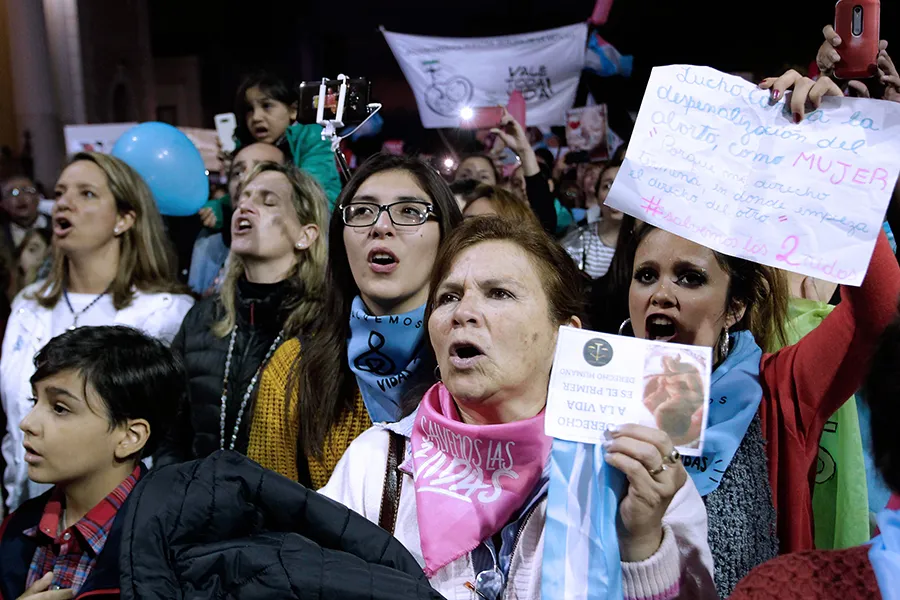
Tens of thousands of people turned out June 10 for pro-life marches in the country’s main cities. A previous march held May 20 drew an estimated 3,600,000 participants in 270 cities.

Unidad Provida, (Pro-Life Unity), an Argentine NGO that serves as an umbrella group for some 100 pro-life organizations, has launched a Twitter campaign for the day of the vote with two hashtags, #Salvemoslas2Vidas (Save Both Lives) and #NoAlAbortoEnArgentina (No to Abortion in Argentina).

“We need the support of our Latin American brothers and sisters in this crucial time for our country…We don’t want this throwaway politics. We believe abortion is never the solution and we are standing up for ‘Let’s Save Both Lives,’” Pro-Life Unity said in a press release.

Other pro-life efforts include the Jericho for Life prayer campaign, which will surround the capitol starting at 5:00 p.m. local time June 12, pray the rosary and conclude with a consecration of Argentina to the Sacred Heart of Jesus and the Immaculate Heart of Mary, led by clergy.

That effort will be followed by a prayer vigil entitled “40 Days for Life Argentina Prays for Both Lives.” The vigil will run from 6:00 p.m. June 12 to 8:00 a.m. June 13, in front of the nation’s capitol building.

Opposition came in even from Iraq, where Argentine missionary Fr. Luis Montes posted an open letter to members of Congress on Facebook, in which he compared abortion to ISIS atrocities, saying that in both cases, victims are “dehumanized.”

Previous efforts to oppose the abortion bill included a day of prayer and fasting called by the Argentine Conference of Bishops on June 7. The bishops also called for a prayer campaign from May 13 to June 3 which was supported by the Argentine Conference of Men and Women Religious.

A column published May 30 in La Nación daily and signed by more than 1,000 doctors argued against the legalization of abortion.

“Far from resolving problems,” the doctors wrote, “abortion is a failure for medicine.”


[…]

No Picture
News Briefs

Church leaders in Nicaragua appeal for unity, peace as crisis continues

June 11, 2018 CNA Daily News 0

Managua, Nicaragua, Jun 11, 2018 / 05:01 pm (ACI Prensa).- As unrest centered on protests of president Daniel Ortega continues unabated in Nicaragua, bishops in the country are calling for unity and peace.

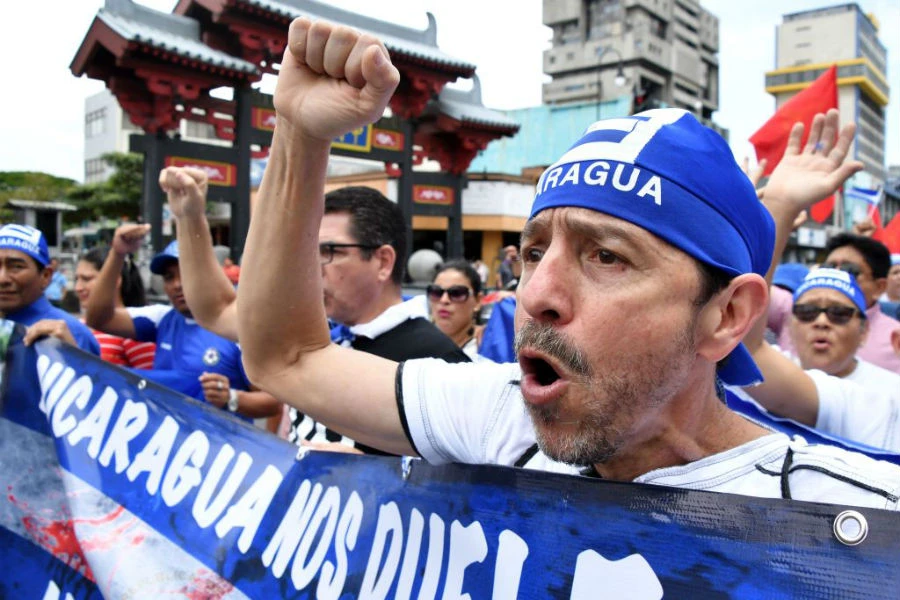
The Inter-American Commission on Human Rights says that at least 127 people have been killed in the protests. Demonstrators have called for freedom of expression, an end to violent repression, and for Ortega to step down from office.

Bishop Silvio José Báez Ortega, Auxiliary Bishop of Managua, called June 11 for a free Nicaragua “without tyrants, or victims, like a great house in which all of us live joyfully, without tears or blood, in liberty and social justice.”

Protests began April 18 after Ortega announced social security and pension reforms. The changes were soon abandoned in the face of widespread, vocal opposition, but protests only intensified after more than 40 protestors were killed by security forces initially.

The Church in Nicaragua was quick to acknowledge the protestors’ complaints, and mediated a short-lived dialogue between the government and protestors.

Barricades and roadblocks are now found throughout the country, and clashes frequently turn lethal.

Bishop Rolando José Álvarez Lagos of Matagalpa exhorted Nicaraguans during his June 10 homily to join “the immense majority” of the population which is asking for an urgent change in the country since “Nicaragua can no longer tolerate this.”

“The people of God must beware the lies that try to divide,” Bishop Álvarez said. “This is the hour for unity in Nicaragua.”

Fr. Vicente Martínez Bermúdez, a priest of the Diocese of Matagalpa, has reported that over the weekend he was detained by a group of 20 hooded men and threatened with death. Another prirest of the Matagalpa diocese was wounded by shrapnel May 15 while trying to separate protestors and security forces, the AP reported.

In Jinotega, Bishop Carlos Enrique Herrera Gutierrez brought the body of a 17-year-old protestor home to his mother June 9.

Bishop Herrera said that he was asked by the national police to intercede during protests the prior evening so that people who were manning barricades would not continue to advance, “and remain peaceful.”

The bishop spoke to the protestors, and “when I left I had reached an agreement that the demonstrators at the barricades would advance no further,” he stated.

But minutes later “they reported to me giving evidence that paramilitary groups controlled by the city government, coming from outside the city, attacked those at the barricades, who remained  peaceful until they were attacked,” Bishop Herrera said.

“In addition the townspeople insisted the riot police opened fire on the civilians who were at the barricades,” he reported.

He spoke to the mayor of Jinotega and the head of the national police, who “denied their involvement in the repressive actions.”

“I was left with no other choice but to personally go out (accompanied by some priests and faithful) at 11 o’clock at night to care for the injured and to transport the body of young Abraham Antonio Castro Jarquín, who sadly died as a result of these confrontations,” he stated.

Bishop Herrera urged demonstrators to “show tolerance and act with respect,” and asked the municipal authorities “not to use violence” because “you will bring on more mourning and an uncontrollable spiral of violence which we will all regret.”

Bishop Herrara asked the faithful to continue to pray for peace, “keep up your petitions and practice mercy with all the needy, especially in emergency situations. We area all responsible to provide assistance in times of crisis, to give a better response to this crisis.”

“I hope that we will all contribute to build peace and stability in our city, where we may have  guarantees to freely express our opinions,” he said.

Nicaragua’s bishops met with Ortega June 7 to discuss the country’s crisis and possible resumption of the suspended national dialogue. The dialogue among the Ortegas, business owners, students, and farmers began May 16 and collapsed May 23.

They issued a statement afterwards conveying to him “the pain and anguish of the people in face of the violence suffered in recent weeks” and to give him “a proposal that brings together the sentiments of many sectors of Nicaraguan society and expresses the strong desire of the vast majority of the population.”

The prelates stated that when the president “has formally responded, we will convene the full session  of the national dialogue to assess that response and therefore the feasibility of continuing with the same national dialogue.”

The dialogue cannot be resume while Nicaraguans continue to be denied the right to demonstrate freely and are “repressed and assasinated”, the bishops stated.

Cardinal Leopoldo José Brenes Solorzano of Managua called on Catholics to pray the rosary daily for peace in the country.

The Nicaraguan government has suggested that protestors are killing their own supporters so as to destabilize Ortega’s administration.

The pension reforms which triggered the unrest were modest, but protests quickly turned to Ortega’s authoritarian bent.

Ortega has been president of Nicaragua since 2007, and oversaw the abolition of presidential term limits in 2014.

He was a leader in the Sandinista National Liberation Front, which had ousted the Somoza dictatorship in 1979 and fought US-backed right-wing counterrevolutionaries during the 1980s. Ortega was also leader of Nicaragua from 1979 to 1990.


This article was originally published by our sister agency, ACI Prensa. It has been translated and adapted by CNA.

[…]