No Picture
News Briefs

Chilean diocese opens investigation of priest accused of sexual abuse
June 8, 2018 CNA Daily News 0

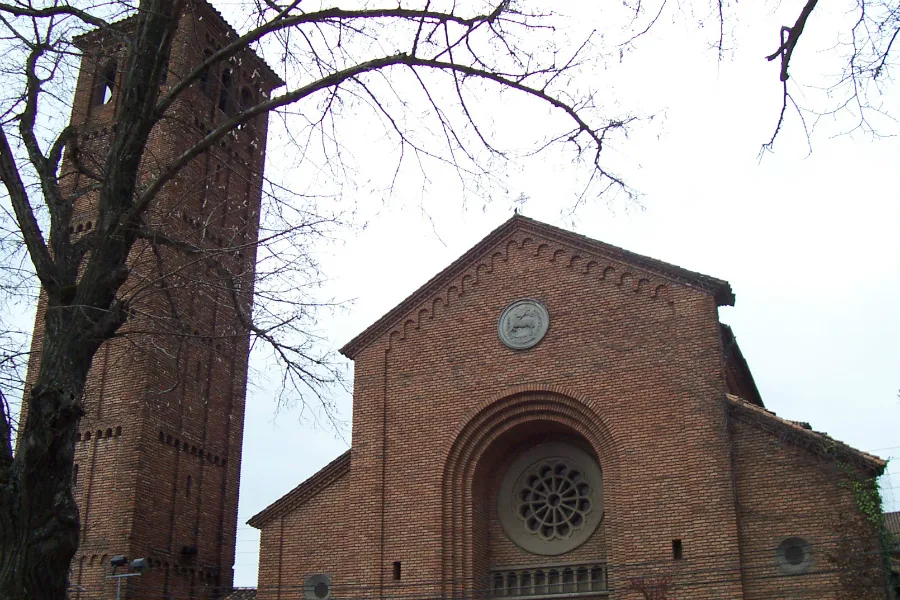
Linares, Chile, Jun 8, 2018 / 02:22 pm (ACI Prensa).- The Diocese of Linares confirmed Wednesday the receipt of a complaint of alleged sexual abuse by Fr.  Germán Cáceres Fuentes.

The diocese explained in a June 6 statement that a preliminary investigation has begun and Fr. Cáceres has been removed from ministry until the decision of the Congregation for the Doctrine of the Faith is obtained.

It was also determined that the priest has the obligation to remain in the diocese and be available when required “within the next 48 hours for any proceedings” of the investigation.

They also requested the “cooperation of everyone who could contribute pertinent or relevant information in this investigation.”

“Bishop Tomislav Koljatic and the diocesan Church of Linares reiterate their total commitment to determining the truth and total rejection of any kind of abuse against minors and/or vulnerable persons. It also thus reaffirms its commitment to the support and accompaniment of the victims. And it asks the Lord that this pain and suffering be the source of the transformation and healing that our Church and communities need,” the statement concluded.

Fr. Cáceres has been serving as pastor of Santa Rosa parish in Melozal, fewer than 20 miles northwest of Linares.

On June 5, the Linares diocese issued a statement on the canonical situation of Fr. Ramón Iturra Muñoz, accused of sexually abusing minors and whose case file was sent to the Holy See in July 2017.

The Congregation for the Doctrine of the Faith established “the plausibility of said accusation” and requested that the investigation be widened to other parishes where the priest had previously been assigned.

“Given this determination, another precautionary measure is added which is the prohibition of publicly exercising the priestly ministry until the final verdict,” the diocese stated.

Clerical sex abuse in Chile has been in the spotlight since Pope Francis’ visit to the country in January.

The pope was asked about  Bishop Juan de la Cruz Barros Madrid, whom he appointed Bishop of Osorno in 2015. Bishop Barros has been accused of covering up abuse committed by  Fr. Fernando Karadima, who was convicted by the Congregation for the Doctrine of the Faith in 2011 of abusing minors, and sentenced to a life of prayer and penance.

Pope Francis initially defended Bishop Barros, saying he had received no evidence of the bishop’s guilt, and called accusations against him “calumny” during his January trip to Chile. He later relented, and sent Archbishop Charles Scicluna of Malta to investigate the situation in the country.

After receiving Archbishop Scicluna’s report, Francis apologized, said he had been seriously mistaken, and asked to meet the country’s bishops and more outspoken survivors in person.

He met with Chile’s bishops May 15-17. As a result, each of them tendered letters of resignation, which Pope Francis has yet to accept or reject. The pope also gave the bishops a lettter chastising them for systemic cover-up of clerical abuse and calling them to institute deep changes.

The pope has twice met at the Vatican with groups of Fr. Karadima’s victims, in April and in June.


This article was originally published by our sister agency, ACI Prensa. It has been translated and adapted by CNA.
[…]

No Picture
News Briefs

More than 400,000 pro-life signatures presented to Argentine legislature

June 7, 2018 CNA Daily News 0

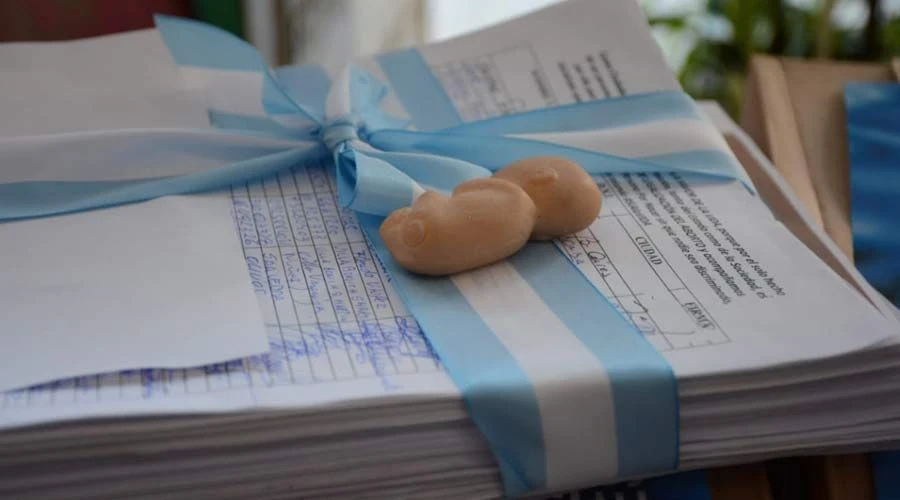
Buenos Aires, Argentina, Jun 7, 2018 / 07:00 pm (CNA).- In the run-up to a Congressional vote on a pending abortion bill, 417,000 signatures expressing support for the unborn and their mothers were presented June 5 to Argentina’s legislature.

The bill, which would legalize elective abortion in the country, will be voted on in the House of Representatives on June 13.

The signatures were delivered by representatives of pro-life organizations to Congresswomen Gabriela Burgos and Carmen Polledo, who chair the  committees on Criminal and Healthcare Legislation, respectively.

Speaking to ACI Prensa, CNA’s Spanish language sister agency, the president of Más Vida, Raul Magnasco, said that the signatures are “one more proof of the clear commitment that the people of Argentina have in defense of life and their rejection of legalized abortion.”

“Thousands more signatures have come and are coming in up to today from different provinces. [The response] has filled with joy all of us who are committed to life,” he added.

In addition to political action, Catholics have organized prayer campaigns in defense the lives of unborn babies and their mothers.

A “Jericho for Life” prayer campaign began June 6,  inspired by the Old Testament story of the walls of Jericho falling down in response to prayer.

In the scriptural account, Joshua’s army, led by priests carrying the Ark of the Covenant, circled the city until its walls fell on the seventh day with the sounding of the trumpets.

Jericho for Life invites Catholics to adore the Blessed Sacrament, or recite the rosary, magnificat, or other brief prayers to the Blessed Virgin Mary, to read Scripture, and to ask for the intercession of Argentina’s patron saints.

The prayer campaign will conclude June 12, the day before the vote, with a Jericho for Life prayer rally surrounding the capitol building.

The Argentine Conference of Bishops encouraged participation in a day of prayer and fasting June 7.

Pro-life marches are scheduled in 16 cities and are sponsored by Unidad Provida (Pro-life Unity) and umbrella group for 100 pro-life organizations.

The March for Life held May 20 drew 3,600,000 participants in 270 cities.

On June 13, the day of the vote on the abortion bill, a demonstration will also be held in front of the capitol building in Buenos Aires at 6:00 pm local time.

In yet another effort, a new documentary “9 Enuentros para Vivir o Abortar” will be shown at the Argentine capitol building June 7. The film interviews politicians, doctors, mothers of young women who died from an abortion, and others with both pro-life and pro-abortion views.


This article was originally published by our sister agency, ACI Prensa. It has been translated and adapted by CNA.
[…]

No Picture
News Briefs

Catholic churches offer relief after Guatemala’s deadly volcano eruption

June 5, 2018 CNA Daily News 1

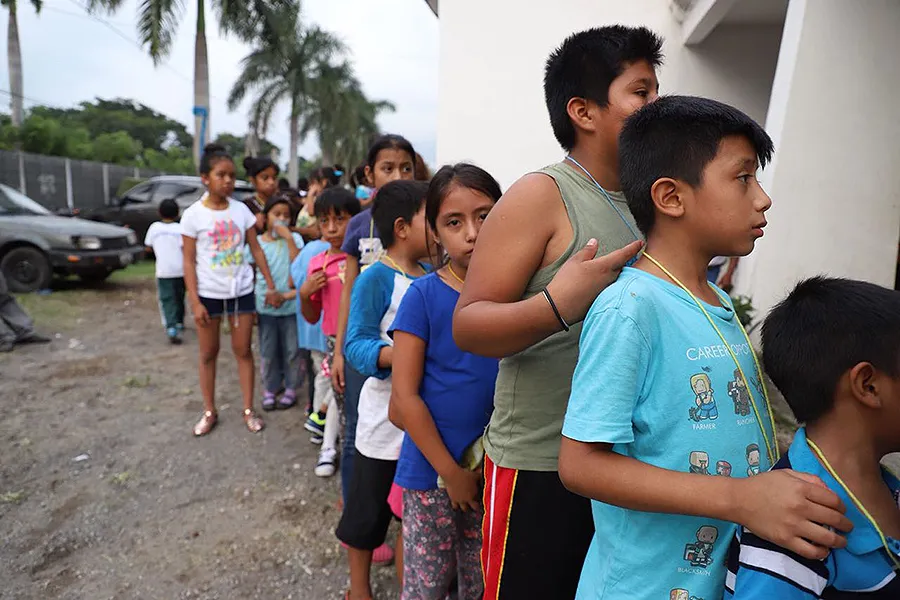
Escuintla, Guatemala, Jun 5, 2018 / 04:59 pm (CNA/EWTN News).- Three Catholic churches in Guatemala have opened their doors to shelter victims of Sunday’s sudden volcano eruption that devastated villages and left at least 70 people dead.

“What I’ve seen so far is complete destruction. Hundreds of people have lost everything,” said Luis Rolando Sanchez, Catholic Relief Services’ emergency coordinator for Latin America.

Both Catholic Relief Services (CRS) and Caritas Escuintla have staff on the ground in Guatemala providing hot meals, food, water, and other basic necessities to the displaced, as rescuers continue to search for survivors in villages buried in ash.

“The Church sprang into action immediately by opening shelters and getting lifesaving relief to those who need it. But there is a lot of work to do with so many people impacted by this disaster,” Sanchez continued. Local authorities estimate that nearly 2 million people were affected by the Volcan de Fuego or fire volcano.

All three of the church shelters are located in Escuintla, Guatemala, near ground-zero for the volcano, whose eruption spewed ash clouds nearly 33,000 feet into the air. The Escuintla district, along with Chimaltenango and Sacatepéquez, are among the areas most affected by the blast, according to CRS.

Kim Pozniak, Catholic Relief Services’ communications coordinator, told CNA that their staff on the ground in Guatemala heard many tragic stories as more than 100 people arrived at one of the church shelters in Escuintla on June 4.

One woman, Julia, could barely hold back tears as she explained to Catholic Relief Services staff that she had lost her daughter, granddaughter, and son-in-law.

Julia had stayed behind with her three granddaughters while their parents left the house to go sell pineapples, the family’s source of livelihood, when the volcano erupted, burying the parents under lava.

“Everyone has lost someone,” said Pozniak, “People are traumatized.” She added that more volunteers from other parts of Guatemala are beginning to arrive at the shelters to provide some trauma relief.

“Despite the unimaginable damage and heartbreak, I have hope that these communities will recover. People in Guatemala are nothing if not resilient,” said Sanchez.

“I encourage U.S. Catholics to pray for their brothers and sisters who are suffering through this terrible ordeal,” he continued.

Pope Francis said he was “deeply distressed in hearing the sad news of the violent eruption” in a telegram on June 5 and offered his prayers for the victims and their families.

Geologist Trevor Nace explained that the Volcan de Fuego’s eruption of felsic lava was much more sudden, vicious, and deadly than Hawaii’s Kilauea volcano, which has been slowly erupting for the past month.

“Combined with the steep slopes and high rainfall in Guatemala, mud, and rock is easily swept down slopes only to destroy more homes and threaten more lives,” Nace said in an article on Forbes.

Guatemalans have been warned to avoid waterways, where ash and water can combine to create mudslides that can flow up to 120 miles per hour.

[…]

No Picture
News Briefs

Priest condemns latest attack on Jesuit university in Nicaragua as ‘cowardly’

May 31, 2018 CNA Daily News 1

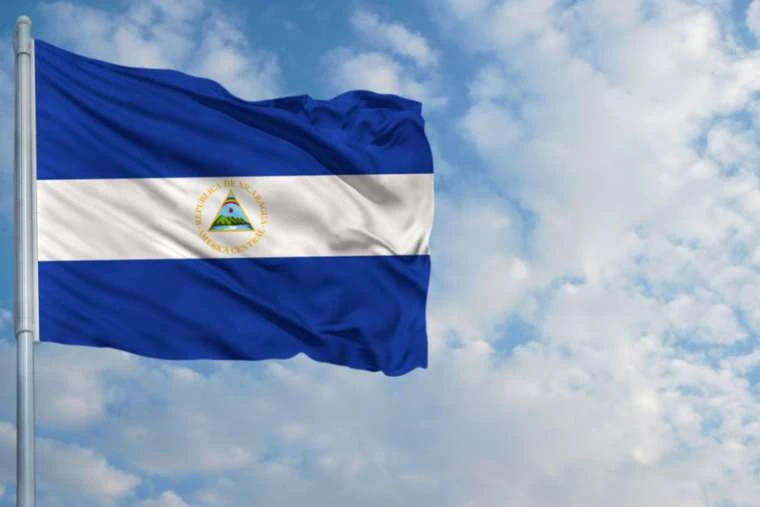
Managua, Nicaragua, May 31, 2018 / 05:17 pm (CNA/EWTN News).- A mortar attack on a Jesuit university in Nicaragua last weekend resulted in no deaths or injuries, and has been condemned by the school’s rector as “cowardly.”

On May 27, three masked people fired mortar at two guards standing at the main gate of the University of Central America, located in the country’s capital of Managua.

Fr. José Alberto Idiáquez, the rector of the university, denounced “…this cowardly night attack by para-police forces that, protected by the impunity guaranteed by the current (government), have been using the hours of the night to intimidate and kill innocent citizens in the neighborhoods of the capital and other cities.”

“Although they did not succeed in wounding or killing any of our guards, that was the intent, because of the charge of gunpowder used and because of the closeness of the shot,” he added.

The attack is the latest in a spate of violence and civil unrest in the country, which began April 18 after President Daniel Ortega announced social security and pension reforms. The changes were soon abandoned in the face of widespread, vocal opposition, but protests have only intensified after more than 40 protesters were killed by security forces.

In his statement, Idiaquez said that this is the second time the university has been under attack, noting the destruction of the school’s entrance during the April 18 protests.

The university, which has become a center of student-led anti-government activism, suspended all academic and administrative activities in the days following the latest attack.

Protesters have called for freedom of expression, an end to violent repression, and for Ortega to step down from office.

The Inter-American Commission on Human Rights has also expressed human rights concerns regarding the violence and visited Nicaragua May 17-21 to document human rights violations in four cities and to issue recommendations.

The commission found that since protests began, at least 76 have died and 868 have been injured, including a priest of the Diocese of Matagalpa who was wounded by shrapnel May 15 while trying to separate protesters and security forces, according to the AP.

The Church in the country has been quick to acknowledge the protestors’ complaints and to attempt to mediate peace with the government.

On May 22, the Catholic bishops of the country encouraged Ortega to create “a mechanism of international investigation of the acts of violence which occurred, with guarantees of autonomy and independence to ensure the right to the truth and duly identify those responsible.”

In their letter to Ortega, the bishops stressed the importance of continued dialogues to work towards peace.

On the same day that the letter was issued, the bishop’s conference also announced that bishops and priests are being discredited by attacks orchestrated by the government and that they have been receiving death threats through “anonymous social media” posts.

On May 23, Cardinal Leopoldo Brenes of Managua announced that peace talks had been suspended indefinitely after reaching an impasse with the government, which refused to discuss an agenda presented by the bishops that included suggested reforms to presidential elections, according to ABC News. However, Brenes said he is hopeful the talks can eventually continue.

Ortega has been president of Nicaragua since 2007, and oversaw the abolition of presidential term limits in 2014.

He was a leader in the Sandinista National Liberation Front, which had ousted the Somoza dictatorship in 1979 and fought US-backed right-wing counterrevolutionaries during the 1980s. Ortega was also leader of Nicaragua from 1979 to 1990.

[…]

No Picture
News Briefs

Church building in Venezuela seized by local government group

May 30, 2018 CNA Daily News 0

Merida, Venezuela, May 30, 2018 / 03:14 pm (ACI Prensa).- A group of people appropriated the facilities of a parish in Venezuela’s Mérida state on Monday afternoon, saying they were acting on behalf of the local government.

The group seized Our Lady of Mount Carmel parish in Ejido, fewer than 10 miles southwest of Mérida, May 28.

Bishop Luis Enrique Rojas Ruiz, Auxiliary Bishop of Mérida, said the group stormed in and tore off the padlocks to the doors that give access to the soccer field and parish halls.

The pastor, Fr. José Juan Flores, prevented them from entering the church and asked their identity. They replied that they were from the city council and they came on behalf of the mayor of Ejido, Simón Pablo Figueroa.

The occupiers immediately asked Fr. Flores to remove his belongings and proceeded to weld shut from the outside the metal doors leading to the soccer field.

Speaking to ACI Prensa, CNA’s Spanish language sister agency, Bishop Rojas explained that once he learned about the incident he decided to send a Whatsapp message about the “frightening and arbitrary” behavior of the group.

“We call on the authorities in charge of this case to answer for physical integrity and safety of  the parish priests as well as that all of the people who are there,” Bishop Rojas’ message reads.

Hours later, Bishop Rojas had a phone conversation with the mayor and invited him to a meeting. However, the meeting has not yet materialized, as the mayor is in Caracas.

Fr. Flores said that an incident of this kind was imminent since the church had been threatened with the seizure of its parish buildings and the priests and faithful had also been threatened.

“They have insulted the faith on many occasions, scratching highly offensive graffiti on the parish buildings. They want to damage the image of the priests and the diocese and so they damage beautiful works of art with expletives and major insults,” Bishop Rojas said.

Lawyers from the archdiocese and the town were to meet May 29 to agree on solutions to end the seizure.


This article was originally published by our sister agency, ACI Prensa. It has been translated and adapted by CNA .

[…]

No Picture
News Briefs

Bolivian cardinal-elect denies rumors of a wife and children

May 29, 2018 CNA Daily News 1

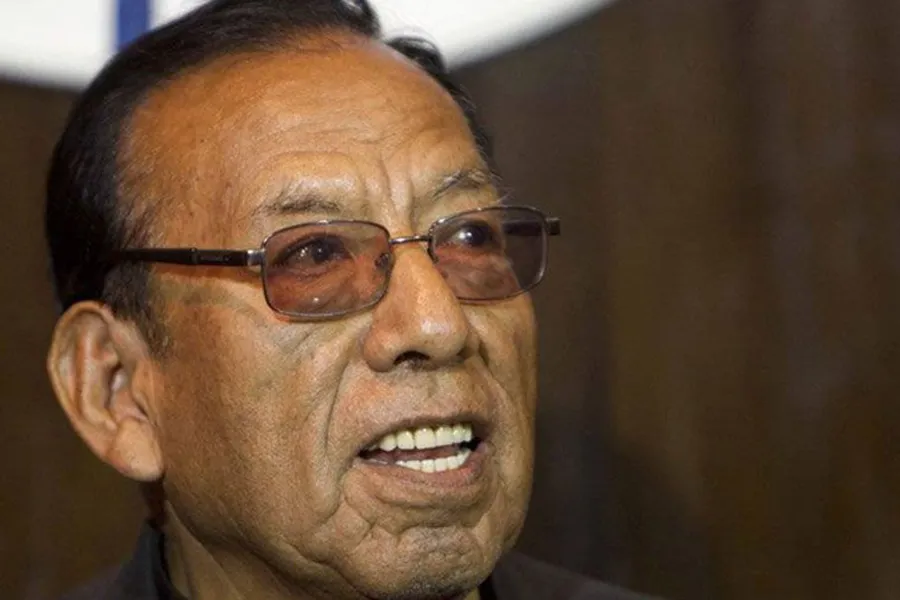
La Paz, Bolivia, May 29, 2018 / 12:25 pm (CNA).- In a statement Tuesday, Bolivian bishop and Cardinal-elect Toribio Ticona strongly denounced rumors that he has a wife and children.

“As a result of the false accusation which is being spread in the media regarding my private life, it is my duty to declare and emphatically make clear that its content does not correspond to the truth,” Bishop Ticona said in a statement released by the Bolivian Bishops’ Conference.

The bishop said he interprets the rumors as an attack not only against himself, but against Pope Francis, who recently chose him to be elevated to the position of cardinal.

“If these accusations persist, I will have no problem filing a libel lawsuit against those promoting or propagating this,” he said.

Ticona said that similar rumors surfaced in 2011, but “ended up being simple calumny.”

“Personally, I am happy that these accusations should come out at this time, in order to definitively close the case,” he added.

Earlier this week, the blog Adelante la Fe reported that “It is a well-known fact that while (Ticona) was serving his office in Corocoro, he was living (as husband and wife) with a lady in Oruro’s chancery. She and her children are proud to be called wife and children of the Patacamaya bishop, as Bishop Toribio Ticona is also known.”

However, in a May 29 article in Italian newspaper Il Messaggero, journalist Franca Giansoldati reported that the Vatican has carried out “deep investigations” of the claims, which found that “nothing is true” regarding the rumors.

The Vatican has not yet responded publicly to the claims.

Earlier this month, Pope Francis announced that he would be holding a June consistory to create 14 new cardinals who express the “universality” of the Church. Francis made particular note of his election of Bishop Ticona along with two other bishops, saying that they “have distinguished themselves for their service to the Church.”

Ticona, 81, is Bishop Emeritus of the Cora Cora Prelature in Bolivia, and has been described as a charismatic figure and an advocate for the poor.  

Upon being named a cardinal by Pope Francis, Ticona said it was “a great surprise” and that he thanked God for the honor.

Ticona was born to a poor Bolivian family in 1937, and worked as a shoe shiner, newspaper vendor and a mayor. Influenced heavily by the Belgian priests at his home parish, Ticona entered San Cristóbal seminary in 1960 and on January 29, 1967 was ordained a priest.

He was named Auxiliary Bishop of  Potosí in 1986, and in 1992 was made the Prelature of Cora Cora in La Paz.

After learning of his election as a cardinal, the Bolivian Bishops’ Conference said that “Bishop Toribio embodies the vocation of a humble priest who serves. Our Church joins in giving thanks to the Lord for this gift.”


[…]

No Picture
News Briefs

Papal agency raises funds to help Christians remain in the Middle East

May 25, 2018 CNA Daily News 1

Ottawa, Canada, May 25, 2018 / 03:32 pm (CNA/EWTN News).- The Catholic Near East Welfare Association in Canada is launching a fundraising campaign to help Christians in the Middle East remain in their homelands.

The fundraising campaign launched May 16 is known as “Christians Can’t Survive Without You”.

“This campaign’s very important purpose is to tell Canadian Catholics that they should care about the presence of Christians in the Middle East, because they are the leaven of peace in the Middle East,” Carl Hétu, CNEWA Canada‘s executive director, told The Catholic Register.

“If we turn our backs on what’s happening in the Middle East, particularly to the Christians of the Middle East, then we’re turning our back on ourselves as Christians,” he added.

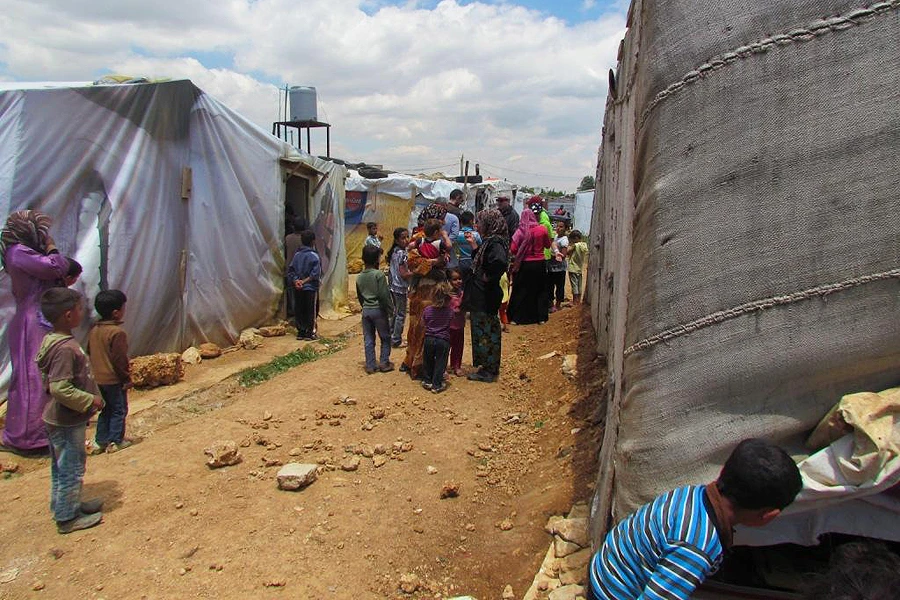
Since the Iraq War which began in 2003, the number of Christians in the Middle East has plummeted. In addition to conflict in Iraq, the Syrian Civil War has also pushed many Christians out, as have economic pressure, discrimination, and persecution.

CNEWA noted that “Over the past 15 years, over 2.5 million Middle East Christians have been forced out of their homes. They desperately need your help.”

“We are one body in Christ united with Christians in the Middle East. Their struggles are our struggles and it is our responsibility to help our brothers and sisters there to keep our faith alive,” the agency stated.

In recent years, CNEWA has worked to set up schools, nurseries, and medical clinics in Iraq to serve Christians who were displaced by the Islamic State. It also supports St. Peter Patriarchal Seminary in Erbil.

CNEWA was founded in 1926 to give pastoral and humanitarian support to the Middle East, Northeast Africa, India, and Eastern Europe. An agency of the Vatican, the group supports the Eastern Catholic Churches.

Archbishop Terrence Prendergast of Ottawa, board president of CNEWA Canada, said that an attack on Middle East Christians “is an attack on the values Christians promote worldwide. To lose Christianity in the region would be a devastating loss.”

Maronite Patriarch of Antioch Bechara Boutros Rai said last year at the In Defense of Christians summit that “The conflicts that have beset the Middle East have driven out millions of busy citizens, including so many Christians, and with their exodus, our region becomes more extreme, more dangerous to the outside world.

Greek Orthodox Patriarch of Antioch John X Yazigi said, “We as Christians in the Middle East: we are going to remain and stay there. We are not strangers in that part of the world: we are people of light and of truth.”

[…]