No Picture
News Briefs

Why Christians believe in resurrection, not reincarnation

April 12, 2020 CNA Daily News 0

Denver, Colo., Apr 12, 2020 / 01:01 pm (CNA).- Every time Christians recite the Apostles’ Creed, they affirm their belief in what will happen to them after death: “’I believe in the resurrection of the body and life everlasting.”

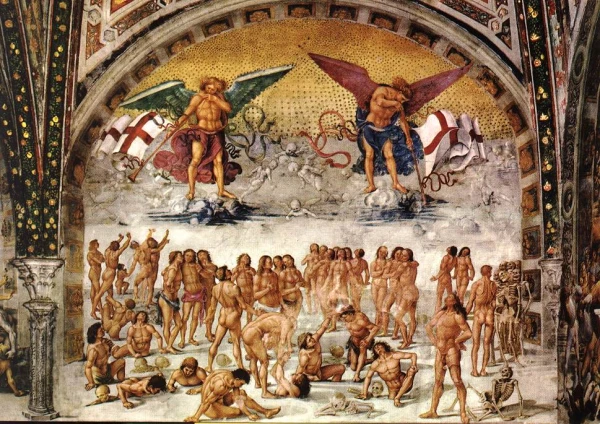
The belief in the resurrection of one’s physical body at the end of time is central to Christian theology, and finds its basis in the resurrection of Christ, who rose in body and soul three days after his passion and death.

But according to a 2018 Pew survey, 29 percent of Christians in the US hold the New Age belief of reincarnation – the belief that when one’s body dies, one’s soul lives on in a new and different body, unrelated to the first.

The percentage of Catholics in the U.S. who said they believe in reincarnation was even higher – 36 percent; just shy of the 38 percent of religiously unaffiliated people who said they believe the same.

However, according to Catholic teaching, belief in anything other than the resurrection of the body is completely incompatible with a Christian theology and anthropology of the human person.

Where did the belief in resurrection come from?

Even before Christ, the belief that the body would rise at the end of time was becoming a more common, though not universally held, belief among certain groups of Jews, such as the Pharisees.

The Sadducees, for example, “were dubious about the authority to be given to the Prophets and other writings…(which included) skepticism about spiritual realities like the soul or even angels,” said Joel Barstad, who serves as Academic Dean and associate professor of theology at Saint John Vianney Theological Seminary in Denver, Colorado.

“From New Testament evidence it would seem they were particularly hostile to the idea of a future resurrection of the dead,” he told CNA.

“The Pharisees on the other hand believed in angels and spiritual souls and the general resurrection of the dead,” he said.

As they became more convinced of the “radical faithfulness of God,” he noted, belief in bodily resurrection took root, paving the way for the acceptance of the resurrection of Christ.

“The resurrection of Jesus from the dead confirmed that belief, but it also gave it a deep and solid foundation,” he said.
 
What does belief in resurrection mean for Christians?
 
According to the Catechism of the Catholic Church: “The ‘resurrection of the flesh’ (the literal formulation of the Apostles’ Creed) means not only that the immortal soul will live on after death, but that even our ‘mortal body’ will come to life again. Belief in the resurrection of the dead has been an essential element of the Christian faith from its beginnings. ‘The confidence of Christians is the resurrection of the dead; believing this we live.’ How can some of you say that there is no resurrection of the dead? But if there is no resurrection of the dead, then Christ has not been raised; if Christ has not been raised, then our preaching is in vain and your faith is in vain…. But in fact Christ has been raised from the dead, the first fruits of those who have fallen asleep.”

The Christian confidence in bodily resurrection comes from Christ himself, and the New Testament promise that salvation comes through follow Christ in everything, including his death and resurrection, Michael Root, a professor of Systematic Theology at The Catholic University of America, told CNA.

“Salvation is unity with Christ, Christ brings the kingdom of God, and that kingdom is realized in the resurrection,” Root said.

There is a great deal of “fuzziness of thinking” regarding death that many Christians hold besides reincarnation, Barstad added, such as believing that after death one dies and goes to heaven and stays there forever, rather than joining with their resurrected body at the end of time.

“The vague notion that something called a soul or a spirit or a shade lingers after death in some kind of place or condition where it can be more or less happy is not Christian,” Barstad said. “A human soul without a body is a tragedy. Think about what a body is to the soul. It is the instrument, the nexus, the node, the vessel through which, by which, in which a soul establishes and sustains contact with reality,” he added.

A body, he said, has concretely experienced everything that a soul has gone through in its lifetime. It is the actual mode through which the soul has related to others. It makes that person who they are – the father of a particular son, or the daughter of a particular mother, the wife of a particular husband, or the friend of a particular person.

“A soul stripped completely of its body is literally nobody. Who cares whether such a nobody lives forever! A Christian is someone who wants to be this somebody…now and after death and unto the ages of ages. But for that to be possible, I’ll need my body resurrected along with the bodies of everyone and everything I have a relationship with,” he said.

“I have to die completely and be dissolved back into the dust from which I came; and then I have to be put back together again in a new kind of life,” he said. “The trouble is I would cease to exist at the midpoint of this process. Someone else has to hold me in being as I pass over from death to new life. Only because Christ loves me am I held in being, not just my soul, the nobody, but the somebody I am because I have this body.”

Why Christians should reject reincarnation

The two main reasons that a Christian should reject reincarnation is that it is opposed to the way of salvation offered by Christ, and because it goes against the nature of the human person, Root said.

“It contradicts the picture of salvation that we have in the New Testament, where our participation in Christ’s resurrection is what salvation is all about,” Root said, “and it gives us quite a different picture of what it is to be a human being – a disembodied self that isn’t related to any particular time.”

“Christianity takes very seriously that we are embodied beings, and any notion of reincarnation means that the real self only has a kind of accidental connection to any specific body, because you’ll go on to another body and another body and another body, and bodiliness ends up being kind of at best side point about who you are,” he said.

The belief in the resurrection is bound up with a Christian view of the human person, Root said, which is that a person will only ever have one particular body, and what happens in that particular body matters.

“There’s very little formal Catholic dogma about the resurrection details, but one that there is is that we will rise in the same body we now have. There’s no official definition of what ‘same’ is here, and there’s a big transformation, but nevertheless it is official Catholic dogma that we will rise in the body we now have,” he said.

The transformation of the body can be seen in the resurrected Christ who, once resurrected, was able to walk through walls, appear or disappear suddenly, and seemingly control who was able to recognize him, though he maintained his body, Root noted.

The Christian view of the human person also means that what happens with each person’s body matters. In the document “Jesus Christ: The Bearer of the Water of Life” by the Pontifical Councils for Culture and for Interreligious Dialogue, the Vatican said that belief in reincarnation is incompatible with Christianity because it denies the freedom and responsibility of persons who act through their bodies.

Reincarnation is “irreconcilable with the Christian belief that a human person is a distinct being, who lives one life, for which he or she is fully responsible: this understanding of the person puts into question both responsibility and freedom,” the document states. A Christian occupies a body, which is able to be judged for its sins, but is also able to participate in Christ’s redemptive work through its suffering, the Vatican noted.

“In bringing about the redemption through suffering, Christ has also raised human suffering to the level of the redemption. Thus each man in his suffering can also become a sharer in the redemptive suffering of Christ,” the document states.

Barstad noted that the New Age belief in reincarnation as something positive even contradicts most traditional religions that believe in reincarnation, such as Buddhism and Hinduism, which ultimately view reincarnation as something to be escaped.

“I am not aware of any robust doctrine of reincarnation, whether that of Western Platonists or Eastern Buddhists, that regards reincarnation of a soul as a good thing; maybe certain Hindus or a Stoic could see it as a benign cosmic necessity, like the physical laws governing the conservation of energy,” he said.

“But certainly the deepest aspiration of Platonists and Buddhists is to dissolve the nexus of temporal, bodily relationships once and for all; that is, to dissolve the relationship to body so completely that no further embodiment is possible for that soul. The goal is for the soul to become completely and permanently nobody.”
 
The hope of the resurrection

Christian hope lies in the belief that Christ has conquered death, and Christians will be able to be known and loved fully as themselves in eternal life, which will include their resurrected bodies, Barstad said.

“(A) Christian wants to continue to exist as himself. He knows that he is loved by his Creator and Redeemer who wants him to exist always. Consequently, he can have the courage to love himself enough to want that self, this somebody, to exist forever,” Barstad said.

While Christians may experience wrongs and sufferings in this life, they can have the hope of knowing that “they have been loved by Christ who through his own divine-human dying and rising can take them apart, to the very dust, and refashion them, making something beautiful out of the tangled mess,” he added.

Christians also have the hope that not only will they be resurrected individually, but that they will rejoin their loves ones, “living in a renewed and refashioned heaven and earth,” Barstad said.

“This is why we evangelize, this is why we repent and make amends for our wrongs and forgive those who wrong us, this is why we pray for the dead, and this is why the saints who already enjoy the (beatific) vision of God nonetheless still pray for us. They are still invested in this world and await with us the final revelation of Christ that will bring about the resurrection of everybody.”

This article was originally published on CNA Oct. 24, 2018.

[…]

No Picture
News Briefs

Full text: Pope Francis’ homily at the Easter Vigil

April 11, 2020 CNA Daily News 1

Vatican City, Apr 11, 2020 / 03:40 pm (CNA).- Here is the full text of the Easter Vigil homily of Pope Francis, delivered April 11 at St. Peter’s Basilica.

“After the Sabbath” (Mt 28:1), the women went to the tomb. This is how the Gospel of this holy Vigil began: with the Sabbath. It is the day of the Easter Triduum that we tend to neglect as we eagerly await the passage from Friday’s cross to Easter Sunday’s Alleluia. This year however, we are experiencing, more than ever, the great silence of Holy Saturday. We can imagine ourselves in the position of the women on that day. They, like us, had before their eyes the drama of suffering, of an unexpected tragedy that happened all too suddenly. They had seen death and it weighed on their hearts. Pain was mixed with fear: would they suffer the same fate as the Master? Then too there was fear about the future and all that would need to be rebuilt. A painful memory, a hope cut short. For them, as for us, it was the darkest hour. 

Yet in this situation the women did not allow themselves to be paralyzed. They did not give in to the gloom of sorrow and regret, they did not morosely close in on themselves, or flee from reality. On the Sabbath they were doing something simple yet extraordinary: preparing at home the spices to anoint the body of Jesus. They did not stop loving; in the darkness of their hearts, they lit a flame of mercy. Our Lady spent that Saturday, the day that would be dedicated to her, in prayer and hope. She responded to sorrow with trust in the Lord. Unbeknownst to these women, they were making preparations, in the darkness of that Sabbath, for “the dawn of the first day of the week”, the day that would change history. Jesus, like a seed buried in the ground, was about to make new life blossom in the world; and these women, by prayer and love, were helping to make that hope flower. How many people, in these sad days, have done and are still doing what those women did, sowing seeds of hope! With small gestures of care, affection and prayer. 

At dawn the women went to the tomb. There the angel says to them: “Do not be afraid. He is not here; for he has risen” (vv. 5-6). They hear the words of life even as they stand before a tomb… And then they meet Jesus, the giver of all hope, who confirms the message and says: “Do not be afraid” (v. 10). Do not be afraid, do not yield to fear: This is the message of hope. It is addressed to us, today. Today. These are the words that God repeats to us this very night. 

Tonight we acquire a fundamental right that can never be taken away from us: the right to hope. It is a new and living hope that comes from God. It is not mere optimism; it is not a pat on the back or an empty word of encouragement, with a passing smile. No. It is a gift from heaven, which we could not have earned on our own. Over these weeks, we have kept repeating, “All will be well”, clinging to the beauty of our humanity and allowing words of encouragement to rise up from our hearts. But as the days go by and fears grow, even the boldest hope can dissipate. Jesus’ hope is different. He plants in our hearts the conviction that God is able to make everything work unto good, because even from the grave he brings life. 

The grave is the place where no one who enters ever leaves. But Jesus emerged for us; he rose for us, to bring life where there was death, to begin a new story in the very place where a stone had been placed. He, who rolled away the stone that sealed the entrance of the tomb, can also remove the stones in our hearts. So, let us not give in to resignation; let us not place a stone before hope. We can and must hope, because God is faithful. He did not abandon us; he visited us and entered into our situations of pain, anguish and death. His light dispelled the darkness of the tomb: today he wants that light to penetrate even to the darkest corners of our lives. Dear sister, dear brother, even if in your heart you have buried hope, do not give up: God is greater. Darkness and death do not have the last word. Be strong, for with God nothing is lost!

Courage. This is a word often spoken by Jesus in the Gospels. Only once do others say it, to encourage a person in need: “Courage; rise, [Jesus] is calling you!” (Mk 10:49). It is he, the Risen One, who raises us up from our neediness. If, on your journey, you feel weak and frail, or fall, do not be afraid, God holds out a helping hand and says to you: “Courage!”. You might say, as did Don Abbondio (in Manzoni’s novel), “Courage is not something you can give yourself” (I Promessi Sposi, XXV). True, you cannot give it to yourself, but you can receive it as a gift. All you have to do is open your heart in prayer and roll away, however slightly, that stone placed at the entrance to your heart so that Jesus’ light can enter. You only need to ask him: “Jesus, come to me amid my fears and tell me too: Courage!” With you, Lord, we will be tested but not shaken. And, whatever sadness may dwell in us, we will be strengthened in hope, since with you the cross leads to the resurrection, because you are with us in the darkness of our nights; you are certainty amid our uncertainties, the word that speaks in our silence, and nothing can ever rob us of the love you have for us. 

This is the Easter message, a message of hope. It contains a second part, the sending forth. “Go and tell my brethren to go to Galilee” (Mt 28:10), Jesus says. “He is going before you to Galilee” (v. 7), the angel says. The Lord goes before us. He always goes before us. It is encouraging to know that he walks ahead of us in life and in death; he goes before us to Galilee, that is, to the place which for him and his disciples evoked the idea of daily life, family and work. Jesus wants us to bring hope there, to our everyday life. For the disciples, Galilee was also the place of remembrance, for it was the place where they were first called. Returning to Galilee means remembering that we have been loved and called by God. Each of us has our own Galilee. We need to resume the journey, reminding ourselves that we are born and reborn thanks to an invitation given gratuitously to us out of love. This is always the point from which we can set out anew, especially in times of crisis and trial. 

But there is more. Galilee was the farthest region from where they were: from Jerusalem. And not only geographically. Galilee was also the farthest place from the sacredness of the Holy City. It was an area where people of different religions lived: it was the “Galilee of the Gentiles” (Mt 4:15). Jesus sends them there and asks them to start again from there. What does this tell us? That the message of hope should not be confined to our sacred places, but should be brought to everyone. For everyone is in need of reassurance, and if we, who have touched “the Word of life” (1 Jn 1:1) do not give it, who will? How beautiful it is to be Christians who offer consolation, who bear the burdens of others and who offer encouragement: messengers of life in a time of death! In every Galilee, in every area of the human family to which we all belong and which is part of us – for we are all brothers and sisters – may we bring the song of life! Let us silence the cries of death, no more wars! May we stop the production and trade of weapons, since we need bread, not guns. Let the abortion and killing of innocent lives end. May the hearts of those who have enough be open to filling the empty hands of those who do not have the bare necessities. 

Those women, in the end, “took hold” of Jesus’ feet (Mt 28:9); feet that had travelled so far to meet us, to the point of entering and emerging from the tomb. The women embraced the feet that had trampled death and opened the way of hope. Today, as pilgrims in search of hope, we cling to you, Risen Jesus. We turn our backs on death and open our hearts to you, for you are Life itself. 

[…]

No Picture
News Briefs

Be messengers of life amid death, says Pope Francis at Easter Vigil

April 11, 2020 CNA Daily News 1

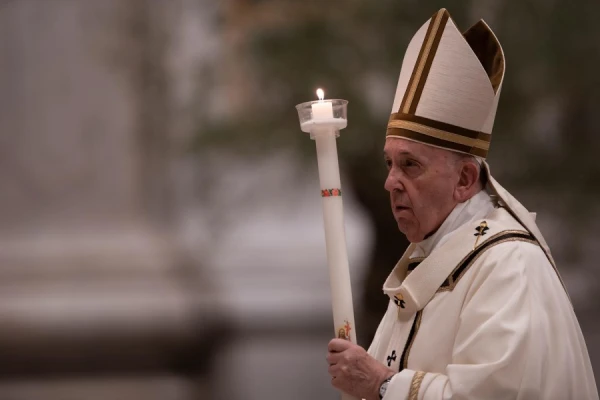
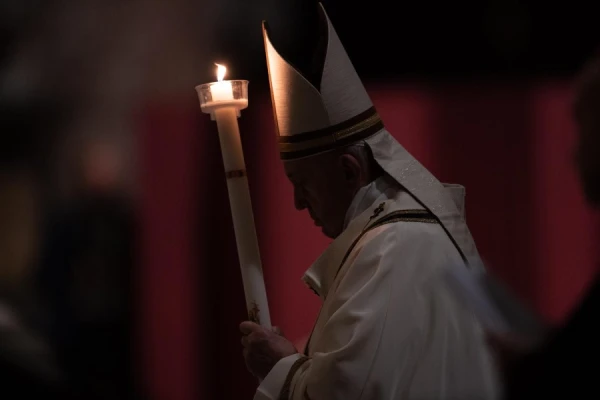
Vatican City, Apr 11, 2020 / 03:30 pm (CNA).- Pope Francis urged Christians to be “messengers of life in a time of death” as he celebrated the Easter Vigil in a nearly empty St. Peter’s Basilica amid the coronavirus pandemic.

In his homily April 11, he said: “How beautiful it is to be Christians who offer consolation, who bear the burdens of others and who offer encouragement: messengers of life in a time of death!” 

He continued: “Let us silence the cries of death, no more wars! May we stop the production and trade of weapons, since we need bread, not guns. Let the abortion and killing of innocent lives end.” 

“May the hearts of those who have enough be open to filling the empty hands of those who do not have the bare necessities.”

With the Vatican under lockdown, the congregation consisted of only a small number of clergy and lay people, who stood spaced apart as a precaution against spreading COVID-19. Officials confirmed an eighth case of the disease among Vatican employees April 8, but have reported no deaths.

St. Peter’s, the largest church in the world, is normally packed for the Easter Vigil. This year, vast parts of the basilica were completely empty and silent. Microphones picked up the smallest sounds from the liturgy.

This year’s Easter Vigil liturgy was scaled back. The preparation of the Paschal candle was omitted due to “the health emergency in progress”, the Vatican said, as was the lighting of candles among the faithful. 

Instead, the basilica was lit up gradually until it was fully illuminated at the Gloria, when the bells of St. Peter’s tolled. No baptisms took place, only a renewal of baptismal promises. 

The pope celebrated the Vigil at the Altar of the Chair, which was flanked by the miraculous crucifix of San Marcello and the Byzantine icon of Mary, Salus Populi Romani.

In his homily, the 83-year-old pope noted that in St Matthew’s Gospel the women found Jesus’ tomb empty “after the Sabbath”.

“This is how the Gospel of this holy Vigil began: with the Sabbath,” he said. “It is the day of the Easter Triduum that we tend to neglect as we eagerly await the passage from Friday’s cross to Easter Sunday’s Alleluia. This year however, we are experiencing, more than ever, the great silence of Holy Saturday.”

“We can imagine ourselves in the position of the women on that day. They, like us, had before their eyes the drama of suffering, of an unexpected tragedy that happened all too suddenly. They had seen death and it weighed on their hearts.”

“Pain was mixed with fear: would they suffer the same fate as the Master? Then too there was fear about the future and all that would need to be rebuilt. A painful memory, a hope cut short. For them, as for us, it was the darkest hour.”

But the women did not allow themselves to be paralyzed, the pope observed. 

“Jesus, like a seed buried in the ground, was about to make new life blossom in the world; and these women, by prayer and love, were helping to make that hope flower,” he said. “How many people, in these sad days, have done and are still doing what those women did, sowing seeds of hope! With small gestures of care, affection and prayer.”

The pope said that the Resurrection gave believers a fundamental right: “the right to hope”. This is not mere optimism, he explained, but a gift from heaven.

He then referred to signs currently displayed in windows throughout Italy which proclaim “Andrà tutto bene” (“All will be well”).

“Over these weeks, we have kept repeating, ‘All will be well’, clinging to the beauty of our humanity and allowing words of encouragement to rise up from our hearts,” he said. 

“But as the days go by and fears grow, even the boldest hope can dissipate. Jesus’ hope is different. He plants in our hearts the conviction that God is able to make everything work unto good, because even from the grave he brings life.”

He urged listeners undergoing suffering not to give in to despair.

He said: “Dear sister, dear brother, even if in your heart you have buried hope, do not give up: God is greater. Darkness and death do not have the last word. Be strong, for with God nothing is lost!”

More than 107,000 people had died from COVID-19 worldwide as of April 11, according to the Johns Hopkins Coronavirus Resource Center.

[…]

No Picture
News Briefs

Virginia bishops condemn Good Friday signing of abortion bill

April 11, 2020 CNA Daily News 0

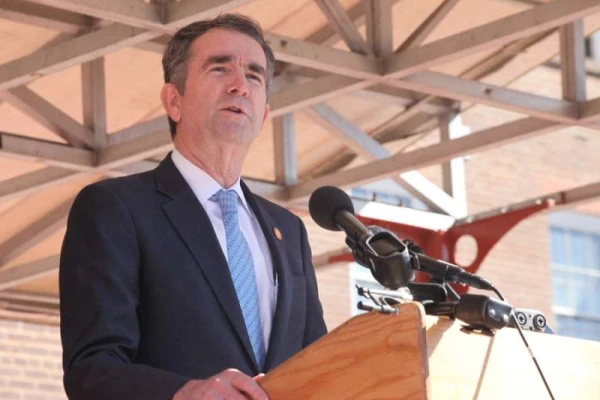
CNA Staff, Apr 11, 2020 / 02:20 pm (CNA).- Virginia’s Catholic bishops lamented a decision by the state’s governor to sign abortion legislation passed in the Virginia legislature earlier this year. The bishops said it is offensive to pro-life Christians that the governor chose Good Friday as the day to sign the legislation.

“Yesterday, Governor Northam announced that he had signed the so-called ‘Reproductive Health Protection Act'(SB 733 & HB 980). We are deeply saddened and disappointed by his signature of this legislation. That he would take this action on Good Friday, one of the most solemn days for Christians, is a particular affront to all who profess the Gospel of life,” Bishops Michael Burbidge and Barry Knestout said in an April 11 statement.

The Reproductive Health Protection Act first passed the state House, and then passed Virginia’s state Senate Jan. 29, more than 11 weeks ago.

The bill, which is now law, repeals a Virginia law mandating that only doctors can perform abortions, allowing other medical professionals, such as physicians assistants and nurse practictioners, to perform them.

The law also repeals requirements that women be given specific information about the abortion procedure before it takes place, and that an ultrasound be performed before any abortion.

The law also exempts abortion clinics from hospital regulatory standards for safety and cleanliness. It takes effect July 1.

“Over the past eight years, abortions have decreased by 42% in Virginia. Tragically but undoubtedly, these changes to our state law will reverse that life-saving progress and increase the number of abortions,” the state’s bishops said April 11.

“In February, we joined thousands of people of many different faiths to proclaim life at our state capitol at the second annual March for Life. Regrettably, the Governor and a majority of Virginia’s legislators have adopted a far different message.”

“Though elected officials have stripped Virginia law of many longstanding provisions that protect unborn children and the health and safety of women, the pursuit of a culture of life in our Commonwealth will persevere,” the bishops added.

Virginia’s Governor Ralph Northam said in a statement that “The Reproductive Health Protection Act will make women and families safer, and I’m proud to sign it into law.”

“No more will legislators in Richmond—most of whom are men—be telling women what they should and should not be doing with their bodies,” the governor added.

The governor did not indicate why he had chosen Good Friday to sign the bill.

For their part, the bishops said that pro-life efforts in the state “will continue to save lives because the sacrificial, life-giving love that Christ pours out on us is abundant, fruitful and overflowing.”

“As the Easter season begins, the Lord of life calls us to embrace new life in Him. Through this new life, let us come together with renewed zeal in prayer, advocacy and witness for life.”


[…]

No Picture
News Briefs

Pope welcomes Turin Shroud livestream for those ‘harshly tried by pandemic’

April 11, 2020 CNA Daily News 2

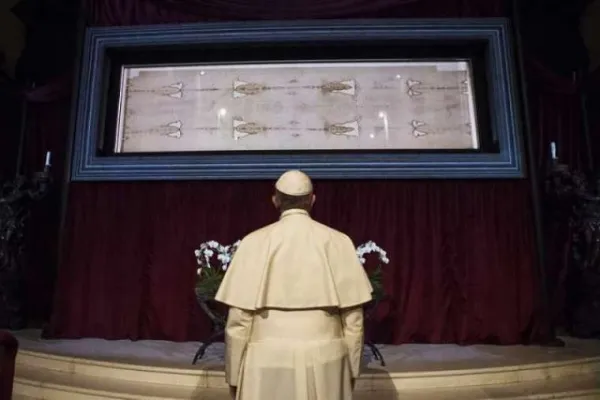
Vatican City, Apr 11, 2020 / 04:00 am (CNA).- Pope Francis has praised the decision to livestream the exposition of the Turin Shroud on Holy Saturday amid the coronavirus pandemic. 

The Archdiocese of Turin has invited Catholics around the world to pray virtually before the Shroud at 5pm local time April 11.

For centuries, the faithful have venerated the Shroud, which bears the image of a crucified man, as Christ’s burial cloth.

In a letter to Turin Archbishop Cesare Nosiglia dated April 9, the pope wrote: “I wish to express my warm appreciation to you for this gesture, which comes in response to the request of God’s faithful people, harshly tried by the coronavirus pandemic.”

The pope said he wanted to echo the archbishop’s appeal to Catholics to contemplate “the Man of the Shroud” who bears the traits of the “man of sorrows” described in the Book of Isaiah (53:3,4-5).

He said: “As Christians, in the light of the Scriptures, we contemplate in this Cloth the icon of the Lord Jesus crucified, dead and risen. To Him we entrust ourselves, in Him we trust. Jesus gives us the strength to face every trial with faith, with hope and with love, in the certainty that the Father always listens to his children who cry out to Him, and saves them.”

“Dear Brother, and all of you, dear brothers and sisters, who will participate through the media in prayer before the Holy Shroud, let us live these days in intimate union with the Passion of Christ, to experience the grace and joy of his Resurrection.”

Catholics will be able to take part in the exposition via EWTN’s YouTube page and EWTN Vatican’s Facebook page.

They can also follow the event on the official Facebook page Sindone 2020 and Twitter account @Sindone2020.

With the Vatican’s assistance, the ceremony will broadcast via satellite in South America and sub-Saharan Africa. Through Telepace, a Catholic network based in Italy, the exposition will also be available to viewers in North Africa, the Middle East and Australia.

The event has its own logo, an image of the face on the Shroud, accompanied by the words “Più forte è l’amore” (“Love is stronger”), chosen by Archbishop Nosiglia as the ceremony’s theme.

More than 102,000 people had died from COVID-19 worldwide as of April 11, according to the Johns Hopkins Coronavirus Resource Center.

[…]