The Cathedral of the Most Blessed Sacrament in Detroit. Credit: Nheyob via Wikimedia (CC BY SA 4.0)
Detroit, Mich., Feb 10, 2021 / 02:01 pm (CNA).- Most Catholics in the Archdiocese of Detroit will again be obliged to attend Mass on Sundays and Holy Days of Obligation starting March 14.
Detroit, along with every U.S. diocese, suspended public liturgies last year in response to the coronavirus pandemic. Archbishop Allen Vigneron of Detroit dispensed all Catholics from their Sunday obligation March 13, 2020.
“In allowing the general dispensation to expire, we welcome back to Mass all Catholics who have already been engaged in other activities that would present a similar or greater risk of exposure, such as eating out at restaurants, traveling, partaking in non-essential shopping, and widening one’s circle of contacts,” Archbishop Vigneron wrote in a Feb. 9 letter.
“These individuals should also prepare to return to Mass in recognition of its preeminence in our lives as Catholics.”
The general dispensation from the obligation to assist at Sunday Mass was originally set to expire Feb. 17, Ash Wednesday, but Vigneron extended it until March 13, Detroit Catholic reported.
Though the general dispensation will expire, certain particular dispensations will be granted, Vigneron said. Particular dispensations will be granted to those with underlying conditions or in a high-risk category; those exhibiting flu-like symptoms; those who have good reason to think they might be asymptomatic of a contagious illness (e.g., they were in recent contact with someone who tested positive for a contagious illness such as COVID or influenza); those who care for the sick, homebound, or infirmed; pregnant women; those 65 or older; those who cannot attend Mass through no fault of their own (e.g., no Mass is offered, they are infirmed, or, while wanting to go, they are prevented for some reason you cannot control (e.g., their ride did not show up, the church was at capacity)); and those who have significant fear or anxiety of becoming ill by being at Mass.
Churches in the archdiocese will remain limited to 50% capacity, and mask and social distancing requirements will remain.
Vigneron acknowledged and thanked parishes for their efforts to stream Mass online in the past year, but cautioned that watching a broadcast of Mass “cannot become the norm.”
“God did not come to us virtually. He came to us — and continues to come to us — in the flesh. As Catholics, unmediated contact with the Real Presence of the flesh and blood of Our Lord in offering this sacrifice to the Father is irreplaceable and essential,” he wrote.
“It is during the Holy Sacrifice of the Mass that the saving death and resurrection of Jesus is made present to us, our covenant with Our Lord is renewed, and God, in the person of Jesus Christ, comes to us and makes himself truly present for us in his Body, Blood, Soul, and Divinity. It is an irreplaceable gift; a foretaste of Heaven itself.”
COVID-19 case rates have dropped throughout most of the country as vaccination rates have reached an estimated 10% overall.
The first US diocese to reinstate the Sunday Mass obligation amid the pandemic is believed to be Sioux Falls. On Aug. 17, 2020, Bishop Donald DeGrood of Sioux Falls changed the dispensation to apply only to those at increased risk for severe illness and those responsible for their care.
Some dioceses have reinstated the Sunday obligation, only to lift it again amid rising coronavirus cases.
The six dioceses of Wisconsin lifted the Sunday dispensation in September 2020, but just two weeks later, Bishop David Ricken of Green Bay reinstated it in his diocese, due to sharply rising numbers of COVID-19 cases in the area.
Bishop William Callahan of La Crosse also reversed course and announced that he had decided to keep the dispensation in place for his diocese.
If you value the news and views Catholic World Report provides, please consider donating to support our efforts. Your contribution will help us continue to make CWR available to all readers worldwide for free, without a subscription. Thank you for your generosity!
Click here for more information on donating to CWR. Click here to sign up for our newsletter.
The Sisters of St. Joseph of the Apparition cover the altar, just dedicated by the cardinal. The covering of the altar signifies that it is both the place of the Eucharistic sacrifice and the Lord’s table. / Credit: Photo courtesy of the Latin Patriarchate of Jerusalem
Jerusalem, Sep 12, 2024 / 07:00 am (CNA).
On Aug. 31, exactly 100 years after its dedication, the Church of Our Lady of the Ark of the Covenant was reopened for worship on the hill of Kiryat Yearim, nine miles from Jerusalem.
The church, which was closed for four years for restoration work, stands atop the hill overlooking the (Muslim) village of Abu Gosh. From the top, visitors can see Jerusalem.
A view from the hill of Kiryat Yearim, where the Church of Our Lady of the Ark of the Covenant stands. At the foot of the hill lies the Muslim village of Abu Gosh, with Jerusalem visible in the background, a little more than nine miles away. The place, mentioned in the Bible as “Kiriath-Jearim,” held an important role in the history of the Jewish people, as it was here that the Ark of the Covenant rested for about 20 years until King David brought it to Jerusalem. Credit: Marinella Bandini
The place, mentioned in the Bible as “Kiriath-Jearim,” has held an important role in the history of the Jewish people as it was here that the Ark of the Covenant rested after being recovered from the Philistines (see 1 Samuel 6).
The ark contained the two stone tablets on which the Ten Commandments — God’s covenant with the Jewish people — were inscribed and was the sign of God’s presence among his people.
According to the Bible, it was hosted in the house of Abinadab, where it remained for about 20 years (see 1 Samuel 7:1-2) until King David brought it to Jerusalem.
For this reason, even today, the site is visited by many groups of Jews.
A Byzantine basilica was built on the top hill around the fifth century. The current church, the foundation stone of which was laid in 1920, stands on the remains of that building. It was consecrated in 1924 by the then-Latin patriarch of Jerusalem, Luigi Barlassina, and dedicated to Our Lady of the Ark of the Covenant.
The Church of Our Lady of the Ark of the Covenant in Kiryat Yearim (exterior). The church is dedicated to the Virgin Mary, whom Christians also honor with the title of “Ark of the Covenant.” “The covenant of God with his people finds its fulfillment in Jesus Christ, who is no longer just the sign of God’s presence but God himself among us. Mary is the new Ark of the Covenant because she carried Christ himself in her womb,” said Cardinal Pierbattista Pizzaballa, the Latin patriarch of Jerusalem, in his homily. Credit: Marinella Bandini
Cardinal Pierbattista Pizzaballa, the current Latin patriarch of Jerusalem, recently came to the basilica to dedicate its new altar on the occasion of the reopening of the church.
“This reopening is a moment of trust in the future, a desire to start anew, and this is what we need most at this time, when everything around us speaks of death and endings,” he told CNA after the celebration on Aug. 31.
The opening of the doors of the Church of Our Lady of the Ark of the Covenant in Kiryat Yearim on Aug. 31, 2024, for the solemn celebration with the rite of dedication of the altar, presided over by Cardinal Pierbattista Pizzaballa, the Latin patriarch of Jerusalem. Credit: Photo courtesy of the Latin Patriarchate of Jerusalem
“Climbing this mountain, blessed by the presence of the Lord,” he added, “invites us to have a broad and farsighted perspective on events and not to close ourselves off in the dramatic present moment.”
Hosting the event were the Sisters of St. Joseph of the Apparition, a French congregation founded in 1832 by Mother Emilie De Vialar, which owns and operates the church and surrounding property.
The complete details of how the land came to be acquired by the sisters are lost to history, but it centers on one of the order’s sisters who died in 1927. Sister Josephine Rumèbe, who is buried in the church, was reportedly endowed with special mystical gifts and managed to acquire the land on behalf of the sisters. The story goes that she had 5,000 francs at her disposal and sought the help of a clergyman for the purchase. To prevent a competing buyer from acquiring it, the cleric secured the entire hill for 20,372 francs. Miraculously, when Sister Josephine counted the gold coins hidden in her room, the amount matched exactly what she needed.
Cardinal Pierbattista Pizzaballa, the Latin patriarch of Jerusalem, pours the chrism oil on the new altar of the Church of Our Lady of the Ark of the Covenant in Kiryat Yearim. On Aug. 31, 2024, he presided over the solemn Mass with the rite of dedication of the altar, marking the reopening of the church after four years of restoration and maintenance work. Credit: Marinella Bandini
The dedication of the new altar in the basilica took place after the recitation of the creed and chanting of the litanies. The cardinal placed relics in the altar, including that of Mother Emilie De Vialar, who was canonized a saint in 1951. This was followed by the anointing of the altar with chrism oil, the incensing of the altar, the covering of the altar, and the lighting of the altar.
The relics placed inside the new altar of the Church of Our Lady of the Ark of the Covenant in Kiryat Yearim, which was dedicated by Cardinal Pierbattista Pizzaballa, the Latin patriarch of Jerusalem, on Aug. 31, 2024. Among the relics are those of Mother Emilie De Vialar, founder of the Sisters of St. Joseph of the Apparition, the order who owns the church and surrounding property. Credit: Marinella Bandini
“The covenant of God with his people finds its fulfillment in Jesus Christ, who is no longer just the sign of God’s presence but God himself among us. Mary is the new Ark of the Covenant because she carried Christ himself in her womb,” said the cardinal in his homily, inviting the faithful, following the example of the Virgin Mary, to renew their trust in God as the Lord of history and active within history.
Upon entering the church — whose iconographic elements were created by artists from the Ave Center of the Focolare Movement — the eye is drawn to the golden flame emanating from the center of the apse.
Cardinal Pierbattista Pizzaballa, the Latin patriarch of Jerusalem, celebrates the Eucharistic liturgy on the altar he dedicated in the Church of Our Lady of the Ark of the Covenant in Kiryat Yearim on Aug. 31, 2024. Credit: Marinella Bandini
A special decoration that, on one hand, evokes the biblical significance of fire, symbolizing the presence of God, and on the other, is connected to the history of this place and particularly to Sister Josephine’s vision of a “mountain of fire,” holds significance here.
When she was still a young postulant in France, during Eucharistic adoration, Sister Josephine had a vision of flames forming a mountain with Jesus above them instead of the host. The vision then vanished, and only 50 years later, at the time of laying the foundation stone of the church, it was revealed to her that the “mountain of fire” was indeed Kiryat Yearim, which she used to call “the Holy Mountain.”
Sister Valentina Sala, the current provincial of the congregation for the Holy Land, immediately felt a strong connection to this place. She recounted to CNA: “The first time I came here for a few weeks, a sister took me to Kiryat Yearim. I knelt at Sister Josephine’s tomb and prayed to return if that was God’s will.”
Sister Valentina Sala, the current provincial of the congregation of the Sisters of St. Joseph of the Apparition for the Holy Land, prays at the tomb of Sister Josephine Rumèbe, founder of the convent and the church in Kiryat Yearim. “The first time I came here for a few weeks, a sister took me to Kiryat Yearim. I knelt at Sister Josephine’s tomb and prayed to return if that was God’s will,” she recounted to CNA. Credit: Marinella Bandini
On the centenary of the church’s dedication, Sister Valentina also emphasized the significance of this place for her congregation, whose charism is to serve the needs of people through works of charity.
“What is charity work? What people need today is not just health care or education; there is a hunger and thirst for God. We must be able to recognize this need, helping those who come here to listen to his voice. We need places where people can pause and rest with God,” she said.
When the construction of the church was nearly complete, Sister Josephine had a vision of the Virgin Mary, at the top of the church, facing Jerusalem with outstretched arms in a gesture of dispensing grace. A statue now stands above the church to recall that vision, facing away from those entering and directed toward Jerusalem.
“This place, which evokes the covenant, invites us to realign ourselves with God and to be under this blessing,” Sister Valentina concluded.
This is also the meaning of the words she addressed to those present — the vast majority of local faithful from Jerusalem as well as from Galilee — at the end of the Mass.
Hundreds of local faithful from Jerusalem and Galilee attend the solemn Mass with the rite of dedication of the altar, marking the reopening of the Church of Our Lady of the Ark of the Covenant in Kiryat Yearim, on Aug. 31, 2024. A hundred years ago, Sister Josephine Rumèbe of the Sisters of St. Joseph of the Apparition wrote about having seen a vision of “a crowd rushing toward the basilica. I saw priests, sisters of our order, and then men and women of the world who were even more pleasing to God than all the others, holy souls shining like stars.” Credit: Marinella Bandini
“Sister Josephine had already seen you in various visions: ‘I saw a crowd rushing toward the basilica. I saw priests, sisters of our order, and then men and women of the world who were even more pleasing to God than all the others, holy souls shining like stars.’”
She continued: “And what if we are that vision? What if we are that future? Of course, we are! From now on, you will be the ones to bring life to this hill, to this covenant between God and his people. Come, rush, stay, feel at home. There is not only a newly renovated church to see but a Presence to discover: Take the time to dwell with the Lord. What could be more beautiful… Many graces await to be dispensed from here!”
Denver Newsroom, Sep 27, 2020 / 12:00 pm (CNA).- The director of a Catholic organization focused on the needs of people with disabilities said Wednesday that the police shooting of a Utah boy with autism points to the importance of advocacy, understanding, and compassion for people with autism and other disabilities.
“This situation shines a light on two diagnoses unfortunately on the rise in our world: autism and mental illness,” Charleen Katra, director of the National Catholic Partnership on Disability, told CNA this week.
“More importantly, we see how the lives of persons currently living with either or both diagnoses are in dire need of understanding and advocacy,” Katra said.
“This situation makes us all weep, along with God. All human beings, in all circumstances, deserve to be treated with dignity.”
Cameron has Asperger syndrome, also called autism spectrum disorder, and had a mental health crisis on Friday, Sept. 4, according to his mother, Golda Barton. Cameron also has mental health problems; in police bodycam footage his mother said he was under the care of a psychiatrist for multiple mental health diagnoses, and that he has sensory processing disorder.
Barton called 911 on Sept. 4, and requested a crisis intervention officer. She said her son needed to be hospitalized for mental health treatment.
When police officers, rather than a crisis team, arrived, Barton told them that her son was scared of police, had difficult processing commands, was likely to run, and that he needed to be hospitalized. She also told police that Cameron might have a BB gun or a pellet gun. Asked by police if it was a real gun, Barton said she did not believe it was a real gun.
Police expressed uncertainty about how best to approach Cameron, according to bodycam footage, before they approached his house, and, after he began to run, began pursuing him.
After a foot chase through an alley, Cameron slowed to a walk on a sidewalk. Police instructed him to get on the ground as they approached him, and he did not do so.
A police officer then fired 11 shots, and Cameron fell to the ground. He told police “I don’t feel good,” and “Tell my mom I love her,” before the bodycam footage ended.
Cameron suffered injuries to his intestines, bladder, colon, shoulder, and ankles, his mother has said. The shooting is now under investigation in Utah.
“The actions documented in this case are devastating on many levels. The call from a desperate mother for assistance, who rightly requested a crisis intervention team to deescalate a challenging situation, was met with behaviors that did the exact opposite,” Katra told CNA.
“Persons with autism and mental illness often live daily with high levels of anxiety. What Linden needed was patience and compassion. The ability of a person already anxious or experiencing a mental health episode to process actions and words of others will be delayed even more than usual,” she added.
A person with autism spectrum disorders is likely to have difficulties during encounters with police, experts say, because some behaviors typical in persons with autism, such as avoiding eye contact or moving hands rapidly, can be interpreted as a threat if police lack specific training or experience related to autism. Those with mental health problems also have disproportionately challenging interactions with police, as their actions can be perceived as belligerent or threatening.
Barton pointed out in an interview early this month that when police approached her son, he was walking, within reach of them, and smaller than them.
“He’s a small child. Why didn’t you just tackle him?” Barton asked police during an interview with KUTV News. “He’s a baby. He has mental issues.”
“Linden Cameron is a creation of the Creator; made in God’s image. We must continue to educate and advocate for individuals with greater needs with haste,” Katra added.
Police officers have not commented on the shooting, because it is now under investigation.
In a Sept. 9 statement, the Salt Lake City diocese told CNA: “We offer our prayers for Linden Cameron and his family. Whatever the results of the ongoing investigations, we are heartbroken to see a child caught in our culture of gun violence.”
In its statement, the Salt Lake City diocese said it “supports and encourages continued discussions with law enforcement about the use of force and legislative action to ensure that the dignity and sanctity of all life is protected throughout our criminal justice system.”
The National Catholic Partnership on Disability says it is the “voice of the U.S. Catholic Bishops” on disabilities, and was founded to implement the U.S. bishops’ conference’s 1978 pastoral statement on the full inclusion of people with disabilities in the Catholic Church. The organization is affiliated with the U.S. bishops’ conference.
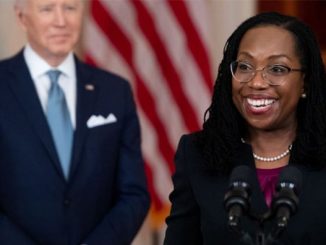
Judge Ketanji Brown Jackson, with President Joe Biden, speaks after she was nominated for Associate Justice of the US Supreme Court, in the Cross Hall of the White House in Washington, DC, February 25, 2022. / Saul Loeb/AFP via Getty Images.
Saginaw has lifted the dispensation as well, but here’s the question–at least one parish requires you make a reservation, S.D. is still mandated (and masks, of course). What happens if you can’t get in because all reservations are filled?






Saginaw has lifted the dispensation as well, but here’s the question–at least one parish requires you make a reservation, S.D. is still mandated (and masks, of course). What happens if you can’t get in because all reservations are filled?