Cairo, Egypt, Aug 2, 2018 / 06:01 pm (CNA/EWTN News).- A Coptic Orthodox bishop was was found dead as a result of a suspected murder in St. Macarius Monastery in Egypt on Sunday.
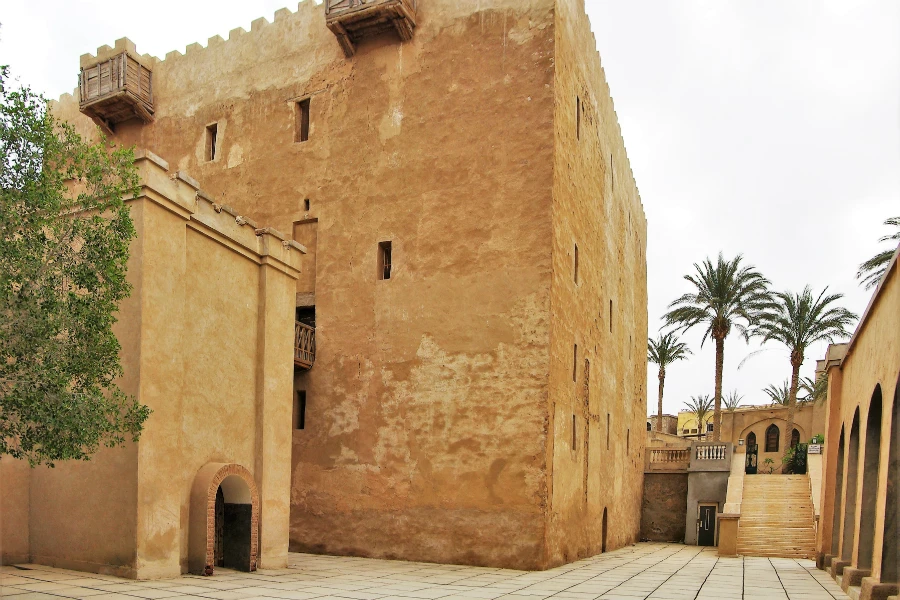
Bishop Epiphanius, who died July 29, was abbot of the monastery, which is located in Egypt’s Beheira governorate, about 60 miles northwest of Cairo.
His body had injuries to his head and back that suggest that he had been hit by a sharp object, according to the preliminary security investigation.
The bishop was remembered for his wisdom, simplicity and humility by Tawadros II, Coptic Orthodox Pope of Alexandria, who celebrated Bishop Epiphanius’ funeral Mass on Tuesday.
“Just as the meaning of his name is light, he also enlightened our world. We are extremely saddened by his departure but we live on in hope of the resurrection when we bid farewell to all our loved ones,” Tawadros II said at the July 31 funeral, according to Ahram Online.
According to The Coptic Orthodox Church Centre, Bishop Epiphanius was born June 27, 1954 in Egypt’s Tanta governorate. He joined St Macarius Monastery in February 1984, and became a monk in April of that year. He was ordained a priest Oct. 17, 2002, and consecrated a bishop March 10, 2013.
In Defence of Christians (IDC) condemned the “horrific attack” on Bishop Epiphanius, calling it “the latest in a string of violence against Coptic Christians that has increased sharply in 2017 and 2018.”
Egypt’s Coptic Christian minority has suffered continued attacks since the 2015 Islamic State beheading of 21 men. In December 2017, ten people were reported dead after terrorists attacked a Coptic church near Cairo. Forty-nine Christians died in church bombings on Palm Sunday in 2017. A Coptic priest was murdered in a knife attack in Cairo in October 2017.
IDC called on the U.S. Administration and the State Department to hold Egypt accountable for the treatment of Coptic Christians.
Tawadros II announced Aug. 2 that Coptic Orthodox monasteries will stop accepting seminarians for one year, Egypt Today reported.
The Coptic Orthdox Church is an Oriental Orthodox Church, meaning it rejected the 451 Council of Chalcedon, and its followers had historically been considered monophysites – those who believe Christ has only one nature – by Catholics and the Eastern Orthodox, though they are not considered so any longer.
If you value the news and views Catholic World Report provides, please consider donating to support our efforts. Your contribution will help us continue to make CWR available to all readers worldwide for free, without a subscription. Thank you for your generosity!
Click here for more information on donating to CWR. Click here to sign up for our newsletter.
Harare, Zimbabwe, Sep 6, 2019 / 05:01 pm (CNA).- On Thursday the Catholic Church in Zimbabwe began a three-day meeting to consider the cause of canonization of John Bradburne, a lay missionary to the area in the 1970s, who could become the country’s first canonized saint.
At the Sept. 5-7 meeting, Catholic leaders will hear arguments in favor of and against the sainthood cause of Bradburne, who was killed during the Rhodesian Bush War in 1979.
The meeting began on the 40th anniversary of Bradburne’s death and will determine whether his cause for official sainthood can proceed.
Bradburne was born in 1921 in England, the son of an Anglican clergyman. He served in the British army in World War II, and he converted to Catholicism in 1947 after staying with the Benedictines of Buckfast Abbey.
Although he wanted to become a monk at Buckfast, he had not been in the Catholic Church long enough, and so he became a wanderer throughout Europe and the Middle East, living out of one bag. He also became a prolific poet.
During his wanderings, he stayed at other Benedictine abbeys, with Carthusians, the Congregation of Our Lady of Sion, and even tried living as a hermit on Dartmoor in England. Bradburne became a Third Order Franciscan in 1956.
He arrived in the British colony of Southern Rhodesia (present-day Zimbabwe) in 1962, and shortly thereafter he told a Franciscan priest that he had three wishes: to serve leprosy patients, to die a martyr, and to be buried in the habit of St Francis.
Through a Jesuit friend in Southern Rhodesia, Bradburne came to serve at the Mutemwa Leper Settlement in 1969, and would spend the last 10 years of his life there.
Southern Rhodesia declared independence in 1965, and the Rhodesian Bush War was fought from 1964 to 1979 among the white minority government, the Marxist Zimbabwe People’s Revolutionary Army, and the Zimbabwe African National Union (ZANU).
ZANU was chaired from 1975 to 1980 by Robert Mugabe, who then served as prime minister of Zimbabwe from 1980 to 1987, and as president from 1987 to 2017. Mugabe died Sept. 6.
As the war intensified and ZANU guerrilla forces approached Mutemwa, Bradburne was urged to leave, but he insisted on remaining. According to The Telegraph, even after the white Catholic priests of the area had been evacuated, the white British Bradburne “refused to leave, and continued to attend to lepers, write poetry and play his harmonium in the tin hut in which he lived.”
Bradburne was abducted, and shot and killed Sept. 5, 1979. According to the Memorial Society, during Bradburne’s funeral, a pool of blood could be seen collecting beneath his coffin. After the funeral, the coffin was opened but no sign of blood could be found. However, when it was noticed that Bradburne had not been buried in a Franciscan habit, per his wishes, a Franciscan habit was brought and Bradburne was dressed in it for his burial.
According to Independent Catholic News, two people have claimed miraculous cures through Bradburne’s intercession: a woman in South African who regained the use of her legs, and a man in Scotland cured of a brain tumor.
The Jonn Bradburne Memorial Society is supporting the investigation into his life and virtues. The group was led by Bradburne’s niece, Celia Brigstocke, until her death on August 2018. Brigstocke’s eldest daughter, Kate Macpherson, now leads the efforts.
The “Holy Fire” is passed from inside Christ’s tomb to pilgrims gathered inside the Basilica of the Holy Sepulcher in Jersusalem on May 4, 2024, for the annual Orthodox Christian ceremony, held on the day before Easter, according to the Julian calendar. / Credit: Marinella Bandini/CNA
Jerusalem, May 5, 2024 / 09:00 am (CNA).
Pilgrims gathered in Jerusalem Saturday for the annual “Holy Fire” ceremony at the revered site of Jesus’ burial and resurrection, an ancient custom considered by many believers to be a miraculous event that takes place the day before the Orthodox Christian celebration of Easter.
For safety reasons, attendance at the May 4 event was capped at 4,200 people inside the Basilica of the Holy Sepulcher, though the crowds were more manageable and somewhat subdued this year because of a lack of pilgrims from the Palestinian territories and abroad due to the ongoing Israel-Hamas war.
Israeli police man a checkpoint inside the Old City of Jerusalem during the “Holy Fire” ceremony held at the Basilica of the Holy Sepulcher on May 4. 2024. Credit: Marinella Bandini/CNA
Access to the Old City where the basilica is located was restricted beginning on Friday night amid a heavy police presence. Numerous medical personnel and firefighters were present inside the basilica.
Though its authenticity is disputed by some, the “Holy Fire” or “Holy Light” refers to a fire of purported divine origin that ignites inside Jesus’ tomb while only the Greek Orthodox patriarch is present. Pilgrims then light their candles by extending them through a small opening in the tomb, producing a dramatic scene of flickering flames and joyous celebration.
The Orthodox Christian ceremony, which is attended by Catholics and other Christians, as well, has been held continuously since at least 1106, though accounts dating to the fourth century relate that the apostle Peter saw the holy light himself inside the tomb.
Pilgrims carry candles lit from the “Holy Fire” inside the Basilica of the Holy Sepulcher in Jerusalem on May 4, 2024. Credit: Marinella Bandini/CNA
The doors of the Holy Sepulcher were opened at 9 a.m. by Greek Orthodox representatives and again at 9.30 a.m. by representatives of the Armenian Apostolic Church — the two Orthodox communities that serve with Catholic Franciscans as the custodians of the site. Only then did the faithful begin to enter the basilica.
Around 11 a.m., those present began to sing traditional hymns in the loudest voice possible. These chants date back to the Turkish occupation of Jerusalem in the 13th century when Christians were not allowed to chant anywhere but in the churches.
The heart of the ceremony was between 1 and 2 in the afternoon. After the solemn entrances of the other Orthodox patriarchs of Jerusalem, the Greek Orthodox patriarch, Theophilos III, entered the basilica.
Previously, the doors of the Aedicule (the small shrine that houses the tomb of Jesus Christ) had been sealed with a large wax seal — signifying that the tomb had been inspected and that nothing was present that could be used to start a fire. Shortly before the arrival of the Greek patriarch, the seal was removed, and a large oil lamp was carried into the tomb.
After completing three rounds around the Aedicule, leading a procession of monks and priests, Patriarch Theophilos III entered the Aedicule, followed by a delegate of the Armenian patriarch (who could not attend due to an internal dispute) and several bishops from various denominations.
The Greek Orthodox Patriarch Theophilos III exits the Aedicule of the Holy Sepulcher on May 4, 2024, in Jerusalem, showing the faithful the two candles just lit from the oil lamp that is believed to have been miraculously ignited inside Jesus’ tomb. Credit: Studio Sami Jerusalem
Only the Greek Orthodox patriarch is allowed to enter the chamber that houses the tomb of Jesus, while all the others remain in the Chapel of the Angel, a sort of antechamber that commemorates the appearance of a heavenly messenger to the women at the tomb announcing Jesus’ resurrection.
Before entering the tomb, the Greek patriarch was inspected by Israeli authorities to prove that he didn’t carry any technical means to light the fire.
All the lights and lamps in the basilica were extinguished, especially those inside the Aedicule, which was left in darkness.
What believers attest to be a miracle takes place after a brief time of prayer: A holy fire is said to descend from heaven and ignite an oil lamp inside the tomb.
Pilgrims inside the Basilica of the Holy Sepulcher hold their candles aloft after the “Holy Fire” was ignited inside Jesus’ tomb on May 4, 2024, the day before the Orthodox Christian celebration of Easter. Credit: Marinella Bandini/CNA
On Saturday, after the lamp was lit the Greek Orthodox patriarch emerged from the tomb and lit bundles of 33 candles (a number representing the age of Christ at the time of his crucifixion and resurrection.) Meanwhile, pilgrims lit their candles also from the small round windows on the sides of the Aedicule, creating a dramatic scene outside the tomb. It is said that the fire does not burn anything (or anyone) for the first 33 minutes after being lit.
For Orthodox believers, the lighting of the fire is a genuine miraculous event, although voices within the Orthodox world itself have repeatedly questioned the authenticity of the miracle, attributing the spontaneous lighting of the lamp to tricks or chemical methods.
A lamp used to transport the “Holy Fire” from the Basilica of the Holy Sepulcher in Jerusalem to Bethlehem is carried at the lighting ceremony on May 4, 2024. By longstanding tradition, the flames from the purported miraculous fire are brought to the main Orthodox churches in the Holy Land and sent to the main Orthodox churches around the world via specially arranged flights. Credit: Marinella Bandini/CNA
In solidarity with the Palestinian people in Gaza and the victims of the war, the Orthodox Christians have chosen a more subdued celebration this year. To that end, the Holy Fire was not passed hand to hand through the streets of the Old City of Jerusalem, as is the custom, but was brought directly into the homes of the faithful.
Special lanterns transport flames from the tomb to the main Orthodox churches in the Holy Land and around the world (via specially arranged flights). The arrival of the flames from Jerusalem will mark the beginning of the Easter celebrations.
Lahore, Pakistan, Nov 14, 2017 / 12:11 pm (CNA/EWTN News).- Amid national challenges, the Pakistani Catholic Bishops’ Conference has announced a “Year of the Eucharist,” to focus on renewal and service.
The year will begin on the Solemnity of Christ the King, Nov. 26, 2017. It will end on the same feast day next year, Nov. 25, 2018.
“The ‘Year of the Eucharist’ is meant to be a time of spiritual growth and inner renewal and to share the love of Christ with all humanity by our dedicated service to our country,” the bishops said in a statement published by the Pakistan Christian Post.
“As our country is going through difficult times we urge all people in Pakistan to pray more fervently for peace, harmony, progress and prosperity of our beloved country.”
The statement was issued during the bishops’ second annual plenary meeting, which took place in Lahore, Pakistan on Nov. 9-10.
In the statement, the bishops lamented the social problems that have arisen from corrupt politics. They expressed hope that the next election would be free and fair, and would “strengthen the democratic process.”
“We have to be honest in our dealings and be free from all stains of corruption,” the bishops said. “There must be an honest interim government that will bring in fair practices and not interfere with the election campaigns and the voting process.”
The bishops called on the Election Commission of Pakistan to be completely impartial, and encouraged the political parties to be attentive to the struggles of the country’s minorities.
“We feel that the current electoral system for minority candidates being appointed by political parties on reserved seats does not represent the community and so we urge the government to create a just and fair system,” they said.
The bishops also warned that “the educational system in Pakistan is suffering.” The weaknesses in the system must be addressed, they said, noting that the local Church has worked hard to offer high-quality, affordable education.
“Education is the basic right of every human being. It has power to drag a human from darkness of illiteracy into the light of knowingness. A country can never progress without appropriate educational system,” they stressed, calling on the government to work for a system that promotes peace and religious harmony.
Looking at the situation of the Church in the country, the Pakistani bishops thanked the government for showing respect for Sister Ruth Pfau, a beloved sister who spent more than 50 years working to eradicate leprosy in Pakistan.
Pfau died Aug. 10 at age 87 and was given a state funeral, the first Christian woman in the country to receive one, according to CNN.
The bishops thanked government leaders “for making the funeral of Dr Ruth Pfau a national event,” but said that Pfau’s legacy must continue.
“This must further inspire the clergy, religious, lay faithful and all people to a renewed commitment of serving our neighbor, especially in the poor and the marginalized,” they said.
Leave a Reply