No Picture
News Briefs

Holiness: The fullness of the Christian life

October 10, 2017 CNA Daily News 0

Denver, Colo., Oct 10, 2017 / 03:01 pm (CNA).- Fifty-five years ago, on October 11, 1962, Pope St. John XXIII began the Second Vatican Council at St. Peter’s Basilica in Rome.

The council was not called to resolve a dispute about doctrine or dog… […]

No Picture
News Briefs

Why did Twitter reject this pro-life ad?

October 10, 2017 CNA Daily News 0

Washington D.C., Oct 10, 2017 / 02:52 pm (CNA/EWTN News).- A political advertisement for pro-life Rep. Marsha Blackburn (R-Tenn.) has been blocked by Twitter for statements about Planned Parenthood selling fetal body parts for medical research.

“I’m 100 percent pro-life. I fought Planned Parenthood, and we stopped the sale of baby parts, thank God,” Blackburn says in her video.

Twitter blocked the ad, telling the Blackburn campaign that the comment was “deemed an inflammatory statement that is likely to evoke a strong negative reaction.”

The tech company said the advertisement would be reinstated if the comment was removed.

Blackburn encouraged her supporters to join her in “standing up to Silicon Valley” by sharing the video. Although the video cannot be part of a paid promotion on Twitter, users can link to the video on the site and retweet Blackburn’s post of the video.

<blockquote class=”twitter-tweet” data-lang=”en”><p lang=”en” dir=”ltr”>.<a href=”https://twitter.com/Twitter?ref_src=twsrc%5Etfw”>@Twitter</a> shut down our video ad, claiming it's &quot;inflammatory&quot; &amp; &quot;negative.&quot; Join me in standing up to Silicon Valley → RETWEET our message! <a href=”https://t.co/K3w4AMgW6i”>pic.twitter.com/K3w4AMgW6i</a></p>&mdash; Marsha Blackburn (@VoteMarsha) <a href=”https://twitter.com/VoteMarsha/status/917457080025481216?ref_src=twsrc%5Etfw”>October 9, 2017</a></blockquote>
<script async src=”//platform.twitter.com/widgets.js” charset=”utf-8″></script>

Blackburn is running for a U.S. Senate seat in Tennessee which will be left open by the retirement of current senator Bob Corker (R-Tenn.).

Earlier in the two-and-a-half-minute video, Blackburn claims that the “left calls me a wingnut or a knuckle-dragging conservative,” criticizes the Senate’s failure to repeal the Affordable Care Act, and affirms her support of Second-Amendment rights and the Trump Administration’s immigration policies.

After investigative reporting by the Center for Medical Progress which revealed Planned Parenthood’s practice of taking money from medical research companies in exchange for aborted fetal tissue, Blackburn chaired a Republican-run House panel to investigate the organization and fetal tissue research more broadly.

After their investigation, she and her panel urged Congress to stop the funding of Planned Parenthood.

The practice of fetal tissue donation is legal in the United States if the donating company makes no profit off of the transaction. Planned Parenthood has since announced that it would no longer donate aborted fetal tissue for reimbursement.

Pro-life activists criticized Twitter’s move to refuse promotion of the ad.

“We are profoundly disappointed, but not surprised that Twitter continues to censor pro-life speech,” said Marjorie Dannenfelser, president of the pro-life advocacy organization, Susan B. Anthony List, in a statement.

“While we have observed that this censorship seems to be applied selectively to pro-life groups, Twitter’s move has broad, chilling implications for all sorts of advocacy and political speech. We hope anyone seeking to engage in political speech will join us in denouncing the censorship of Rep. Blackburn,” Dannenfelser said.  

“Such heavy-handed tactics only backfire on those who use them.”


[…]

No Picture
News Briefs

The dangers of spiritualizing your psychological problems

October 10, 2017 CNA Daily News 4

Denver, Colo., Oct 10, 2017 / 02:17 pm (CNA/EWTN News).- Maria had been struggling with some depressive and anxious thoughts for a while, although at the time, she didn’t recognize them as such. Probably because she was 14 years old.  

When she shared her struggles with someone in her Catholic community, the woman told Maria that she was worried that “the devil was working his ways” in her, and used that to pressure her into going on a week-long retreat out of state.

“Sure, retreats are great,” Maria told CNA. “But pretty sure I just needed a therapist at that point in my life. And pretty sure I had already given valid reasons for why I wasn’t interested in buying a plane ticket for a retreat.”

When Catholics experience spiritual problems, the solutions seem obvious –  talk to a priest, go to confession, pray, seek guidance from a spiritual director. But the line between the spiritual and the psychological can be very blurry, so much so that some Catholics and psychologists wonder if people are too often told to “pray away” their problems that may also require psychological treatment.

When body and soul are seen as unrelated

Dr. Gregory Bottaro is a Catholic clinical psychologist with the CatholicPsych Institute. He said that he has found the over-spiritualization of psychological issues to be a persistent problem, particularly among devout Catholics.

“Over-spiritualization in our time is usually a direct consequence of Cartesian Dualism,” Bottaro told CNA in an e-mail interview.

“Decartes is the philosopher who said: ‘I think therefore I am.’ He separated his thinking self from his bodily self, and planted the seed that eventually grew into our current thinking that the body and spirit are separate things. Acting as if the body doesn’t matter when considering our human experience is just as distorted as acting like the spirit doesn’t matter,” he said.

Because of this prevalent misconception about the separation of our body and soul, people both in and out of the Catholic Church often feel a stigma in seeking mental help that isn’t there when they need to seek physical help, he said.

“We shouldn’t think any less of getting help for mental health than we do for physical health. There are fields of expertise for a reason, and just as we can’t fix every one of our own physical wounds, we can’t always fix every one of our own mental wounds. It is virtuous to recognize our need for help,” Dr. Bottaro said.

Virtuous, but not always easy.

Just pray

Michele is a young Catholic 20-something who was used to being social and involved in various ministries within the Church. But a move to a new city left her usually-bubbly self feeling lonely and isolated.

“I felt like a failure spiritually because shouldn’t my relationship with God be enough? But, I would come home from work and cry and just lay in my bed. It was hard for me to motivate myself to do anything,” she told CNA.

When a friend, also involved in ministry, called to catch up, Michele saw it as a chance to reach out and share some of the feelings that had been concerning her.

“I don’t remember exactly what I said, but she told me what I was feeling was sinful. I shut down and said I was exaggerating and made up some story about how everything was fine,” she said.

Michele waited several more months before seeking help through Catholic Charities, where she was connected to a therapist. She found out that she had attachment disorder, which, left untreated for longer, could have turned into major, long term depression.

Derek is also a young 20-something Catholic who was also told to pray away his problems. He was suffering from depressive episodes, where he wouldn’t eat and would sleep for 15 hours a day. His friends’ advice was to pray. It wasn’t until he attempted suicide that he got serious about seeking psychotherapy.

Sarah, also a young Catholic and a former FOCUS missionary, had a similar experience. For months, she confessed suicidal thoughts to her pastor and spiritual director, who gave her advice based on the discernment of spirits from St. Ignatius of Loyola. But eventually the thoughts became so intense and prevalent that Sarah called every mandatory reporter she knew, and was admitted to the hospital on suicide watch.

“I think part of it is – if someone is trained in something, that’s how they want to fix it,” Sarah told CNA.

“If you’re trained in spirituality then you want to use spirituality to fix it. And you absolutely should include spirituality. However, you can’t just pray it away. These are real problems and real medical things. There are events in people’s lives that have happened, and they need to work through that both spiritually and psychologically, and a priest or youth minister can’t do both. They need to get you to someone who’s able to help,” she said.

The negative stigma attached to seeking mental help is magnified in the Church because of the “pray it away” mentality, Sarah added. Once prayer doesn’t work, people can feel like spiritual failures, and many people in the Church will distance themselves from someone who is mentally ill.

“I can’t be a fully functional young woman who’s working through something and needs help with it,” she said. “It’s either – I’m ok or I’m not.”  

A Catholic psychologist’s perspective  

Dr. Jim Langley, a Catholic licensed clinical psychologist with St. Raphael’s counseling in Denver, said he tends to see opposite ends of the spectrum in his patients in about equal numbers – those who over-spiritualize their problems, and those who under-spiritualize them.

“Part of the problem is that in our culture, we have such a medically-oriented, science-oriented culture that we’ve sort of gotten away from spirituality, which causes a lot of problems,” he said.

As human beings, our minds and our souls are what set us apart from other created things, Langley added, making those aspects of our being most vulnerable to evil attacks.

“I know a priest who would explain it like this: Evil is like a germ, and it wants to get in just like bacteria does in our body. And where does bacteria get in? It gets in through our wounds. So if we have a cut on our hand, that’s where bacteria wants to get in and infect us. On the spiritual side, it’s the same thing. Where we have the most sensitive wounds tend to be in our sense of self and our psychology, and so that’s where evil wants to get in at us.”  

People who tend to ignore the spiritual aspect of their psychological problems cut themselves off from the most holistic approach of healing, Langley added.  

“The main reason is because it really is God who heals, and almost any psychological issue you’re dealing with is going to have some sort of a spiritual component connected to it, because it has to do with our dignity as a human person.”

And while it can be challenging to make people see the spiritual component of their problems, it can also be a challenge to help other people recognize that their spiritual issues might also have a psychological component, he said.

Some devout Catholics see it as preferable to say they are suffering from something like the dark night of the soul, rather than to admit that they have depression and may need medication and counseling, he said.

“In some ways in our Catholic community, it’s cooler to have a spiritual problem than it is to have a psychological problem,” he said. “The problem with over-spiritualizing is that you cut yourself from so many tools that psychology and even your faith could have to help you to be happy.”

Many of the things psychologists do to help their patients includes teaching them “recipes” for happiness, Langley said – re-training their thought patterns, providing practical tools to use when anxiety or depression kick in.

But a person who doesn’t recognize an issue as also having a psychological component may be resistant to these methods entirely, including spiritual methods, he said.

Catholics who are concerned about seeking psychological help should seek a Catholic psychologist or psychiatrist who can talk about both the spiritual and psychological aspects of healing, Langley said.

“People who don’t practice from a Catholic or spiritual perspective can do a pretty good job, but it’s like they’re doing therapy with their hand tied behind their back, because they’re missing out on a whole array of things you can do to help a person.”

Therapists who aren’t practicing from a Catholic perspective could also do some unintended harm in their practice, Langley noted. For example, men who are addicted to pornography may be told by a secular therapist that pornography is a healthy release, or couples struggling in their marriage may sometimes be encouraged by secular practitioners to divorce.

It’s really a false dichotomy, Langley added, to categorize problems as strictly spiritual or psychological, because oftentimes they are both, and require both psychological and spiritual treatment.

“So much of good therapy is helping a person get back in touch with their sense of dignity that God created them with…and as they get more in touch with it, they are actually just more open to God’s love and they’re more open to making changes in their life that might be helpful.”

What needs to change?

The Catholic experience of mental illness varies. Some found their experience of a mental illness diagnosis in the Church very isolating, while others said it was a great source of healing and support.

Langley said that for the most part, he has a great relationship with the clergy in his area.

“Most of our referrals come from priests,” he said. “I hardly ever see a priest that is overly convinced that something is spiritual. I think priests really do a pretty good job of saying when something is more psychological.”

Some of Langley’s favorite clients are those who are seeking spiritual direction at the same time as therapy, he said, because between therapy and spiritual direction, the person seeking help is usually able to find the right balance of psychological and spiritual strategies that work.

Others said they felt the relationship between psychologists and Catholic clergy or other leaders could be stronger.

A licensed marriage and family therapist in California, who asked to remain anonymous because he was not authorized to speak to the media, said that priests and mental health professionals should be working together to support those struggling with mental illness, to make them feel more welcome, and to let them know what resources are available.

“The faith community hasn’t done a great job reaching out for support for those within the community with mental illness, and the mental health community hasn’t done a good enough job making itself available to the faith community,” he said.

Several Catholics who have had mental illness also said they wished that it were something that was discussed more openly in the Church.

“I have thirsted for greater support in the Church,” said Erin, who has depression and anxiety.

“That is my biggest struggle as a Catholic with mental illness: not necessarily focusing too much on the spiritual aspects, but people not knowing how to address any other aspect.”

She had some suggestions for Catholics who find out their friend has a mental illness.

“As Christ would do, and as Job’s friends failed to do, please, please just walk with me. And if I bring up something spiritual, feel free to talk about it. If you think I’m shutting you out, ask. If I randomly start crying, hold my hand,” she said.

“Finding support in my one friend (who also has a mental illness) has done worlds of good for me. Imagine what could happen if Christians became more vulnerable about their mental illness. What a support system that would be!”

Michele said in sharing her story about seeking therapy, she has been surprised at how many Catholics have gone through similar experiences.

“I try to be very open about it now because a stigma should not exist.”

Catholic psychologists in your area can be found by searching at http://www.catholictherapists.com/ or at https://wellcatholic.com/. The National Suicide Prevention Lifeline can be reached at 1-800-273-8255.

Some names in this article have been changed for the protection of privacy.
 

This article was originally published on CNA July 1, 2016.

[…]

No Picture
News Briefs

Robert George reflects on Trump admin’s latest religious liberty moves

October 9, 2017 CNA Daily News 2

Washington D.C., Oct 9, 2017 / 03:59 pm (CNA/EWTN News).- Two sets of announcements by the Department of Justice and the Department of Health and Human Services issued Friday both promise to broaden religious freedom protections in the United States.

The first announcement, by the HHS department, broadens the religious freedom exemptions to the department’s contraception mandate, which has been facing federal lawsuits from conscientious objectors since its introduction in 2011.

The second announcement was a memo issued by the Department of Justice, in which Attorney General Jeff Sessions explained in a detailed twenty-point memo, the legal principles all government agencies should consider when dealing with religious freedom concerns.

Neither announcement will automatically resolve religious freedom cases currently within the court system.

In an Oct. 6 interview with CNA, Robert George, a professor of constitutional law at Princeton University and visiting professor at Harvard University, explained the implications of these two announcements for religious freedom supporters throughout the country.


According to the administration this has been a pretty big day for religious freedom. Can you provide a general reaction and walk us through an overview of what the new HHS mandate adjustment and DOJ rules mean for religious freedom?

Well I think this is a big day for religious freedom. I see much greater value in the guidance that been issued today than in the executive order on religious freedom from a few months ago, which I was very disappointed in, as you know. I felt that order was essentially meaningless. The guidance today I think is genuine and I think it is very likely to make a positive difference. The administration goes clearly on the record and instructs all relevant agencies of government that the [Religious] Freedom Restoration Act applies even where a religious assurance seeks an exemption from a requirement that the entity confer benefits on third parties.

This is point 15 of the 20 key principles for Religious Liberty issued by the Justice Department.

And this is a big point in dispute between the two sides in this debate over religious freedom. And the administration comes down squarely in favor of what I certainly believe is the correct view.

Another key point that the guidance makes clear in point 19 is that religious employers are entitled to employ only persons whose beliefs and conduct are consistent with the employer’s religious precepts. Now I interpret that to mean that an employer may, if the religious employer chooses, for religious reasons choose to employ only members of its own faith. But it also means that the employer, if it chooses on the basis of its religious faith, can choose to hire people who are not of the same faith, but limit those employment opportunities to prospective employees whose conduct is in line with the moral teachings of the faith. Now this is very important. It means for example that a Catholic school could say, “We don’t insist on hiring only Catholics to be teachers in the school. Perhaps we insist on Catholics as teachers of religion, since it’s a Catholic school. We are perfectly happy to hire a math teacher, social studies teacher, and literature teacher who are Hindu or Protestant or Jewish or Mormon or Muslim.”

But, even if they choose to do that [a Catholic employer] can choose to employ only people from their own faith or other faiths who live their lives in line with Catholic moral teaching. So if for example the school says, “We do not want to employ people who are living in a cohabiting partnership outside of marriage,” under this guidance, under point 19 as I interpret it, the employer is entitled to do that, and that’s protected as a matter of the employer’s religious freedom. This is a very important point.

You know, I do have a question about point 20 that has to do with the first word and the point – that what is “generally.” The point says, “generally, the federal government may not condition federal grants or contracts on the religious organization altering its religious character beliefs or activities.” What I don’t know is what the exceptions are. I assume “generally” is meant to state a rule, but to contemplate that there are exceptions to the rule. So I think we need clearer guidance from the administration and from the Justice Department about the conditions under which the federal government may legitimately condition federal grants or contracts on their religious organization altering its religious character beliefs or activities. Since it’s presented as a conditional norm not as an absolute norm we really need some clarity about what the conditions are, or what the exceptions are. And I cannot find that clarity in in the material released today. But I do think we need it.

I’m glad you brought up the Executive Order and its shortcomings. Could you briefly explain what your concerns with the order were, for those who are unfamiliar?

There was very little in the March executive order that was actually operative in such a way as to protect everybody’s religious freedom.

To the extent that there was much operative, it had mainly to do with the interpretation and application of the Johnson Amendment, which forbids political advocacy of certain sorts by churches.

I said at the time that the Johnson Amendment, while problematic both constitutionally and as a policy matter, was not among the top 20 items on a list of genuine concerns about religious freedom. It’s very rarely, if ever, enforced. It does have something of a chilling effect which is why would like to get rid of it. But, to those who have not been chilled by it, have by and large been left unmolested by the government. So it was not a problem in desperate need of fixing.

There were a lot of other things like the protection of employers against being forced to hire people who were in same-sex partnerships, for example, where the employers faith judged those kinds of partnerships to be immoral, or other sorts of sexual partnerships – perhaps co-habiting opposite sex partners without benefit of marriage.

That was nothing in there to protect employers in those domains. So, what what we see today goes in the right direction on a number of those issues, including you know those two areas – points 15 and 19 – that I already called attention to.

Now I know that the preparatory materials for the guidance points, says that this guidance does not resolve any specific cases. It offers guidance on existing protections in religious liberty and federal law.

Of course there are cases that are pending. So the proof will be in the pudding. We need to know whether those government officials – including those in charge of litigation matters who have cases pending that jeopardize the life of religious employers. We need to know whether they will interpret these guidance points in ways that will cause them to relent in attempting to limit the freedom of those employers. I certainly hope that they will, but this is by its own terms, this guidance does not dictate to any official that he or she resolved a specific case in a particular way. It says that it doesn’t do that. It says, “this guidance does not resolve any specific cases.”

So since that’s true, we’ll need to know how officials interpret the guidance and apply the guidance to specific cases. That will be the proof. That will be the proof in the pudding.

We’ll see whether these cases are resolved in ways that are respectful of religious freedom, or whether these guidance points are treated as if they’re meaningless and officials carry on with cases in the way that some have been carrying on with these cases: in ways that limit the religious freedom, or attempt to limit the religious freedom, of these employees.

There’s some important points that have been well-established, but it’s good to have them reiterated since they remain controversial. Point three is an example of that: the freedom of religion extends to persons and organizations. There’s there’s a view that’s been circulated by people who are in truth enemies of religious freedom, although they would not admit to being that – but they are.

There’s a view that says religious freedom rights extend only to individual persons and not to organizations like churches, schools, religiously based social service providers, and so forth. This guidance in point three makes very clear that this administration’s position is that freedom of religion extends to religious organizations and not just individuals, so that’s good. It’s not new, but it’s good.

Switching gears to the changes to the HHS mandate: how does this adjustment impact the longstanding battle over mandate we’ve been seeing for the past six years?

Of course, your best source of your best source of information on that, Addie, is the Becket Fund for Religious Freedom. I’m would certainly myself defer to what the lawyers there said because it’s their case and they have been completely on top of this, and they’re excellent lawyers. As you know I’m a member of the board of the Becket Fund, and a member of what’s called the Corporation of the Becket Fund as well.

I think our lawyers have done a fantastic job in these cases including Little Sisters of the Poor case, so I would really defer to their judgement.

I will say this though: I believe an authentic, faithful, honest interpretation of these guidelines by the government officials who have responsibility for that litigation would it cause them to basically concede to the Little Sisters, and to acknowledge that to the extent that the regulations purport to impose upon religious organizations a requirement that they provide, or in any way to implicate themselves in providing contraceptives or abortifacient efficient drugs in violation of religious teaching, that the government would simply concede the government has no right to do that. The regulations cannot be enforced against those religious entities. But again, the proof will be in the pudding.

We’ll see whether the public officials to whom this guidance is addressed apply the guidance in that way. That’s the point again about the guidance itself not resolving specific cases. So we’ll see.

There’s other point that’s worth making, just to step back from all this for a while.

Even as late as the middle 1960s there were still jurisdictions – including Massachusetts and Connecticut – that prohibited the sale, distribution, and even use of contraceptives. Those were longstanding laws put on the books by Protestant majorities in the 19th century to protect public morality.

The reason that efforts to repeal those laws consistently failed in the legislatures of Connecticut in Massachusetts and some other states, although they succeeded in some states, the reason they failed in other states is that some of the legislatures felt that the widespread availability of contraception would would weaken the public morality and open the floodgates to promiscuity, adultery, divorce, family abandonment, and all the things that comes in the wake of a collapse of sexual morality. The Supreme Court struck down the anti-contraception laws in 1965 in the case of Griswold v. Connecticut and in 1972 in the case of Eisenstaedt v. Baird and they did that at the request of liberals who insisted that contraception was a deeply private matter in which the public had no right to intrude.

The Supreme Court found a so-called right to privacy, according to the justice system the right to use contraception, because it was a private matter. One cannot help but notice how liberals have changed their tune. They no longer regard contraception as a private matter: once they broke down the laws against contraception on the grounds that it was an allegedly private matter, they suddenly shifted back to treating it as such a public matter that they’re going to force people in general to pay for other people’s private contraception. They’re even willing to force religious conscientious objectors like the Green family and Hobby Lobby and a Little Sisters of the Poor to make themselves complicit in one way or another in providing other people’s allegedly private contraceptives.

So, one cannot help but perceive a rather huge dollop of hypocrisy in the way the contraception issue has been treated by the progressive movement to from the middle 1960s to the middle 2010s.

If it’s private, leave it private. If it’s not private, then they had no business asking the Supreme Court to strike down laws prohibiting it in the name of a putative right to privacy.

They really should make up their minds whether it’s private or not private.

Another change is that the mandate now protects those with non-sectarian conscience objections to the mandate. Can you speak to the importance of this expansion for those who object to these issues for non-religious reasons?

Yes. Many people do not derive their moral convictions from a religion, and many religious people believe that even apart from divine revelation there are moral truths that can be known by the disciplined application of reason even apart from what might, in addition, be known by religious authority by virtue of the teaching of a church or a body of scripture or what have you.

In both cases it’s sometimes described as natural law.

It appears that in this guidance, it’s acknowledged that conscience formed on the basis of non religiously based, or not necessarily religiously based, on a moral reflection deserves conscience protection in the same way that religiously based moral convictions deserve conscience protection.

Back to the DOJ update … Can you comment on the DOJ guidance on how to address all religious freedom objections. What other cases or situations can this apply to outside of the contraceptive mandate or providing potentially abortifacient procedures? What are some of the other kinds of cases that the DOJ guidance might impact?

Yes, I mean I knew one thing would be in those states that have moved to assisted suicide, I think the guidance system provides some promise of protecting religiously based health care-providing institutions like Catholic hospitals or other religiously affiliated medical institutions from being forced to participate in assisted suicide or, for that matter, in abortion. The same with individuals as well as institutions: doctors in state facilities for example who cannot in conscience participate in assisted suicide or abortion in places like Oregon that have taken the step of embracing assisted suicide.
It could be that if there are some states or municipalities that move in the direction of banning male infant circumcision – there’s a movement that strongly is pushing for bans on male infant circumcision– the movement is called the intactivist movement– if such laws are adopted I think that this would strengthen hands of Jewish organizations and Muslim organizations that will seek to preserve the right on a religious basis to have their male infant children circumcised. We’ve seen this in Europe: some some jurisdictions in Europe have banned male infant circumcision and their movement is alive here in the United States. One can easily imagine certain jurisdictions, certain municipalities, maybe a state, banning circumcision, so it could become important in that area.

These these protections will protect not only Catholics and other Christians, but members of non-Christian faiths as well.

What else should our readers know about these two religious freedom updates?

Probably the most important thing to remind people in closing is that the guidance or principles designed to guide public officials but, they don’t dictate results. The same is true of the Religious Freedom Restoration Act, by the way. It simply gives the religious claimant today in court and requires that the government prove that its imposition on a religious claimant is supported by a compelling state interest and represents the least restrictive or least intrusive means of prosecuting that interest. It doesn’t dictate the result.

So while I welcome and I think all friends of religious liberty and of conscience should welcome this guidance, we need to hold off cheering until we see how the guidance is actually interpreted and applied by public officials. It’s when we see actual cases being resolved – whether those cases are in litigation or whether their decisions about whether to bring a case or how to bring a case – until we see actual cases. Until we see the guidance actually applied to concrete disputes we won’t know whether to cheer. So what that tells us is there’s a human element. Rules don’t apply or interpret themselves. Human beings interpret and apply rules. So we need to see the human beings in the bureaucracy interpreting and applying the rules and then we’ll see whether there’s anything worth cheering about here.

But I do like to believe of the principals and I think if they are faithfully and authentically interpreted, it will mean a very desirable set of protections for religious freedom. Protections that are now many years overdue due to the assaults on religious freedom during the Obama administration.

[…]

No Picture
News Briefs

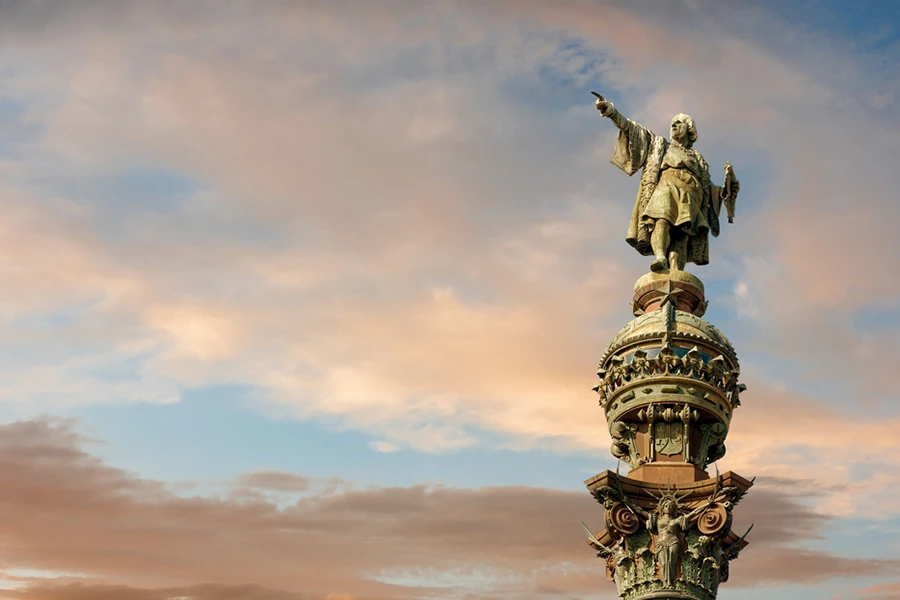
Don’t rush to judge Columbus, anthropologist encourages

October 9, 2017 CNA Daily News 4

Providence, R.I., Oct 9, 2017 / 10:33 am (CNA/EWTN News).- The controversies surrounding Christopher Columbus are sometimes misplaced and should not overshadow Columbus’ Christian motives in his voyages, a scholar of religious studies and anthropology has said.

“In recent times, Christopher Columbus has become the symbol for everything that went wrong in the New World, so much so that it has become difficult to celebrate the holiday commemorating his discovery of the New World,” Carol Delaney, a visiting scholar of religious studies at Brown University, told CNA.

“I have been dismayed by the lack of knowledge about the man by those who are rushing in judgment against him and changing the day that commemorates his extraordinary achievement.”

“While we may not agree with the scenario that motivated Columbus, it is important to understand him in the context of his time,” she added.

Delaney, who holds a doctorate in cultural anthropology from the University of Chicago, is author of the 2011 book “Columbus and the Quest for Jerusalem,” which examines Columbus’ religious motivations for his voyages.

Her book warns against misjudging Columbus’ motivations and accomplishments “from a contemporary perspective rather than from the values and practices of his own time.”

In her view, some criticism “holds him responsible for consequences he did not intend, expect, or endorse” and blames him for “all the calamities” that befell the “new world” he was once celebrated for discovering.

Columbus has been a major figure for Catholics in America, especially Italian-Americans, who saw his pioneering voyage from Europe as a way of validating their presence in a sometimes hostile majority-Protestant country. The Knights of Columbus, the largest Catholic fraternal organization in the world, took his name and voyage as an inspiration. At one point in the nineteenth century there were efforts to push for the voyager’s canonization.

In 1892, the quadricennial of Columbus’ first voyage, Leo XIII authored an encyclical that stressed Columbus’ desire to spread Catholic Christianity. The Pope stressed how Columbus’ Catholic faith motivated his voyage and supported him amid his setbacks.

In recent decades, some critics have stressed the negative aspects of Columbus’ voyage and European colonization of the New World, noting that European colonists’ arrival brought disease, violence and displacement to natives. Columbus Day holidays and parades have drawn protests from some activists.

Some U.S. localities have dropped observances of Columbus Day, while others have added observances intended to recognize those who lived in the Americas before Columbus sailed.

Delaney, however, questioned interpretations that depict Columbus as a gold-hungry marauder who did not care for the natives.

She said Columbus was motivated by the belief that all people must be evangelized to achieve salvation and by the belief that he could ally with the Great Khan of Cathay and secure enough gold to support an effort to retake Jerusalem.

“There was no intention of taking land or enslaving the people of the Khan, ruler of one of the greatest empires at the time,” Delaney said.

On his first return voyage to Spain, Columbus brought several natives who were not enslaved. Rather, they had been baptized and educated.

“One became his ‘adopted son’ and translator on future voyages, two were adopted by the (Spanish) king and queen,” she said.

After Columbus’ ship the Santa Maria ran aground on his first voyage, Columbus left 39 men on an island in the Caribbean with special instructions.

“He told them they should not go marauding, should not kidnap and rape the women, and should always make exchanges for food and gold,” Delaney explained.

“When he returned with more ships and people he found that all of the men whom he’d left behind had been killed. Unlike the priest who accompanied him, Columbus did not blame the natives, but his own men; clearly, they had disobeyed his orders.”

Delaney acknowledged that Columbus on later voyages enslaved some natives who resisted Christianization. At the same time, he also punished his own men who perpetrated misdeeds against the natives.

The scholar has also questioned uncritical treatments of the Spanish friar Bartolomeo de las Casas, who is sometimes compared favorably to Columbus.

While las Casas is now remembered primarily as a defender of the rights of native Americans, she said this came later in life. The friar also owned slaves, endorsed slavery, and operated plantations. He also helped suppress a native rebellion

Columbus never owned slaves and yet is “reviled and blamed for everything that went wrong in the Indies,” Delaney said in her book.


This article was originally published on CNA Oct. 13, 2014.

[…]

No Picture
News Briefs

Why this young woman spoke up against ‘Men for Choice’

October 8, 2017 CNA Daily News 3

Washington D.C., Oct 8, 2017 / 04:02 pm (CNA/EWTN News).- Men are often told they have no voice in the abortion debate, yet an ongoing program, “Men for Choice”, seeks to amplify the voices of men in order to support abortion.

One young woman, concerned about the program’s ability to silence the voices of all who speak up for the unborn, and in particular women who have been mistreated because of abortion, decided to stand up and voice her opinion on the men’s abortion advocacy.  

“People are always talking about choice, but it’s only one choice,” said Kate Bryan, a resident of Washington, D.C. “That’s what I feel about Men for Choice: they’re really only pushing for one choice and if you don’t stand with them, you shouldn’t have a voice.”

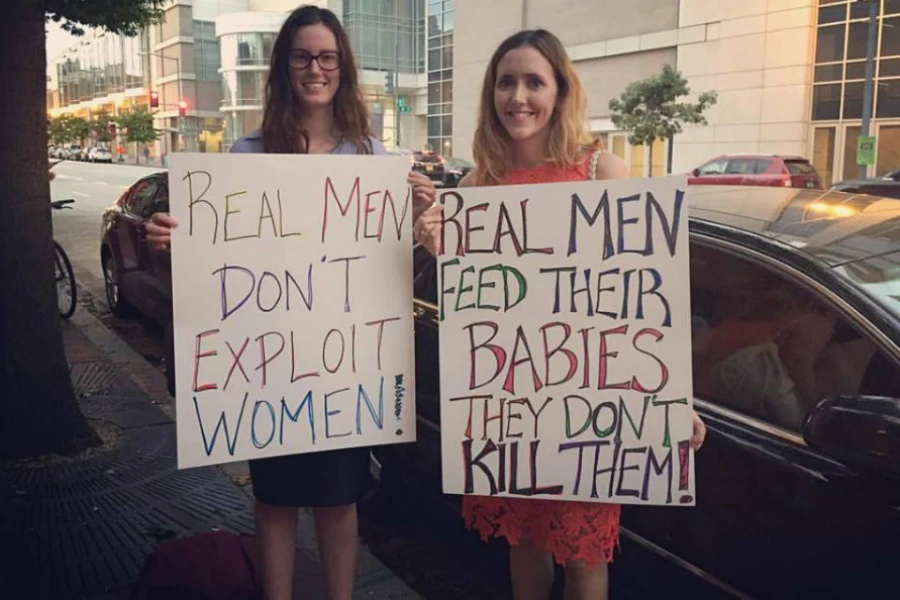
Bryan and a friend protested against an event promoting Men for Choice, an ongoing program coordinated by NARAL Pro-Choice America, a national abortion advocacy organization. Together, they carried signs reading “Real Men Don’t Exploit Women” and “Real men feed their babies they don’t kill them.”

She and a friend attended a Sept. 26 rally of Men for Choice in the nation’s capital, and said she plans on protesting future Men for Choice events. Bryan said she was motivated to protest for her pro-life beliefs, as well as her interest in supporting women’s voices and pushing back against what she described as the “exploitation” of women.

Bryan said she finds it “interesting” that the pro-abortion organization is trying to promote men’s support for abortion, given that it can open up “so many opportunities for abuse, coercion.” Bryan pointed to several examples of coerced abortion and the pressure some women faced from family and partners to get an abortion.

Bryan also participated to help educate attendees on the facts of abortion procedures. “Most people go into events with minds made up on abortion,” Bryan told CNA.

However, many of the women she talked to at the event didn’t know basic facts about abortion procedures, at what ages these procedures are performed, and NARAL’s policies on abortion. She said that several of the women she talked to expressed disbelief and then surprise as they came to accept these facts.

“I don’t know if we changed anybody’s mind, but at least we challenged people to think,” Bryan said.  

The experience was different, however, when encountering the male protestors, Bryan stated. “The majority of men that were walking past mocked us,” she recalled. “We weren’t doing anything, just standing out there with our sign, and we were happy to talk to people.”

Despite some of the more tense interactions, Bryan said she’s glad she protested.  “Abortion doesn’t lead to freedom. It’s not empowering to women.” Bryan said she would like to see more “real choices” for women, like community support for pregnant women, better workplace protections, and family leave.

“I really feel passionate about empowering women and giving them opportunities and helping them find true freedom,” Bryan stressed. “Women deserve better, men deserve better and children in the womb certainly deserve better.” 

[…]

No Picture
News Briefs

How the US can protect human rights in China

October 6, 2017 CNA Daily News 0

Washington D.C., Oct 6, 2017 / 01:01 pm (CNA/EWTN News).- The Trump administration should act to address “severe violations of religious freedom” in China, a bipartisan congressional commission said Thursday.

“Efforts to shutter and … […]