


Distribution Service: Fathom Entertainment
FCC Rating: G
Reel Rating: 2.5 out of 5 stars
The Dicastery for Promoting Christian Unity originated as the “Secretariat for Promoting Christian Unity,” which was founded by Pope John XXIII on June 5, 1960. But its roots go much deeper, all the way back to Christ’s priestly prayer in John 17, that “they may be one, just as You, Father, are in Me, and I in You.”
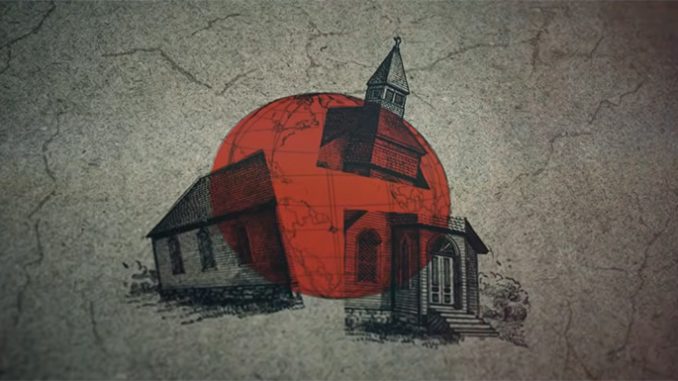
That They May Be One, which takes its name from this passage, is a new documentary that looks at the history of the ecumenical movement and its role in the church. While slow and somewhat vague in parts, it does capture the desire of the Church to bridge the divides between Christian groups in a meaningful way.
What is less clear, but more urgent, is how this movement will continue into the 21st century.
The film starts with an intriguing coincidence. In the second half of the 19th-century, an Italian nun named Elena Guerra, who was canonized by Pope Francis just two years ago, felt a strong call to spread devotion to the Holy Spirit. She started a religious order devoted to the third person of the Trinity and wrote to Pope Leo XIII in 1885, encouraging the Holy Father to invoke and dedicate the 20th-century to Him.
On January 1, 1901, Leo XIII did just that, beginning the year with the classic prayer “Veni Sanctus Spiritus.” On the same day, a group of preachers, including William Seymour and Agnes Ozman, were praying at a church in Topeka, Kansas, when there was a “sudden outpouring of the Holy Spirit,” and they began speaking in tongues. This is considered the start of the Pentecostal movement in the United States.
Vatican II’s “Decree on Ecumenism” began by stating: “The restoration of unity among all Christians is one of the principal concerns of the Second Vatican Council. Christ the Lord founded one Church and one Church only.” And it noted that division among Christians “openly contradicts the will of Christ, scandalizes the world, and damages the holy cause of preaching the Gospel to every creature.” A few decades later, Pope John Paul II expressed his strong belief “that believers in Christ, united in following in the footsteps of the martyrs, cannot remain divided.”
The film traces the history of the ecumenical movement through this last century to the present, interviewing many Catholic and Protestant leaders, though the Orthodox are largely absent. For the first time in centuries, the 20th-century saw real and serious dialogue between multiple parties, which led to profound events such as the lifting of mutual excommunications between Pope Paul VI and the Ecumenical Patriarch in 1965, and the “Joint Statement on Justification” with Lutherans in 1999.
More than these declarations, however, is the common love for Jesus expressed in mutual prayer and charity. The ultimate mark of a Christian is authentic love, and when Christians of all stripes can love together, it will bring not just unity in structure but will also deepen holiness.
This does not, of course, negate pitfalls or difficulties along the way. The film readily acknowledges the fear that ecumenical hopes could lead to a watering down of the Faith or even denial of doctrine. The key is not changing the true teachings of the Church, but being willing to engage the other and building faith in Jesus Christ. This includes being honest about theological differences and accepting where lines cannot be crossed.
For example, if someone does not believe the Eucharist is the Body and Blood of Christ, they should not receive Him. That would hinder unity through sacrilege rather than build faith. However, we can pray together and serve together.
The first act of the documentary, which focuses on the Holy Spirit, is quite compelling. Unfortunately, the film quickly loses momentum and never recovers. The second act drags on in a rather repetitive slog, with multiple interviewers repeating the same message. It also leans heavily on personal experience rather than examining concrete actions by the Church and misses several key developments, including the revival of apologetics and the role of social media. And, strangely, there is no mention of Eastern Catholic churches or the Anglican Ordinariate.
While the documentary’s intentions are sound and laudable, the film is light on solutions. Yes, Christ does will that all Christians “be one,” yet this will happen under the mantle of His Church. It would be both interesting and valuable to explore and envision how this could transpire. But we’ll have to wait for another documentary for that.
If you value the news and views Catholic World Report provides, please consider donating to support our efforts. Your contribution will help us continue to make CWR available to all readers worldwide for free, without a subscription. Thank you for your generosity!
Click here for more information on donating to CWR. Click here to sign up for our newsletter.

Oh sure. Protestants who call The Mother of God “nothing more than an incubator” will surely line up for a “unity” that doesn’t even remotely exist among Catholics.
And what is the purpose of defying the imperatives of Jesus Christ by pursuing the “unity” He dismissed. “A man’s enemies are members of his own household.”
I went to all of these churches on my journey to Rome: Baptist, Presbyterian, Anglican, and Lutheran.
Not once in those years did I here the crass expression about our Blessed Mother that I first hear today in our beloved combox.
I am being sarcastic. I for one, would applaud closer moderation of the combox. Very few Protestants if any, speak of the Mother of Jesus in the manner described above, “as nothing more than an incubator”.
We believed that she was good and holy, but not sinless. A far cry from the remarks made about some Protestants I have never heard about above.
Maybe it is okay for Catholics to desire unity with those Protestants like I was, who are not so candidly rude and vulgar?
Fundamentalists certainly do speak in such terms about the Blessed Virgin Mary. I know from direct experience, and I see it quite often on X.
I went to churches that identified as Independent Fundamental Baptist from 1978 to 1989. I haven’t followed the movement a lot since. I spoke rashly about something I did not know about.
My apologies for publicly doubting you Mr. Baker. I thank you, Mr. Editor for the correction. I will try to be more circumspect if I make any future posts.
No problem Mr. McKenzie. One of my many many faults is that I can be abrasive rather than measured in my posts.
Thank you Nr. Rory for sharing those thoughtful comments.
I used to attend a Wednesday night Bible study and prayer meeting at my neighbors’ rural fundamentalist church and I never heard the Blessed Mother referred to in that way either. They certainly held different ideas about Our Lady, but as an “incubator “, no.
Well maybe you should look around. This took about 30 seconds to find:
Less than two months ago Secretary of War Pete Hegseth’s “pastor” Doug Wilson (a Calvinist) spoke with Catholic podcaster John Papola to state Catholic church bells would be permitted, “but a parade in honour of the Virgin Mary, carrying an image of the Virgin Mary down main street, no”.
Baptist theologian Timothy George says Protestants often feel what might be called “ecclesiological hardening of the arteries” toward the Virgin Mary. This is characteristic of both conservatives, who want nothing to do with “idols,” and liberals, who, by denying the possibility of virgin conception, render Mary dogmatically useless.
That you never encountered the sort of open indurate hostility to Marian devotion is your personal good fortune, but that is not the experience of others or a complete survey of Protestant attitudes.
I have, as a Catholic routinely heard the judgement that Catholic veneration of Mary, while not quite latria, is sufficiently energetic enough (in their apparent ability to read hearts, minds and souls) to be a constructive idolatry and an detraction from Christ.
I have heard that particular demeaning characterization a number of times. But my point is to emphasize that there are variations of attitude, including those that are hostile, among so many that it makes the idea of unity seem futile. Endless “dialogues” between Catholic and Protestant scholars might achieve an improved understanding occasionally between two individuals from such a limited population sample, but a unified faith would require God to effectively eliminate free will to enable a unity of thought among all involved. This is why all Christians are unified in stumbling in our faith, indicating our need to constantly acknowledge this, which is addressed in the Catholic Sacrament of confession. And yet we can’t even inspire our fellow Catholics to take this gift seriously anymore.
Authentic unity tends to only occur is such things like the pro-life movement.
I’ve heard that from Protestants, and worse, and not just from strangers on the internet. You are quite correct about it’s being crass. This is the sort of thing that the Five First Saturdays are meant to make reparation for.
I desire real unity, even with those Protestants – meaning I want them all to convert to Catholicism, so that there can be unity in truth, with one Lord, one Faith, and one Baptism. I can’t say I expect it to happen soon. Unity of Faith is indeed missing with many who call themselves Catholics as well, and this produces extra roadblocks.
Those who prefer to fight with “enemies” will always find enemies to fight. Those who have found Unity already will live in Unity. We each get to choose. First step is to look within, as honestly as possible. The rest will flow from there. Beam in one’s own eye/ splinter in the eye of another.
Can you spare us the vacuous and vapid platitudes of the 1960’s radicals and Rodney King pseudo-philosophizing?
The simple fact is that while most people have no interest in enemies, enemies have an interest in people.
I can have no authentic unity-for just one example with people that sexually abuse others, especially children-whether it be molestation or corrupting their morals and stealing their innocence in a grade school. Evil exists and many people embrace it.
I can also have no unity with those that promote people are “useless eaters” and are openly at war with human fecundity, advocating for the mechanized slaughter of the unborn, and increasingly the infirm and the elderly.
When the pathological left speaks of unity, it wants submission. We’ve seen how quickly the calls for “unity” evaporate when they lose an election.
An excellent rebuttal TPR.
One of the biggest problems in the world today is a vision endlessly promoted by platitudinous liberal politicians. If we all agree to live in Mr. Rogers Neighborhood, all our problems will be solved.
Not true. Our sins and our delusions of not having sinned will continue.
If we live in unity with Christ, we will live in division with the world and those who are of the world. We all hate one master and love the other, the only question is which.
Aquinas’ Catena of Matthew 10:36 has St. John Chrysostom:
Chrys., Hom. xxxv: How then did He enjoin them, that when they should enter any house they should say, Peace be to this house, as also the Angels sung, Glory to God in the highest, on earth peace to men.[Luke 2:14] That is the most perfect peace when that which is diseased is lopped off, when that which introduces strife is taken away, for so only is it possible that heaven should be joined to earth. For so does the physician save the rest of the body, namely by cutting off that which cannot be healed. So it came to pass at the tower of Babel; a happy discord broke up their bad union. So also Paul divided those who were conspired together against him. For concord is not in all cases good; for there is honour among thieves. And this combat is not of His setting before them, but of the plots of the world.
I have always asked, “Who does the ecumenism? Is there an army I am not aware of? Is there a training program?
Can today’s Christian Nationalism be a hurdle?
USCCB: A divided Christianity is a scandal to the world and the movement of the Holy Spirit calls for the restoration of unity. Underlying the Catholic Church’s pursuit of ecumenism is the recognition that despite the separation, elements of the Church can exist outside the visible boundaries of the Catholic Church. Thus, it can even be said that the Church’s pursuit of ecumenism is another way of expressing her radical catholicity or universality.
Pray for all of society.
“I have always asked, “Who does the ecumenism? Is there an army I am not aware of? Is there a training program?
Can today’s Christian Nationalism be a hurdle?”
**********
“Christian nationalism” is a thing but it’s not a big thing. Most of the folks I’m aware of in that movement are not Trump supporters. They may have voted for Trump originally but have become disillusioned because he’s not really on board with them. Pres. Trump isn’t a libertarian, a hardcore right-winger, nor a traditional conservative.
Vatican Bourgeoisie, noted for their outstanding niceness, will likely settle for a loving humanism.
Affectionate Humanism is better placed than loving. Google AI’s definition:
A perspective defining humanism not merely as a secular worldview, but as a deep, passionate love for life, humanity, and the cultivation of human potential without divine intervention [See Humanism is Love in The Humanist.com Maggie Ardiente
With Todd Stiefel].
“I am amazed at myself: the more I love mankind in general, the less I love people in particular, that is, individually, as separate persons. In my dreams,” he said, “I often went so far as to think passionately of serving mankind, and, it may be, would really have gone to the cross for people if it were somehow suddenly necessary, and yet I am incapable of living in the same room with anyone even for two days, this I know from experience. As soon as someone is there, close to me, his personality oppresses my self-esteem and restricts my freedom. In twenty-four hours I can begin to hate even the best of men: one because he takes too long eating his dinner, another because he has a cold and keeps blowing his nose. I become the enemy of people the moment they touch me,” he said. “On the other hand, it has always happened that the more I hate people individually, the more ardent becomes my love for humanity as a whole.” ~ Brothers Karamatsov
Great report from Dostoevsky on humanism.
Thanks MrsC. We may be off topic of UNITY. However, we can’t deny that Trump is not a uniter, but a divider. UNITY? Except “believers in Christ, united in following in the footsteps of the martyrs, cannot remain divided.”
Your soft peddle deflection of Trump’s ideology seems to fall short of reality. Even Republicans can’t dismiss the fact that Trump is a convicted criminal sitting at the Resolute desk observing his Oval Office gold leaf on the walls. Some say Trump has a heart of gold. His opulent display, especially the unauthorized demolition of the White House East wing, our house, not his house, now exceeds $1 billion and will be paid for by taxpayers. This propirity disgrace when the average citizen can’t pay their bills.
I would disagree with your definition and the influence of CN as it applies to the US.
Factcheck:
Surveys indicate that around 20-30% of Americans identify with Christian nationalist beliefs.
The cultural impact of Christian Nationalism notably influences social issues, including education, immigration, and LGBTQ+ rights.
It plays a significant role in shaping policies with extreme rhetoric, especially within the Republican Party.
Christian unity may be more difficult than the bouncing ball of a peace plan for the Iran war.
I think President Trump was elected to be a disruptor not a divider. He really doesn’t fit into any political shoebox.
You are on the right track. Trump is surely a disruptor, but it takes a disruptor’s unbelievably blind sycophants bowing to his every command to reveal a real divider. His insane penchant for autocratic power makes him unqualified to continue in office. I used to sell shoes. I know of shoeboxes.
Thanks
Can you identify those who are Trump sycophants Mr. Morgan? I’m not sure I know any. Supporters, yes. Sycophants, no.
I know some who previously supported Trump because they misread him.
” I used to sell shoes. ”
And you ran for four touchdowns at Polk High, right Al?
This post would be a defensible and objective comment if there were complaints about the following in 2009-2017.
When Obama was was telling us his primary victory would be remembered as the day the seas began to lower (what should they be?), when he was awarded the Nobel Peace prize for being a cult of personality or when we were told he had an ‘incandescent” intellect, that he was “watching us, watch him” or when Peggy Noonan described him as “elegant”.
As it is, those sorts of not sycophancy, but hagiographies bordering idolatry were not subject to dispute.
My preferred 2028 candidate is an internet meme. Sweet Meteor of Death 2028! META (Make Earth Tunguska Already)
Government is YOUR golden calf and as soon as the left identifies its 2028 candidate the unrestrained and unmerited accolades will begin again.
The extreme rhetoic is in gullible acceptance of leftist narratives, extreme as in Orwellian.
You have to actually commit a crime to be justly convincted of a crime. Inventing non-existant statutes to apply retroactively, as was done with Trump, involves a crime by an anarchistic judiciary. Trump’s anti-elitism offends the self-esteem of those who build their esteem on presumptions of moral superiority.
And “fact checking” of surveys only reveals the dishonesty of those minds who view the practice of surveys as something other than the social manipulation for predetermined results that they are.
I’m sorry, but I don’t WANT “unity” with you. Nothing you write indicates any shared belief or principle that could be a unifying element and that starts with your expressed disrespect for marriage.