Columns

Sex, wokeness, and social justice

July 8, 2023 James Kalb 71

America and the whole Western world have just completed “Pride Month,” a string of observances celebrating all things LGBTQ. The message was that these things are normal and beneficial, a matter of choice and identity, […]

No Picture
News Briefs

Vatican to collect stories of Christian martyrs killed since 2000

July 5, 2023 Catholic News Agency 2
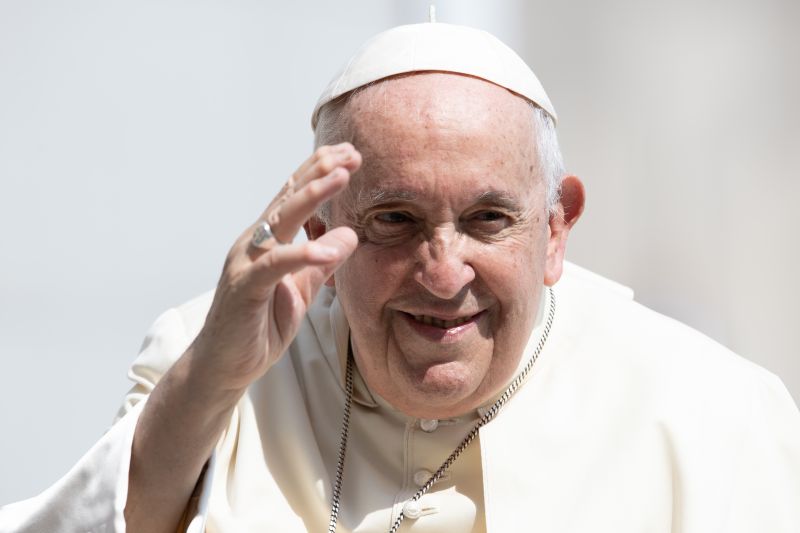
Pope Francis at the general audience in St. Peter’s Square on June 28, 2023. / Daniel Ibanez/CNA

Vatican City, Jul 5, 2023 / 04:02 am (CNA).

The Vatican announced Wednesday the creation of a commission to research and catalog the stories of Christian martyrs from the third millennium.

In a letter published July 5, Pope Francis said he has established the “Commission of New Martyrs — Witnesses of the Faith” within the Dicastery for the Causes of the Saints.

The commission’s task will be to create an archive of the lives of Christian martyrs, both Catholic and non-Catholic, killed in the last quarter century, the pope said.

Pope Francis noted that he is not modifying canon law on the formal recognition of martyrdom in the Catholic Church, but wants the testimonies of those killed for being Christian to stand “side by side with the martyrs officially recognized by the Church…”

“As I have said many times,” he wrote, “the martyrs ‘are more numerous in our time than in the early centuries:’ they are bishops, priests, consecrated men and women, lay people and families, who in the different countries of the world, with the gift of their lives, have offered the supreme proof of charity.”

The pope said he created the commission in light of the Church’s 2025 Jubilee Year, which will focus on the theme of hope.

“Hope keeps alive the deep conviction that good is stronger than evil because God in Christ has overcome sin and death,” he said.

Francis also recalled that St. Pope John Paul II had formed a similar commission on new martyrs for the Great Jubilee 2000.

The earlier commission, which received 13,000 testimonies of men and women who gave their lives for Christ in the 20th century, shared some of the stories during an ecumenical prayer service in the Colosseum on May 7, 2000.

Pope Francis said the 2025 Jubilee Year will include a similar event in order to remember what he has called the “ecumenism of blood.”

“Even in our time, in which we are witnessing a change of epoch, Christians continue to show, in contexts of great risk, the vitality of Baptism that unites us,” the pope said.

He noted that some Christians, though aware of the danger to their lives, have yet publicly lived their faith and participated in the Sunday liturgy; others have been killed while performing works of charity to the poor; and still others have been “silent victims,” losing their lives in violent upheavals.

“To all of them we owe a great debt and cannot forget them,” he emphasized.

The pope referenced St. John Paul II’s 1994 apostolic letter, Tertio Millennio Adveniente, which said that “everything must be done so that the legacy of the cloud of ‘unknown soldiers of the great cause of God’ is not lost.”

“In a world in which it sometimes seems that evil prevails, I am certain,” he said, “that the elaboration of this catalog, also in the context of the now upcoming Jubilee, will help believers to also read our time in the light of Easter, drawing from the treasure chest of such generous faithfulness to Christ the reasons for life and goodness.”

[…]

The Dispatch

Synod-2023: Reversing Vatican II?

July 5, 2023 George Weigel 25

The first words of the Second Vatican Council’s Dogmatic Constitution on the Church — one of the council’s two most important texts — signaled a decisive development in Catholic self-understanding. Rather than begin its reflection […]

No Picture
News Briefs

Pope Francis: Do you ‘live as a witness of Jesus?’

July 2, 2023 Catholic News Agency 4
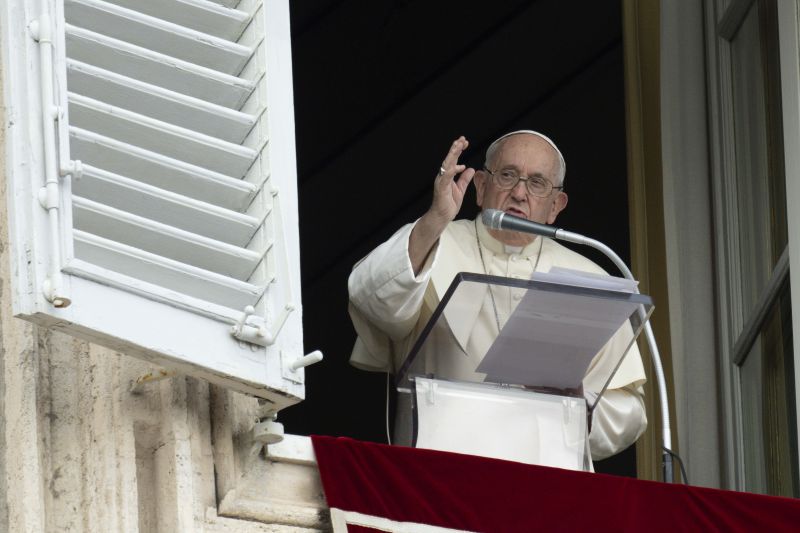
Pope Francis blesses the crowds in St. Peter’s Square after praying the Angelus on July 2, 2023. / Vatican Media

Vatican City, Jul 2, 2023 / 05:30 am (CNA).

Every baptized person is called to be a modern-day prophet, living as a witness of Jesus to others, Pope Francis said on Sunday.

In his Angelus address July 2, the pope recalled that at our baptism, each of us received “the gift of the prophetic mission.”

The pope, addressing an estimated 15,000 pilgrims and tourists gathered in St. Peter’s Square, said a prophet is not a kind of magician who can tell the future.

“This is a superstitious idea and a Christian does not believe in superstitions, such as magic, tarot cards, horoscopes and other similar things,” he said, lamenting that “many, many Christians go to have their palms read.”

“A prophet is a living sign who points God out to others, a prophet is a reflection of Christ’s light on the path of his brothers and sisters,” he explained, inviting everyone to ask themselves: “Do I live as a witness of Jesus?”

“Do I bring a little bit of his light into the life of another person? Do I evaluate myself on this? I ask myself: What is my bearing witness like, what is my prophecy like?” he said.

Pope Francis gave his weekly Sunday address, and recited the Marian prayer the Angelus, from a window of the Apostolic Palace.

He said not only are each of the baptized called to be prophetic witnesses of Christ, they also should welcome other Christians in their identity as prophets.

“It is important to welcome each other as such, as bearers of God’s message, each one according to his state and vocation, and to do it right where we live — that is, in the family, in the parish, in the religious community, in other places in the Church and in society,” he said.

“The Spirit,” he added, “has distributed gifts of prophecy in the holy People of God. This is why it is good to listen to everyone.”

His advice for making an important decision is to pray about it first of all and to call on the Holy Spirit.

“But then listen and dialogue trusting that each person, even the littlest, has something important to say, a prophetic gift to share,” Francis said. “Thus, the truth is sought and the climate of listening to God and our brothers and sisters is spread…”

People should feel accepted and valued because they are gifts, he said, not only because they say what we like to hear.

Pope Francis said we could avoid or resolve a lot of conflicts by listening to others with the desire to understand.

“So, finally, let us ask ourselves: Do I know how to welcome my brothers and sisters as prophetic gifts?” he said. “Do I believe that I need them? Do I listen to them respectfully, with the desire to learn? Because each of us needs to learn from others.”

After praying the Angelus, Pope Francis recalled the importance of continuing to pray for peace around the world.

“Even in this summer time, let us not tire of praying for peace, in a special way for the Ukrainian people, [who are] so worn out.”

“And let us not neglect the other wars, unfortunately often forgotten,” he added, “and the numerous conflicts and clashes that bloody many places on earth.”

“Let us take an interest in what is happening, let us help those who are suffering, and let us pray, for prayer is the gentle force that protects and sustains the world,” he concluded.

[…]

No Picture
News Briefs

FULL TEXT: Pope Francis’ letter to new doctrine chief Archbishop Fernández

July 1, 2023 Catholic News Agency 6
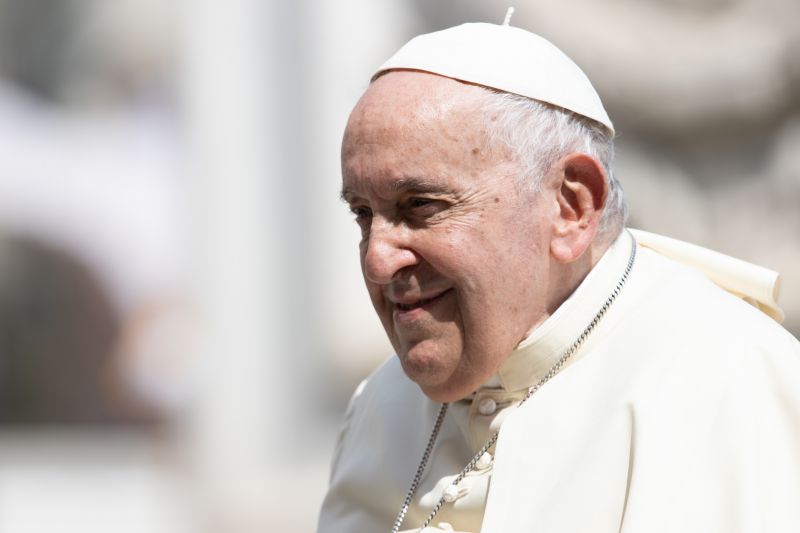
Pope Francis at the general audience in St. Peter’s Square on June 28, 2023. / Daniel Ibanez/CNA

Vatican City, Jul 1, 2023 / 13:22 pm (CNA).

The announcement on July 1 that Pope Francis has named Archbishop Víctor Manuel Fernández to lead the Dicastery for the Doctrine of the Faith was accompanied by a letter the Holy Father addressed to the Argentine theologian.

While Fernández’s appointment came as a surprise to many, the pope’s letter also has attracted attention because of what it reveals about Francis’ vision for the dicastery, one of the most important and powerful offices in the Roman Curia.

The pope says in the letter that the dicastery at times has promoted pursuing “doctrinal errors” over “promoting theological knowledge.”

“What I expect from you is certainly something very different,” Francis said. “I ask you as prefect to dedicate your personal commitment in a more direct way to the main purpose of the dicastery, which is ‘guarding the faith.’”

Quoting from his first apostolic exhortation Evangelii Gaudium, which Fernández reportedly helped to draft, Pope Francis emphasizes that the Church grows “‘in her interpretation of the revealed word and in her understanding of truth’ without this implying the imposition of a single way of expressing it.”

The pope said that differing “currents of thought in philosophy, theology, and pastoral practice, if open to being reconciled by the Spirit in respect and love, can enable the Church to grow.”

“It is good that your task expresses that the Church ‘encourages the charism of theologians and their scholarly efforts’ as long as they are not ‘content with a desk-bound theology’ with a ‘a cold and harsh logic that seeks to dominate everything.’”

The Holy See Press Office’s official English translation of the letter is below. Source material appears in footnotes beneath the letter.

Letter of the Holy Father to the new prefect of the Dicastery for the Doctrine of the Faith

To His Most Reverend Excellency

Archbishop Víctor Manuel Fernández

Vatican City, 1 July 2023

Dear Brother,

As the new prefect of the Dicastery for the Doctrine of the Faith, I entrust to you a task that I consider very valuable. Its central purpose is to guard the teaching that flows from the faith in order to “to give reasons for our hope, but not as an enemy who critiques and condemns” [1].

The Dicastery over which you will preside in other times came to use immoral methods. Those were times when, rather than promoting theological knowledge, possible doctrinal errors were pursued. What I expect from you is certainly something very different.

You have served as dean of the Faculty of Theology of Buenos Aires, president of the Argentinean Society of Theology and president of the Faith and Culture Commission of the Argentinean Episcopate, in all cases voted by your peers, who have thus valued your theological charisma. As rector of the Pontifical Catholic University of Argentina you encouraged a healthy integration of knowledge. On the other hand, you were parish priest of “Santa Teresita” and until now archbishop of La Plata, where you knew how to bring theological knowledge into dialogue with the life of the holy People of God.

Given that for disciplinary matters — especially related to the abuse of minors  — a specific Section has recently been created with very competent professionals, I ask you as prefect to dedicate your personal commitment more directly to the main purpose of the Dicastery, which is “keeping the faith” [2].

In order not to limit the significance of this task, it should be added that it is a matter of “increasing the understanding and transmission of the faith in the service of evangelization, so that its light may be a criterion for understanding the meaning of existence, especially in the face of the questions posed by the progress of the sciences and the development of society” [3]. These issues, incorporated in a renewed proclamation of the Gospel message, “become tools of evangelization” [4] because they allow us to enter into conversation with “our present situation, which is in many ways unprecedented in the history of humanity” [5].

Moreover, you know that the Church “grow[s] in her interpretation of the revealed word and in her understanding of truth” [6] without this implying the imposition of a single way of expressing it. For “Differing currents of thought in philosophy, theology, and pastoral practice, if open to being reconciled by the Spirit in respect and love, can enable the Church to grow” [7]. This harmonious growth will preserve Christian doctrine more effectively than any control mechanism.

It is good that your task expresses that the Church “encourages the charism of theologians and their scholarly efforts” as long as they are not “content with a desk-bound theology” [8], with a “a cold and harsh logic that seeks to dominate everything” [9]. It will always be true that reality is superior to the idea. In this sense, we need theology to be attentive to a fundamental criterion: to consider that “all theological notions that ultimately call into question the very omnipotence of God, and his mercy in particular, are inadequate” [10]. We need a way of thinking which can convincingly present a God who loves, who forgives, who saves, who liberates, who promotes people and calls them to fraternal service.

This happens if “the message has to concentrate on the essentials, on what is most beautiful, most grand, most appealing and at the same time most necessary” [11]. You are well aware that there is a harmonious order among the truths of our message, and the greatest danger occurs when secondary issues end up overshadowing the central ones.

In the horizon of this richness, your task also implies a special care to verify that the documents of your own Dicastery and of the others have an adequate theological support, are coherent with the rich humus of the perennial teaching of the Church and at the same time take into account the recent Magisterium.

May the Blessed Virgin protect and watch over you in this new mission. Please do not cease to pray for me.

Fraternally,

FRANCIS

Footnotes

[1] Apostolic Exhortation Evangelii Gaudium (24 November 2013), 271.

[2] Motu proprio Fidem Servare (11 February 2022), Introduction.

[3] Ibid., 2.

[4] Apostolic Exhortation Evangelii Gaudium (24 November 2013), 132.

[5] Encyclical Letter Laudato Si’ (24 May 2015), 17.

[6] Apostolic Exhortation Evangelii Gaudium (24 November 2013), 40.

[7] Ibid.

[8] Apostolic Exhortation Evangelii Gaudium (24 November 2013), 133.

[9] Apostolic Exhortation Gaudete et Exsultate (19 March 2018), 39.

[10] International Theological Commission, “The Hope of Salvation for Infants who die without being baptized” (19 April 2007), 2.

[11] Apostolic Exhortation Evangelii Gaudium (24 November 2013), 35.

[…]