No Picture
News Briefs

Pope Francis confirms Shanghai bishop appointed in violation of Vatican-China deal

July 15, 2023 Catholic News Agency 2
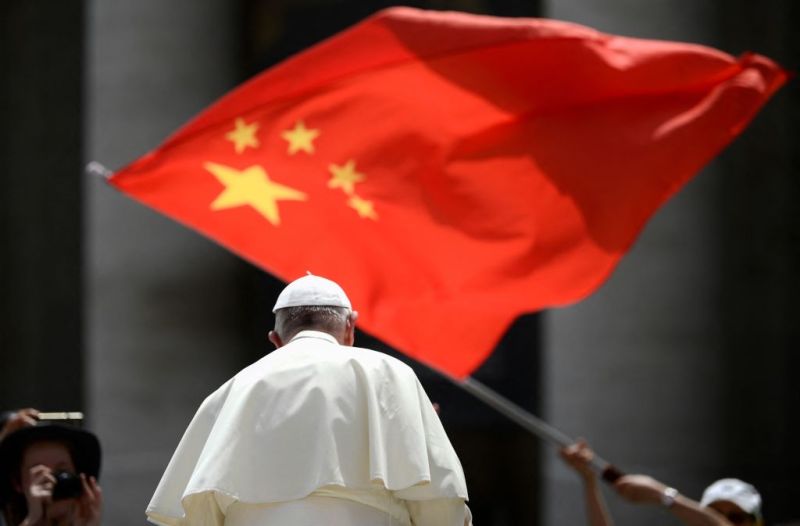
A worshipers waves the flag of China as Pope Francis leaves following the weekly general audience on June 12, 2019, at St. Peter’s square in the Vatican. / Photo by FILIPPO MONTEFORTE/AFP via Getty Images

Rome Newsroom, Jul 15, 2023 / 06:30 am (CNA).

Pope Francis has decided to approve the appointment of the bishop of Shanghai who was previously installed by Chinese authorities without the Vatican’s approval.

Vatican Secretary of State Cardinal Pietro Parolin announced on Saturday that Pope Francis wanted to “remedy the canonical irregularity created in Shanghai, in view of the greater good of the diocese and the fruitful exercise of the bishop’s pastoral ministry.”

Parolin said that the pope’s “intention is fundamentally pastoral” and will allow the bishop to “work with greater serenity to promote evangelization and foster ecclesial communion.”

Bishop Joseph Shen Bin was installed in Shanghai in April in violation of the Holy See’s provisional agreement with Beijing on the appointment of bishops. It was the second unauthorized appointment by Chinese authorities in the past year.

Pope Francis formally confirmed Shen Bin for the Shanghai post on July 15. Parolin said that the Vatican intentionally made “the decision to take time before publicly commenting on the case” to evaluate the pastoral situation in Shanghai, which has been without a bishop for over a decade.

In an interview with Vatican News published with the announcement of the Chinese bishop’s appointment, Parolin underlined that it is “indispensable, that all episcopal appointments in China, including transfers, be made by consensus, as agreed, and keeping alive the spirit of dialogue” between the Holy See and China.

The Holy See first entered into a provisional two-year agreement with Beijing on the appointment of bishops in 2018, which was renewed in 2020 and again in 2022.

One month after the Holy See agreed to renew the deal last October, the Vatican said that Chinese authorities violated the terms stipulated in the agreement by installing Bishop John Peng Weizhao as an “auxiliary bishop of Jiangxi,” a diocese that is not recognized by the Vatican.

Parolin explained that the text of the provisional agreement has been kept confidential “because it has not yet been definitively approved.”

“It revolves around the fundamental principle of consensual decisions affecting bishops,” he said.

“We are, therefore, trying to clarify this point, in an open dialogue and in a respectful confrontation with the Chinese side.”

When asked what other topics need to be discussed in the Vatican’s dialogue with China, Parolin listed evangelization, the bishops’ conference, and the communication between Chinese bishops and the pope.

The cardinal called for a Chinese bishops’ conference with “statutes appropriate to its ecclesial nature and pastoral mission” and the establishment of regular communication between Chinese bishops and the pope.

“In fact, it must be said that too many suspicions slow down and hinder the work of evangelization: Chinese Catholics, even those defined as ‘underground,’ deserve trust, because they sincerely want to be loyal citizens and to be respected in their conscience and in their faith,” Parolin said.

Despite the repeated violations, Parolin added that the Holy See is “determined” to continue dialogue with China.

“Indeed, the dialogue between the Vatican side and the Chinese side remains open and I believe that it is a path that is in some way obligatory,” he said.

“In order to make it smoother and more fruitful, it seems to me that the opening of a stable liaison office of the Holy See in China would be extremely useful. I take the liberty of adding that, in my opinion, such a presence would not only favor dialogue with the civil authorities, but would also contribute to full reconciliation within the Chinese Church and its journey towards desirable normality.”

Bishop Joseph Shen Bin

Shen Bin, 53, was consecrated as a Catholic bishop in 2010 with the consent of both the pope and Chinese authorities, according to the Vatican. He served as bishop of the Diocese of Haimen until April 2023 when he was transferred to Shanghai “without the involvement of the Holy See.”

Since 2022, Shen Bin has been the president of a group called the Council of Chinese Bishops, a state-sanctioned bishops’ conference not recognized by the Vatican. He previously was the vice president of the Chinese Catholic Patriotic Association established by the Chinese Communist Party and under the control of the United Front Work Department.

One month after Shen Bin’s installation, officials from the Chinese People’s Political Consultative Conference (CPPCC) visited Shanghai to evaluate the progress of “Sinicization” in the diocese.

In his installation ceremony, the bishop said that he would, “continue to carry forward the fine tradition of patriotism and love of the Catholic Church in Shanghai, adhere to the principle of independence and self-government, adhere to the direction of my country’s Catholicism in China, and better promote the healthy inheritance of Shanghai Catholic evangelization.”

The Diocese of Shanghai

The Diocese of Shanghai is the largest Catholic diocese in the country and home to the Basilica of Our Lady Help of Christians, also known as the National Shrine of Our Lady of Sheshan. The shrine, consecrated in 1873, is considered the first Basilica of East Asia and is one of the main pilgrim sites on the Mainland for Catholics.

The diocese was the hub of Catholic counter-revolutionary activity in the 1950s (and the city where the CCP was founded in 1921). Following Mao’s victory in 1949 Bishop Ignatius Kung Pin-Mei helped establish the apparatus of Catholic resistance that would become the underground Catholic church. On the night of September 8, 1955, Bishop Kung, along with several hundred other clergy and lay Catholics, were arrested for their defiance of the regime and their refusal to renounce union with the pope. By the end of the month, some 1,2000 Shanghai Catholics were arrested. Kung was imprisoned for a total of 30 years before coming to the United States in 1988.

The Diocese of Shanghai has been functionally vacant since the death of Bishop Aloysius Jin Luxian in 2013. Jin had been imprisoned and sent to reeducation camps, only to be fully freed in 1982. He was made bishop of Shanghai in 1985, during Deng Xiaoping’s period of opening up, but it wasn’t until 2005 that he was recognized by the Holy See. He played a critical role in reestablishing the Sheshan Seminary and in rebuilding the local Church in Shanghai.

Bishop Joseph Xing Wenzhi, who was ordained with papal approval and government approval, was made auxiliary bishop of Shanghai in 2005 and disappeared from the public in 2011.

Auxiliary Bishop Thaddeus Ma Daqin, Xing’s successor, denounced the CCPA during his ordination mass on July 7, 2012; later that night he was put under house arrest in the Sheshan Seminary, where he remains to this day.

[…]

No Picture
News Briefs

Meet the two new cardinals with ties to the U.S. 

July 10, 2023 Catholic News Agency 6
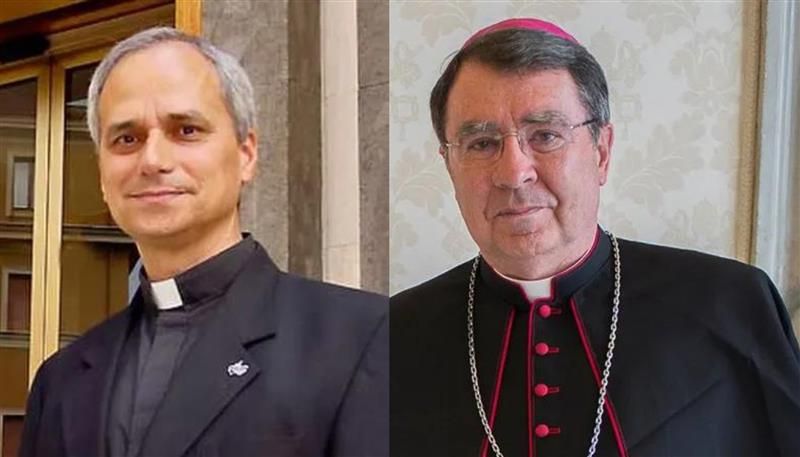
Archbishop Robert Prevost and Archbishop Christophe Pierre were among the 21 named cardinals by Pope Francis on Sunday, July 9, 2023. / Frayjhonattan, CC BY-SA 4.0, via Wikimedia Commons/L’Osservatore Romano

Washington D.C., Jul 10, 2023 / 15:20 pm (CNA).

Pope Francis named 21 new cardinals Sunday, two of whom, Archbishop Robert Prevost and Archbishop Christophe Pierre, have deep ties to the Church in the United States.

The president of the U.S. Conference of Catholic Bishops, Archbishop Timothy Broglio of the Archdiocese for the Military Services, USA, responded to the pope’s announcement in a Sunday statement, calling on the faithful to pray for the American Church’s newest cardinals.

“Please join me in praying for Cardinal-designate Prevost and Cardinal-designate Pierre as they continue their lives of service to the universal Church,” Broglio said. 

Broglio added that “for the Church in the United States, their ministry has been a true blessing. Our episcopal conference rejoices in this sign of recognition of these distinguished Churchmen.”

Prevost and Pierre will be formally elevated to the rank of cardinal, the highest position in the Church besides the pope, on Sept. 30.

So, who are the two new cardinals with U.S. ties?

Archbishop Robert Prevost

Archbishop Robert Prevost, 67, is the new head of the Vatican’s Dicastery for Bishops, an influential position responsible for recommending new bishops to the pope.

Born in Chicago, Prevost graduated with a bachelor’s degree in mathematics from Pennsylvania’s Villanova University in 1977. That same year he joined the Order of St. Augustine, also known as the Augustinians, making his solemn vows in 1981. He earned a master’s of divinity degree from Chicago’s Catholic Theological Union in 1982 and was ordained an Augustinian priest that same year. After being ordained, Prevost earned a doctorate in canon law from Rome’s Pontifical College of St. Thomas Aquinas in 1987.

He returned to Chicago for a short time in 1987, serving as pastor for vocations and director of missions for the Augustinian Province of Chicago. Prevost was then sent to Peru, where he served the Augustinians in various capacities including as a regional ecclesiastical judge and teacher of canon law in the diocesan seminary for Trujillo, Peru, for 10 years.

After being elected the head of the Augustinian Province of Chicago, Prevost returned to the U.S. in 1999. He was elected prior general of the Augustinians in 2001 and then reelected in 2007, serving as head of the order until 2013.

Pope Francis appointed Prevost as apostolic administrator of Chiclayo, Peru, in 2014, and he was ordained titular bishop of Sufar that same year.

While serving the Church in Peru, Francis made Prevost a member of the Dicastery for the Clergy in 2019 and then a member of the Dicastery for Bishops in 2020. On Jan. 30, Francis made Prevost prefect of the Dicastery for Bishops, a position he took up succeeding Cardinal Marc Ouellet on April 12.

Archbishop Christophe Pierre

Archbishop Christophe Pierre, 77, is the current apostolic nuncio to the United States, a position in which he serves as the Holy See’s representative to America. Pierre has extensive experience in the Church’s diplomatic corps and can speak French, English, Italian, Spanish, and Portuguese.

Born in Rennes, in northwestern France, Pierre attended school in Antisirabé, Madagascar, Saint-Malo, France, and Marrakesh, Morocco. He entered the seminary in Rennes in 1963. His time at the seminary was interrupted by two years of service in the French military, 1965-1966. After returning to the seminary, he was ordained a priest in 1970.

Pierre earned a master’s degree in sacred theology from the Catholic University of Paris in 1971 and a doctorate in canon law from the Pontifical Lateran University in 1977. 

After studying at the Pontifical Ecclesiastical Academy in Rome, Pierre went on to serve the Church as a diplomatic representative to New Zealand and the islands of the Pacific Ocean (1977–1981), Mozambique (1981), Zimbabwe (1982–1986), Cuba (1986–1989), Brazil (1989–1991), and as the Holy See’s permanent observer to the United Nations in Geneva (1991–1995). 

In 1995, Pierre was ordained a bishop in Saint-Malo, France. Pope John Paul II appointed him as the apostolic nuncio to Haiti, a position he held from 1995 to 1999. He then served as the apostolic nuncio to Uganda (1999–2007) and then to Mexico (2007–2016). 

After the retirement of Archbishop Carlo Viganò, Pope Francis appointed Pierre apostolic nuncio to the United States on April 12, 2016. 

[…]

No Picture
News Briefs

Pope Francis: Do we allow ourselves to be amazed at God’s works?

July 9, 2023 Catholic News Agency 4
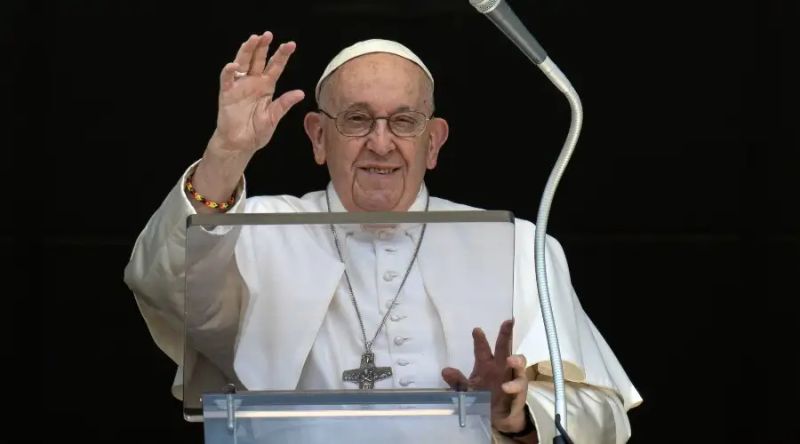
Pope Francis at the Angelus from St. Peter’s, July 9, 2023 / Vatican News

Vatican City, Jul 9, 2023 / 07:09 am (CNA).

The residents of three rich cities in the time of Jesus were incapable of marveling at his works and message, Pope Francis noted, seeing in their example a warning for the faithful of today.

Before praying the midday Angelus with a large crowd in St. Peter’s Square on this very warm Sunday, the Pope considered Jesus’s “very beautiful prayer” addressed to the Father and recounted in the Mass of today: “I thank you, Father, Lord of heaven and earth, that you have hidden these things from the wise and understanding and revealed them to little children.”

The Pope reflected on two questions about Jesus’s prayer: What are these “things” and who were they hidden from?

To answer the first question, the Pope noted that just before this passage Jesus recalled some of his works, including healings.

“The message, then, is clear. Let us not forget this,” Pope Francis said. “God reveals himself by liberating and healing the human person, with a gratuitous love that saves. This is why Jesus thanks his father, because his greatness consists in his love and he never works outside of love.”

Those who pretend to be great cannot understand these things, the Pope warned. 

“In this regard, Jesus names the inhabitants of three rich cities of his times — Chorazin, Bethsaida, Capernaum — where he had accomplished many healings, but whose inhabitants remained indifferent to his preaching. For them, his miracles were only spectacular events, useful for making news and to incite gossip. Once passing interest in them was over, they archived them, maybe in order to occupy themselves in other novelties of the moment. They did not know how to welcome the great things of God.”

Those who miss God’s message because they are “full of themselves” are contrasted with the “little children.”

Jesus praises the Father for “the simple people whose hearts are free from presumption and self-love. The little ones are those who, like children, feel their need and are not self-sufficient. They are open to God and allow themselves to be amazed at his works. They know how to read the signs, to marvel at the miracles of his love!”

Pope Francis invited the faithful to remember that “our lives, if we think about it, are filled with miracles.”

And he suggested that instead of being indifferent, we allow ourselves to be impressed:

“To impress — a beautiful verb that brings photographic film to mind. This is the correct behavior before God’s works: to take a photo of his works in our minds so they are impressed on our hearts, to then be developed in our lives through many good deeds, so that this ‘photograph’ of God who is love becomes ever brighter in us and through us.”

The Pope concluded, as he often does, with some questions for reflection, or examination of conscience: 

“In the deluge of news that overwhelms us, do I, as Jesus shows us today, know how to stop myself before the great things that God accomplishes? Do I allow myself to marvel like a child at the good that silently changes the world? And do I thank the Father each day for his works? May Mary, who exulted in the Lord, make us able to be amazed by his love and to thank him with simplicity.”

After praying the Angelus, the Pope announced that he will create 21 new cardinals in a consistory on September 30.

He also noted the new flare-up of violence in the Holy Land. He expressed his hopes that Palestinian and Israeli leaders would commit themselves to dialogue so that “we can put an end to the spiral of violence and open paths of reconciliation and peace.”

Patriarch Pierbattista Pizzaballa, the Latin patriarch of Jerusalem, who is among those the Pope has just named a cardinal, on July 4 condemned the Israeli government’s air and ground attacks on the Jenin refugee camp in the Palestinian West Bank after two unknown assailants launched rockets toward Israel from Lebanon.

In a statement on Twitter, the patriarch said, “the city of Jenin has been subject to unprecedented Israeli aggression, which also caused a lot of damage to our Latin parish in Jenin.”

“We condemn this violence, demand a ceasefire, and hope for the pursuit of peace and dialogue to prevent other future unjustified attacks on the population,” he said.

Pope Francis also noted that today is Sea Sunday. In addition to thanking the various people who work in ports and on the seas, he noted the many volunteers who dedicate themselves to cleaning the oceans. The Pope spoke of recent news about the amount of plastic that is found in the water and praised those who are working to combat this issue. 

In the same context, he thanked those who work to help the many migrants who try to find better lives by crossing the Mediterranean Sea. He has referred to this body of water as “Europe’s largest cemetery.”

Nearly 50 people were saved just last Friday off the coast of Libya. The International Organization for Migration has reported that the first quarter of 2023 was the deadliest first quarter since 2017, with 441 migrant deaths in the Central Mediterranean. In fact, according to that UN group, nearly 2,000 have already died this year. Part of that large number is due to one of the worst tragedies to ever occur: when the Adriana sank last month off the coast of Greece. The IOM estimates the number who died at 596.

[…]