Police have released images from a surveillance camera of a suspect they say vandalized Our Lady of Lourdes Catholic Church in Gales Ferry, Connecticut, on March 11, 2023. / Ledyard Police Department
Washington, D.C. Newsroom, Mar 13, 2023 / 11:38 am (CNA).
Police are searching for a man who burglarized and vandalized Our Lady of Lourdes Catholic Church in Gales Ferry, Connecticut, early Saturday.
The Ledyard Police Department reported that the man broke into the church, smashing windows and attempting to break into rooms using a crowbar. The police reported that the man further vandalized the church by painting “hateful” messages on the floor of the church meeting hall with black paint and more “hateful speech” on a wall that displayed a large crucifix.
Based on security camera footage from inside the church, police allege the man entered the building at about 1 a.m. Saturday, March 11, and stayed in the building for about two and a half hours. The police believe the man first tried to enter the building by throwing bricks at the front door but was unsuccessful. The police believe the man then walked around the outside of the building and broke windows with bricks, rocks, and religious items before breaking into a window on the north side of the building and entering the church.
Officers were dispatched to the scene at 7:35 on Saturday morning after the church reported the vandalism. The police department obtained images of the man through security camera video. The department has notified the FBI Civil Rights Unit, the Connecticut State Police Hate Crimes Unit, and the New London Judicial District Attorney’s Office, all of which are assisting the police with the investigation.
The police describe the suspect as a male in his mid- to late-20s with dark thinning hair and a distinctive beard with no mustache. The police said the man appeared to be wearing jeans, dark work boots, and a dark-colored winter jacket and was carrying a light-colored military-style backpack.
While police were on scene at Our Lady of Lourdes, at about 7:40 a.m. Ledyard Police Emergency Communications Center received a report that Seabury Anglican Church had a broken window next to the entrance of its church. The police do not believe that the Anglican church had been entered or subjected to any further damage. They suspect the same individual was involved in both incidents.
If you value the news and views Catholic World Report provides, please consider donating to support our efforts. Your contribution will help us continue to make CWR available to all readers worldwide for free, without a subscription. Thank you for your generosity!
Click here for more information on donating to CWR. Click here to sign up for our newsletter.
A Caritas Poland ‘Tent of Hope’ in Krościenko, southern Poland. / Caritas Poland.
Warsaw, Poland, Mar 22, 2022 / 06:45 am (CNA).
Poland’s Catholics are engaging in an unprecedented effort to help the more than 2 million people who have arrived … […]
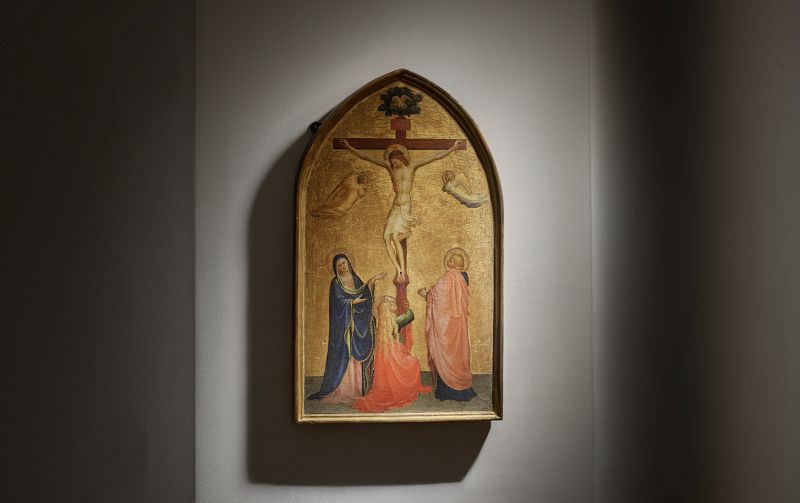
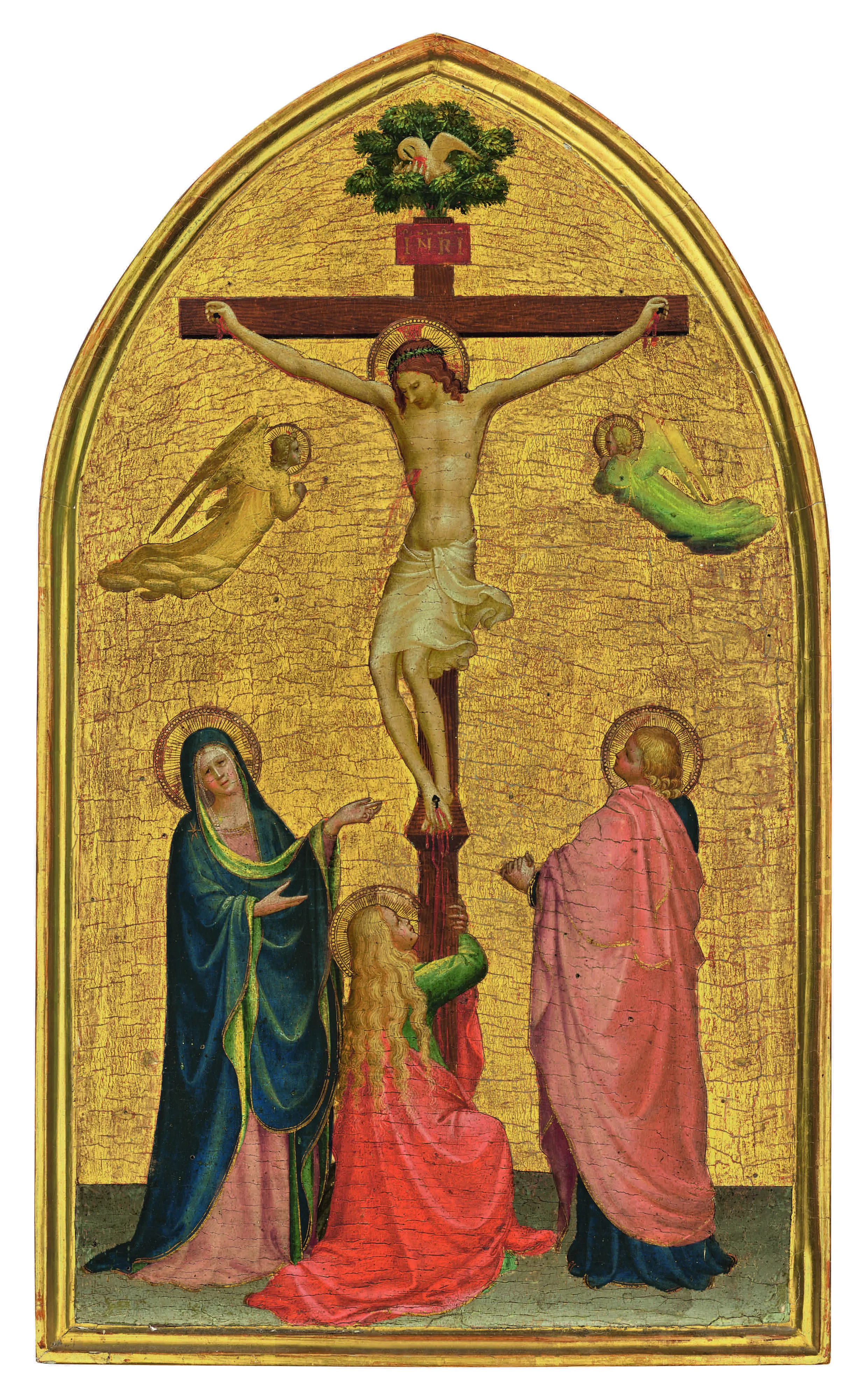
Fra Angelico’s “The Crucifixion with the Virgin, Saint John the Baptist and the Magdalen at the Foot of the Cross” / Christie’s
London, England, Jul 7, 2023 / 05:00 am (CNA).
The most publicized painting of the summer sale season is from the Italian Renaissance — and it’s unrepentantly religious — Fra Angelico’s Crucifixion just sold July 6 at Christie’s for over £5 million (about $6.4 million) to an unknown buyer, setting a new auction record for the artist.
Fra Angelico’s painting of the Crucifixion sold at Christie’s on July 6, 2023, for about $6.4 million. Photo courtesy of Christie’s Images Limited 2023
Just as the sensation of 2017 was “Christ as Salvator Mundi,” by Leonardo da Vinci, the latest is Christ as part of a Calvary scene. Fra Angelico died around the time that Leonardo was born, in the mid-15th century, and had been revered throughout Italy. For a major painting to come on the market by this artist is exceptional.
Christie’s is the same auction house that sold Leonardo’s work six years ago — it was the most expensive painting ever sold — $450 million, and the buyer was probably the Crown Prince of Saudi Arabia. It was an unlikely choice for the Guardian of the Holy Cities of Mecca and Medina, but for those with the means, the message is less important than the maker. It’s unlikely that Mohammed bin Salmanwas bidding for the Fra Angelico as “Jesus as Saviour of the World” is less of a worry for non-Christians than Jesus on the Cross.
The Catholic identity of Fra Angelico goes deeper than Leonardo’s. ‘Fra’ is a shortened form of the Italian word for brother, which is what he was within the Dominican Order. Originally named Guido di Piero, the friar-artist’s gentle nature led to the nickname “Angelico.”
All his known paintings are religious; many of them are in the convent of San Marco in Florence. He lived there for much of his life, painting for San Marco and other Catholic institutions. The settings present a problem for collectors as Fra Angelico’s paintings are mostly still attached to the walls. The cells and common areas of his friary are covered with them and unlike the high-value graffiti by Banksy, nobody is prepared to hack apart a historic building to remove the frescoes.
During Fra Angelico’s lifetime, his fame spread far and wide. Two successive popes were so impressed, they summoned the painter-friar to work on frescoes at the Vatican on different occasions. It was in Rome that he died before his 60th year. He was buried there, despite his strong attachment to Tuscany.
The importance of Fra Angelico’s work was closely tied to his character. Unlike so many artists of questionable morals, it seems that Fra Angelico led a blameless life and used painting as a form of worship. He felt himself to have been divinely inspired and few viewers would disagree. He reportedly wept whenever he painted the Crucifixion.
Even in a secular age, the power of his devotion is apparent. The glistening gold ground of the painted panel at Christie’s has an otherworldly glow. There is plenty of symbolism too, although some of this is lost amid the spellbinding colors and composition of this 25-inch-tall painting. A notable detail is almost invisible in the face of the grieving woman at the bottom of the painting. And above Christ’s head is a tiny Pelican in Her Piety, a well-known symbol of Christ’s sacrifice, chest bloodied from pecking in order to feed her young.
The atmosphere in the Christie’s viewing room for Part 1 of the Old Masters sale took on a heightened sense of the sacred with the Fra Angelico; therewas a hushed awe that matchedthe subject matter. (In the same space three months ago there was another painting of the crucifixion that also transformed the highly commercial space into a haven of contemplation. Craigie Aitchison is one of the few 20th-century artists to have made a name by painting Christ’s Passion.)
Fra Angelico was not always as well known as he is now. For centuries, his fame was eclipsed but then rose again in the 19th century, along with a revival of interest in deeply spiritual early Renaissance art.
Art historians such as Alexander Lindsay, 25th Earl of Crawford, championed what was often called “Catholic art” and Fra Angelico was one of his favorites. John Ruskin was another supporter, despite reservations about Catholicism. Most enthusiastic of all was that rare thing, an art writer who happened to be a Catholic cardinal. Nicholas Wiseman, the first Catholic Archbishop of Westminster, likened Fra Angelico’s “perfection in virtue” to “perfection in Christian art.”
In that 19th-century explosion of enthusiasm for Italian “Primitives,” many collectors in the UK and the USA acquired works that will seldom be seen again for sale. Still operating in London and New York, Colnaghi is the oldest commercial gallery in the world and has a long-time interest in Fra Angelico. Jeremy Howard of Colnaghi is a preeminent authority on the subject.
Before the auction Howard told CNA that, “Paintings by Fra Angelico on the market are rare — there have only been three sales this century — and rediscoveries are even rarer.”
“The present Crucifixion was identified in 1996,” he continued. “It was probably acquired in the early Victorian period by Lord Ashburton at a time of fervent religious revivalism … But you don’t need to be religious to appreciate the beauty and the raw emotional appeal of this very early work by one of the great pioneers of the Italian Renaissance.”
The last word should perhaps go to Pope John Paul II, who beatified Fra Angelico in 1982. The pope’s motu proprio was prefaced with a quote from Giorgio Vasari, the definitive art writer of the Renaissance. He described “Beato” Angelico (which is how he has always been known in Italy): “the one who does the work of Christ.”



Leave a Reply