

 By
The pontiff’s speech referred to his own recent cancer surgery.
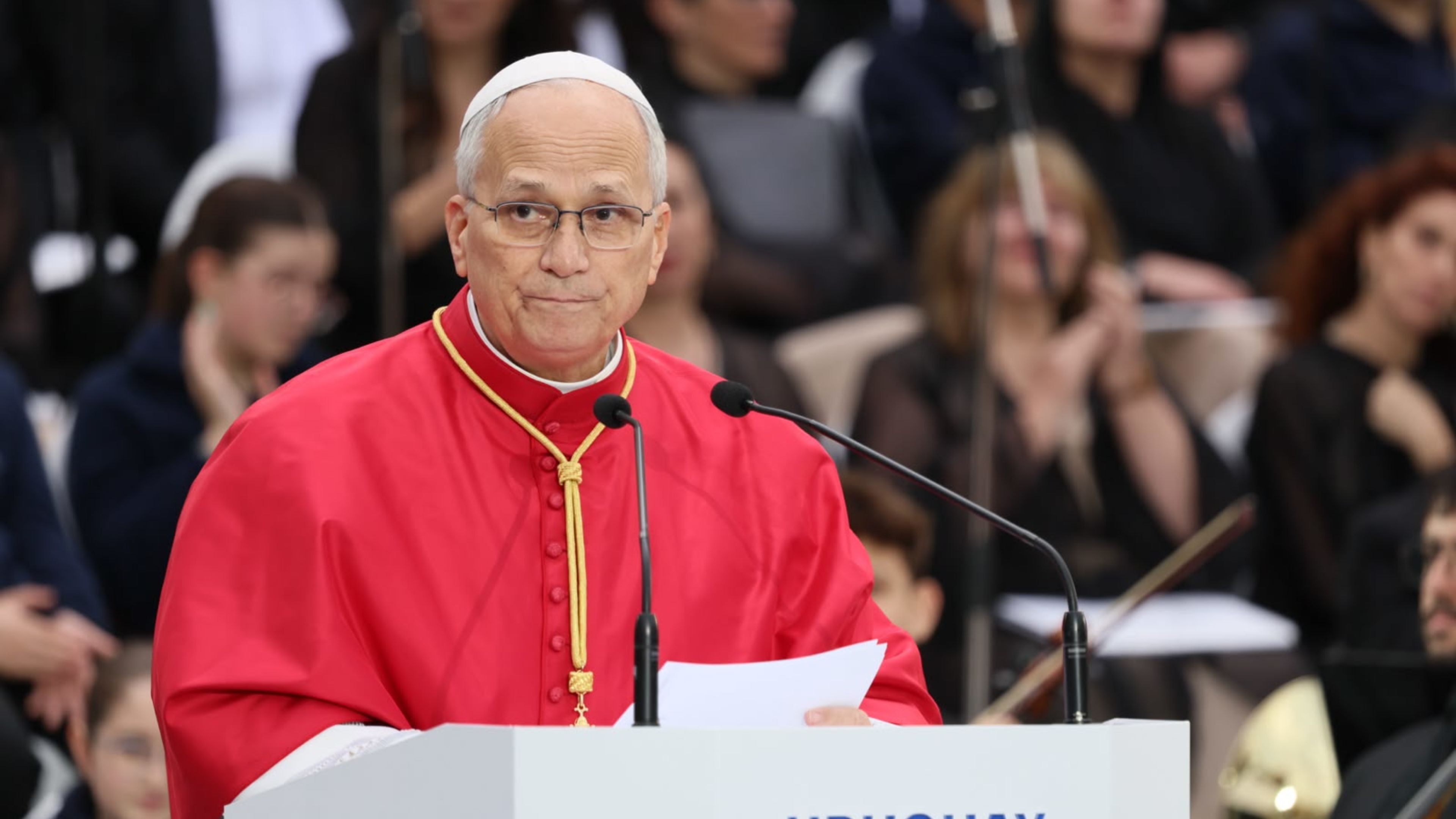
MONTEVIDEO, Uruguay — Pope Leo XIV on Friday opened his first visit to South America as pope with a call to protect life from its beginning in the womb until its natural end and to guarantee healthcare for all members of society.
The pope addressed Uruguay’s President Yamandú Orsi and other dignitaries in the country’s capital on the first day of an 11-day tour of the continent that will also take him to Argentina and Peru.
“The unborn already belong to the human family and to the future of their people. Their absolute dependence on their mother does not diminish the dignity to which they are entitled or the protection they deserve,” Leo said.
Though he did not directly mention euthanasia, which Uruguay legalized last year, the pope stressed the need to preserve life even in the midst of suffering.
“Given the painful reality of suicide, it is clear that adequate healthcare, family ties, and the closeness of the community are inseparable. None should ever feel like a stranger among their own or think that their absence matters less than their presence,” Leo said. “It is everyone’s responsibility to ensure that each person can live with dignity, receive the care they need, and be accompanied until the natural end of his or her life.”
Euthanasia, the intentional ending of a human life in order to relieve suffering, is forbidden by Catholic teaching.
The pope referred to his recent surgery for lung cancer, less than a month before his trip to South America, in his call for universal healthcare.
“Recently I experienced firsthand the limitations imposed by illness and I received care for which I am deeply grateful. That experience makes me think of the many men and women who lack the means to obtain a timely diagnosis or receive the treatments they need. Ensuring that healthcare is accessible to everyone, regardless of their resources, is a duty that confronts every society,” Leo said.
Uruguay is exceptional among Latin American countries for the extent of its state-provided social services. It is also one of the most secular countries in the region, where more than half the population does not identify with organized religion and the official state calendar refers to Holy Week as Tourism Week.
Echoing remarks he made in September in France, whose model of secularism has historically influenced Uruguay, Leo called for religious believers and institutions to take part in public life.
“The secular character of the state involves an obligation to ensure that there is room for believers and nonbelievers to live together in freedom and respect. This neutrality does not require that the religious dimension be confined to the private sphere,” the pope said. “Individuals and religious communities can contribute to the common good while respecting the autonomy of civil institutions.”
If you value the news and views Catholic World Report provides, please consider donating to support our efforts. Your contribution will help us continue to make CWR available to all readers worldwide for free, without a subscription. Thank you for your generosity!
Click here for more information on donating to CWR. Click here to sign up for our newsletter.

Leave a Reply