

 By
Bishop Wilfred Chikpa Anagbe alleged that repeated warnings before the deadly attack on the Yelwata community went unheeded.

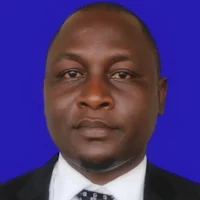
MAKURDI, Nigeria — Bishop Wilfred Chikpa Anagbe of Nigeria’s Diocese of Makurdi has faulted the government over persistent attacks in Benue state and other parts of the country, saying authorities have the capacity to end the violence but lack the political will.
In a Nov. 3 interview with ACI Africa, the sister service of EWTN News in Africa, Anagbe alleged that repeated warnings before the deadly attack on the Yelwata community went unheeded.
“If the government wants this problem to stop, it can stop. Nigeria is capable of handling this issue, but they are not willing to do so. It is not that they lack the capacity; they lack the willingness,” he said.
The bishop spoke while attending a national workshop for lay leaders of various Church groups organized by the Catholic Secretariat of Nigeria (CSN).
Referring to the attack on the Yelwata community, he said warnings were issued about a month and three weeks before the violence, and again 24 hours before the attack.
According to Anagbe, local vigilantes responsible for alerting the people issued the warnings, but no preventive action followed.
He said the attack lasted about four hours, which he believed provided sufficient time for security personnel to intervene.
“But no help came,” he lamented.
The Nigerian member of the Missionary Sons of the Immaculate Heart of Mary (CMF/Claretian Missionaries) maintained that local vigilante groups could contribute to addressing the violence if the government demonstrated sufficient commitment.
“If the government wants, even the vigilantes in the villages can handle this issue. I am not even talking about the police,” he said.
The bishop also expressed concern about the government’s approach to former insurgents described as repentant fighters, warning of the possibility of such individuals infiltrating security structures.
Remembering the victims of Yelwata
Anagbe assured families affected by the violence that the Church had not forgotten their suffering.
He said the victims were initially denied a proper burial. The Church later gave them a Christian burial and inscribed their individual names on a memorial in Yelwata.
“The message is simple: The people must know that the Church has not forgotten them. We remember what they went through, how they died, and the fact that they did not have a proper burial,” he said.
The bishop, who began his episcopal ministry in October 2014 as coadjutor bishop of Makurdi Diocese, said the memorial would preserve the victims’ identities for future generations.
“By putting their names on the memorial, we ensure that their memory is preserved for generations. These are not fictitious names; each victim’s name is recorded there,” he said.
Catholic faith in public service
Anagbe, who chairs the Episcopal Commission for Laity at the Catholic Bishops’ Conference of Nigeria (CBCN), also urged lay Catholics to translate their faith into action through political leadership, education, economic development, and the promotion of justice.
Describing the laity as the backbone of the Church, he said they have many apostolates in which they must participate fully. Their presence in different professions and institutions, he added, gives them significant opportunities to influence society.
“They are the salt of the earth and the light of the world,” he said.
“Let them truly be the salt that enlivens, refreshes, and gives taste and meaning to life and society. When you eat food without salt, it becomes tasteless. And without light, you can easily stumble and fall,” he added.
Anagbe said baptism and confirmation call lay Catholics to bear witness to Christ beyond their participation in Church activities. He identified politics, socioeconomic development, sports, and education as areas in which they should demonstrate their commitment to the Gospel.
Their professional roles and positions of authority, he said, give them greater opportunities than clergy to influence these sectors.
The bishop expressed concern that some Catholic politicians fail to reflect Christian values in public office, stressing that religious affiliation alone does not guarantee authentic Christian witness.
“We do not simply need politicians who identify as Catholics. Some may belong to the Church, but their actions show that they are not living the faith in their public responsibilities,” he said.
He urged Catholic politicians to demonstrate consistency between their religious identity and the way they exercise public responsibility.
“You must be a genuine Catholic and a politician at the same time. It is not enough to attend Mass and worship God during election campaigns while failing to live the Christian life in your daily responsibilities,” he said.
“Being a Catholic must be evident in both words and deeds. That is what it means to be the salt of the earth and the light of the world.”
This story was first published by ACI Africa, the sister service of EWTN News in Africa, and has been adapted by EWTN News.
If you value the news and views Catholic World Report provides, please consider donating to support our efforts. Your contribution will help us continue to make CWR available to all readers worldwide for free, without a subscription. Thank you for your generosity!
Click here for more information on donating to CWR. Click here to sign up for our newsletter.

Leave a Reply