No Picture
News Briefs

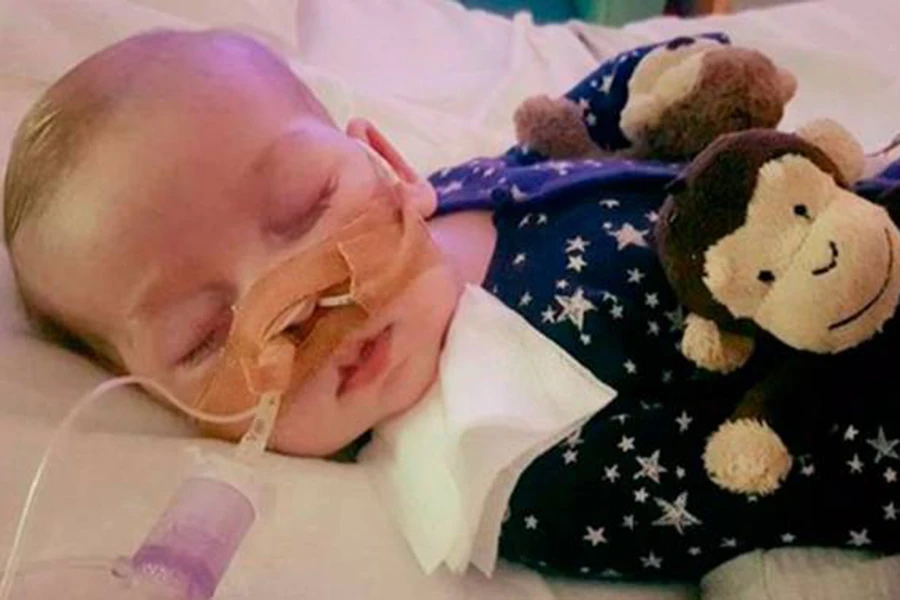
London hospital seeks another hearing in Charlie Gard case

July 7, 2017 CNA Daily News 0

London, England, Jul 7, 2017 / 04:46 pm (CNA/EWTN News).- Great Ormond Street Hospital in London is applying for a new hearing with the high court after new evidence suggests the critically ill baby could benefit from an experimental treatment.

The decision comes after a team of seven international medical experts alerted the hospital that fresh, unpublished data suggested that an experimental drug could improve Charlie’s brain condition.

One of the signatories of the letter is a researcher and neurologist with the Vatican-owned Bambino Gesu Hospital in Rome, which offered to transfer Charlie to their facilities earlier this week. Great Ormond Hospital said they denied the transfer for legal reasons.  

“Two international hospitals and their researchers have communicated to us as late as the last 24 hours that they have fresh evidence about their proposed experimental treatment,” a hospital spokesman said, according to the BBC.

“We believe, in common with Charlie’s parents, it is right to explore this evidence,” they said.

“Great Ormond Street Hospital is giving the High Court the opportunity to objectively assess the claims of fresh evidence…It will be for the High Court to make its judgment on the facts,” they said.

Charlie has been diagnosed with mitochondrial depletion syndrome, a rare genetic disease thought to affect just 16 children in the world. The disease causes progressive muscle weakness and can cause death in the first year of life.

Charlie’s case has caught international attention for the various legal battles that his parents, Chris Gard and Connie Yates, have fought in an attempt to save their son’s life.

The current decision of the hospital to apply for the appeal comes as a surprise after Charlie’s parents were denied their request by the High Court to take Charlie to a hospital in the United States to seek experimental treatment, even after they had raised over $1 million to take him there. Charlie’s parents were also denied their request to take their son home to die.

Both the Vatican pediatric hospital and Pope Francis have expressed their support for Charlie.

“The Holy Father follows with affection and emotion the story of Charlie Gard and expresses his own closeness to his parents,” read a July 2 statement issued by Vatican spokesman Greg Burke.
 
“He prays for them, wishing that their desire to accompany and care for their own child to the end will be respected.”
 
On June, the day the Charlie’s life support was initially scheduled to be disconnected, the Pope also used his Twitter account to send a clear pro-life message in the infant’s favor:

“To defend human life, above all when it is wounded by illness, is a duty of love that God entrusts to all.”

Charlie’s case will be heard by Justice Francis on Monday at 2 p.m. local time (9 a.m. Eastern) according to a High Court listing.


[…]

No Picture
News Briefs

Pope Francis to G20 Summit: With great power comes great responsibility

July 7, 2017 CNA Daily News 0

Hamburg, Germany, Jul 7, 2017 / 10:44 am (CNA/EWTN News).- Pope Francis sent a message to leaders of the world’s economy gathered for the G20 summit in Hamburg, Germany, reminding them of the responsibility they have to care for those not represented at the summit.

The G20 Summit is annual meeting of heads of state and finance from the leaders of the world’s economy. While only 20 countries are members, they represent 85 percent of the world’s GDP and two-thirds of it’s population.

German Chancellor Angela Merkel is hosting this year’s G20 Summit in Hamburg, Germany from July 7-8. The summit has been met this year with small but significant groups of mostly anti-capitalist protesters, who among other things are protesting the meeting of U.S. President Donald Trump with Russian President Vladimir Putin.

In his address to the leaders, Pope Francis reflected on four key themes, starting with “time is greater than space,” at which point he told the group to consider effective solutions for the immigration crisis that has hit Europe and the Middle East in the past several years. Immigration was already listed on the agenda of the G20 group, for which the Pope said he was thankful.

“An effective solution, necessarily spread over time, will be possible only if the final objective of the process is clearly present in its planning,” he said.

“In the minds and hearts of government leaders, and at every phase of the enactment of political measures, there is a need to give absolute priority to the poor, refugees, the suffering, evacuees and the excluded, without distinction of nation, race, religion or culture, and to reject armed conflicts.”

He paused to especially remind the group of the crisis in South Sudan, where thirty million people are lacking the food and water to survive.

In his next point, “unity prevails over conflict,” the Pope reminded the group that “war…is never a solution”, reiterating the words of Pope Benedict XV.

“There is a tragic contradiction and inconsistency in the apparent unity expressed in common forums on economic or social issues, and the acceptance, active or passive, of armed conflicts,” Francis said.

The Pope also told the summit in his third theme that “realities are more important than ideas”, and asked them not to fall into the ideologies of the first half of the 20th century that brought “exclusion, waste and even death.”

“I pray to God that the Hamburg Summit may be illumined by the example of those European and world leaders who consistently gave pride of place to dialogue and the quest of common solutions: Schuman, De Gasperi, Adenauer, Monnet and so many others,” he said.

And finally, the Holy Father asked the global leaders to remember that “the whole is greater than the part.”

“Problems need to be resolved concretely and with due attention to their specificity, but such solutions, to be lasting, cannot neglect a broader vision,” he said.

“While it is reasonable that G20 Summits should be limited to the small number of countries that represent 90% of the production of wealth and services worldwide, this very situation must prompt the participants to a profound reflection. Those states and individuals whose voice is weakest on the world political scene are precisely the ones who suffer most from the harmful effects of economic crises for which they bear little or no responsibility,” he noted.

“This great majority, which in economic terms counts for only 10% of the whole, is the portion of humanity that has the greatest potential to contribute to the progress of everyone.”

At the end of his remarks, the Pope asked for God’s blessings on the summit.


[…]

No Picture
News Briefs

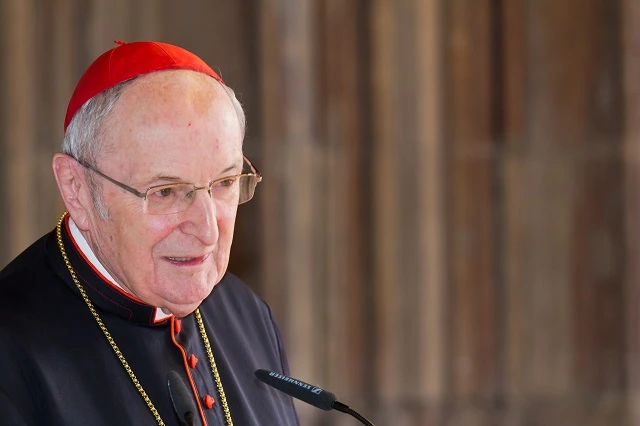
Cardinal Joachim Meisner, one of four ‘dubia’ cardinals, dies at age 83

July 5, 2017 CNA Daily News 5

Bad Füssing, Germany, Jul 5, 2017 / 05:25 am (CNA/EWTN News).- Cardinal Joachim Meisner, archbishop emeritus of Cologne, Germany and one of four cardinals who sent the “dubia” to Pope Francis last year, passed away Wednesday morning at the age of 83.

According to a press release from the Archdiocese of Cologne, the cardinal died July 5 while on vacation in Bad Füssing, Germany. Recently, the prelate had lived in Cologne.

Archbishop of Cologne from 1989-2014, he retired with the permission of Pope Francis in February 2014, at the age of 80, the same year his age made him ineligible to vote in a conclave.

Cardinal Meisner, alongside Cardinals Carlo Caffarra, Walter Brandmüller and Raymond Leo Burke, submitted five “dubia,” or doubts, about the interpretation of Amoris laetitia to Pope Francis on Sept. 19, 2016.

The letter, made public in November, asked for clarification on Chapter 8 of the document, which touches on the reception of communion for divorced and remarried couples.

In May, the four – dubbed the “dubia cardinals” – sent a letter to the Pope requesting a private audience to discuss the content of the “dubia,” since they have yet received no response.

Cardinal Meisner, considered a leading conservative Catholic figure in Germany, stood in contrast to other German prelates who have propagated one of the more liberal interpretations of Chapter 8 of the post-synodal document.

Born in Breslau, Germany on December 25, 1933, Cardinal Meisner was ordained a priest for the Diocese of Erfurt-Meiningen in 1962. Later he studied at the Pontifical Gregorian University in Rome, receiving his doctorate in theology in 1969.

He was appointed auxiliary bishop to the Apostolic Administrator of Erfurt Meiningen in 1975, and elected a delegate to the fourth Ordinary General Assembly of the Synod of Bishops at the Vatican in 1977, where he renewed a friendship with then-Cardinal Karol Wojty?a.

Cardinal Wojty?a became Pope John Paul II one year later, and appointed Meisner Bishop of Berlin in 1980, elevating him to the position of cardinal in 1983.

In 1988 Cardinal Meisner was made Archbishop of Cologne, serving in this position until his retirement at age 80 on Feb. 28, 2014.

He participated in the 2005 and 2013 papal conclaves which elected Pope Benedict XVI and Pope Francis. He had close relationships with both Pope St. John Paul II as well as Joseph Ratzinger, now-Benedict XVI, whom he would visit at the Vatican.

[…]

No Picture
News Briefs

Pope’s hospital in Rome offers to take Charlie Gard

July 3, 2017 CNA Daily News 2

Vatican City, Jul 3, 2017 / 08:17 pm (CNA/EWTN News).- The president of the Pediatric Hospital Bambino Gesu in Rome, also known as the “Pope’s Hospital”, has offered to transfer Charlie Gard to his facilities.
 
Charlie is a 10-month-old baby who suffers a terminal illness and will be disconnected from life support in the next days, against the will of his parents, but at the allowance of the European Court of Human Rights.
 
President of the hospital, Mariella Enoc, tweeted that the Holy Father’s own words in support of Charlie “sum up well the mission of Hospital Bambino Gesú”.
 
“For this reason, I have asked the health director to check with the Great Ormond Street Hospital in London, where the neonate is recovered, if there are sanitary conditions for an eventual transfer of Charlie to our hospital. We know that the case is desperate and that, until now, there are no effective therapies,” the statement said.
 
“We express our closeness to parents in prayer and, if this is their desire, we are available to welcome their child with us, for as long as he lives.”
 
Charlie has been diagnosed with mitochondrial depletion syndrome, a rare genetic disease thought to affect just 16 children in the world. The disease causes progressive muscle weakness and can cause death in the first year of life.
 
Charlie’s parents, Chris Gard and Connie Yates, successfully conducted a fundraiser of more than $1 million to take their son to the United States for experimental treatment, but their request has been denied by the London hospital and by the courts.
 
On June 27, the European Court of Human Rights agreed with hospital and the British courts, finding the baby’s parents’ appeal “inadmissible.” The Gards were also banned from taking Charlie to die at home.
 
While Charlie’s life support was to be disconnected on June 30, Connie Yates announced on Facebook that the hospital authorities had agreed to allow the parents to have a little more time with their son.
 
On Sunday, July 2, the Holy See Press Office director Greg Burke issued a statement in which Pope Francis called for respect for the will of Charlie Gard’s parents.
 
“The Holy Father follows with affection and emotion the story of Charlie Gard and expresses his own closeness to his parents,” read a July 2 statement issued by Vatican spokesman Greg Burke.
 
“He prays for them, wishing that their desire to accompany and care for their own child to the end will be respected.”
 
On Friday, the day the Charlie’s life support was initially scheduled to be disconnected, the Pope also used his Twitter account to send a clear pro-life message in the infant’s favor.

To defend human life, above all when it is wounded by illness, is a duty of love that God entrusts to all.

— Pope Francis (@Pontifex) June 30, 2017


[…]

No Picture
News Briefs

Rise in priest suicides prompts call for helpline in Ireland

July 3, 2017 CNA Daily News 2

Dublin, Ireland, Jul 3, 2017 / 04:28 am (CNA/EWTN News).- Besides a shortage of vocations, Irish priests are facing an even more harrowing kind of crisis.

At least eight priests in Ireland have committed suicide in the past 10 years, according to recent reports given at meetings of the Association of Catholic Priests (ACP), and many priests are sounding the alarm about a severe dip in morale and a mental health crisis among the country’s clergy.  

The drop in priestly morale has clergy calling for a confidential helpline to be set up for priests needing support.

At a recent ACP meeting, an attendee reiterated the request: “Our morale is affected because we are on a sinking ship. When will the ‘counter-reformation’ take place? We’re like an All-Ireland team without a goalie. We need a national confidential priests’ helpline. We’re slow to look for help.”

The concerns of a severe dip in the morale and well-being of priests in the country have been raised by the 1,000-member clerical group in at least three different meetings in the past few months.

Fr. Roy Donovan, a spokesman for the ACP, told IrishCentral in May that besides the priests who are speaking up, he believes many more elderly churchmen are suffering in silence, and don’t know where to go for help.

The factors for the crisis in morale and mental health are several-fold, priests have said.

Like much of the world, Ireland, once a thriving Catholic country, is facing a serious vocations crisis. In 2004, Ireland had more than 3,100 priests. By 2014, the last year data is available, the number had declined by more than 500, with 2,627 priests in the country, though the number of active priests is likely closer to just 1,900.

This shortage leads to a phenomenon called clustering, where several parishes are combined into one for lack of leadership, increasing priests’ workload and subsequent stress, and forcing many priests to work well beyond retirement years because of the lack of new vocations.  

“These men lived through a time when there were plenty of vocations and their churches were full at Mass, so there’s a loss of esteem. Also, in the past they would have had live-in housekeepers. Now most don’t and are on their own and so feeling a lot more isolated and lonely, as well as feeling nervous and more vulnerable,” Fr. Brendan Hoban, one of the founders of ACP, said during a meeting in November 2016.

Also, starting in the 1990s, the Catholic Church in Ireland was rocked by a sex abuse scandal that resulted in a massive decline in both vocations and in the faith of the laypeople.

Priests reported being disheartened by the declining faith in the people they serve, “who have so little contact with the church from First Communions to funerals,” according to minutes from the meetings.

Priests’ confidence “has been eroded when we see so many people going through the motions of faith,” they said.

Recently, the Church in Ireland has also been rocked by negative press regarding the Bon Secours Mother and Baby Home in Tuam, and the Sisters there “did a disservice by not clarifying exactly what happened. They need to do so immediately. It makes our job impossible, especially as we face a storm on abortion next year,” the priests noted at a meeting.

Their requests included the hiring of a media person who could speak clearly for clergy and bishops in times of crisis. The country is also facing an ongoing, heated debate about whether or not to legalize abortion.

The priests also acknowledged that they need to be better about asking for help when they need it.

“We need to unmask and say ‘I need help!’ There is a great sense of ‘being alone,’ making our own way in the diocese. There is a lack of dialogue among priests in the diocese. Yet, people are fantastic and generous in parishes, if given half-a-chance.”


[…]

No Picture
News Briefs

German bishops criticize parliament’s approval of gay marriage

June 30, 2017 CNA Daily News 4

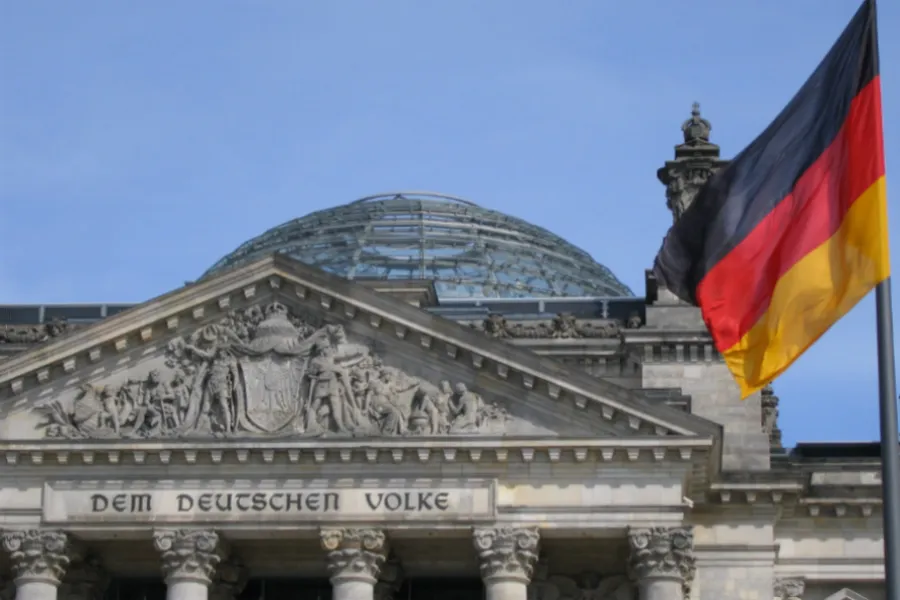
Berlin, Germany, Jun 30, 2017 / 12:08 pm (CNA/EWTN News).- Archbishop Heiner Koch of Berlin expressed his regret Friday at the German parliament’s vote in favor of legalizing same-sex marriage, saying it had abandoned the fundamental characteristics of marriage.

“The fathers of the (German) constitution gave marriage such pride of place because they wanted to protect and strengthen those who, as a mother and father, want to give life to their children.”

“I regret the fact that the legislature has given up on essential aspects of the marriage concept in order to make the latter amenable to same-sex partnerships,” he said June 30.

Lawmakers in Germany’s parliament voted in favor of legalizing same-sex marriage in the country by changing the definition of marriage in their legal code to include two persons of the same sex.

In a statement reacting to the vote, Archbishop Koch, chairman of the commission for marriage and family of the German bishops’ conference, said he also regrets a loss in differentiation between different forms of partnership as a means to “stress the value of same-sex partnerships.”

Regarding different forms of relationship, “differentiation, however, is not discrimination,” he said.

“If the protection of relationships and the assumption of shared responsibility is now provided as a justification for the opening of marriage,” he continued, “then this means a substantial rebalancing of content and a dilution of the classic marriage concept.”

He went on to stress that the Church’s understanding of marriage and its sacramental nature have not changed with the law, and that Catholics must continue to present publically the truth and goodness of the reality of marriage as being between one man and one woman.

“As the Catholic Church, we will now increasingly face the challenge of convincingly presenting the vitality of the Catholic understanding of marriage,” he said. “At the same time, I recall that the sacramental character of our marriage understanding remains unaffected by today’s decision in the Bundestag.”

The vote passed the lower house of Germany’s parliament 393 to 226, with four abstentions. The vote, which took place in a sudden and somewhat unexpected manner, was added to Friday’s agenda by the Social Democratic Party of Germany, the Greens, and The Left.  

German Chancellor Angela Merkel herself voted against the redefinition, pointing to her belief in marriage as being between a man and a woman.

However, the chancellor paved the way for the vote to take place with the announcement Monday that she had changed her position on adoption by same-sex couples and would allow deputies of her party, the Christian Democratic Union of Germany (CDU), a free vote, so they could act according to their “conscience,” she said.

Several of those who voted in favor of the change in definition are members of the Central Committee of German Catholics.

The move was opposed by the Christian Social Union in Bavaria, Alternative for Germany (which holds no seats in the Bundestag), and some members of the CDU.

The session was the final before parliament’s summer recess and the country’s national elections in September.

Representatives of the Church in Germany, including the chairman of the German bishops’ conference, Cardinal Reinhard Marx of Munich and Freising, spoke out against the measure shortly before the vote.

“The German Bishops’ Conference emphasizes that marriage, not only from a Christian point of view, is the bond of life and love of woman and man as a principally lifelong connection with the fundamental openness to life.”

“We are of the opinion that the State must continue to protect and promote marriage in this form,” they stated.

Since 2001, it has been legal for same-sex couples in Germany to enter into civil unions, although now they will be allowed the legal protections of marriage, including the option to adopt children.

From here the legislation goes on to the upper house of Parliament for formal approval. It then requires the signature of President Frank-Walter Steinmeier to go into effect, which will likely take place before the end of 2017.

With this change, Germany joins more than 20 other countries that have legalized gay marriage over the last 16 years, including Ireland and the United States in 2015.

[…]