No Picture
News Briefs

Chile hopes Pope Francis’ visit will bring a ‘revolution of tenderness’

July 15, 2017 CNA Daily News 3

Rome, Italy, Jul 15, 2017 / 06:04 am (CNA/EWTN News).- The head of communications for Pope Francis’ upcoming visit to Chile said the country is in a period of social unrest, but the country has hope his trip will help them to rebuild on a foundation of love and tenderness.

“We are really expecting that he will start a ‘revolution of tenderness,’ those are the words of the Pope,” Fr. Felipe Herrera told CNA July 12.

“We have no social cohesion…people are angry against the government, congress, against the Church, against big enterprises, small enterprises, even with their neighbors. We need to rebuild our society on love, trust, fraternity and freedom. So we hope to hear that from the Pope.”

Fr. Felipe Herrera, a priest of the Archdiocese of Santiago, said all Chilean people, not only the Catholics, are excited about the visit.

What will be the Pope’s main message of the trip? The only one who can know that for sure “is the Pope” himself, Fr. Herrera said, but they expect him to bring “the word of Christ, the word of the Lord, particularly calling all Christians to be involved in the life of society.”

“Sometimes as a Church, we live inside of the ‘temple,’ and we need to go out and to witness his love everywhere. And in this case I think we need to rebuild our country in fraternity and trusting each other.”

A detailed schedule of the Pope’s trip has not yet been released, but the Vatican announced in June that Francis will visit Santiago, Temuco, and Iquique Jan. 15-18, 2018. From there, the Roman Pontiff will travel to Peru Jan. 18-21.

His first stop will be the capital city of Santiago, from there traveling south to Temuco, in one of the regions affected by devastating wildfires that raged for weeks in January 2017.

Considered the worst in the Chile’s history for the damage caused, at least 11 people lost their lives in the flames, and countless homes, livestock, and pastures were destroyed. The Pope’s visit will fall just one year after the fires.

Temuco is in a very beautiful area of the country though, Fr. Herrera said. It is also the home of the indigenous Mapuche people, who have been at the center of a decades-long conflict surrounding the rightful ownership of the territory.

Since the start of the disputes in the 1990s, Mapuche have been responsible for fires, shootings, and kidnappings in the country, as negotiations to return their rightful land, taken from them by former dictator Augusto Pinochet, have stalled.

In 2016, 227 acts of violence were reported in the Araucania and Biobio regions, including 61 building fires. Of these, 16 were churches or other religious structures.

There has been conflict, Fr. Herrera said, because of the land they have not received, but deserve. “I think the Pope will bring a ceasefire message to that area.”

In the north of the country is the town of Iquique, a city which receives most of the immigrants coming into Chile, so it’s likely the Pope will have a message for immigrants in that city, he said.

Iquique is also the capital of religious festivities in Chile.

Nearly 50 miles to the east, in the same diocese, is the town of La Tirana, home of a shrine to Our Lady of Mount Carmel. There, every year starting on July 12 and ending on the feast day of July 16, Chile holds a week-long festival celebrating Our Lady, including fireworks and traditional dances.

Considering his devotion to the Blessed Virgin Mary, Pope Francis is likely to make a stop at one of the country’s many shrines to Our Lady, including, possibly, the shrine to the Immaculate Conception, on top of Santiago’s San Cristóbal Hill.

One of the principal shrines in Chile, it is known for its large statue of the Immaculate Conception, which is 46 feet tall and stands on a 27 foot tall pedestal.

St. John Paul II visited the shrine during his visit to Chile in 1987. His trip 30 years ago is still remembered and spoken of by the Chilean people today, Fr. Herrera said. He hopes this new visit by a Pope will have the same effect.

“We hope that this new visit from the Pope will bring us a real ‘revolution of tenderness’ among all Chileans and will be a huge topic for the next 30 years,” he said.

“We need a revolution of tenderness, loving each other, and fraternity among all Chileans.”

[…]

No Picture
News Briefs

Bishops stress hospitality for Camino de Santiago hosts

July 14, 2017 CNA Daily News 0

Santiago de Compostela, Spain, Jul 14, 2017 / 04:38 pm (CNA/EWTN News).- The bishops of Spain and France have published a new letter emphasizing the importance of hospitality for people who host pilgrims on the Camino de Santiago, offering guidelines for how they can welcome and care for the spiritual needs of those making the long trek.

In the letter the bishops noted that hospitality is a tradition that has been practiced in all ages and civilizations, and “is not to question or to prosecute, but only to welcome, to give food and drink, a bed and money for the trip, words of esteem and direction.”

It is the same kindness that Abraham showed to the strangers who came to his door in Mambre, and is “the mercy that the Samaritan showed to the wounded man, carrying him to an inn and leaving money so that he could be healed and recovered during the necessary time,” they said.

Published July 12, the letter is titled “Welcome and Hospitality on the Camino,” and is directed at those who host pilgrims that walk the historic “Camino de Santiago,” or “the Way of St. James.”

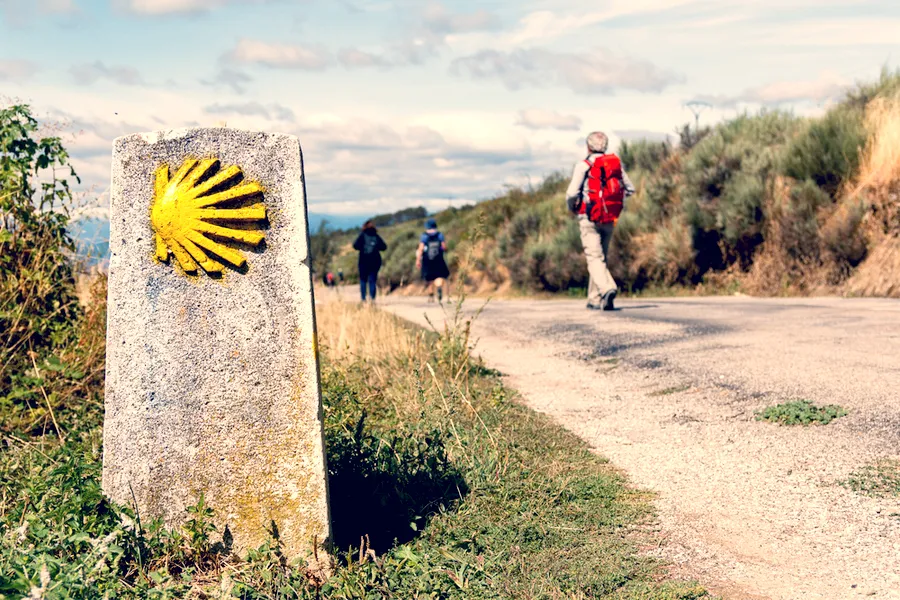
Often referred to simply as “the Camino,” it is an ancient pilgrimage consisting of a network of trails across Europe all leading to the tomb of the saint in Santiago, Spain.

Pilgrims have been making the journey for well over a thousand years to commemorate the life and sacrifice of the apostle. Although it is traditionally a religious pilgrimage, many non-believers also make the trek for a variety of motivating reasons.

The requirement to be a certified pilgrim of the Camino states that walkers must complete at least 100 kilometers, or about 62 miles.

Hundreds of thousands of pilgrims, individual or in groups, make the Camino each year, staying at hostels, low-cost hotels, with families or in religious communities along the way.

In the 20-page long letter, published in Spanish, the bishops of Spain and France pointed to the fact that hospitality “has a long tradition along the Camino de Santiago.”

This history, they noted, “was not always the most desirable,” and at times was marked by greed, deceit and a lack of compassion for the poor and sick. However, in recent decades the Camino has again taken up and multiplied hospitable initiatives and gestures.

“The presence of Christians on the Camino is essential to maintain the religious tradition of the great pilgrimage to Santiago de Compostela and to be active witnesses of faith in Christ,” they said, insisting that there be “visible signs” of the faith in places where pilgrims stay, but “without being exaggerated.”

As part of showing specifically “Christian” hospitality, the bishops asked that there be a crucifix at the entrance of the house or institution as well as one in each room. They also asked that there be an image of St. James, and accompanying brochures that explain his life.

They requested that an image of Mary also be hung somewhere in the building, and if possible, that it be a representation of a local Madonna. They also encouraged hosts to provide bibles in different languages and recent writings of the Popes.

Pamphlets and fliers with guides to nearby monuments and announcements of feasts and activities in Santiago, the final destination of the pilgrimage also ought to be provided, as well as information on prayers and different novenas, and papers with information on liturgies, hostels, museums and office hours for the Pilgrim Office in Santiago.

If there is a church near to the location of where the pilgrim is staying, the host, with the help of local parishioners, is encouraged to speak with the priest to arrange the opening hours so their guests can have the opportunity to “contemplate and meditate” about their experience.

The bishops also urged these parishes to offer Vespers, Mass and a special blessing for pilgrims before they start their journey again. If there is a priest among the group of pilgrims, they are asked to officiate the celebrations and announce them so that others may also participate.

Christian hosts are also asked by the bishops to advise other, non-Christian hosts of the church and office opening hours in case pilgrims staying with them are interested.

For religious houses and monasteries that host pilgrims, the bishops noted that many pilgrims “look for them and appreciate” staying with them. As such, the institutions “must be expanded” and offered “targeted support” to help them provide for pilgrims’ needs.

They are asked by the bishops to invite guests to respect the rules of the order and to keep silence, and to pray with members of the order when possible.

Members of the order, depending on their specific rule, may also eat with pilgrims at meal times. When opportunities arise, they are encouraged to speak with pilgrims, to listen to them and to explain their vocation.

In order to ensure that there is always someone available for this specific task, the bishops asked that all monasteries designate a specific monk or sister fill the role, “so that at whatever time of the day they reach the monastery they can be welcomed as Christ himself.”

As in regular hostels and hotels, the bishops requested that monasteries and convents also provide information on the Santiago pilgrimage and what they will find at the end, as well as on the history of their order, their specific monastery and those who inhabit it. In the case of parishes, they are requested to have information available on the priesthood.

For individuals who decide to host pilgrims, the bishops stressed the importance of being well-formed in the faith, saying “the mere act of being baptized and a practicing Catholic is not enough to be a Christian host.”

“A formation is needed which allows one to deepen in their own faith,” they said, noting that hosts will inevitably have to respond to a variety of different questions on the faith, including deeply reflective questions on the Nicene Creed, the Our Father prayer, religion, morals and the Church itself – her history, administration, role and how it differs from other denominations.

The bishops emphasized the importance of listening to pilgrims without asking jarring or probing questions, saying “the Christian host is not a journalist nor a psychologist.”

“Journalists need immediate answers, opinions on progress; that the interviewee provides, without reflection, their feelings about the event that has just occurred,” they said.

“Neither is the Christian host a psychologist or social assistant who, eager to put maieutics into practice, will try to get the other to speak about themselves and so formulate notions that the interlocutor doesn’t know or had never expressed.”

“Maieutics” refers to the method used by Socrates when he attempted to elicit knowledge from a person through interrogation and an insistence on close and logical reasoning.

“Not everyone is Socrates,” the bishops said, stressing that to impose dialogue on someone that begins with questions such as “what is your impression?” or “is the Camino giving you what you hoped for at the beginning?” will only prompt immediate and superficial answers, such as “there are too many people,” or “I met a nice couple.”

Rather, a Christian host, they said, “must give testimony of their faith in at least two ways. In first place, by example.”

This example doesn’t lie in the mere fact of being a “Christian” hotel or hostel, but the welcome pilgrims receive “must be open, fraternal and joyful for all and whoever arrives, without distinction, even if the pilgrim is in a bad mood, has a bad temper, smells bad or is even aggressive.”

“In every pilgrim that appears, the host will see Christ, will see the work of the Creator, and will welcome him into their home,” the bishops said, urging hosts to receive pilgrims “with joy, because the faith should not be sad, sulky or depressed.”

The bishops also stressed the importance of conveying the pilgrimage as a journey toward hope in which each step brings the pilgrim closer to their goal.

“Each host is a testimony of this hope, of the love of God, of the forgiveness of sin, of redeemed humanity,” the bishops said, adding that “their way of being, their method of welcome, the deep joy that they must radiate, are testimonies of the faith.”

“The host will also give testimony to their faith by listening to the pilgrim if they want to talk,” however, “they will not at any time force that desire to express oneself.”

In order to help pilgrims on along their journey, the bishops requested that specifically Christian hostels operate on donations, or at “a very affordable price.” They also encouraged those who have completed the Camino to volunteer, so they can “give back what they have received during their pilgrimage.”

The bishops closed the letter noting that, according to Pope Francis, to be a pilgrim means primarily “to be in movement, to be uninstalled, to go out from stillness, which becomes a comfort that paralyzes and waits – inactive, routine, formalistic – and to advance free of conditions, to read with realism the events of existence.”

“The experience of the pilgrimage is seen by the Pope as a great symbol of human and Christian life,” they said, and entrusted all who give hospitality to the protection of Mary.

Because it is through Mary, they said, that the Son of God “entered and began his pilgrimage in the world and, as a consequence, the truth of the incarnation and of redemption is linked to the truth of Mary.”

[…]

No Picture
News Briefs

Have you heard of Venerable ‘Mama Bosco’?

July 14, 2017 CNA Daily News 2

Turin, Italy, Jul 14, 2017 / 11:21 am (CNA/EWTN News).- While St. John Bosco is a beloved saint among Catholics, many do not know that his mother, Margaret Bosco, was declared Venerable in 2006 and has an advancing cause towards beatification.

Margare… […]

No Picture
News Briefs

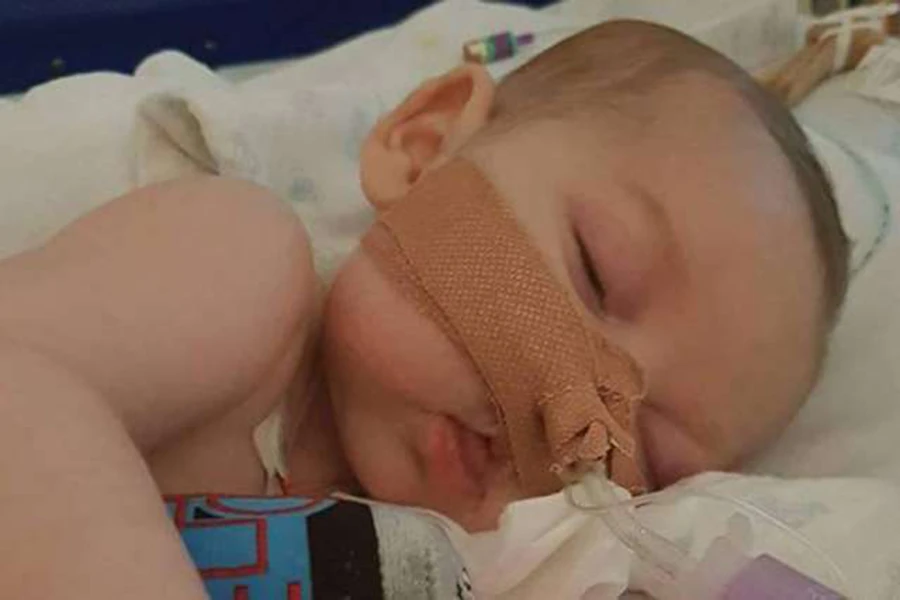
US neurology expert will visit UK to examine Charlie Gard

July 14, 2017 CNA Daily News 1

London, England, Jul 14, 2017 / 09:25 am (CNA/EWTN News).- The American doctor whose experimental treatment has been sought by the parents of Charlie Gard will travel to London on Monday, after a judge ruled that he could examine the baby and confer with the UK doctors.

On Friday, the specialist in mitochondrial diseases and genetic myopathies agreed to travel to examine Charlie in-person at the Great Ormand Street Hospital in London.

The neurologist testified via video July 13 that he believes the 11-month-old has at least a 10 percent chance of improving under his treatment, and possibly as high as a 56 percent chance.

The doctor, Michio Hirano, whose name was revealed after a court order was lifted Friday, is a professor of neurology at the Columbia University Medical Center in New York. He is the doctor overseeing the therapy trial Charlie’s parents had sought to join before being denied by the hospital and courts.

Friday’s development comes one week after Great Ormond Street Hospital applied for a new hearing with the high court, citing new evidence suggesting the critically ill baby could benefit from an experimental treatment.  

A team of seven international medical experts had alerted the hospital that fresh, unpublished data suggested that an experimental drug could improve Charlie’s brain condition.

“Two international hospitals and their researchers have communicated to us as late as the last 24 hours that they have fresh evidence about their proposed experimental treatment,” a hospital spokesman said, according to the BBC.

“We believe, in common with Charlie’s parents, it is right to explore this evidence,” they continued.

“Great Ormond Street Hospital is giving the High Court the opportunity to objectively assess the claims of fresh evidence…It will be for the High Court to make its judgment on the facts.”

Charlie has been diagnosed with mitochondrial depletion syndrome, a rare genetic disease believed to affect just 16 children in the world. The disease causes progressive muscle weakness and can cause death in the first year of life.

In recent weeks, Charlie’s case has drawn international attention due to the various legal battles that his parents, Chris Gard and Connie Yates, have fought in an attempt to save their son’s life.

Charlie’s parents had initially sought to take their son to the United States for the experimental treatment. They had raised more than $1 million to cover the costs of travel and medical expenses.

However, the hospital sought to block their request, citing his poor quality of life. Britain’s High Court agreed, saying that the experimental therapy could cause suffering and would only prolong the process of dying. It would be in Charlie’s best interest to be removed from life support, the court said.

His parents responded that even a small chance of success was worth pursuing, and said that even if their son could not live, they hoped that taking part in the experimental trial could provide the research that would help other children with his condition live in the future.

The European Court of Human Rights rejected an appeal from Charlie’s parents, who were also denied their request to take their son home from the hospital to die.

Both the Vatican pediatric hospital and Pope Francis have expressed their support for Charlie.

“The Holy Father follows with affection and emotion the story of Charlie Gard and expresses his own closeness to his parents,” read a July 2 statement issued by Vatican spokesman Greg Burke.

“He prays for them, wishing that their desire to accompany and care for their own child to the end will be respected.”

On June 30, the day the Charlie’s life support was initially scheduled to be disconnected, the Pope also used his Twitter account to send a clear pro-life message in the infant’s favor:

“To defend human life, above all when it is wounded by illness, is a duty of love that God entrusts to all.”

[…]

No Picture
News Briefs

Mosul needs help to rebuild, Iraqi official cautions

July 13, 2017 CNA Daily News 1

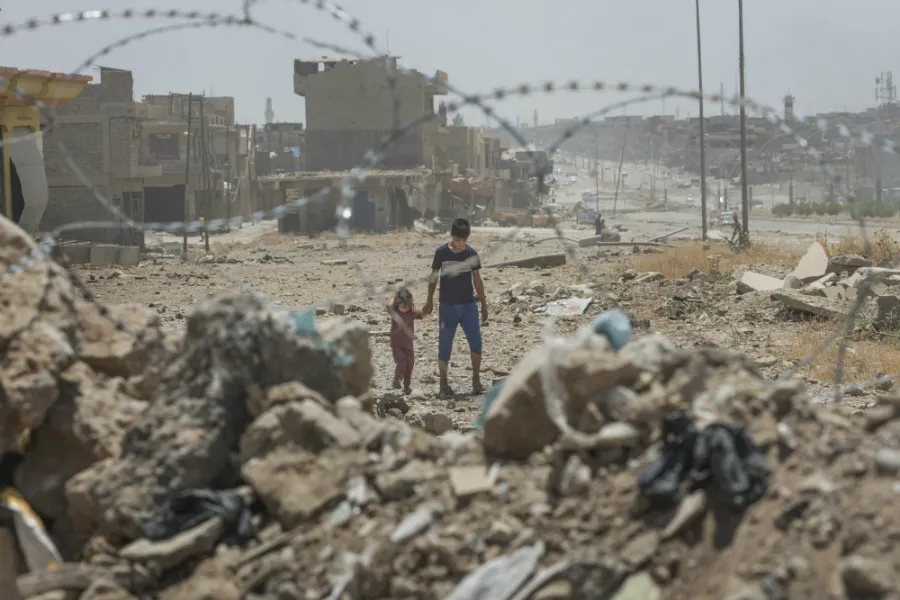
Rome, Italy, Jul 14, 2017 / 12:08 am (CNA/EWTN News).- Just days after Iraqi forces completed their recapture of Mosul from the Islamic State, the nation’s ambassador to the Holy See has said that they are eager to rebuild the city and have people return home, but it will require help to do so.

“We reiterate our need for greater cooperation and greater help for the reconstruction and stability of the freed areas, including Mosul, because there is no complete victory until the displaced are returned to their homes and guaranteed essential services,” Omer Ahmed Karim Berzinji said July 13.

“The most important challenge now is the effort for the reconstruction and the stability of the city through the construction of infrastructures in order for the displaced to return. We have need of international support to bring back stability and to prevent the return of the terrorists.”

Berzinji spoke to journalists at a press conference in Rome July 13.

The presser was held in response to the July 9 declaration that Mosul had been recaptured. The government operation to free Mosul, one of the Islamic State’s remaining key strongholds, had been underway for nine months. The group still controls areas around the Iraqi cities of Tal Afar, Hawija, and Al-Qa’im, as well as portions of Syria.

During this time, thousands were killed and nearly 1 million residents fled the city, the major part of it destroyed.

Fr. Ghazwan Baho, a parish priest in Alqosh – the last major Christian city on the Plain of Nineveh not taken by the Islamic State – told CNA they are thankful Mosul has been freed, but the future of the city is still uncertain.

“We thank God that the evil was overcome, but Mosul is a city almost 80 percent destroyed. The future is dark. There isn’t much hope of reconstruction.”

“It’s not enough to win the war, but we need to rebuild,” he said. “We are afraid of the future, of revenge; our area is a land of conflict. Let’s hope for the best.”

The Islamic State had controlled Mosul, Iraq’s second largest city, since June 2014. It has imposed a rigid version of sharia in territory it controls, but its rule also features arbitrary violence, including killing and enslavement.

A 2016 U.N. report said that 800 to 900 children in Mosul have been abducted and put through Islamic State religious and military training. There have been accounts of child soldiers who were killed for fleeing fighting on the front lines of Iraq’s Anbar province.

The U.N. also estimates that as of Jan. 2016 the group held about 3,500 slaves, mainly women and children of the Yazidi religion. Some of the women are killed for trying to escape or for refusing sexual relations with Islamic State fighters.

The Iraq ambassador couldn’t give specifics on the government’s plan for how to free the women, but told CNA that it will certainly be one of their top objectives. Regarding the Islamic State, he said he considers the victory in Mosul the “beginning of their end.”

“I am very enthusiastic to take all of that (remaining) occupied territory,” he continued.

Another result of the battle, he told journalists, has been the unification of the various “factions” of the Iraqi army who “joined together for the liberation of Mosul.”

The ambassador emphasized that Iraqis worldwide are celebrating the victory, saying that “the first thing after the liberation of Mosul, the most important thing, was that all Iraqis were united.”

Berzinji also noted the help from outside forces, saying “friends and allies have played a distinct role in supporting the efforts of the Iraqi government in this battle through the intervention of the international coalition or outside it.”

“That is why victory in Mosul is a victory for all those who have helped and have collaborated with us in the fight against this criminal organization.”

[…]

No Picture
News Briefs

Yemeni minister: Fr. Tom Uzhunnalil is still alive

July 13, 2017 CNA Daily News 0

Rome, Italy, Jul 13, 2017 / 11:49 am (CNA/EWTN News).- After nearly a year since his kidnapping, Yemen officials say that Fr. Tom Uzhunnalil is in fact alive and efforts are being made for his release.

“The Yemeni deputy prime minister conveyed that as per available information, Father Tom was alive and the Yemen government has been making all efforts to secure his release,” Gopal Baglay, official spokesperson of the Ministry of External Affairs in India said July 11.

The statement was made after Yemen’s Deputy Prime Minister and Minister of Foreign Affairs, Abdulmalik Abduljalil Al-Mekhlafi, told Indian External Affairs Minister Sushma Swaraj that the Salesian priest was in fact alive, and that continued efforts were being made to obtain his release.

According to India’s Deccan Herald news service, Al-Mekhlafi met Swaraj during his current tour to New Delhi. Swaraj had inquired about Fr. Tom, voicing concern for his safety.

Baglay said Al-Mekhlafi “assured all cooperation” in working for the priest’s freedom.

The confirmation comes more than a year after Fr. Tom’s abduction. He was kidnapped in Yemen in March of last year during an attack on a Missionaries of Charity house that left four sisters dead.

He garnered international attention when rumors spread that he was to be crucified on Good Friday, which were later discredited. Since then, numerous photos and videos have been released picturing Fr. Tom, thin and with an overgrown beard, pleading for help and for his release.

The videos were never officially authenticated, however Al-Mekhlafi’s assurance that the Kerala priest is alive confirms the likelihood the man shown was in fact Uzhunnalil.

In the most recent video, published in May, Fr. Tom spoke slowly in English, saying the Indian government has been contacted several times concerning his release. The bishop of Abu Dhabi in the United Arab Emirates has also been contacted, he said, claiming that he’s seen their responses, and they were “very, very poor.”

The priest indicated that he is in poor health, saying: “my health condition is deteriorating quickly, and I require hospitalization as early as possible,” he said.

He then made an appeal for his release, asking “my little family people” to do what they can “to help me be released. Please, please do what you can to help me be released. May God bless you for that.”

Since his kidnapping, Salesians in the Bangalore province of India have made continued efforts for his safety and release, including holding a prayer vigil Jan. 4 and a worldwide novena Jan. 15-23.

Although some attribute the kidnapping to ISIS, no one has claimed responsibility, which has made it difficult for the Indian government to broker the priest’s release. In addition, the situation has been exacerbated by the political instability in Yemen.

Yemen has been embroiled in civil war since March 2015, when Shia rebels attempted to oust Yemen’s Sunni-led government. Saudi Arabia has led a pro-government coalition. Both al-Qaeda and the Islamic State have set up strongholds in the country amid the power vacuum. More than 6,000 people have been killed in the conflict, according to the United Nations.

[…]

No Picture
News Briefs

In Ukraine, Cardinal Sandri says there’s hope for the future

July 13, 2017 CNA Daily News 1

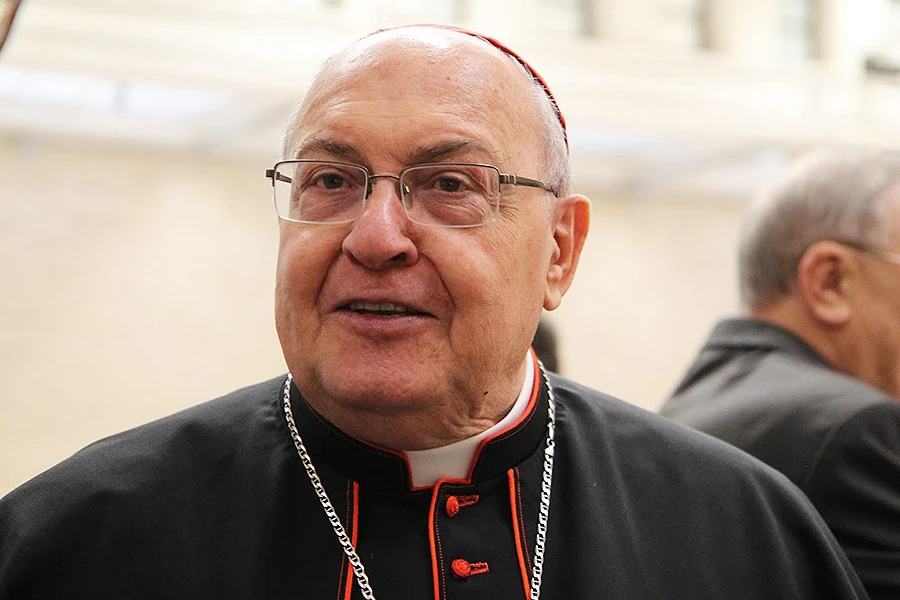
Kyiv, Ukraine, Jul 13, 2017 / 06:02 am (CNA/EWTN News).- Shortly after Pope Francis donated money to help those suffering from Ukraine’s ongoing conflict, Cardinal Leonardo Sandri arrived in the country, saying that while pained, he sees hope for the future.

In comments to local Catholic media after landing in Ukraine July 11, Cardinal Sandri recalled that when he made his first trip to the country several years ago, it was because “in this land was born and is growing, a great hope, a great vision of the future for this Christian country.”

“Today, unfortunately, I also bring pain for a country that ought to be the vanguard of peace in the life of Europe, but which instead is suffering, in all of it’s inhabitants, many deprivations and many victims of this situation,” he said, referring to the ongoing conflict in Ukraine’s eastern region.

Because of this, he said, “I also come with a desire for hope for life and a great future of this beloved country.”

Cardinal Sandri, Prefect of the Vatican’s Congregation for Oriental Churches, is currently on an official July 11-17 visit to Ukraine to participate in the national Pilgrimage to the Shrine of Zarvanytsia.

He offered his comments to Zhyve TV, which is the Catholic TV Station of Ukrainian Greek Catholic Church, after his arrival.

His visit falls in the midst of ongoing upheaval in the country, largely the result of political instability and tensions surrounding the Russian invasion of their eastern region in 2014, which prompted a conflict that has endured three years, claimed thousands of lives and displaced millions of others.

Conflict erupted in Ukraine in November 2013, when the former government refused to sign the Association Agreement with the European Union, leading to months of violent protests.

Tensions deepened in February 2014, when the country’s former president was ousted following the protests, and a new government appointed. In March of that year, Ukraine’s eastern peninsula of Crimea was annexed by Russia and pro-Russian separatist rebels have since taken control of eastern portions of Ukraine, around Donetsk and Luhansk.

Fighting continues, with more casualties reported daily. More than 10,000 people, including civilians, have died in the fighting between Ukraine’s military and pro-Russian separatists. Roughly two million others have been forced to flee due to violence and a lack of basic humanitarian necessities, and those who remain lack access to food, heating and medical supplies.

Last April Pope Francis announced that he would be taking up a special collection in all European churches in order to provide relief from those who are still suffering. In December 2016, the Pope made an initial donation of 6 million euros from the funds collected, asking that it be distributed to different charitable projects.

In his comments to Zhyve TV, Cardinal Sandri said it was “an immense joy” for him to be back in the country after three previous visits, including one with St. John Paul II.

“I come particularly because I was invited to the celebration of the Madonna of Zarvanytsia, so I come to bring to her, the Queen of Ukraine, all the veneration we have for her in the Roman Church, but which we know summarizes the Marian identity of the Ukrainian people,” he said.

The cardinal also offered to Archbishsop Shevchuk and all bishops and faithful in Ukraine, “the greeting, blessing and closeness of the Pope, Francis.”

After his arrival, Sandri traveled to the capital city of Kyiv alongside the Vatican’s nuncio to Ukraine, Archbishop Claudio Gugerotti, and Sviatoslav Shevchuk, Major Archbishop of the Greek-Catholic Church in Ukraine.

While there, he had a moment of silent prayer in front of the Cross of Maiden Square, where he laid flowers in honor of those who lost their lives during the bloody riots of 2014.

From there, he visited the Museum of the Holodomor, making a symbolic gesture in memory of the more than 100 victims.

On Wednesday, July 12, which marks the Feast of Saints Peter and Paul on the Giulian calendar, he will participate in the Pontifical Divine Liturgy at the Cathedral of the Resurrection, offering the homily. After, he is expected to pray at the tomb of Cardinal Lubomyr Husar, Marjor Archbishop Emeritus of Kyiv-Halych and former head of the Ukrainian Greek-Catholic Church, who died May 31.

Later, the cardinal will hold a meeting with seminarians before leaving for the central-eastern city of Kharkiv, where he will visit the local Caritas.

The next day, July 13, Cardinal Sandri will take part in the Divine Liturgy at the cathedral of the Exharkate of Kharkiv before heading to lunch with priests and various other guests.

He is then expected to meet with the Bishop of the Ukrainian Orthodox Church, Metropolitan Nicodemus. In the afternoon he will travel roughly 124 miles to Kramatorsk, where on Friday morning he will celebrate Mass and meet with the local bishops and priests of Donesk.

After paying a visit to the local Caritas and a community center, Sandri is scheduled to stop in the town of Sloviansk, where he will meet with several individuals who have been internally displaced by the conflict.

On Saturday, July 15, the cardinal will hold a meeting with the Greek-Catholic Metropolitan Bishop Volodymr Viytyshyn before joining the annual pilgrimage to the Shrine of Zarvanytsia.

That night, as part of the pilgrimage, Sandri will lead a special meeting with young people before leading a reflection at the close of the procession of candles.

Cardinal Sandri will then preside over Mass Sunday before traveling to Lviv, where he is scheduled to visit the Greek-Catholic Cathedral Saint George and pray at the tombs of Metropolitan Bishop Andrey Sheptytsky and of Cardinal Joseph Slipyj, heads and fathers of the Ukrainian Greek-Catholic Church for a large portion of the 20th century.

He will then hold a brief meeting with the Roman Catholic Archbishop of Lviv, Mieczys?aw Mokrzycki, before heading back to Rome.

According to the website of the apostolic nunciature in Ukraine, Pope Francis has, through Cardinal Sandri, offered all Catholic and Orthodox faithful in Ukraine, his personal greeting and blessing.

The Pope also expressed his “affection and closeness to the population for the sufferings and deprivations they have and are enduring during the well known conflict,” and encouraged those working for peace and reconciliation, as well as those engaged in assisting the displaced.

[…]

No Picture
News Briefs

Macron scrutinized for blaming Africa’s poverty on high birthrate

July 11, 2017 CNA Daily News 2

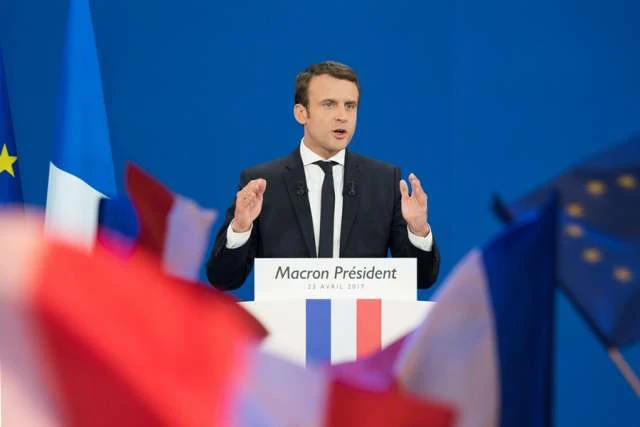
Hamburg, Germany, Jul 11, 2017 / 04:21 pm (CNA/EWTN News).- French President Emmanuel Macron has been under attack for identifying Africa’s development issue as a problem of overpopulation, ignoring the effects of France’s imperialism.

In response a question on Africa’s needs by a reporter at the G20 Summit July 7, Macron said, “it’s by a more rigorous governance, a fight against corruption, a fight for good governance, a successful demographic transition when countries today have seven or eight children per woman.”

The event took place in Hamburg July 7-8, and was the twelfth meeting of G20, the top government leaders with major influence in the world’s economy.

When a reporter with roots in Ivory Coast, once a French colony, inquired into a possible plan for Africa similar to the Marshall Plan to reconstruct post-World War II Europe, Macron said, “The challenge of Africa is totally different and a lot more profound, it’s civilizational today.”

He added that a similar investment of money would not be helpful in this case, but the problem is rather certain aspects of the civilization of Africa. The comment has led to charges the president blames Africa’s poverty on its women, while ignoring the effects of France’s colonization of much of the continent.

Macron aligns to the theory of overpopulation, according to the French newspaper Liberation, in light of a book published last March by the political scientist Francoise Verges.

The theory, she said, makes “Third World women…responsible for underdevelopment,” noting its ignorance towards the effects of France’s colonialism in Africa. Rather, she said that “most studies show today that it is underdevelopment that causes overpopulation.”

Verges also addressed the forced abortions and sterilization of black women which occurred in the 1970s on Reunion, an island and overseas department of France in the Indian Ocean located east of Madagascar.

She said that while abortion was still illegal in France at the time, newspapers and radio propaganda advocated for birth control and limits to larger families among African countries.

“For their part, the doctors of the clinic arrive on the island with the conviction that the women of ‘these countries’  should not make children,” she said.

[…]