No Picture
News Briefs

Priest horrified at exorcist film showings in abandoned church
July 27, 2017 CNA Daily News 0

Belfast, Northern Ireland, Jul 27, 2017 / 03:02 am (CNA/EWTN News).- An Irish priest has decried a film festival’s plans to screen two horror films in an abandoned church next month.

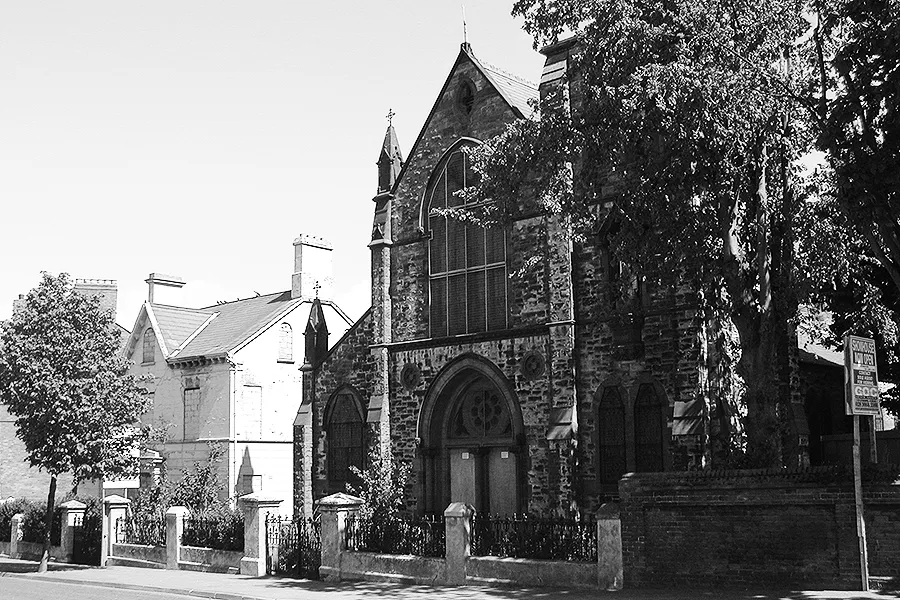
The Belfast Film Festival plans to show two horror movies – The Exorcist and The Omen – at Holy Rosary Church in Belfast, a landmark church that has been abandoned since 1980 and is no longer owned by the Catholic Church.  

Local parish priest Fr. Patrick McCafferty told the Belfast Telegraph that the plan was a “cheap stunt” and disrespectful to what once had been a sacred place.

“What is their motivation for showing those types of films in what was once a sacred building that will have such special memories of spiritual occasions for lots of people,” he said.

“Should they not be sensitive to the fact that many people in that area have fond associations and is sacred to the memories of many people that were baptized or married or buried there?” the priest added.

The old church is currently set to be renovated into an Italian restaurant, with with Fr. McCafferty said he has “no problem.”

“…but the screening of horror films in there is another matter entirely,” he told Ireland’s The Times.
 
The Exorcist (1973), based on William Peter Blatty’s novel by the same name, is the horror movie famous for levitating beds, spinning heads and pea-green soup.

The book and film portray the demonic possession of a 12-year-old girl and her exorcism by two Catholic priests. Blatty said he drew inspiration from a 1949 Washington Post story about a Jesuit priest’s successful exorcism of a 14-year-old boy in Mount Ranier, Maryland.

While the U.S. bishops have previously said that the film stands on “shaky ground” theologically, Catholic film critics have said that for the most part, it tries to portray a real exorcism as authentically as possible.

It won two Oscars in 1974 for best sound and best writing and is one of the 20 highest-grossing films of all time. After the film’s release, interest in exorcism skyrocketed in pop culture, sparking a subgenre of films surrounding the topics of exorcism and spiritual warfare.  
 
The other film to be shown, The Omen, is a 1976 British-American that tells the story of the son of an American diplomat who is marked with the sign of the Devil and is the Antichrist.
 
In 2006, attempts to film a remake of The Omen were disrupted on location in Croatia, with sets vandalized and burnt down. The producers blamed the Catholic Church for the disruptions, saying they had decried the film and sparked the outrage.
 
Catholic reviews of The Omen tend to urge caution, as the film can be seen as depicting evil in a victorious light.
 
Fr. Cafferty said he hasn’t seen either film, though he is familiar with their controversial content.
 
“They are not the sort of films that I would choose to watch myself. People have told me about the films and I would have seen bits about The Exorcist – I just don’t understand why anyone would like to see it in a church,” he said.
 
A spokesperson for the film festival has defended the decision, saying that the abandoned church would enhance the audience’s viewing experience, and cited that the church has been defunct for almost 40 years.

“Belfast Film Festival is well known for its site-specific special events,” said the spokesperson told the BBC, citing its 2015 screening of Jaws on Portrush beach as one example.

“The locations chosen add an extra dimension to the screening, and we think the stone cold surroundings of an abandoned church will make for a suitably chilling viewing experience for The Exorcist.”

“Many people will have their own personal reasons for disliking The Exorcist, and we respect their right to that opinion, but the truth is that it was one of the most widely acclaimed films of the 1970s, nominated for 10 Oscars, including Best Picture,” the spokesperson added.

The screenings of The Exorcist and The Omen, to be shown on Aug. 19 and 20 respectively, have already sold out, according to The Times.
[…]

No Picture
News Briefs

Court to decide if Charlie Gard’s parents can take him home

July 26, 2017 CNA Daily News 1

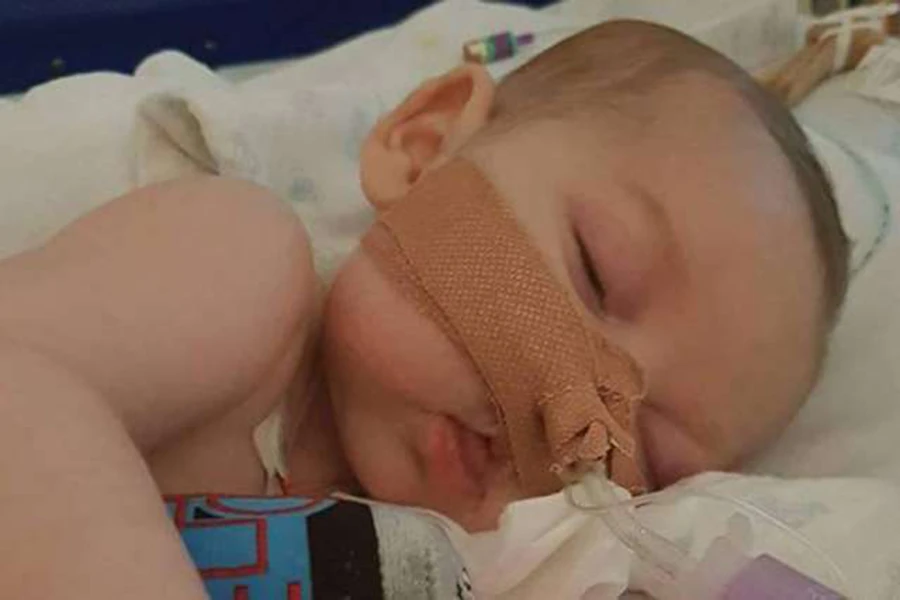
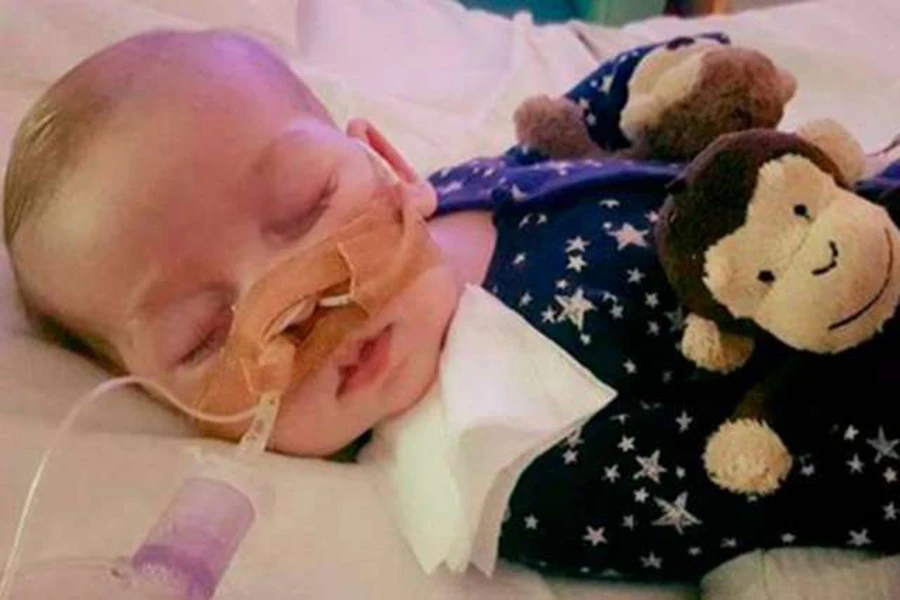
London, England, Jul 26, 2017 / 02:33 pm (CNA/EWTN News).- After ending their legal fight to seek further treatment for their 11-month-old son, the parents of Charlie Gard are now in a dispute with Great Ormond Street Hospital over whether they may take the boy home to live out his final days.

The judge in the case, Justice Peter Francis, is set to pass down a decision by noon on Thursday. However, he said that “(i)t looks like the chances are small” of the boy being brought home. His parents hope to have a week with him after he has been moved to a final location.

On Monday, Christ Gard and Connie Yates, the boy’s parents, announced that they were ending their legal fight for additional treatment for their son. Their lawyer told the High Court that “time had run out” for Charlie. They have expressed the desire that he be moved home “for a few days of tranquility” before life support is withdrawn on July 31, four days before Charlie’s first birthday.

Great Ormond Street Hospital has said that it is impossible for Charlie to receive life support at home, arguing that his ventilator “cannot fit through the family’s front door.” It has instead offered a hospice space for Charlie. Previously, the hospital had promised that they “won’t stand in the way,” according to Grant Armstrong, the couple’s lawyer, but now they were setting up “obstacles.”

Katie Gollop, lawyer for the hospital, said that while the hospital wished to fulfill the parents’ final wishes, the reality of bringing the child home is not “practically” possible. The parents have offered to pay any expenses of Charlie being brought home. The couple has raised nearly $1.75 million in funds for Charlie’s care.

On Tuesday, the Vatican-owned Pediatric Hospital Bambino Gesu, commonly called “the Pope’s hospital,” issued a statement on Charlie. In early July, the hospital had offered for the child to be transferred to its facilities for life support and treatment after Pope Francis stated his support of the Gard family.

The hospital said that experimental therapy “could have been an opportunity for Charlie and it will be an opportunity for all the patients with the same or a similar rare disease.” However, the child’s progressive muscular deterioration had “ma(de) it impossible to start the experimental care plan.”

“Much to our regret, we realized that we probably arrived too late,” the hospital said. Additionally, “(w)e are not in a position to know what might have happened 6 months ago. We cannot know if Charlie would have responded to the experimental therapy.”

“What we know is that we did what Charlie’s mother asked us to do.”

The Vatican hospital also noted “another result: an in-depth international confrontation at the clinical and scientific level: an extraordinary event, of great importance for the future of rare diseases.”

“For the first time, the international scientific community has gathered around a single patient, to carefully evaluate all the possibilities. The clinical and scientific international community created a synergic network, fighting together for the life of a little boy.”

They called this “the true legacy of Charlie.”

Charlie Gard was born last year on August 4. His condition was discovered in October, and he was admitted to Great Ormond Street Hospital.

In April, Justice Francis ruled that the hospital could allow the child to die after doctors and the court had deemed treatment futile, against the wishes of the child’s parents.

In May, the Court of Appeal upheld the ruling, and judges for the European Court of Human Rights declined to intervene in June. Charlie’s case began garnering international attention after this, with some ethicists comparing the situation to that of euthanasia.

The child’s case grew more complicated in early July, however. On July 2, the Pope stated his support of the parents, and Bambino Gesù offered to take Charlie the next day, an offer which was ultimately not accepted. On July 17, Charlie was examined by U.S. neurologist who claimed that an experimental therapy could provide up to a 10 percent chance of improvement in the child’s condition. This came after unpublished research suggested there was a chance for some reversal in Charlie’s brain damage.

However, after new medical reports were revealed in court last week, Yates and Gard conceded that Charlie no longer has a chance for improvement, and on Monday withdrew their legal fight.

The child suffers from permanent brain damage and cannot breathe on his own. His mother has expressed hope that he can spend a week in hospice before life support is withdrawn.


[…]

No Picture
News Briefs

Charlie Gard raises questions of parents’ rights, government limits

July 25, 2017 CNA Daily News 3

London, England, Jul 25, 2017 / 03:18 pm (CNA/EWTN News).- For the past few months the world has watched closely as the parents of a gravely ill British infant fought an intense legal battle over whether or not his life was worth further treatment, which has raised crucial questions.

Among the most potent of these questions regards the ethics of a court stepping in and denying parents the right to seek a treatment which may benefit their child.

British and European courts had sided with officials from Great Ormond Street Hospital, who sought to bar Charlie Gard’s parents from seeking treatment for their child overseas.

In comments to CNA July 25, Benjamin Harnwell, founder of the  Rome-based Dignitatis Humanae Institute, said he thought that “the hospital – and the courts – crossed a totalitarian line in refusing to hand the baby over to his parents at their request, so that they could seek further medical attention in the U.S., for which they had secured the funding.”

“I don’t think it’s ever appropriate” for a hospital or court to step in and “advocate” for a patient, especially in the case of a minor whose parents are involved, Harnwell added.

While the Church “certainly doesn’t teach that people should be kept alive ‘at all costs,’” he said “the question isn’t so much about knowing ‘when to let go’ but about the moral responsibility of parents wanting to choose when to make that decision for themselves.”

Harnwell reflected that Church teaching says “the primary role of medicine is to heal, and then to alleviate suffering when being healed is no longer a possibility.”

Harnwell spoke after the parents of British infant Charlie Gard announced July 24 that they decided to end their court case seeking further treatment for the terminally-ill child.

Gard, 11 months, suffers from a rare genetic condition called mitochondrial depletion syndrome, which causes progressive muscle weakness and is believed to affect fewer than 20 children worldwide. He has been in intensive care since October 2016, and has suffered significant brain damage due to the disease; he is currently fed through a tube, requires a ventilator to breathe and is unable to move.

His case first garnered international attention when his parents, Connie Yates and Chris Gard, were denied the right to transfer him to other hospitals by U.K. courts, despite having raised funds for an experimental treatment from an American doctor. They appealed to the European Court of Human Rights, but were denied a hearing.

Judges argued that prolonging Charlie’s life would inflict unnecessary suffering on the infant, and gave doctors at London’s Great Ormond Hospital, where Charlie is being treated, permission to take him off life support without his parents’ permission.

His life support was to be turned off at the end of June; however, the courts granted an extension so Charlie’s parents could have more time with their son.

After international leaders including Pope Francis and U.S. President Donald Trump voiced their support for Charlie and his parents, the courts allowed medical experts to conduct additional tests on the infant.

American neurologist Dr. Michio Hirano, who had been willing to offer Gard nucleoside bypass therapy, while acknowledging it would not necessarily heal him, traveled to London for the tests. However, after seeing a new MRI scan this week, Hirano declined to offer the therapy.

The child’s life support is expected to be pulled in the next few days, just two weeks shy of his first birthday.

In a tearful statement after the announcement of their decision to drop their court case, Charlie’s parents said, “this is one of the hardest things we will ever have to say and we are about to do the hardest thing that we will ever have to do, and that is to let our beautiful little Charlie go.”

“The American and Italian team were still willing to treat Charlie after his recent brain MRI and EEG performed last week, but there is one reason why treatment cannot now go ahead, and that is time,” they said.

“A whole lot of time has been wasted. We are now in July, and our poor boy has been left to lay in a hospital bed for months whilst lengthy court battles have been fought. Tragically, having had Charlie’s medical notes reviewed by independent medical experts, we now know that had Charlie been given the treatment sooner, he would have had the potential to be a normal, healthy little boy.”

In addition to the devastating end to this story, Harnwell pointed to a larger debate society faces.

This, he said, is the debate on whether the state ought to be “the health care provider of last resort,” stepping in as a third party who gets to decide where it’s limited resources will be spent.

Inevitably, under a socialized model “it will be the state that decides when to divert its limited resources to other patients it feels will benefit more.”

Harnwell stressed that while he didn’t want to “make a political point out of other people’s terrible tragedy,” there is a “very real debate to be had” on the issue.

For Harnwell, Charlie Gard’s case is a perfect illustration of the risks involved in allowing third parties “to assume the role of providing our own safety net.”

Socialized healthcare, he said, “offers a universal reach available (ostensibly) to all irrespective of means, but eventually rationing – decided by bureaucrats, and presumably backed up by the courts – will kick in at some point.”

However, while private healthcare is generally available only to those who can afford it, under this system “the customer is king,” Harnwell said, adding that while people generally have good reasons for choosing one or the other, “my own instinct is always to trust people to chose responsibly for themselves.”

The issue also touches on the debate surrounding the push for euthanasia and living wills currently taking place in several countries.

Fr Francesco Giordano, Director of Human Life International in Rome, related the Charlie Gard case to the euthanasia mentality, saying the problem with living wills is that “it basically takes away from the family the right to make decisions.”

In fact, in reality it “takes away the right of the individual, because when an individual in the case of the living will, the person might not be feeling sick at that time, but when they are sick that person might change his or her mind,” he said, noting that sadly, this is often not permitted.

“So basically what’s happening is the rights of individuals, the rights of the family unit, are being taken away by the states. That’s what we’re seeing here, that’s what’s most concerning for all of us.”

Regardless of the ongoing debates, Harnwell stressed that most importantly right now, “Charlie’s family is suffering unimaginably, and they need our prayers.”

Material from EWTN News Nightly was used in this report.

[…]

No Picture
News Briefs

This boy invited Pope Francis on a pilgrimage – and here’s how he responded

July 23, 2017 CNA Daily News 2

Loreto, Italy, Jul 23, 2017 / 03:57 pm (CNA/EWTN News).- Nine-year-old Andrea is an Italian boy who joined 130 children last month for a “Pilgrimage of Joy” to the Marian Shrine of Loreto, Italy.

He was so moved by the experience that he wrote a letter about it to Pope Francis, inviting the Pope to accompany him and the other children for another pilgrimage next year.

And the Pope offered a surprising response, leaving the door open to the possibility in a letter of reply.

“Thanks for the invitation you have made me to go on a pilgrimage with you, being with children is for me the greatest joy. A proverb says: ‘Never say never.’ Therefore let us entrust this dream into the hands of Providence,” the Pope wrote.

Andrea’s letter to Pope Francis was sent on behalf of himself and the 130 other children who traveled to the Marian Shrine of Loreto from June 22-26. The letter was reprinted by several Italian media outlets.

The pilgrimage was organized by the Rome-Lazio chapter of the National Italian Union of Transportation of the Sick to Lourdes and International Shrines (UNITALSI) with the goal of teaching young children the importance of prayer and closeness to God, while at the same time allowing them to play, have fun, and make new friends.

“We are more than 130 children, and many are sick, others in wheelchairs and others are going alone and are accompanied by some nuns,” Andrea said in his letter, adding that they are praying for the Pope every day.

Andrea also included a group photo of all the children, and asked for the Holy Father’s blessing.

Pope Francis responded saying that “it was so nice to receive your letter and to hear about the enriching adventure you experienced with UNITALSI during the Pilgrimage of Joy to Loreto for children.”

“Thanks also for the group photo you sent me, where I could see that there are a lot of you, and you all look so nice. As I was looking at each face in the photograph, I was praying to Our Lady of Loreto for you, and I blessed you straight from the heart, along with your parents, volunteers, priests and the UNITALSI leaders,” the Pope said in his reply.


[…]

No Picture
News Briefs

Brutal Regensburg report hailed as step in the right direction

July 20, 2017 CNA Daily News 2

Rome, Italy, Jul 20, 2017 / 03:02 pm (CNA/EWTN News).- A member of Pope Francis’ commission to protect minors says a new report on the abuse of more than 500 choir boys in Germany points to a current reality in many non-western countries – and that bringing these things to light means progress for everyone.

“It will take time, but this kind of sensitivity that is created by publicly discussing these things of course will push, because people realize what is right and what is wrong, and they realize that they will be questioned if something goes wrong,” Fr. Hans Zollner told CNA July 19.

Fr. Zollner is vice-rector of the Pontifical Gregorian University, director of the university’s Center for Child Protection (CCP), and a member of the Pontifical Commission for the Protection of Minors.

He spoke following the July 18 publication of a report on an investigation German lawyer Ulrich Weber carried out on the Regensburger Domspatzen, the official choir for the Regensburg Cathedral.

While it was previously thought that only 250 children had been victimized, Weber said the number of children affected is closer to around 500.

According to the report, members of the choir were exposed to physical abuse and 67 suffered sexual abuse from 49 members of the school’s faculty, ranging from 1945 until the early 90s. However, most of alleged perpetrators will likely not face charges due to the amount of time that has gone by.

The reported violence ranged from public ridicule, heavy beatings, and sexual abuse, but a significant portion of the documented incidents involved slapping and food deprivation, a legal form of discipline in Bavaria until the 1980s.

Fr. Zollner said that the magnitude of the abuse was discovered thanks to the decision of the diocese’s bishop to open the archives, allowing a more in-depth investigation to take place.

What came to light was “a horrible and horrendous story” that has been going on for some 70 years, he said, adding that this took place because “in those years and decades people who could have known didn’t look at it, people who could have spoken to police didn’t do it.”

“This includes of course the Church leadership, but this also includes the parents and relatives of the children,” he said, noting that he himself grew up in the city and had friends who were members of the choir.

Zollner recalls his friends talk about getting “beaten up,” but that at the time, “sensitivity to child rights and the violation of these rights was not as high as it is now, and corporal punishment was considered more or less a normal way of education.”

The majority of the excessive discipline in the choir was attributed to Johann Meier, a schoolmaster at one of the boarding schools from 1953 to 1992. However, Benedict XVI’s older brother, Georg Ratzinger, who directed the choir from 1964-1994, was accused of turning a blind eye to the abuse.

It also accused Cardinal Gerhard Muller, who oversaw the diocese from 2002-2012, of cover-up.

Fr. Ratzinger said he was unaware of any sexual abuse, but admitted to slapping children, as it was common practice at the time.

In his comments to CNA, Fr. Zollner noted that while societal understanding of abuse has changed in most western countries, there are several in Asia, Africa and some parts of Latin America where such actions are still common practice.

Speaking of a recent visit to Myanmar, where he offered training and workshops on child protection guidelines, the priest said that while there, he was told that parents would often “specifically ask the teachers to beat their children if they do not obey.”

Zollner said that in Myanmar specifically, it is still normal in some Buddhist monasteries to flog the monks publicly if they are disobedient.

“This is the idea that you learn obedience and correct behavior by beating. So this is the idea that at present in the minds and in the context and in the behavior of parents in an Asian country,” he said, noting that he has seen the same scenario in some African and Latin American countries.

However, the government is now “clamping down on that, so they are also changing the law so that in public schools corporal punishment is prohibited.”

In western society the use of corporal punishment is widely recognized as unacceptable, and this is thanks to both a growing awareness and a “owning up” to the consequences of what is now considered as abuse.

The adoption of the Declaration on the Rights of the Child by the U.N. in 1959 and the subsequent formation of the U.N. Committee for the Rights of the Child have both prompted an increase in awareness that “a young person needs formation and education, yes, and also needs limits, but this can never be imposed and should never be imposed by physical violence or psychological violence or humiliation,” Zollner said.

But to make the point across the board, these rights must be explained and repeated, he said. We must also be realistic with the fact that while many, if not all, countries have signed the declaration, “not all have ratified them.”

When it comes to taking punitive action against those who were abusive in the past, believing it to be acceptable as the normal custom of the time, Fr. Zollner said holding them to account for their actions is a tricky question.

In most cases there is a statute of limitations, and “you can only hold people accountable for the time period that the law covers and for all those criminal acts that are punishable.”

“We don’t have general measures that would and could punish people for something that has happened decades ago if there is not a legal provision for that,” Zollner said.

A current trend for western charities funding Church or social work is to have the recipient sign up not only to obey the law in their country, but they are also required to sign a child protection/safeguarding policy that the charity maintains.

“People unfortunately are not just doing good things because they want to do it, but sometimes they also need to be forced to do it by such measures that are taken in case you do not follow the norms,” he said.

When it comes to the Church and her role in protecting children from predators, Fr. Zollner said the first thing to do is to learn from the mistakes of the past, particularly bishops and Church leaders as a whole.

This, he said, “gives us the possibility to do at least a little bit of justice to all those who have been harmed in such a terrible way.”

Practical steps include thorough screenings of employees on the part of Church institutions that carry our educational, social or pastoral work, delving into the person’s past and present, looking specifically at their interactions with youth.

It’s also necessary that “very clear guidelines and norms” are given, as well as initial and ongoing training for Church workers, which is a task the commission is specifically responsible for.

[…]

No Picture
News Briefs

Be protagonists of change, Cardinal Sandri tells Ukrainian youth

July 19, 2017 CNA Daily News 0

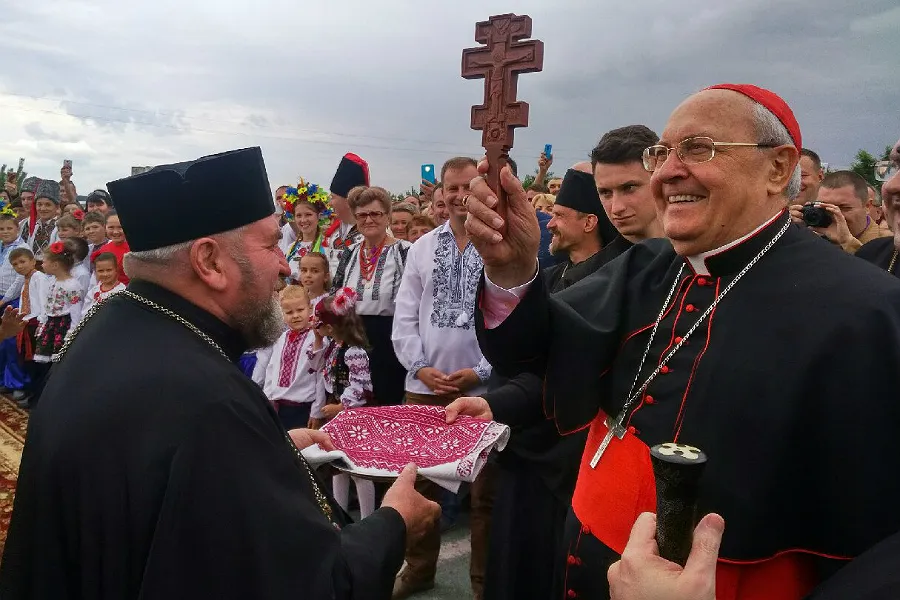
Buchach, Ukraine, Jul 20, 2017 / 12:04 am (CNA/EWTN News).- At the close of his recent trip to Ukraine, Cardinal Leonardo Sandri met with youth from the troubled country, telling them not to be discouraged by the challenges they face but rather to trust in the Lord and commit to changing society for the better.

The cardinal, prefect of the Congregation for Oriental Churches, began his July 15 speech noting that the youth “have had a thousand reasons to stay at home” rather than join him and his delegation for the annual pilgrimage to the shrine of Zarvanytsia, where the encounter took place.

Among these reasons are “the summer heart and the fatigue of the journey, but also and above all the interior ones,” he said, and pointed to the various doubts and questions they might have, such as “ why must I get on the road and march like a pilgrim, when when around me I see so much suffering and fatigue linked to the possibility of building a future?”

“Why believe in God, when around me I see so much violence, when I hear the noise of war, when the steps that are asked of some of you are those of marching like a soldier? Why trust still, when it seems that a corrupt mentality cannot be stopped and the attachment to power is lived as personal gain rather than for the interests of the community and the building of the common good?” he asked.

As a consolation, Cardinal Sandri said the only answer he can give them is to “look at yourselves, as we are doing here from the stage, at your faces – tired, perhaps, but happy.”

The decision to make the pilgrimage is itself “the answer that your hearts and your lives have given to every doubt and every question, which can arise in youth as in adults,” he said.

“Your journey is the right attitude of the heart and of life, and it’s also the most rational,” he said, explaining that “we walk with the mind, learning to study and reflect, cultivating intelligence and learning to discern what happens around us in the world.”

Pointing to the Annunciation, Cardinal Sandri noted that Mary’s question to the angel, “I do not know a man” showed that Mary was not static, but involved in the story. This question, he said, “ became the engine to not stay closed in herself, but rather to go out, to go to her cousin.”

“The encounter with Elizabeth is a precious occasion for Mary,” he said, noting that when meeting her, Mary “explodes in a song of joy, which we call the Magnificat, which is the song of the poor ones of Israel, of those who regardless of everything continued to believe that the Lord had not forgotten his promises.”

In this song, he said, is the “great wisdom” of one who has learned to entrust themselves to God and to contemplate the great things he has done throughout history and which he continues to do them now.

Even in the “famous and beautiful” shrine where the meeting took place is part of the story of faith of the Greek-Catholic Ukrainians, he said.

As such, it serves as an invitation to learn about their tradition and discover that even today, God “continues to be close and make us participants and protagonists in the work of salvation that he continues to fulfill even for your people.”

Cardinal Sandri made a July 11-17 visit to Ukraine to participate in the national pilgrimage to the Shrine of Zarvanytsia, located 15 miles north of Buchach.

His visit falls in amid of ongoing upheaval in the country, where pro-Russian separatists in the east have been fighting government forces since April 2014. The conflict has killed nearly 10,000, and displaced millions.

The fighting in eastern Ukraine followed closely on the March 2014 annexation of Crimea, a Ukrainian territory, by Russia. Russia is also believed by Western governments to be assisting the rebels in Ukraine’s Donetsk and Luhansk oblasts; a claim denied by Moscow.

In his speech, Cardinal Sandri said he would carry with him the various celebrations and meetings he had while in Ukraine, particularly his visit to the eastern, conflict-ridden region of the country “so tried by the battles which have forced many of your brothers and sisters to flee.”

“I have seen the pain, but also many signs of hope, like many flames which slowly light a great fire,” he said, and pointed to the example of displaced persons who, despite their own situation, have begun to work with the local Caritas to “alleviate the pain and deprivation” of others in the same situations.

He pointed to the example of priests, both Greek-Catholic and Latin rite, who during the years of communism were imprisoned or deported.  

In addition to these, he also pointed to priests who “in recent episodes of war that have have bloodied your land have protected and saved as many as they could,” despite being in danger themselves.

As youth, who get the majority of their information through various forms of social media, the cardinal asked that they think of the suffering children in other parts of the world have to endure, such as the students and volunteers of the Jeremiah Educational Center of Faisalabad, Pakistan, who are persecuted “for their faith in Jesus.”

He also asked youth to consider stopping to pray the rosary, and in so doing, send “the embrace of Jesus” to the British infant Charlie Gard and his family, who are in the midst of a legal battle over treatment for the critically ill child.

“The exercise of intelligence to understand the present, prayer, charity and solidarity are ways in which you can also start to walk, like Mary,” he said.

Cardinal Sandri then told the youth to read and meditate on Pope Francis’ message for the upcoming World Youth Day in Panama in 2019.

In his message, the Pope asks that youth “continue your steps not only remembering the past, but also having the courage in the present and hope for the future, to recognize your origins, to always return to the essential and to throw yourself with creative fidelity into the building of new horizons,” Cardinal Sandri said.

“You are the salt and light of this world; don’t resign to thinking that things cannot change,” he said, telling them to “change society, where often the strongest and corrupt dominate, through a pure heart, faithful to God, faithful to the most authentic humanity.”

The cardinal also told attendees to “allow the oil of God’s consolation to soothe the inner wounds of so many,” particularly young women manipulated into being surrogate mothers – which he called “a terrible practice” increasingly banned by countries – and those who have had abortions.

“Let us pray that they feel the desire for the caress of God’s mercy and commit ourselves for a new surge of the defense of the dignity of women and children from every form of trafficking and exploitation,” he said.

Cardinal Sandri closed his speech asking the youth to also help their priests prepare for the upcoming synod of bishops in 2018, dedicated to “Young People, Faith and the Discernment of Vocation.”

The cardinal noted how in the Pope’s letter to youth, published alongside the initial outline of the synod discussion, Francis wrote: “Can things change? YES.”

“This cries from your young heart which does not bear injustice and cannot bend to the culture of waste, and neither can it believe in the globalization of indifference!” he said, quoting the Pope.  

“Even when you experience, like the Prophet Jeremiah, the inexperience of your age, God encourages you to go where he invites you: do not be afraid, because I am with you to protect you,” Cardinal Sandri said, and entrusted the youth to the intercession of the Virgin Mary before giving his blessing.

[…]

No Picture
News Briefs

Report claims decades of abuse against 500 German choir boys

July 18, 2017 CNA Daily News 2

Regensburg, Germany, Jul 18, 2017 / 03:37 pm (CNA).- A new report claims that more students of a prestigious German choir were subjected to physical abuse than originally thought, and accuses the brother of Benedict XVI of turning a blind eye.

Ulrich Weber is the lawyer commissioned to investigate Regensburger Domspatzen, the official choir for the Regensburg Cathedral.

According to Weber, the July 18 report shows that the number children suspected to have been victimized is much greater than the 250 previously accounted for.

He said 500 members of the choir were exposed to physical harm and 67 suffered sexual abuse from 49 members of the school’s faculty, ranging from 1945 until the early 90s. Most of alleged perpetrators, he said, are not expected to face charges because of the length of time that has gone by.

The reported violence ranged from public ridicule, heavy beatings, and sexual abuse, but a large portion of the documented incidents involved slapping and food deprivation, a legal form of discipline in Bavaria until the 1980s.

Much of the heavier discipline was attributed to Johann Meier, a schoolmaster at one of the boarding schools from 1953 to 1992.

Weber has continued to blame Georg Ratzinger, brother of Pope Benedict XVI, for negligence on acting against the physical abuse, saying “one can accuse him of looking the other way and failing to intervene.” He has clarified however, that Fr. Ratzinger had no knowledge of sexual abuse.

Father Ratzinger, who was the director from 1964 to 1994, has also said that he was unaware of the degree of the physical abuse, according to a 2010 interview with Passauer Neue Presse.

“Had I known with what exaggerated fierceness he was acting, I would have said something,” he said in the interview of Meier, pointing out that he had only known about the discipline of slapping, a punishment common in many schools and homes in the area at the time.

However, many of the victims associated their time at the school with “fear, violence, and hopelessness,” Fr. Ratzinger said, apologizing for the corporal punishment of the time as well as the extreme abuse which occurred at the school.

“Of course, today one condemns such actions. I do as well. At the same time, I ask the victims for pardon.”

The Catholic Church has offered compensation to the victims of Regensburg, ranging from about $5,500 to $25,000. 

[…]

No Picture
News Briefs

Cardinal Simoni to consecrate church of Mother Teresa in Balkans

July 17, 2017 CNA Daily News 1

Prizren, Serbia, Jul 17, 2017 / 11:52 am (CNA/EWTN News).- Pope Francis on Saturday appointed Cardinal Ernest Simoni to be his delegate at the consecration of a cathedral dedicated to St. Teresa of Calcutta in Pristina, the capital of the self-declared state of Kosovo.

The consecration will take place Sept. 5, 2017, the 20th anniversary of the death of St. Teresa of Calcutta, and just one year after her canonization in Rome by Pope Francis.

Though in use by Catholics in the area since 2010, the consecration will mark the shrine’s formal dedication to Mother Teresa.

Cardinal Simoni, 88, is a priest of the Archdiocese of Shkodrë-Pult. He is one of the last survivors of the communist persecution in Albania.

Cardinal Simoni was a seminarian in December 1944, when an atheistic communist regime came to power in Albania. In 1948, communists shot and killed his Franciscan superiors. He continued his studies in secret and was later ordained a priest.

Four years later, communist leaders gathered together priests who had survived and offered them freedom if they distanced themselves from the Pope and the Vatican. Cardinal Simoni and his brother priests refused.

On Dec. 24, 1963, as he was concluding Mass, four officials served him an arrest warrant and decree of execution. He was handcuffed and detained. During interrogation, they told him he would be hanged as an enemy because he told the people, “We will all die for Christ if necessary.”

He suffered immense torture, but said “the Lord wanted me to keep living.” He was later freed from the death sentence and given 28 years of forced labor instead, during which time he celebrated Mass, heard confessions, and distributed Communion in secret.

Cardinal Simoni was released only when the communist regime fell and freedom of religion was recognized. Pope Francis made him a cardinal in the consistory of Nov. 19, 2016.

Built in an neo-renaissance and Italianate style of architecture, the Church of St. Teresa of Calcutta will eventually have two bell towers, each 230 feet tall, making it one of the tallest buildings in the city.

It’s stained-glass windows include depictions of St. Teresa of Calcutta with St. John Paul II, and Pope Francis embracing Benedict XVI.

Begun in 2007, it is the main Catholic church in Kosovo, though it is still partially under construction.

Kosovo declared independence from Serbia in February 2008, and its independence is recognized by the United States, much of western Europe, as well as by other countries across the globe.

There are approximately 65,000 Catholics out of a population of roughly 2 million in Kosovo. They are mainly ethnic Albanians, like St. Teresa of Calcutta. There are also some Eastern Orthodox, but the area is majority Muslim.

Most Catholics in Kosovo live in Pristina, as well as the cities of Klina, Gjakove/Djakovica, Viti and Prizren, where St. Teresa of Calcutta’s parents were from.

[…]