No Picture
News Briefs

Even in Barcelona one can see the peripheries, Cardinal Omella says

June 30, 2017 CNA Daily News 0

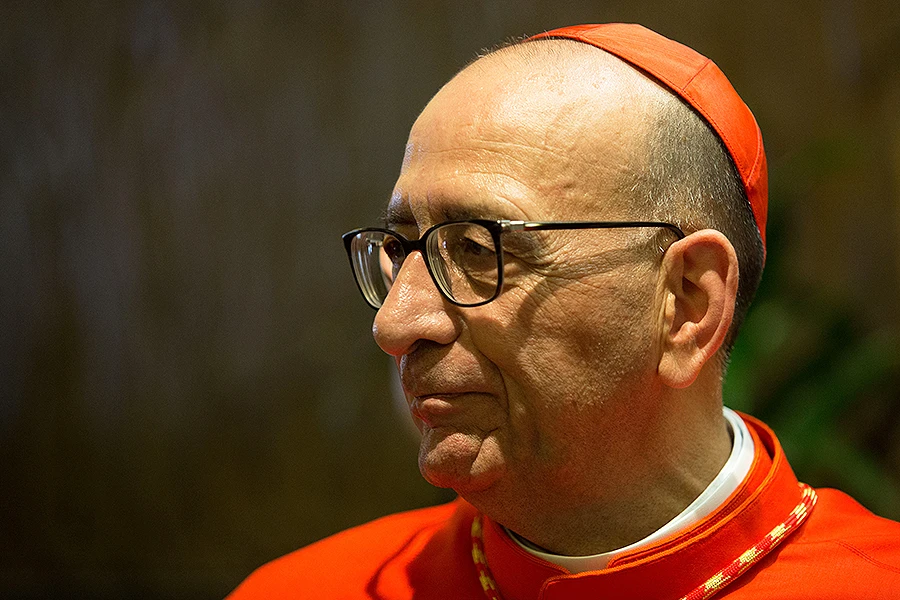
Barcelona, Spain, Jun 30, 2017 / 11:50 am (CNA/EWTN News).- “Enough with the jokes,” then-Archbishop Juan José Omella Omella of Barcelona said when he got the call.

But it wasn’t a joke: A friend was calling him from St. Peter’s Square to tell him that Pope Francis had just announced his name among the five men who were to become cardinals at a consistory which was held June 28.

After receiving the announcement, Omella continued with his plans for the day, including visiting prisoners. He met with journalists the next morning.

“Barcelona is a cosmopolitan city where people from all over the world go,” he told journalists in Rome this week when asked what it means to serve from the peripheries in his city. “You only have to be at the plaza where the door of the cathedral of Barcelona is for a moment to see that there they speak all the languages, and all races and all cultures pass. Or go to the Sagrada Familia to see the amount of people who come everyday.”

“(T)he Church, after the Council, wants to be the Samaritan Church that accompanies the people of this world and picking up those who suffer, those who don’t have a sense of life, who are in complicated situations such as war,” he said. “I think that the Church must be present in these worlds, and to make them understand that the Pope, [in] drawing and creating cardinals from these areas, [says it’s important that] the Church is present in these areas.”

Cardinal Omella was born in the small town of Cretas in a Catalan-speaking region of Aragon in 1946. In his priestly formation, he studied in Belgium as well as Jerusalem. He was ordained a priest of the Archdiocese of Zaragoza in 1970, at the age of 24. He served for a year as a missionary in the Democratic Republic of the Congo.

In 1996, he was appointed auxiliary bishop of Zaragoza, and in 1999 made Bishop of Barbastro-Monzón. He was appointed Bishop of Calahorra y La Calzada-Logroño in 2004. In 2015, Pope Francis appointed him Archbishop of Barcelona.

Since his episcopal consecration, Cardinal Omella has been a member of the Spanish bishops’ social-pastoral commission.

Among the five men elevated at Wednesday’s consistory, Cardinal Omella, 71, stands out in that his selection for the College of Cardinals is in no way unprecedented, whereas Francis’ other choices had at least one unique aspect about their appointment. Cardinal Omella comes from a traditional cardinalate see – his three predecessors were also cardinals. His immediate predecessor, Cardinal Lluís Martínez Sistach, aged out of the electorate when he turned 80 in April.

“This isn’t about attaining great honors,” Omella told Vatican Radio May 22. “I’m not about making a career, but service.”

The Church has to “unite institutions for the common good, so that no one feels cast aside,” he said. “I believe that it is a job we must do at all levels.”


[…]

No Picture
News Briefs

‘Extreme’ abortion push in UK prompts outcry from doctors

June 30, 2017 CNA Daily News 3

London, England, Jun 30, 2017 / 06:02 am (CNA/EWTN News).- In response to an ongoing effort in the U.K. to allow abortions to take place up to birth, a massive group of doctors and medical students signed a letter denouncing the controversial campaign.  

Over 1,400 medical associates addressed the British Medical Association, saying that a change in policy won’t reflect the opinions of all the medical staff or majority of women in Britain – and that it’s also an extreme measure that could damage the BMA’s reputation.

“We represent a variety of positions on the issue of abortion, but believe this motion is out of keeping with both our duties as responsible professionals and the expressed wishes of British women with regards to the legality and regulation of abortion,” the letter reads.

The motion was debated on June 27 at the association’s annual meeting. If passed, the measure would implement an increase in the accessibility of abortions from the current law of 24 weeks, potentially offering abortions from anywhere between 28 weeks until birth.

The proposal would also allow for abortions to be offered for any reason, a distinct difference from the current law which requires previous consultation.

In their letter, the medical staff cited a recent study from ComRes, which showed that a large majority of woman in the U.K. would in fact rather have abortion restrictions increased rather than decreased.

The letter also referenced the intense backlash received by the Royal College of Midwives, which announced last year that it supports abortion under any reason, even up to birth.

“Many commentators on this controversy were pro-choice but recognized that taking this position was an extreme move, and the outrage caused reputational damage both to the Royal College of Midwives and to the wider midwifery profession.”

Professor John Campbell, a 35-year long member of the BMA as well as a supporter of the letter, wrote a June 26 article to the Daily Mail, noting that the damages from abortion have already been tremendous and that the new measure pose an even greater threat to women and children.

Since the procedure was legalized in the U.K. in 1967, over eight million unborn infants have been aborted, Campbell said. He then noted that interpretation of the country’s abortion law has shifted from defense of a women’s safety to abortions on demand.

But increasing the availability of abortions ultimately threatens the mental health and well-being of women, especially if they are not counseled through the process properly, Campbell said.

He cited recent news of a 22-second consultation given to a woman at a Maria Stopes center, saying many women choose abortion “simply because they were not given enough time to talk it through.”

The BMA is the trade union for doctors, and works to promote medical and health legislation in the U.K. Established in 1832, there are now an estimated 156,000 doctors and even more medical students.

The effort to lessen the country’s abortion restrictions was debated by 500 members, but the results have not yet been made public.

[…]

No Picture
News Briefs

St John XXIII’s relics will visit his home diocese in 2018

June 28, 2017 CNA Daily News 1

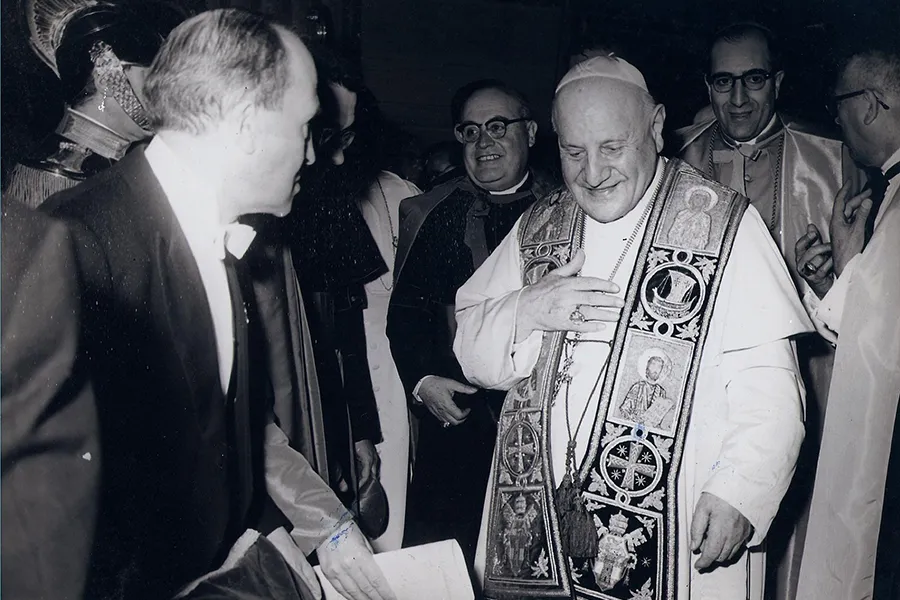
Bergamo, Italy, Jun 29, 2017 / 12:02 am (CNA/EWTN News).- The Diocese of Bergamo announced yesterday that next year the body of St. John XXIII will return to the city, his native diocese, for a visit expected to last about two weeks.

In a June 27 statement the diocese announced that Pope Francis had approved the request of Bishop Francesco Beschi of Bergamo for the body of St. John XXIII to “return to Bergamo.”

Currently exposed for veneration inside St. Peter’s Basilica, the saint’s body will likely return to his home diocese around June 3, 2018, to mark the 55th anniversary of his 1963 death.

St. John XXIII was born Angelo Giuseppe Roncalli in Sotto il Monte, a village of Italy’s Bergamo province, Nov. 25, 1881, as the fourth of 13 children. He was ordained a priest of the Bergamo diocese in 1904, at the age of 22, serving there until he was selected for the Vatican’s diplomatic corps and consecrated a bishop in 1925.

In 1953 he was made a cardinal and appointed Patriarch of Venice, and he was elected Bishop of Rome Oct. 28, 1958.

Known commonly as “Good Pope John,” he is most remembered for his 1963 encyclical Pacem in terris and for his calling of the Second Vatican Council.

He was beatified in 2000, and was canonized April 17, 2014. While two miracles are typically required for a non-martyr saint to be canonized, in the case of Bl. John XXIII, Pope Francis waived the rule and allowed him to be canonized with just one miracle formally approved by the Vatican.

The urn containing his body is expected to stop Bergamo and the Pope’s small, native town of Sotto il Monte for roughly two weeks. However, the details are still being discussed with the Holy See, and will be announced by the diocese when the decisions are finalized.
 
In comments coinciding with the announcement of St. John XXIII’s return to Bergamo, Bishop Beschi offered his thanks to Pope Francis “for this gesture of paternal love toward our diocese.”

“To think that Saint Pope John XXIII will return to his land makes me remember what he said just a few months after his election as Pope, in an audience with a group from Bergamo,” the bishop said, quoting John XXIII’s wish that the pilgrims “always advance in goodness, in virtue, in generosity, so that the people of Bergamo be always worthy of Bergamo.”

The presence of the saint’s relics will challenge both society and the local Church, he said, noting that while the late Pope studied outside of Bergamo, he learned the most essential things during his time growing up in the area.

It is from these roots that St. John XXIII learned “to look at the positive aspects more than the negative, and to consider, in relationships with others, what unites more than what divides,” he said.

Calling the saint a “schoolyard” where one is taught to look at life and the future “with optimism and to consider people with esteem and confidence,” Bishop Beschi urged the people of Bergamo to return to their roots in order to “renew that same sap of grace that unites us to him.”

[…]

No Picture
News Briefs

Cardinal Arborelius shows the Church’s Scandinavian ‘peripheries’

June 28, 2017 CNA Daily News 2

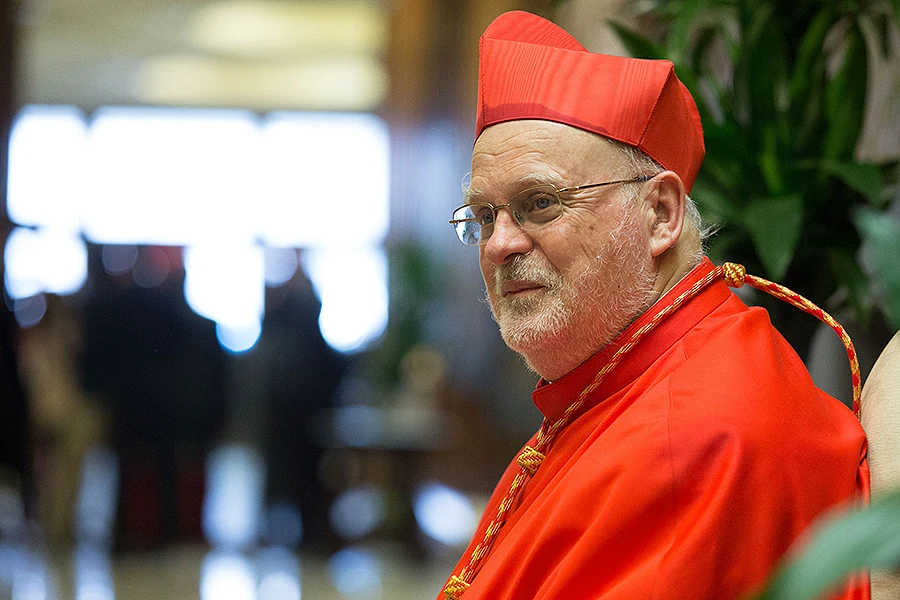
Stockholm, Sweden, Jun 28, 2017 / 04:24 pm (CNA/EWTN News).- When thinking of the “peripheries” of the Church, many think of places such as Latin America, Africa, or maybe Asia. However, in Wednesday’s consistory Pope Francis sought out a periphery that slips the minds of many: Sweden.

Cardinal Anders Arborelius of Stockholm told Vatican Insider he was “somewhat shocked” to get the news of his elevation, saying that “(w)e must also be happy that Sweden and all Scandinavia can be said to have entered the map of world Catholicism, as the gates of the Catholic Church open more to our land.”

“The last become first!” he told CNA while in Rome to receive his red biretta June 28.

Catholics number only about 150,000 in the largely secular and Lutheran country, whose sole diocese is led by the new cardinal. His time as bishop has been dominated by building connections with others, both of different creeds and those who come from different lands.

Cardinal Arborelius was born in Switzerland to Swedish parents in 1949, making him the first Swedish-origin bishop of Sweden since the Protestant Reformation. A historic shortage of priests in the country led to the need to appoint bishops from Germany or the United States to head the Diocese of Stockholm.

However, he was born into a Lutheran family; he converted to Catholicism at age 20 after coming into contact with the Bridgettine sisters. Two years later he entered the Discalced Carmelites, under the influence of the writings of St. Therese of Lisieux. He has since written a biography of St. Teresa Benedicta of the Cross.

He took perpetual vows in 1977, and was ordained in 1979 after receiving his doctorate in Rome.

Cardinal Arborelius was appointed Bishop of Stockholm in 1998 by St. John Paul II.

With his elevation to cardinal, Arborelius is also the first Swede in history to wear the red hat.

In a country dominated by secular culture and with a strong Protestant population, ecumenism has been at the forefront of Cardinal Arborelius’ ministry. In 2016, Pope Francis visited the country to mark the 500th anniversary of the Protestant Reformation, speaking on the need for unity.

Cardinal Arborelius, 67, has been on the Ecumenical Council of Sweden for more than 15 years and has participated in conversations with a broad range of ecclesial communities and Churches, not only Lutheran, but also Orthodox and Pentecostal.

“Naturally, the Catholic Church and the Orthodox have a particular importance because we share a heritage and a tradition which go back to the origins of Christianity,” the newly minted cardinal told CNA.

“But we must do what is possible to involve the Lutheran Church and the evangelical communities in the common work of rendering Christ and his message alive for the greatest possible number of people in Sweden.”

In an interview with the National Catholic Register regarding the 2016 meeting, he described how “(a)ctually, Catholics and Lutherans have already come to an agreement that the Reformation should not be celebrated. Instead, we have agreed that it should be remembered in a spirit of prayer and reconciliation in order to heal.”

Cardinal Arborelius pastors a flock who come from many countries: he estimates the true Catholic population of Sweden is double the official count due to a strong immigrant presence, coming from the Middle East and Asia. This has given the Church there a deep appreciation for migrant peoples, a forefront issue of Francis’ pontificate.

The Church in Sweden is also seeing steady growth due to converts.

“In reality, the number of converts is rather constant, around a hundred every year,” he told CNA. “Their provenance is very mixed. Always more numerous are those who come from evangelical communities. Some come because they are attracted by more traditional groups, others are more engaged by the media, but often they are very different between themselves.”

The appointment comes at a time of increasing attention given to Sweden by the Vatican in recent decades. In 2002, the papal nuncio for Scandinavia was moved from Denmark to Sweden, and the country received its first papal visit from St. John Paul II in 1989.


Angela Ambrogetti contributed to this report.

[…]

No Picture
News Briefs

Refusal to teach LGBT issues could fail a Jewish school in Britain

June 27, 2017 CNA Daily News 1

London, England, Jun 27, 2017 / 07:02 am (CNA/EWTN News).- A Jewish girls’ school has received a failing report from a British education standards monitor because it did not teach its pupils about sexual orientation and gender reassignment.

The report concerns Vishnitz Girls School, an Orthodox Jewish school in the London borough of Hackney for students up to age eight. Inspectors charged that the school did not give its students a “full understanding of fundamental British values.”

The British education standards office, informally known as Ofsted, faulted the school’s lack of instruction about all legally protected characteristics, including sexual orientation and gender-reassignment, the U.K. newspaper The Telegraph reports.

Ofsted charged that this means students have “a limited understanding of the different lifestyles and partnerships that individuals may choose in present-day society.” It said school policy “restricts pupils’ spiritual, moral and cultural development and does not promote equality of opportunity in ways that take account of differing lifestyles.”

The school monitor has inspected the school three times in less than a year. Its report suggested school officials are aware school policy does not fulfill U.K. equality laws.

The school’s annual tuition is about $6,600. The Ofsted report did praise the school’s resources, its teachers’ expertise, and its improvements in areas like safeguarding children and leadership.

However, failure to meet Ofsted’s requirements could shut down a school.

The British Department of Education has required schools to teach “fundamental British values,” in reaction to reports that extremist Muslim groups were trying to infiltrate schools. In November 2014, these requirements were strengthened, with all schools being required to promote equality and diversity, as defined by the education department.

At the time, the British newspaper The Guardian reported these rules were likely to conflict with Catholic, Jewish, Muslim, and other religious schools because they require them to prioritize secular law over religious teachings.

In 2014 a highly ranked Catholic school in Suffolk drew criticism from government inspectors for allegedly failing to prepare students for modern life in Britain.

The school filed a formal complaint about the investigation. The school said parents complained that the inspectors asked children as young as ten about same-sex sexual acts and transsexualism.

Ofsted and the “British values” requirement drew criticism from Catholic leaders like Conservative MP Sir Edward Leigh, president of the Catholic Union of Great Britain. He charged that Ofsted “appears to be guilty of trying to enforce a kind of state-imposed orthodoxy on certain moral and religious questions.”

[…]

No Picture
News Briefs

To understand Pope Francis, you have to understand the Jesuits

June 25, 2017 CNA Daily News 15

Rome, Italy, Jun 25, 2017 / 04:00 pm (CNA/EWTN News).- Discernment is one of the words Pope Francis repeats most, especially when speaking to priests and seminarians.

He often expresses his desire for greater formation in discernment – a concept that may seem obscure without an understanding its importance to the Pope’s Jesuit formation.

“When a Jesuit says ‘discernment,’ they’re employing a term that has a very rich spiritual tradition within the Society of Jesus, so you can presume a lot in that,” Fr. Brian Reedy, SJ, told CNA in an interview.

Fr. Reedy is a US Navy Reserve chaplain and is pursuing a doctorate in philosophical theology from the Pontifical Gregorian University. He holds a licentiate in theology from Boston College.

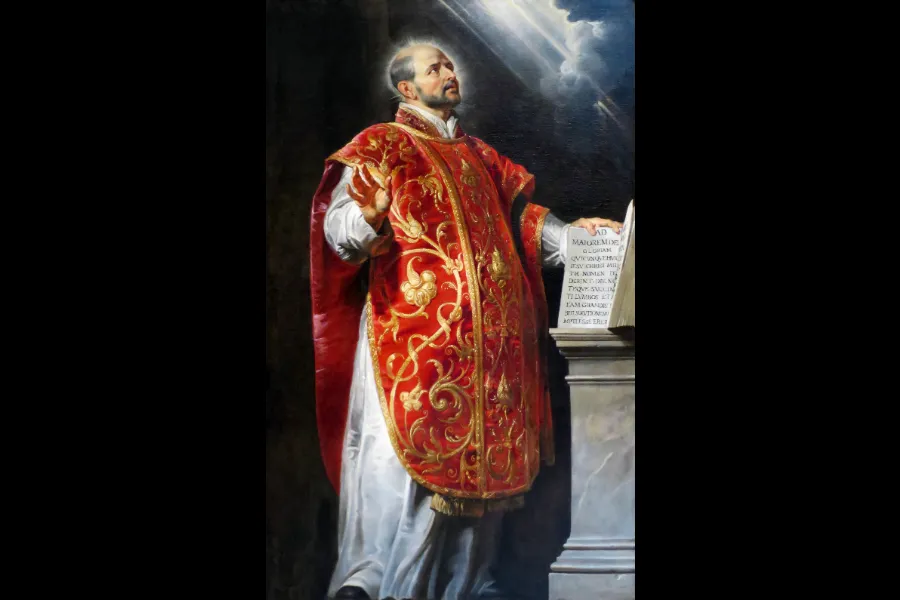
He explained that discernment is something St. Ignatius of Loyola, founder of the Society of Jesus, emphasized profoundly in his Spiritual Exercises, which form the “backbone” of Jesuit spirituality.

In fact, St. Ignatius twice in the spiritual exercises has an extended discourse on how to carry out discernment properly: what it means, what its limitations are, and the rules that govern it.

“One of the things that’s very interesting about discernment is that while it does have a very polyvalent meaning, you can usually presume that when a Jesuit uses the term, when they launch it, it has these rules at least playing the background in their mind,” Reedy said.

So when it comes to Jesuits and discernment, what are the governing rules, and how can we use them to understand Pope Francis?

Rules of Ignatian discernment

One of the first things to keep in mind when it comes to discernment is St. Ignatius’ distinction between  categories of people, Fr. Reedy said, explaining there are different rules for people take the faith seriously, and those who do not.

“If you are somebody who is living a life where God is not really on the scene and the teachings of the Church aren’t really important you have one set of rules. But the reverse situation for somebody who does take their faith life very seriously and God is at least sought after … then we have a completely different set of rules,” he said.

Another distinction, he said, is between proper and improper objects of discernment, meaning that “some things you can discern and other things you can’t.”

When it comes to the current discussion on marriage, Fr. Reedy noted that in his spiritual exercises, St. Ignatius himself speaks specifically about discerning marriage after you have contracted marriage “as an example of one of the things you can’t legitimately discern.”

This, he said, is because “after you are married, you can no longer legitimately discern being married or not, because you’ve made the decision; it’s not a proper object.”

What can be discerned, by a tribunal, is whether or not the marriage is valid.

“That’s a different question than discerning whether you want to be in a marriage still,” Fr. Reedy said. “For Ignatius that question doesn’t make any sense; in fact, it’s offensive to the process that you would discern changing a state of life that you have already committed yourself to.”

The same thing goes for priesthood and the religious life, he said, explaining that St. Ignatius uses that example because “once you’ve made that commitment, what you discern is how to live the commitment.”

“That’s what you would actually be discerning, because discernment is, fundamentally in Jesuit spirituality, the application of doctrine and teaching to the practical applications in somebody’s life. So it’s making practical that which is theoretical.”

There are then certain “guiding rules” that help in the carrying out of proper discernment.

One of St. Ignatius’ rules Fr. Reedy cited is that sin can never be discerned, using the example of committing murder.

“You can’t discern to murder,” he said. “In fact, it’s offensive to the process that you are pretending to discern choosing an absolute evil.”

What can be legitimately discerned is whether or not to kill, because “if you and your family were under immediate threat from somebody, then the father could in the moment discern whether it was possible for him to take lethal action. That’s permitted.”

In terms of Catholic moral theology, Fr. Reedy said it exists between the camp of what is “permitted” and what is “transformative,” and that beyond the permitted sign lies what is “forbidden.”

Things that are forbidden cannot be discerned, and “you only ask to be free from them,” he said. From there, the spectrum goes from what is simply permissible on one side, all the way to what is deeply transformative and engages the world like Christ on the other.

“In that realm, between what is permitted to what is transformative, there’s a lot of discernment of legitimate possibilities of things that are not against reason or against God or the Church,” he said, adding that one can never really discern between good and evil, but “only between relative goods.”

One key rule of discernment that is often forgotten is the guiding principle of “thinking with the Church,” Fr. Reedy said. This means that “whatever you discern, you’re not only thinking about the moral law and how that functions, but also specifically thinking with the Church.”

Francis is a man ‘steeped’ in Jesuit tradition

Pope Francis “is completely steeped in Jesuit tradition and is a man completely of the exercises,” Fr. Reedy said, explaining that one of the first things he tells people when he speaks about the Pope is that “you can hear the spiritual exercises active in what he says.”

In listening to Pope Francis “you can hear a Jesuit who has contemplated the life of Jesus,” the priest said, noting that Francis’ pedagogical or didactic style “is very much patterned on Jesus’, who often gave very oblique and obscure answers to questions.”

Christ did this, he said, “to specifically avoid a kind of legalism that just wants a solid answer that can then be manipulated in some way,” whereas true discernment means “you’re not interested in rules for the sake of rules, (or) tools that can be manipulated or used as weapons; what you’re interested in is finding the best, the truest, the most holy, the most transformative.”

In essence, “you’re always looking for what is the spirit of the law: why does the law exist, what it is, what is it trying to do?”

What can be done is to “have people trained in what the rules are, why they exist, and how to help these people engage that system in a way that can contribute toward their holiness, to their growth in conforming to Christ.”

Fr. Reedy said that for him, one problem he sees in the Church right now is that some people, in their interpretation of the Pope’s actions, are “trying to put on the table, calling under the umbrella of discernment, the actual consideration of sins, of evils.”

“I’ve never gotten the sense that that is what Francis is saying,” he reflected, explaining that in his view, given Francis’ background, what he is is trying to do is to “train people in this: in the proper camp of moral reasoning, which extends from permitted all the way to transformative, how to help people function there in a way that can be messy, but also prevent them from crossing the line into what is forbidden.”

But what about Francis’ ambiguity? Is that a Jesuit thing?

Part of the confusion surrounding Pope Francis’ sayings and writings is that his language can frequently be ambiguous and imprecise, leaving people scratching their heads trying to figure out what he actually meant.

But for Fr. Reedy, this isn’t a Jesuit quality so much as it is a personal limitation of the Vicar of Christ.

“Francis is a complicated character. He’s not a precise theologian, so I think some of the ambiguity and imprecision just comes from his own training and background, which the Church just has to be patient with,” he said.

Secondly, the priest said that if we reflect on scripture, we see that the Pope uses a style that is very similar to what Christ himself often used, especially when he senses a “Pharisaical attitude.”

“When he senses that somebody’s asking a question in order to pin something down in a way he fears is going to hurt somebody else” Francis gets obscure, he said, explaining that the Pope is “very sensitive” to having doctrine “turned into a weapon of sorts.”

And so was Christ, he said, noting that “Jesus had very harsh words for those people.” Even though the Pharisees were technically faithful, upstanding Jews, “they also had a problem in the way that the viewed law; they saw the law first and the needs of the people second, and Jesus challenged that and so is Pope Francis.”

“I think people should stop pretending that Jesus was crystal-clear when he said things all the time,” Fr. Reedy said, noted that Christ “specifically said at times that he was intentionally being confusing. He would say that he was using parables so those other people over there wouldn’t understand – he would say that.”

However, even though Christ could at times speak cryptically, he was clear when pressed on important topics, such as the Eucharist and the meaning behind his words “this is my body,” and that to enter eternal life his disciples must “eat my flesh and drink my blood.”

So when it comes to Pope Francis, Fr. Reedy said people have to take into account “the Jesus-like way he teaches,” which he said is often at play in the Pope’s speeches.

But there is also an element of manipulation when it comes to the Pope’s ambiguity which must be addressed.

“I think (the Pope’s) ambiguity is being manipulated,” Fr. Reedy said, explaining that in these cases, “I think we need to continue to push for greater clarity.”

This doesn’t mean we’ll get the clarity immediately, he said, but when it comes to particularly problematic issues “we need clarity. We need a line to be drawn saying we’re not talking about Catholic divorce.”

This isn’t referring to somebody “who was in a valid marriage just rupturing that marriage, pretending it’s dissolvable against the explicit words of Jesus, and just starting a new one and saying that’s okay.”

“We’re not talking about that … I don’t think we are, I don’t think the Pope is,” he said, because if we look to the rules of discernment of St. Ignatius of Loyola, “I don’t think we can legitimately discern that.”

“So I’m confident that that’s not what the Pope is saying and I think that we should continue to ask for clarity, but not rush to clarity so that we can feel good about ourselves.”

What is needed, he said, is “to defend the truth so that we can become good.”

[…]

No Picture
News Briefs

This beautiful church was a gift from Slovakia to Icelandic Catholics

June 24, 2017 CNA Daily News 1

Reykjavik, Iceland, Jun 24, 2017 / 04:02 pm (CNA/EWTN News).- Bishop David Tencer of Reykjavik last week consecrated a new wooden church building, a gift from the Slovak Catholic Church.

The church is a tribute to Bishop Tencer, who is a Capuchin Franciscan and a native of Slovakia.

Slovak Prime Minister Robert Fico and two other members of the Slovak government joined Bishop Tencer for the June 17 consecration of the church in Reyðarfjörður, more than 400 miles northeast of Reykjavik, Iceland’s capital.

Wood is scarce in the volcanic, rocky country of Iceland, so the church was made of Slovakian wood, then disassembled and shipped to Iceland for reassembly.

“You will not find a single house or church of this type in Iceland,” Bishop Tencer told The Slovak Spectator.

The church is in the shape of a St. Damian Crucifix, an eastern-style icon sometimes called a Franciscan crucifix because St. Francis of Assisi prayed before a cross of this style when he received a commission from God to rebuild the Church.

Icelandic sources report that the new church doubles the seating capacity of the previous chapel of the Capuchin friars from 25 to 50, allowing them to accommodate the growing number of people who come from all regions of the country to attend Mass with the friars.

Iceland’s population is mostly Lutheran, with the country’s 13,000-some Catholics making up only 3-4 percent of the country’s 350,000 population. Many of Iceland’s Catholic population are Polish immigrants who moved to the country for work.

Most of the country’s priests also come from elsewhere, including Poland, Slovakia, Ireland, France, Argentina, Britain, and Germany. The orders of religious sisters with a presence in the country include The Servants of the Lord and the Virgin of Matará, The Mexican sisters from Guadalajara, the Missionaries of Charity, and two Carmelite orders.

The country is divided into six parishes, and the single Diocese of Reykjavik is immediately subject to the Holy See.

But the small size of the Church in Iceland is part of its charm, Bishop Tencer told The Spectator, because this means, “I know many of its members in person.”

It is also a result of a turbulent history of Catholicism in the country, which was nearly wiped off the island during the reformation and the rule of a harsh Danish king in the 16th century. Bishop Jon Arason, the island’s last Catholic bishop until 1929, was executed in 1550 for his refusal of the reformation.

The Slovak prime minister said he was happy to be a part of the project of providing a church building to Iceland, an initiative of the Church in Slovakia, because it paid tribute to the service that Slovaks are doing in Iceland.

“So, I’m happy that a piece of Slovakia from Hrinyová, and the bishop, who is also from Slovakia, are representing our country in Iceland,” he told Slovakian media.

[…]