End of life care must acknowledge our mortality, Francis reminds physicians

November 16, 2017 CNA Daily News 0

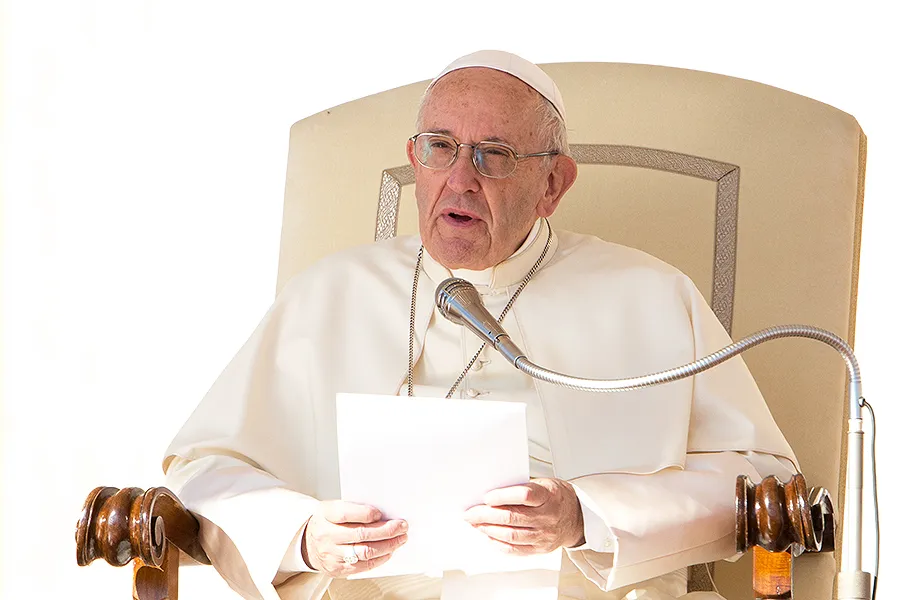
Vatican City, Nov 16, 2017 / 03:05 pm (CNA/EWTN News).- In a message to medical professionals Thursday, Pope Francis said that when it comes to end-of-life care, treatments should always be based on human dignity and with the patient’s best interests in mind.

He also stressed that the various medical options provided must avoid the temptation either to euthanize a patient or to pursue disproportionate treatments which do not serve the integral good of the person.

When it comes to caring for those at the end of their earthly life, “it could be said that the categorical imperative is to never abandon the sick,” the Pope said Nov. 16.

The anguish of being faced with our human mortality and the difficult decisions we have to make “may tempt us to step back from the patient,” he said, but cautioned that is the stage when we are most called to show love, closeness, and solidarity.

Each person – whether they are a parent, child, sibling, doctor or nurse – must give in their own way, he said, and even though there is not always a guarantee of healing or a cure, “we can and must always care for the living, without ourselves shortening their life, but also without futilely resisting their death.”

In this sense, he pointed to the importance of palliative care, “which is proving most important in our culture, as it opposes what makes death most terrifying and unwelcome – pain and loneliness.”

Pope Francis offered his words in a message sent to participants in the World Medical Association’s Nov. 16-17 European Meeting on End-of-Life Questions, organized in collaboration with the Pontifical Academy for Life.

The Pope said “greater wisdom” is needed today when it comes to end-of-life care, “because of the temptation to insist on treatments that have powerful effects on the body, yet at times do not serve the integral good of the person.”

The increase in the “therapeutic capabilities of medical science” have made it possible to eliminate various diseases, improve health and prolong a person’s life, he said, noting that while these are certainly positive developments, there is now also the danger “to extend life by means that were inconceivable in the past.”

“Surgery and other medical interventions have become ever more effective, but they are not always beneficial: they can sustain, or even replace, failing vital functions, but that is not the same as promoting health.”

Referencing a speech given by Venerable Pius XII to anaesthesiologists and intensive care specialists in 1957, Francis said that “there is no obligation to have recourse in all circumstances to every possible remedy” for an illness, and that in specific cases, “it is permissible to refrain from their use.”

“Consequently, it is morally licit to decide not to adopt therapeutic measures, or to discontinue them, when their use does not meet that ethical and humanistic standard that would later be called ‘due proportion in the use of remedies,’” referencing the Congregation for the Doctrine of the Faith’s 1980 Declaration on Euthanasia.

The key element of this criterion, according to the CDF, is that it considers “the result that can be expected, taking into account the state of the sick person and his or her physical and moral resources.”

This “makes possible a decision that is morally qualified as withdrawal of ‘overzealous treatment’,” the Pope said.

“Such a decision responsibly acknowledges the limitations of our mortality, once it becomes clear that opposition to it is futile.” He quoted the Catechism in saying that “here one does not will to cause death; one’s inability to impede it is merely accepted.”

“This difference of perspective restores humanity to the accompaniment of the dying, while not attempting to justify the suppression of the living,” he said.

“It is clear that not adopting, or else suspending, disproportionate measures, means avoiding overzealous treatment; from an ethical standpoint, it is completely different from euthanasia, which is always wrong, in that the intent of euthanasia is to end life and cause death.”

When it comes to concrete clinical situations, Pope Francis noted that various factors come into play that are not always easy to evaluate, and to determine whether a medical intervention is proportionate or not, “the mechanical application of a general rule is not sufficient.”

“There needs to be a careful discernment of the moral object, the attending circumstances, and the intentions of those involved.”

Francis emphasized that when caring for any given patient, decisions must be made in light of human dignity. “In this process, the patient has the primary role,” he added.

“The patient, first and foremost, has the right, obviously in dialogue with medical professionals, to evaluate a proposed treatment and to judge its actual proportionality in his or her concrete case, and necessarily refusing it if such proportionality is judged lacking. That evaluation is not easy to make in today’s medical context, where the doctor-patient relationship has become increasingly fragmented and medical care involves any number of technological and organizational aspects.

Compounding this difficulty, the Pope said, is the “growing gap” in healthcare opportunities, which he said is due to “the combination of technical and scientific capability and economic interests.”

What this means, then, is that sophisticated and costly treatments are increasingly available to “ever more limited and privileged segments” of the population. This then raises questions regarding sustainable healthcare delivery and “a systemic tendency toward growing inequality in health care.”

This tendency, Francis said, “is clearly visible” on a global level, especially when comparing different continents. However, he noted this is also seen within wealthier countries, where access to healthcare “risks being more dependent on individuals’ economic resources than on their actual need for treatment.”

In this context, as it relates to both clinical practice and medical culture in general, “the supreme commandment of responsible closeness must be kept uppermost in mind,” he said.

Given the complexity of issues surrounding end-of-life care and the moral and ethical questions they raise, the Pope said democratic societies must address them “calmly, seriously and thoughtfully,” in a way open to finding agreeable solutions whenever possible, including on the legal level.

“On the one hand, there is a need to take into account differing world views, ethical convictions and religious affiliations, in a climate of openness and dialogue. On the other hand, the state cannot renounce its duty to protect all those involved, defending the fundamental equality whereby everyone is recognized under law as a human being living with others in society.”

Special attention must be paid to the vulnerable, who need help when it comes to defending their own interests, he said, noting that if this “core of values essential to coexistence” is weakened, then “the possibility of agreeing on that recognition of the other which is the condition for all dialogue and the very life of society will also be lost.”

Healthcare legislation must adopt this “broad vision and a comprehensive view” of what will most effectively promote the common good in each concrete case, he said, and closed by offering his prayer for the discussion.

“I also trust that you will find the most appropriate ways of addressing these delicate issues with a view to the good of all those whom you meet and those with whom you work in your demanding profession.”

[…]

Climate change a problem we can’t ignore, Pope Francis says

November 16, 2017 CNA Daily News 2

Vatican City, Nov 16, 2017 / 12:08 pm (CNA/EWTN News).- Pope Francis sent a message Thursday to a conference on climate change, telling participants the problem is something that can’t be ignored, but must be met with a proactive desire to develop effective solutions.

“I would like to reiterate my urgent invitation to renew dialogue about the way in which we are building the future of the planet,” the Pope said Nov. 16.

“We need a solution that unites everyone, because the environmental challenge that we are living, and its human roots, involves and touches us all,” he said, noting that unfortunately many of the efforts to seek concrete solutions “are often frustrated by various motives that range from negating the problem to indifference, comfortable resignation or blind trust in technical solutions.”

Francis said we have to avoid falling into the “perverse attitudes” of denial, indifference, resignation, and trust in inadequate solutions, which “certainly do not help honest research and sincere dialogue on building the future of our planet.”

Pope Francis offered his words in a message to Frank Bainimarama, Prime Minister of Fiji, for the U.N. COP-23 Climate Change conference taking place Nov. 6-17 in Bonn, Germany, and which is being presided over by the government of Fiji.

He noted how the gathering is taking place two years after the Paris Climate Agreement was reached, which reached a consensus on the need to develop “a shared strategy to counteract one of the most concerning phenomenons that our humanity is living: climate change.”

The Paris Agreement was an international climate accord reached in 2015 after representatives of more than 150 countries met for COP 21, or the United Nations Climate Change Conference.

Signatories pledged on various levels to help reduce global carbon emissions and aim to keep global temperatures from rising more than two degrees Celsius, as compared to average temperatures from the pre-industrial age, by the end of the 21st century.

When the agreement was initially reached, Pope Francis hailed it as “historic” and said it would require “a concerted and generous commitment” from members of the international community. Over 190 countries have signed on to the agreement.

However, United States President Donald Trump decided earlier this year to pull out of the accord, arguing that the requirements would harm the U.S. economy and jobs.

In his message to the COP-23 conference, Pope Francis said the challenge of climate change requires the commitment of every country, some of whom “must try to assume a guiding role,” with due consideration for vulnerable populations.

He noted how in this year’s conference participants are trying to implement a new phase of the Paris agreement, which is “the process of defining and building guidelines, rules and institutional mechanisms so that it can truly be effective and capable of contributing to the achievement of the complex objectives it proposes.”

In coming up with solutions, the Pope cautioned against limiting them only to the economic or technical dimensions, because “technical solutions are necessary but insufficient.”

Rather, he said “it’s essential and desirable to also keep in attentive consideration the ethical and social aspects and impacts of the new paradigm of development and progress in short, medium and long-term.”

To this end, Francis emphasized the need to focus on an education and lifestyle that are based on an integral ecology capable of assuming “a vision of honest research and open dialogue” where the various aspects of the Paris Agreement are intertwined.  

The agreement, he said, calls for “serious responsibility to act without delay as freely as possible from political and economic pressures, overcoming particular interests and behaviors,” and requires a “responsible awareness” of our common home.

Pope Francis closed his message voicing his hope that the work done in the conference would be animated by the same “collaboration and proactive” spirit of the COP-21 conference in 2015.

“This will accelerate awareness-raising and the consolidation of the will to make effective decisions to counteract the phenomenon of climate change while at the same time fighting poverty and promoting a true integral human development.”

[…]

Pope Francis makes surprise visit to the poor outside St Peter’s Square

November 16, 2017 CNA Daily News 1

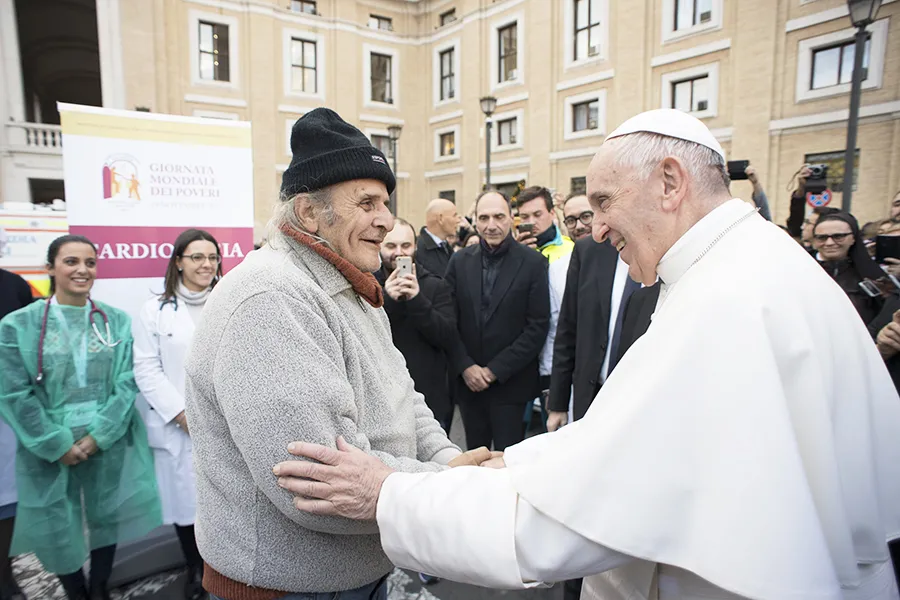
Rome, Italy, Nov 16, 2017 / 10:58 am (CNA/EWTN News).- Pope Francis on Thursday made an unannounced visit to a small makeshift medical center in front of St. Peter’s Square where poor and homeless people are receiving free treatment ahead of this weekend’s World Day for the Poor.

According to Selene, a young volunteer present when the Pope arrived Nov. 16, “It was absolutely an unforgettable surprise for me, and for all the volunteers serving here,” whom she said are all young Italians.

In comments to CNA, she said she has “no words” to describe the encounter, in which the Pope thanked them for their work, blessed them, and spent time talking with the poor and needy for about 20 minutes.

Pope Francis arrived to the center around 3:45p.m., where he was welcomed by a group of poor people waiting to be seen by specialists.

The center was set up in anticipation of the first World Day of the Poor, which will take place Nov. 19 and is being organized by the Pontifical Council for the Promotion of the New Evangelization.

Open from 9a.m. until 4p.m. every day this week, the center offers patients free visits with doctors who specialize in clinical analysis, cardiology, dermatology, infectious diseases, gynecology, and andrology.

The doctors operate out of small mobile ambulances that patients can go into for a check-up or for a more specialized exam.

After talking and exchanging jokes with the poor and homeless waiting to be seen, the Pope then spoke with nurses from the Italian Red Cross and volunteers with the Confederation of Mercy, who help operate the center.  

Dr. Silvia Rosati said the Pope’s surprise appearance was “a beautiful experience, a wonderful experience.”

“We are trying to do the little that we can right now,” she said, recounting how the Pope told them to “continue trying to be as present as possible with the poor, and with our attempt to help people as much as we can with our work.”

Established by Pope Francis at the end of the Jubilee of Mercy, the World Day for the Poor this year has the theme “Love not in word, but in deed.”

In addition to access to free medical exams, the poor and needy participating in the event will attend a  said Mass by Pope Francis in St. Peter’s Basilica. Afterward, they will be offered a three-course lunch at different centers and organizations around Rome, including the Vatican’s Paul VI Hall.

[…]

Report: US bishops choose delegates for 2018 Synod

November 15, 2017 CNA Daily News 2

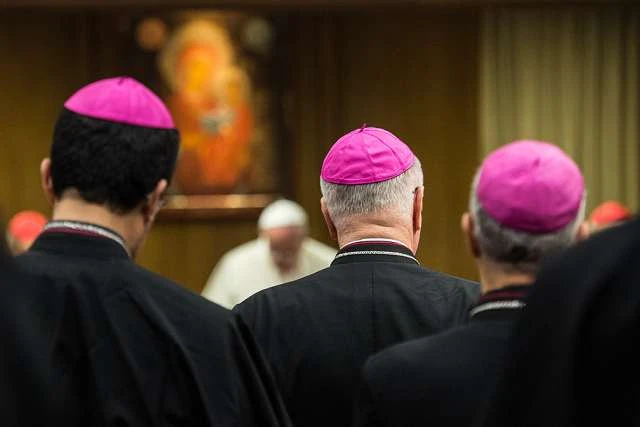
Baltimore, Md., Nov 15, 2017 / 03:30 pm (CNA).- Meeting in Baltimore for their annual fall assembly, the U.S. bishops have selected their choices for delegates to next year’s Synod on Young People, the Faith, and Vocational Discernment, multiple sources have reported to CNA.

According to these sources, the delegates are Cardinal Daniel DiNardo of Galveston-Houston, the bishops’ conference president; Archbishop Jose Gomez of Los Angeles, conference vice president and head of the nation’s largest diocese; Archbishop Charles Chaput of Philadelphia, who hosted the World Meeting of Families attended by Pope Francis in 2015; and Auxiliary Bishop Robert Barron of Los Angeles, known for his prominent new media evangelization presence. These names have not been confirmed by the USCCB.

The 2018 Synod on Young People, the Faith, and Vocational Discernment is a global meeting of bishops to be held next year in Rome. Bishops’ conferences vote on delegates to attend the synod. After being elected, delegates’ names are sent to the Vatican for approval.

Cardinal DiNardo was born in Steubenville, Ohio, in 1949. He studied philosophy and theology, and he was ordained a priest in 1977.

He became coadjutor bishop of Sioux City, Iowa, in 1997 and was named coadjutor bishop of Galveston-Houston in January 2004. He was elevated to the College of Cardinals in November 2007.

The cardinal was chosen vice president of the U.S. Bishops’ Conference in 2013, and president of the conference in 2016, a position that he currently holds.

He previously served as the head of the bishops’ pro-life committee, and he has also served as a member of the Pontifical Council for Culture, the Pontifical Council for the Pastoral Care of Migrants and Itinerant People, and the Pontifical Council for the Economy.

Appointed in 2010 to shepherd the Archdiocese of Los Angeles, Archbishop Gomez heads the largest U.S. diocese, with more than 4 million Catholics. He is the highest-ranking Hispanic bishop in the United States.

Born in Monterrey, Mexico in 1951, he holds degrees in accounting, philosophy and theology, and was ordained an Opus Dei priest in 1978. In 2001, he was ordained an auxiliary bishop for the Archdiocese of Denver, and in 2005, he was appointed Archbishop of San Antonio.

Archbishop Gomez has worked extensively in Hispanic ministry and played a key role in creating the Catholic Association of Latino Leaders (CALL). In 2005, he was named one of Time Magazine’s 25 most influential Hispanics in the United States, and in 2007 he was on a CNN’s list of “Notable Hispanics” in a web special celebrating “Hispanic Heritage Month.”

In 2008, Archbishop Gomez was appointed as a consultant to the Pontifical Commission for Latin America. He has served in various roles for the U.S. Conference of Catholic Bishops, in areas including Cultural Diversity, Doctrine, and Hispanics and the Liturgy.

In 2016, he was elected vice president of the bishops’ conference.

Born in 1944 in Concordia, Kansas, Archbishop Chaput was ordained to the priesthood in 1970. He was ordained Bishop of Rapid City, South Dakota, in 1988, and was appointed Archbishop of Denver by Pope John Paul II in 1997.

While in Denver, Archbishop Chaput launched the local St. John Vianney Seminary, which boasts one of the highest seminary enrollment rates in the country. He was also influential in the success of several Colorado-based organizations, including the nationwide missionary group Fellowship of Catholic University Students (FOCUS), the international women’s group Educating on the Nature and Dignity of Women (ENDOW), and the Augustine Institute, a lay Catholic graduate school.

As member of the Prairie Band Potawatomi Tribe, Archbishop Chaput is the first Native American archbishop. He has served on several U.S. bishops’ committees involving marriage and family, pro-life activities, immigration, and religious freedom. In 2014, Pope Francis appointed him to the Pontifical Council for the Laity.

The archbishop was chosen to lead Philadelphia in 2011. He led efforts to organize the 2015 World Meeting of Families, which brought Pope Francis to the United States.

Bishop Barron was appointed auxiliary bishop of Los Angeles in 2015. He is the founder of the Word on Fire Catholic Ministries, as well as the host of the award-winning documentary Catholicism.  

Born in Chicago in 1959, Bishop Barron was ordained a priest in 1986. He taught as Mundelein Seminary, the University of Notre Dame and at the Pontifical University of St. Thomas Aquinas.

Known as a pioneer in new media evangelization, Bishop Barron has a strong social media following. He has published 15 books and is a #1 Amazon bestselling author.


[…]

Pope Francis got a Lamborghini, and he’s raffling it for charity

November 15, 2017 CNA Daily News 3

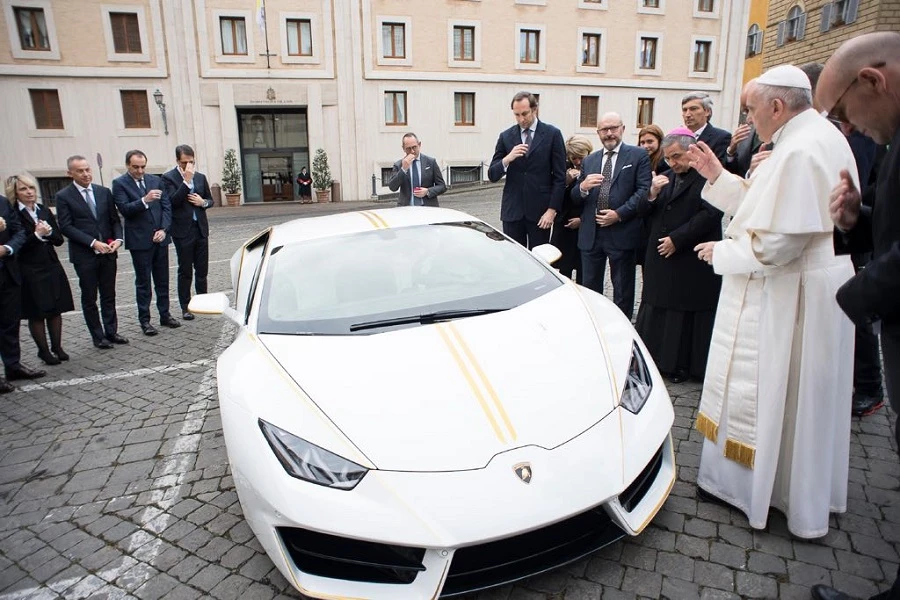
Vatican City, Nov 15, 2017 / 05:09 am (CNA/EWTN News).- On Wednesday Pope Francis became the proud new owner of a special papal-themed Lamborghini Huracán, which was given to him by company execs at the Vatican and will be auctioned off for charity.

The sleek white Huracán with gold lines running along the hood and angles of the car’s body was presented to Francis in front of his residence at the Vatican’s Saint Martha Guesthouse Nov. 15, which he blessed and autographed in the presence of top executives from the luxury Italian sports car brand.

It will be auctioned at Sotheby’s and the Pope has decided to give the proceeds to three different charitable causes: the restoration of villages on the Nineveh Plain in Iraq, assisting victims of human trafficking, and missionary work in Africa.

At a base cost of roughly $250,000, the Huracán made its debut at the March 2014 Geneva Auto show, and was released in the second quarter of the year, quickly becoming Lamborghini’s most popular and best-selling car.

The name, which is Spanish for “hurricane,” is reminiscent of the fighting bull “Huracán” that fought in the late 1800s and was known for its courage. The choice of the car’s name follows suit with Lamborghini’s style, as they typically use historic Spanish fighting bulls as a scheme for naming their vehicles.

It was designed based on the hexagonal form of the carbon atom, and has 610 metric horsepower and 4 wheel drive, as well as a naturally aspirated V10 engine and a full-LED lighting system. In 2014, the Huracán was named “Supercar of the Year” by car magazine Top Gear.

With six different models of the Huracán on the market, the papal-version marks a special 7th edition created specifically for Pope Francis.

In terms of proceeds, funds will go toward initiatives led by papal charity Aid to the Church in Need to rebuild properties that were destroyed by ISIS in Iraq.

One of their projects, titled “Iraq, return to the roots,” was presented at the Vatican in September. From 2014-2017, the project has financed various programs for Christians in Iraq, amounting to an approximate total of $35 million.

Among the structures destroyed or damaged since the ISIS invasion of the Nineveh Plains in 2014, it is estimated that some 13,000 homes, schools, hospitals and religious buildings were completely or partially destroyed. The project, with a total estimated cost of $250 million, aims to continue providing a concrete response to Christians from the Nineveh Plains who want to return to their homes.

Proceeds from the raffle will also directly benefit the Pope John XXIII Community, which assists women who have been victims of human trafficking and prostitution. Pope Francis has met members of the community at the Vatican on several occasions, and he visited them in August 2016 as one of his “Mercy Friday” outings during the Jubilee of Mercy.

Funds from the raffle will also support two Italian associations that carry out missionary work in Africa, one being the “GICAM” project of hand surgeon Professor Marco Lanzetta, and the other being the “Friends of Central Africa” organization, which for two years has led projects dedicated primarily to care for women and children.

Francis has done similar raffles for high-end gifts in the past, with each item going for well beyond its market sale price.

In 2013 he was given a Harley-Davidson Dyna Super Glide, which was sold to a private buyer for roughly $327,000, far exceeding the $16-22,000 presale estimate.

After his September 2015 visit to the United States, during which FIAT Chrysler made a pair of FIAT 500Ls available for the Pope to use during his time in Philadelphia, both of the cars were auctioned off to support local charity.

Similarly, in April 2016 a white skullcap – known as a “zucchetto” worn by prelates in the Catholic Church – was sold for around $18,000, after the owner had bought it and exchanged it with the Pope during a general audience. At least part of the funds went to support a children’s charity.

[…]