Black Elk sainthood cause advances with US bishops’ vote
November 14, 2017 CNA Daily News 4

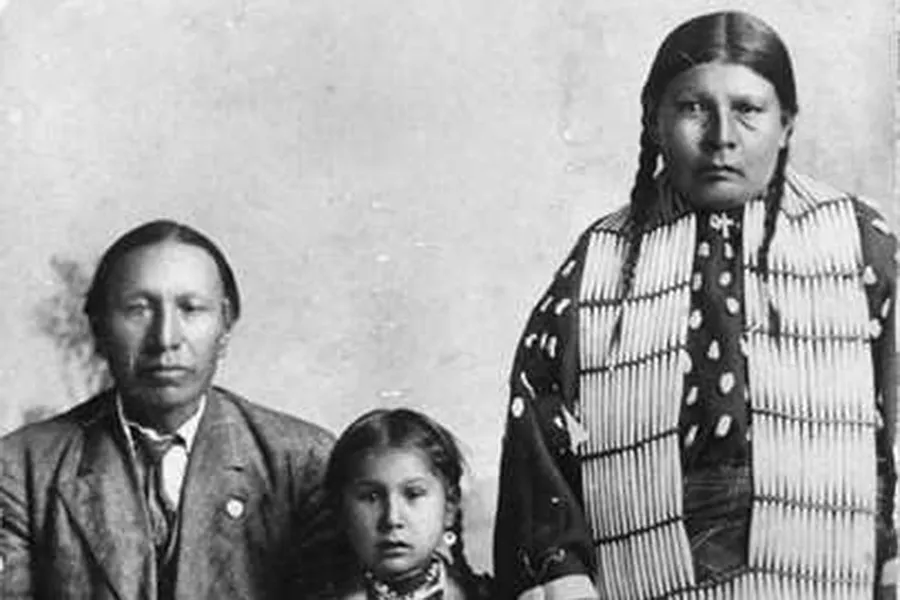
Baltimore, Md., Nov 14, 2017 / 02:59 pm (CNA/EWTN News).- The sainthood cause for Lakota medicine man and Catholic catechist Nicholas Black Elk took another step forward today, as the U.S. bishops unanimously approved his canonical consultation.

The Nov. 14 voice vote of the bishops took place at their annual fall assembly in Baltimore, and is the latest in a series of steps on the path to sainthood.

The motion to vote on the cause was brought forward by Bishop Robert D. Gruss of Rapid City, South Dakota, the home diocese of Black Elk where his cause was officially opened earlier this year.

Even before his conversion to Catholicism, Black Elk was a prominent medicine man “widely known as a holy man and a mystic,” Bishop Gruss told the assembly of bishops.

After his conversion, Black Elk “fully embraced a Catholic life” and became an “ardent Catechist” who would go on to convert more than 400 Native Americans to the faith, Gruss noted.

Black Elk became “an icon who reveals what God calls all of us to be – people of faith and hope, and a source of hope for others,” he added.

Black Elk was born sometime between 1858 and 1866 and, like many of his ancestors, served as a medicine man, which combined the roles of medical doctor, spiritual adviser and counselor.

He was present for the Battle of Little Bighorn in 1876, and the following year, he joined Buffalo Bill’s Wild West Show, which toured Europe, including a performance before Queen Victoria.

In 1892, after touring with the show for several years, he married Katie War Bonnet. They had three children. After she converted to Catholicism, all three children were baptized.

The year after she died, Black Elk converted to Catholicism and was baptized on Dec. 6, 1904, the Feast of St. Nicholas. He took Nicholas as his baptismal name because he admired the saint’s generosity.

In 1905, he married again to Anna Brings White, a widow with two children. They had three children together and she passed away in 1941.

During Black Elk’s lifetime, the practice in the Diocese of Rapid City was for Jesuit priests to select Lakota Catholic men to teach the faith to other members of their tribe as catechists. They evangelized, prayed and prepared converts in the Lakota language, traveling by foot or by horseback until automobiles became available.

Black Elk became a catechist in 1907, chosen for his enthusiasm and his excellent memory for learning Scripture and Church teaching. He was also one of the signatories of the cause of canonization for St. Kateri Tekakwitha, another Native American saint. He passed away Aug. 19, 1950 at Pine Ridge.

Last year, a petition with over 1,600 signatures to open his cause for canonization was presented to Bishop Gruss by the Nicholas Black Elk family. An October Mass officially opened his cause in the diocese this year.

Gruss said that Black Elk’s witness is an inspiration for both Native and non-native Americans, because he “lived the Gospel in everyday life.”

The next step in Black Elk’s cause will be for a tribunal to investigate and document examples of heroic virtue in his life.

 

[…]

Sacramento bishop leads prayer after northern California shooting

November 14, 2017 CNA Daily News 0

Baltimore, Md., Nov 14, 2017 / 02:54 pm (CNA/EWTN News).- Notifying his fellow bishops of “a terrible shooting” in his diocese, Bishop Jaime Soto of Sacramento led them in prayer for the victims during the U.S. bishops’ general assembly in Baltimore on Tuesday.

“I would ask if we could take a moment to ask God’s mercy not only on those affected by this [incident], but on all affected by gun violence in these times. Let us ask for Mary’s intercession for these people,” he said Nov. 14, leading those gathered in the Hail Mary.

“Mary, mother of Mercy and Queen of Peace, pray for us,” he added.

Minutes after learning about the shooting in Northern California, Sacramento’s @bishopsoto led his brother bishops in a prayer for all victims of gun violence. #USCCB17 pic.twitter.com/5YiFaIN5X3

— US Catholic Bishops (@USCCB) November 14, 2017

The New York Times reports that at least four people were killed at several sites in and around Ranch Tehema Reserve, a small community located about 130 miles northwest of Sacramento. Several more people were wounded, including at an elementary school. No children were killed, according to police. The gunman has been shot and killed by police, authorities said.

A sheriff’s office official told reporters the shooter was armed with a semiautomatic rifle and two handguns, and neighbors had reported his involvement in a domestic violence incident.


[…]

Pakistani bishops declare Year of the Eucharist

November 14, 2017 CNA Daily News 0

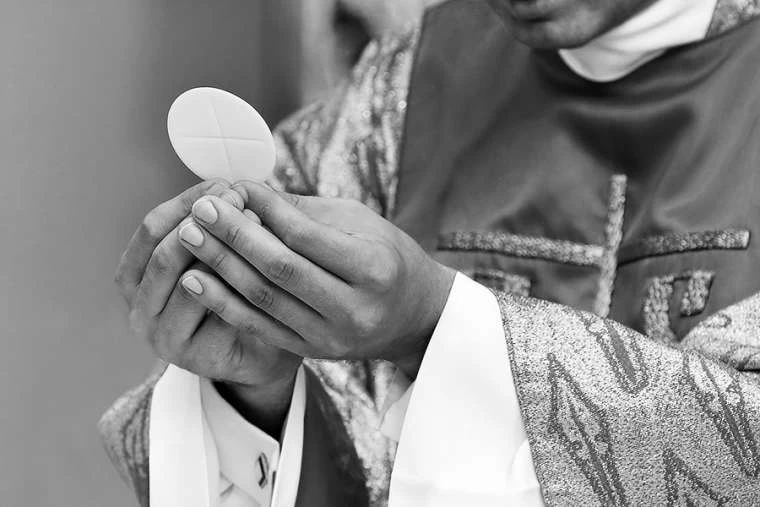
Lahore, Pakistan, Nov 14, 2017 / 12:11 pm (CNA/EWTN News).- Amid national challenges, the Pakistani Catholic Bishops’ Conference has announced a “Year of the Eucharist,” to focus on renewal and service.

The year will begin on the Solemnity of Christ the King, Nov. 26, 2017. It will end on the same feast day next year, Nov. 25, 2018.

“The ‘Year of the Eucharist’ is meant to be a time of spiritual growth and inner renewal and to share the love of Christ with all humanity by our dedicated service to our country,” the bishops said in a statement published by the Pakistan Christian Post.

“As our country is going through difficult times we urge all people in Pakistan to pray more fervently for peace, harmony, progress and prosperity of our beloved country.”

The statement was issued during the bishops’ second annual plenary meeting, which took place in Lahore, Pakistan on Nov. 9-10.
In the statement, the bishops lamented the social problems that have arisen from corrupt politics. They expressed hope that the next election would be free and fair, and would “strengthen the democratic process.”

“We have to be honest in our dealings and be free from all stains of corruption,” the bishops said. “There must be an honest interim government that will bring in fair practices and not interfere with the election campaigns and the voting process.”

The bishops called on the Election Commission of Pakistan to be completely impartial, and encouraged the political parties to be attentive to the struggles of the country’s minorities.

“We feel that the current electoral system for minority candidates being appointed by political parties on reserved seats does not represent the community and so we urge the government to create a just and fair system,” they said.

The bishops also warned that “the educational system in Pakistan is suffering.” The weaknesses in the system must be addressed, they said, noting that the local Church has worked hard to offer high-quality, affordable education.

“Education is the basic right of every human being. It has power to drag a human from darkness of illiteracy into the light of knowingness. A country can never progress without appropriate educational system,” they stressed, calling on the government to work for a system that promotes peace and religious harmony.

Looking at the situation of the Church in the country, the Pakistani bishops thanked the government for showing respect for Sister Ruth Pfau, a beloved sister who spent more than 50 years working to eradicate leprosy in Pakistan.

Pfau died Aug. 10 at age 87 and was given a state funeral, the first Christian woman in the country to receive one, according to CNN.

The bishops thanked government leaders “for making the funeral of Dr Ruth Pfau a national event,” but said that Pfau’s legacy must continue.

“This must further inspire the clergy, religious, lay faithful and all people to a renewed commitment of serving our neighbor, especially in the poor and the marginalized,” they said.

[…]

Pope Francis pens letter to disabled soldier he met in Colombia

November 14, 2017 CNA Daily News 0

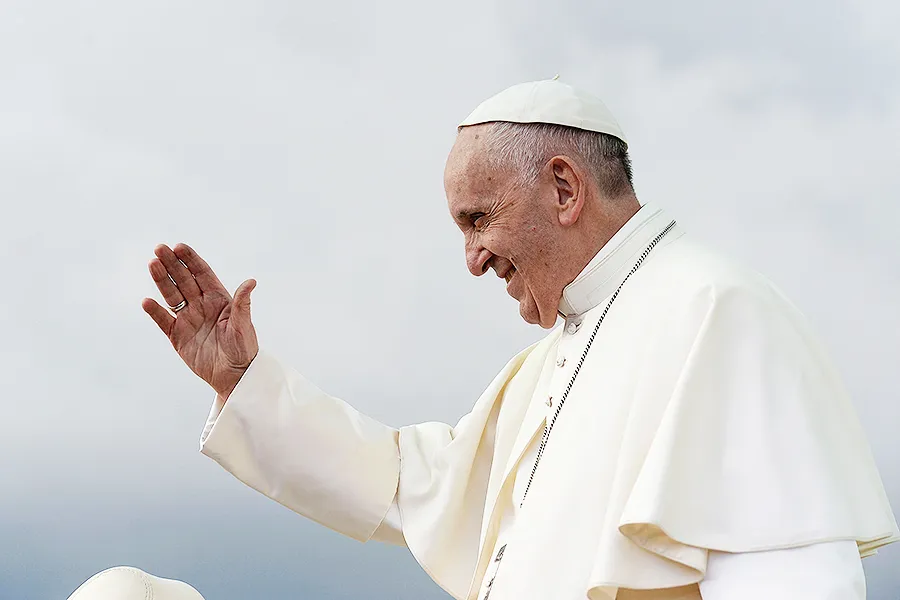
Bogotá, Colombia, Nov 14, 2017 / 02:52 am (CNA/EWTN News).- Pope Francis sent a handwritten letter to a disabled soldier he met in Colombia this fall, thanking him for a special gesture at the Bogota airport, when the soldier gave him his military cap.

The pope told the soldier that their encounter touched him so much that he placed a photo of it in his study.

The pontiff’s letter was addressed to the special ops Marine Edwin Restrepo. Restrepo, who has been in a wheelchair for 13 years, after he stepped on an anti-personnel blast mine during a search and secure operation near the town of Zambrano.

Restrepo lost part of an arm and a leg, and he also went blind. Nevertheless, he learned to read Braille and after finishing school, began a law career. He also learned how to walk with his new prosthesis.

Restrepo briefly met Pope Francis at the Catam airport in Bogota on Sept. 10 before the pontiff left for Villavicencio during his apostolic trip to Colombia. He handed the Pope his soldier’s cap and asked the Holy Father to pray for the soldiers and police in Colombia.

The pope’s letter is dated Oct. 16 and was read and delivered to the soldier Nov. 9 by Bishop Suescún Mutis of the Colombian military diocese.

The Holy Father wrote in his letter, “Dear Brother, I don’t know your name but I haven’t forgotten the spontaneous gesture you made this past September 10 at the Catam airport before my departure for Villavicencio.”

Referring to the military cap Restrepo handed him, Francis wrote, “That gesture touched my heart, and I didn’t give your soldier’s cap to my aide (as I normally do with the things people give me). Instead I wanted to take it with me, a memento and symbol of your devotion and love for your country, as captured in the photo.”

The pope told Restrepo that “that soldier’s cap accompanied me during the trip. I thought of you often, and of so many of your companions injured fighting for your people.”

After returning to Rome,  “I couldn’t let go of it, and I placed it next to the photo and the news article that came out in L’Osservatore Romano next to the picture of the Blessed Virgin above the little altar that I have in my study that I often pray in front of. So every time I pray there, I pray for You, your fallen and injured comrades and for Colombia.”

 “And once again I say ‘Thanks!’ to you. Thanks for your gesture, thanks for your love for your country. And, please, I ask you to not forget to pray for me. May Jesus bless you and the Blessed Virgin care for you. Fraternally, Francisco,” the text concludes.


[…]

US bishops to issue statement on need for immigration reform

November 13, 2017 CNA Daily News 3

Baltimore, Md., Nov 13, 2017 / 02:30 pm (CNA/EWTN News).- As the conclusion of a lengthy discussion on migration, the US Conference of Catholic Bishops decided Monday to draft a statement from their president expressing the need for humane and just immigration reform.

The Nov. 13 proposal was first floated by Archbishop Michael Sheehan, Archbishop Emeritus of Santa Fe. After debating how to go about preparing a statement, it was agreed by oral assent that Cardinal Daniel DiNardo of Galveston-Houston, president of the conference, would issue a statement with the assistance of the Committee on Migration, chaired by Bishop Joe Vasquez of Austin, assisted by Archbishop Jose Gomez of Los Angeles.

The discussion followed brief presentations from Archbishop Gomez and Bishop Vasquez. The Los Angeles archbishop outlined the principles which guide the US bishops’ work on migration, which come from Strangers No Longer, a 2003 pastoral letter issued jointly by the US and Mexican bishops’ conferences.

“This is a time when newcomers [to the US] are fleeing violence or persecution or cannot find a livelihood in their own country,” he reflected, adding that the Trump administration has taken several steps on immigration that demand a response from the Church because they “have a direct impact on our pastoral care of immigrants, refugees, and DACA youth.”

The first of these is the decision to allow only 45,000 refugees in the coming fiscal year – the lowest level since the program’s founding in 1980, and the second consecutive year in which the number of refugees admitted will be reduced.

This move, Archbishop Gomez said, “is simply inhumane, particularly when our great nation has the resources and ability to do more” for those “fleeing tyranny and persecution.”

He urged the preservation of DACA, which provides reprieve from the threat of deportation for undocumented persons who were brought to the US as minors, many of whom only know the US “and are by every social measure, American youth.”

Bishop Vasquez then spoke, saying the bishops are advocating for a solution for the DACA youth in the form of the DREAM Act, which would provide those young people with residency in the US.

He encouraged the bishops to contact their legislators to pass the DREAM Act or similar legislation as a prompt and humane solution, noting that 85 percent of Dreamers have lived in the US 10 years or longer, 89 percent have gainful employment, and 93 percent have a high school degree.

The Bishop of Austin also addressed temporary protected status, which has been extended to migrants from El Salvador, Honduras, and Haiti because of acute conditions of insecurity in their home countries.

“It is not the proper time to return 300,000 individuals” to their home countries when they remain insecure due to natural and manmade disasters, he said. These individuals have jobs and support their families, many have mortgages, and they have some 270,000 children who are US citizens.

“ A longer term legislative solution for these brothers and sisters” is necessary, he said.

The US bishops’ “vigourous opposition” to many of the administration’s actions on immigration has been taken because the Gospels “compel us to do so,” Bishop Vasquez stated.

“ Along with the right choices on refugee resettlement, DACA, and TPS, we also need comprehensive immigration reform,” he added, saying there is a need for a path to legalization and citizenship, acknowledging at the same time that “our country also has the right, and the responsibility, to secure its borders.”

Responding to the migration committee’s presentation, Bishop Jaime Soto of Sacramento maintained that “the existence of the TPS population is in a certain sense a condemnation of the inability of Congress and administrations over the past 21 years to provide comprehensive immigration reform,” saying that having held them “in this holding pattern for decades is unconscionable.”

Archbishop Gomez stated that “all of us have to have a conversion, and that’s why it’s so important to talk about this, because people don’t know what the Church teaches,” which echoed comments made by Cardinal Blase Cupich of Chicago.

The Chicago archbishop had lamented the “the poisoning rhetoric that is degrading of immigrants, and even demonizing of them,” which “is having an effect on our own people, because they pick up that language … there’s something wrong in our churches when the gospel is proclaimed but people leave parishes with that rhetoric still in their hearts.”

Archbishop Gomez commented that “it’s important for us to call people to conversion, and explain to them what is it we teach; it’s so essential for the future of our country.”

Bishop Vasquez reiterated the importance of conveying the Church’s teaching, and also of fostering personal encounters with immigrants or refugees. “Once you do that you understand the situation of persons … just like us, therefore we empathize and are in solidarity with them; that’s what brings conversion and change of mind.”

Bishop Oscar Cantu of Las Cruces raised the question of how to counter charges that immigration policy is a matter of prudential judgement, and that the faithful may therefore in good conscience come to a judgement which differs from that of the bishops.

Bishop Thomas Wenski of Miami responded that “we’re making our prudential judgement, too … in the light of Catholic teaching.” He emphasized that “immigrants are not problems, but brothers and sisters; strangers, but strangers who should be embraced as brothers and sisters. We’re offering what we think is best, not only for the immigrants, but for our society as a whole. We can make America great, but you don’t make America great by making America mean.”

Immigration reform, he maintained, must “include the common good of everyone: Americans and those who wish to be Americans.”

Bishop Soto responded that deportations do not fall under the category of prudential judgement, but rather were included by St. John Paul II in his 1995 encyclical Evangelium vitae among the sins which cry out to heaven, and so is not merely “consistent with Church teaching,” but “to discard it as a prudential judgement doesn’t reflect our tradition.”

Archbishop Salvatore Cordileone of San Francisco recommended the five principles from Strangers No Longer as a sine qua non, on which “there can be no disagreement” among Catholics. “While there’s room for prudential judgement, it’s not something that can be taken lightly” because it “involves such basic considerations of justice.”

[…]

Cardinal DiNardo: Amid division, we must look to the God who unites

November 13, 2017 CNA Daily News 3

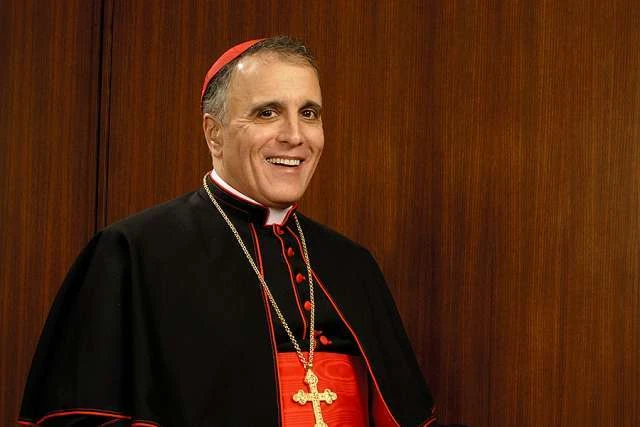
Baltimore, Md., Nov 13, 2017 / 12:45 pm (CNA/EWTN News).- Witnessing to the Gospel is the simple but fundamental call for people of faith who live in trying times, Cardinal Daniel DiNardo said in his keynote address to the U.S. bishops on Monday.

The United States Conference of Catholic Bishops is meeting Nov. 13-14 in Baltimore for their fall assembly. This year’s assembly marks the centenary of the U.S. Conference of Catholic Bishops, which was founded in 1917 as the National Catholic War Council.

Not unlike today, DiNardo noted, the U.S. bishops 100 years ago were dealing with trying times, including a massive overseas migrant crisis.

“The bishops back then knew that such challenges could only be met through a unified marshaling of all the Church’s resources,” said DiNardo, who is president of the conference.

“Not surprisingly, we are living in a time of similar challenge,” he said, and bishops today are leading “a diverse flock. People look, talk, and even think differently from each other.” Amidst such diversity, it can be easy to be tempted to division and fear, seeing strangers as a threat rather than as people to be welcomed, the cardinal said.

“But fear is not of God. God does not divide; God unites. And God, who is love, created us to love. Love is not naïve, but neither is it irritable, resentful, or rude,” he said.  

The Church in America is rich with people who have met the challenges of their time and witnessed to the love of the Gospel, Cardinal DiNardo said, pointing to the example of Blessed Father Stanley Rother, an Oklahoma priest and martyr who was beatified earlier this year.

Rather than abandon his people amidst a civil war in Guatemala, where he served, Fr. Rother  “offered his life for the people he had come to serve. In this way, he is a witness to the Love of God for all peoples, a truth that the Church must continually teach.”

The challenges of the present day are many, DiNardo noted, and the agenda of the bishop’s conference includes questions on “how best to care for the sick, the unborn, the poor, the immigrant and refugee, the unemployed and the underemployed in cities and towns across America.”

“But the question before us is straightforward: as a people of faith, what will our contribution be?” he said. “I would like to answer straightforwardly: our contribution is always to witness to the Gospel.”  

While the Gospel compels Christians to respond to the challenges of the times, it also calls them to respond in “civility and love,” he noted.  

“My friends, civility begins in the womb. If we cannot come to love and protect innocent life from the moment God creates it, how can we properly care for each other as we come of age? Or when we come to old age?” he said, to a round of applause from the bishops present.

Furthermore, the U.S. bishops must stand with the Holy Father in supporting comprehensive immigration reform in a system that is broken, promoting pro-life policies that respect human dignity and keep families together, he noted, to another round of applause from the bishops.  

Moral immigration reform has increasingly been an issue of concern for the U.S. bishops. Earlier this year, DiNardo and the U.S. bishops denounced the Trump administration’s decision to end DACA, a program that benefited hundreds of thousands of undocumented immigrants who entered the U.S. as minors.

“Providing for the common defense and the general welfare is a basic responsibility of government,” the cardinal said. “However, we have a moral responsibility to improve border security in a humane way.”

Racism is another divisive issue being considered by the U.S. bishops this year, made all the more urgent by recent violent demonstrations, such as the alt-right demonstration in Charlottesville in August, after which the bishops denounced “the evil of racism, white supremacy and neo-nazism.”

In order to address the issues of both overt and systemic racism, the conference recently announced the creation of an Ad Hoc Committee Against Racism, which will be chaired by Bishop George Murry of the Diocese of Youngstown, Ohio.

“(T)hey are planning to meet with people across the country and to learn from them how the Church can best work with others in ending this evil,” DiNardo said. “Pray this conversation will lead to genuine conversion of hearts, including our own.”

The U.S. has suffered much as a country in recent times, DiNardo noted, including natural disasters such as Hurricane Harvey which swept through his own Archdiocese of Houston, killing nearly 80 people and leaving thousands displaced.

But it is often great suffering that “has brought the Church in America together and has reminded me of how wonderful the gifts of faith, hope and love truly are,” he said.  

“We need to constantly put forward these virtues, especially in light of the violence from what is a long and growing list of mass shootings in our schools, offices, churches, and places of recreation. The time is long past due to end the madness of outrageous weapons – be they stockpiled on a continent or in a hotel room,” he said, to another round of applause.

While the challenges facing the Church in the United States today are many, the bishops today are not unlike the bishops who first met 100 years ago, faced with the challenges of their own times, Cardinal DiNardo said.

“(L)ike our predecessors, we know that the love of Christ is stronger than all the challenges ahead,” he said.

“My brothers, let us follow our Holy Father ever more closely, going forth to be with our people in every circumstance of pastoral life. Drawing strength and wisdom from these past hundred years, let us sound our hands and voices joyfully. And let us always remind our people, and ourselves, that with God, all things are possible.”

At the end of his speech, all the bishops in attendance applauded Cardinal DiNardo with a standing ovation.


[…]

Youth ministry must reflect young people’s diversity, US cardinal says

November 13, 2017 CNA Daily News 0

Baltimore, Md., Nov 13, 2017 / 11:14 am (CNA/EWTN News).- Young people are not a singular mass, and ministry to them must reflect their diversity, Cardinal Daniel DiNardo of Galveston-Houston told his fellow U.S. bishops Monday as they discussed the upcoming synod.

From a wide-ranging consultation process in the US, “what we learned and what was reinforced was that the ‘youth’, people ages 16-29, is comprised of several different groups, including high school youth, college students, and young adults” of diverse ethnic groups and cultures, and thus “ministry with these age groups is unique and should not be lumped together.”

Cardinal DiNardo, who is president of the U.S. Conference of Catholic Bishops, underscored that it is important to bring this message to Rome for the Synod on Young People, the Faith, and Vocational Discernment next year, noting the importance of adapting the synod’s findings to local circumstances.

He thanked the more than 100 dioceses and 25 Catholic organizations which helped respond to the consultation process, and in particular Archbishop Charles Chaput of Philadelphia and Cardinal Joseph Tobin of Newark, who will attend the synod.

Archbishop Chaput and Cardinal Tobin will also be identifying and preparing three young adults who will travel to Rome to attend a pre-synod gathering meant to help the synod in its work.

The consultation process has helped the bishops in a “growing awareness of the challenges facing youth today,” Cardinal DiNardo said, enumerating economic struggles, poverty, drug and alcohol abuse, isolation and anxiety, and societal pressures.

Young people “want to be listened to” amid their struggles, he said. They “want to be invited to lead” and are also seeking “mentorship and spiritual direction, looking for support in time of transition.”

Many youth reported that they “don’t know where to go to mentorship and spiritual direction” and “for many, the Church is not there for them at critical moments of transition in their lives.”

Cardinal DiNardo also pointed to the Church’s struggle to connect with the “nones,” those who do not identify with any religious tradition.

Mental health and challenging immigration laws are particular concerns for minority communities, he said, including Native American youth. There is an unfortunate lack of “intercultural competency” in accompanying young people in these challenges, he said.

There are “many positive and encouraging signs with primary and secondary youth considering priesthood and religious life,” the cardinal reported, but there are greater challenges in connecting with college students.

“More work needs to be done in promoting vocations to religious and holy life, and the universal call to holiness,” he emphasized.

There are great leaders in youth ministry who are “ doing incredible things for young people with few resources,” and he commended the “dedication and energy of so many faithful leaders.”

Nevertheless, there are “untapped opportunities that exist to connect people to a relationship with Christ” and to help them find their vocation.

He concluded saying that “we can be hopeful this synod will bear much fruit” and that the feedback from American youth will be of help to the Holy See. He also noted that the Vatican is continuing to solicit responses from young people through Nov. 30.

Following Cardinal DiNardo’s address, Cardinal William Levada, prefect emeritus of the Congregation for the Doctrine of the Faith, noted that he observed a lacuna in the preparatory document issued by the synod secretariat: that the “nones” demonstrate an increasing level of ignorance of the faith.

“I see nothing in the preparatory document that suggests one of the issues might be considered is the ignorance of the faith and how to go about remedying that. I think that as teachers of the faith, we have responsibility for that. I consider it a major problem to have a synod of bishops on how the Church can help young people and ignore the ignorance of the faith.  I hope that in the conference’s approach to the synod we can take that up as well – how to increase knowledge of the faith among our young people.”

Cardinal DiNardo responded that both young people and those who minister to them had noted this same problem in their responses to the consultation, and that their reports have been delivered to the synod.

Archbishop Allen Vigneron of Detroit added that the U.S. bishops’ doctrine committee agrees that sound teaching is key and that “we need to make a good case for the reasonableness of the Church’s teaching.” The doctrine committee has taken up the issue and endorsed Cardinal Levada’s concerns, he said.


[…]