Be missionary disciples of Christ, apostolic nuncio encourages US bishops
November 13, 2017 CNA Daily News 0

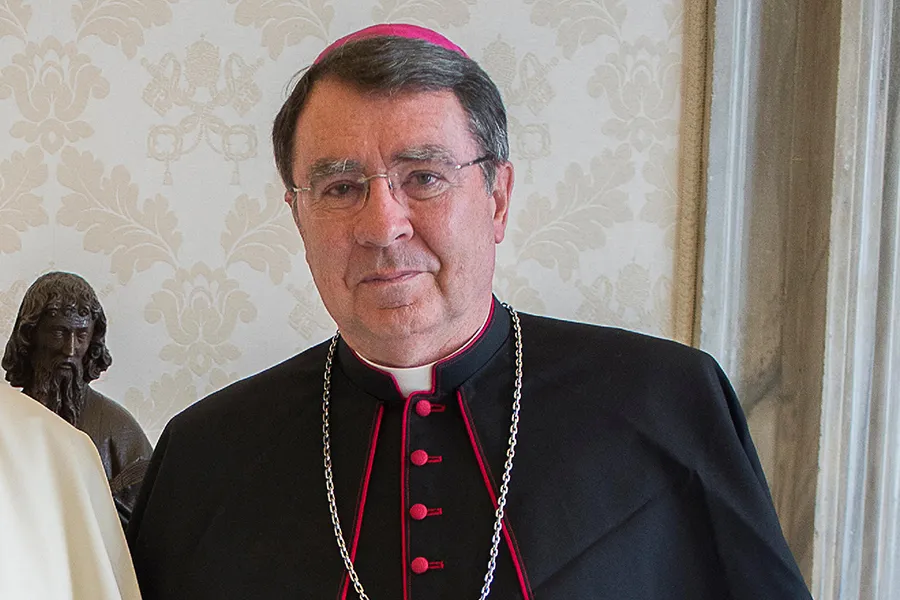
Baltimore, Md., Nov 13, 2017 / 09:20 am (CNA/EWTN News).- On the opening day of the US bishops’ plenary assembly, Archbishop Christophe Pierre addressed the gathering, encouraging them to prioritize youth, the mission of evangelization, and Christ himself.

“I offer you the example of the patroness of your country, the Blessed Virgin Mary, as someone who went forth with a sense of urgency” to share the joy of Christ with her cousin, Elizabeth, the apostolic nuncio to the US said Nov. 13 in Baltimore, Md.

The archbishop noted that the US Conference of Catholic Bishops is celebrating its 100th anniversary, and urged that in addition to remembering the past, they must look to the forward, avoiding “small-mindedness” and recommending three things about which to be passionate: the youth, the mission of evangelization, and the Lord himself.

Archbishop Pierre mentioned the importance of the upcoming Synod of Bishops which will focus on young people, “to learn from them and to help them to discover the path the Lord has chosen for them.”

He addressed “the difficulties of transmitting the faith in our day,” especially in the face of the rise of the number of people not identifying with any religious tradition. The youth, he said, are faced “not only with existential questions” such as finding work, but above all with spiritual problems.

Turning to the importance of evangelization, Archbishop Pierre recommended four characteristics of a “new evangelist”: boldness, connectedness, urgency, and joy.

“The statistics alone should give us a sense of urgency; but is it an urgency motivated by fear of loss, or is it the joy of sharing the gospel?” he asked, offering the example of the Virgin Mary’s Visitation: “having conceived of the Holy Spirit, she could not keep her joy to herself. Similarly, we cannot keep our joy to ourselves.”

An essential aspect of evangelization, he said, is “building a culture of encounter,” as Pope Francis is so fond of saying. He again pointed to Mary, who “was so passionate about bringing her Son to the world.”

It is critical to have a clear sense of mission, he stated, pointing out that many Americans, “including the young and those who do not know Christ … need to hear the basic kerygma,” the passion and resurrection of Christ “and the life he offers.”

The nuncio gave as examples the great evangelizers of the American past: St. Frances Xavier Cabrini, St. Junipero Serra, Bl. Stanley Rother, and Ven. Solanus Casey, who will be beatified next weekend. These were all exemplars of a “permanent state of mission,” he stated.

Being in a permanent state of mission is to be a faithful follower of Christ “who is in passionate love with his flock.” Returning to the youth, he said it is important to show them that “the Church is not self-referential but is there for them.”

Amid declining numbers, Archbishop Pierre told the bishops to “take courage,” for “there are signs of growth in the Church in the south and the west.” He recalled the recent dedication of a cathedral, attended by many Latinos, an experience which “confirmed for me the importance of the Fifth National Encuentro,” being held to assess and improve Hispanic ministry in the US. The Encuentro will be important for an “authentic renewal of the mission of evangelization,” he proclaimed.

The archbishop then turned to the prime importance of the person of Jesus, saying, “although we are pastors, we are first disciples.” As shepherds, the bishops are called to set an example of having a personal relationship with Christ based in prayer: “The time spent in prayer and adoration can renew us for the work of evangelization.”

In Christ “we find our true friend, who does not abandon us, so that we set out on mission with him and in him.”

“We are called first to be with Jesus,” he said, so that we can then go with him to his beloved flock, “to draw close to them, to be with them, to listen to them … and speak to them with the gentleness of Jesus.”

Going on mission without having spent time with Christ in prayer “would be going for a long drive without much fuel,” he reflected.

To enter into this life of prayer “we must empty ourselves of the many distractions of modern life,” he said, urging that each of the bishops “must ask himself: am I really passionate about Jesus? Do I convey that enthusiasm for the Lord?”

Archbishop Pierre concluded saying that despite demographic changes and the dictatorship of relativism, their ministry can bear fruit, recalling the missionary and apostolic zeal of the Spanish missionaries, the French Jesuits, and the early bishops of the United States, “who labored for the flock in the wilderness.”

This is a time of “opportunity for adventure, the adventure of faith,” a time “to be bold, trusting that the Lord will never abandon us.”

“For this reason, rather than to give into discouragement, we have every reason to be filled with hope and joy, because Jesus is in our midst … once more I repeat this can be a great moment for the Church in America.”

[…]

Pope prays for victims of massive earthquake that struck Iran, Iraq

November 13, 2017 CNA Daily News 0

Vatican City, Nov 13, 2017 / 06:41 am (CNA/EWTN News).- After an earthquake along the border of Iraqi-Iranian border left some 340 people dead and another 4,000 injured, Pope Francis voiced his sorrow for the loss of life and offered prayer for the dead and for rescue efforts.

In identical telegrams signed by Vatican Secretary of State Cardinal Pietro Parolin and sent to leaders in both Iran and Iraq, Pope Francis said he was “deeply saddened” by news of the quake, and assured all those affected of his “prayerful solidarity.”

Voicing sorrow to the families of the victims, the Pope offered prayer for the deceased and entrusted them to God’s mercy. He also prayed for the injured and the emergency personnel and civil authorities engaged in rescue efforts.

He closed the telegram asking God for the “divine blessings of consolation and strength.”

The Pope’s telegram came just one day after a 7.3 magnitude earthquake struck the border region between Iran and Iraq, with aftershocks felt in Pakistan, Lebanon, Kuwait and Turkey.

According to CNN, most of the deaths are from Iran. The agency reports that so far 336 deaths have been confirmed in Iran, with another 3,950 injured, while in the northern Kurdish region of Iraq seven deaths have been reported along with 300 injuries.

Rescue operations are underway in both countries, and Iran has already declared a 3-day period of mourning.

The quake is the strongest to hit the region in recent years, though not the most deadly. Iran, which sits along a major fault line between the Arabian and Eurasian tectonic plates, has experienced a number of earthquakes, with the most deadly being a 6.6 quake in 2003 that struck the city of Bam and killed some 26,000 people.

A decade earlier, in June 1990, roughly 37,000 people were killed in a major quake that leveled the cities of Rudbar, Manjil and Lushan.

[…]

Cardinal Parolin invokes God’s wisdom on the US bishops

November 12, 2017 CNA Daily News 3

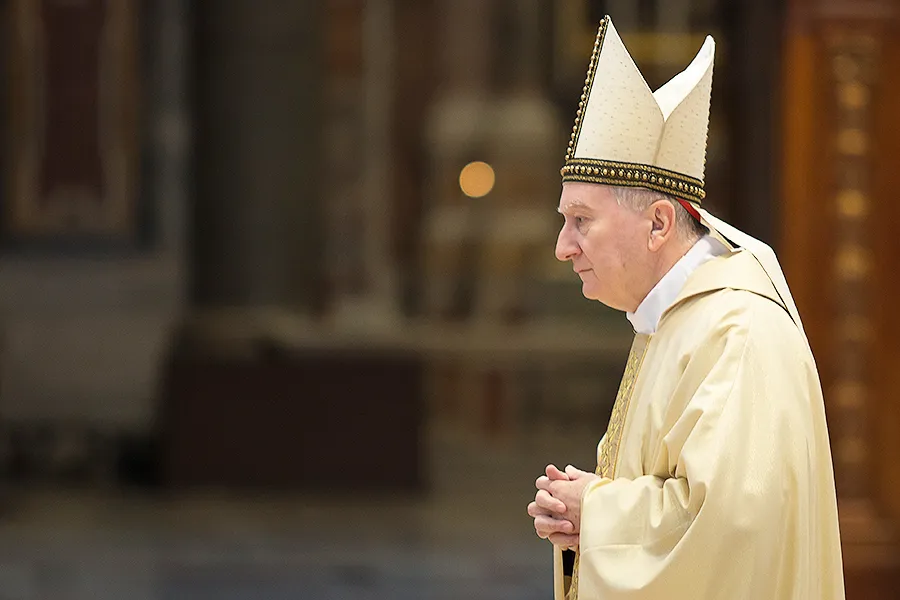
Baltimore, Md., Nov 12, 2017 / 07:38 pm (CNA/EWTN News).- Speaking to the US bishops gathered for the opening Mass of their plenary assembly on Sunday, the Vatican Secretary of State encouraged them to continue their prophetic witness in the face of the challenges facing the country.

Recalling the first reading from the Book of Wisdom, Cardinal Pietro Parolin said this “divine wisdom is a gift of the Holy Spirit,” which “enables us to serve God by doing his will.”

“May the fire of God’s love inspire you as a body to make wise decisions free of all partisan spirit,” he added.

The US bishops were gathered for Mass Nov. 12 at the Basilica of the National Shrine of the Assumption of the Blessed Virgin Mary in Baltimore for their fall assembly. This year’s assembly marks the centenary of the US Conference of Catholic Bishops, which was founded in 1917 as the National Catholic War Council.

The conference “originated in a Spirit-filled and wise response to the human suffering and displacement of the First World War,” Cardinal Parolin noted.

The bishops’ conference began as America’s bishops cared for those who were “forced from their homes and came to the new world in search of security and a new life.”

The cardinal invoked this past “as the Church in your country seeks to provide healing, comfort, and hope to new waves of migrants and refugees.”

Turning to the Gospel reading of the wise and foolish virgins, Cardinal Parolin urged the bishops to a prophetic witness and “to be a source of wisdom and strength,” saying that “the oil with which the Lord asks us to fill our lamps is above all purity and an authentic personal conversion.”

As olives had to be pressed to produce the olive oil for the virgins’ lamps in Christ’s parable, so must we stamp out whatever “stands in the way of our growth in Christ: our worldliness, our desire for human respect.”

He applauded the charitable institutions of the Church in the US, and encouraged the bishops to always bring people to relationship with Christ, “which alone brings true joy and satisfies the desires of the human heart.”

The Vatican Secretary of State looked forward to the series of “Encuentros” which are being held to assess and improve Hispanic ministry in the US.

“In this way you are seeking to foster that heightened sense of missionary discipleship which Pope Francis considers the heart of the new evangelization.”

“In the century prior to the founding of your conference, the challenge facing the Church in this country was to foster communion in an immigrant Church to integrate the diversity of peoples, languages, and cultures in the one faith, and to inculcate a sense of responsible citizenship and concern for the common good.”

“At the same time the Catholic community is called under your guidance to work for  a more just and inclusive society by dispelling the shadows of polarization, divisiveness, and societal breakdown by the pure light of the gospel ” he said. He praised the bishops particularly for “defending the right to life of the unborn” and for their concern for ensuring access to health care.

“I cannot fail to mention the contribution made by the USCCB to the discussion of important social issues and political debates, above all, when this involved the defense of moral values and the rights of the poor, the elderly, the vulnerable, and those who have no voice.”

He also discussed the importance of pastoral care, saying that “in this process of accompaniment may you continue to exercise your prophetic office.”

He gave thanks for the Spirit’s gift of wisdom shown in the bishops’ conference, and concluding, prayed that “you make keep the lamp of faith burning brightly.”

The bishops’ fall assembly meetings begin Monday, and will continue through Wednesday.


[…]

If you died today, are you ready? Pope Francis asks

November 12, 2017 CNA Daily News 2

Vatican City, Nov 12, 2017 / 05:36 am (CNA/EWTN News).- On Sunday Pope Francis encouraged people not to wait to reflect on their lives, but to ask themselves: If this was my last day on earth, am I prepared? Am I cooperating with God’s grace?

“It would be nice to think a little bit: one day will be the last. If it was today, am I prepared?” he asked Nov. 12. “Here, therefore, is the meaning of being wise and prudent: it is not to wait for the last moment of our life to cooperate with the grace of God, but to do it already, from now.”

The basis of the Pope’s Angelus reflection on preparing for the Kingdom of Heaven was the day’s Gospel passage of the parable of the ten virgins: five wise and five foolish.

In the parable, which he said, “tells us the condition to enter the Kingdom of Heaven,” we hear the story of five virgins who are wise and prudent, bringing oil for their lamps while they wait for the bridegroom. The other five, however, are foolish and are not prepared with oil.

Therefore, when the arrival of the bridegroom is announced the five foolish virgins realize, too late, that they are not prepared. Thus, the wise virgins enter into the banquet hall with the bridegroom and the door is closed on the foolish.

“What does Jesus want to teach us with this parable?” Francis asked. He reminds us to be prepared to meet the Lord, which means not only having faith, but also living a Christian life, “full of love, charity, for our neighbor.”

In the parable, the oil is a symbol for charity, he explained, which acts as a light for our faith, making it shine and become fruitful. On the other hand, if we live a life based on self-centeredness and our own interests, then our lives are made sterile and our faith “extinguished.”

“If, however, we are vigilant and try to do good, with gestures of love, sharing, service to our neighbor in difficulty, we can remain calm while we wait for the bridegroom’s coming,” he reassured.

Thought “the Lord may come at any time,” he continued, “even the sleep of death does not scare us because we have the oil reserve accumulated with the good works of every day.”

Look to the Virgin Mary, he said, who inspires us, through charity, to be active in our faith, “so that our lamp may shine here, on the earthly path, and then forever, at the wedding feast in paradise.”

Following the Angelus, Pope Francis spoke about Vicente Queralt Lloret and 20 companions and José María Fernández Sánchez and 38 companions, who were beatified in Madrid on Nov. 11.

Some were members of the Congregation of the Mission: priests, brothers and novices, he said. And others were laity who belonged to the Miraculous Medal Association. They were all martyred during the religious persecution of the Spanish Civil War between 1936 and 1937.

“We give thanks to God for the great gift of these exemplary witnesses of Christ and the Gospel,” he said.

Francis then concluded by greeting different pilgrim groups, including groups from Washington, Philadelphia, Brooklyn and New York. When he did, a group broke out in song for a moment, which the Pope paused to listen to. He then thanked them for the song before asking for prayers and wishing everyone a good lunch.

[…]

Father Janos Brenner: Hungarian priest and martyr

November 11, 2017 CNA Daily News 1

Szombathely, Hungary, Nov 11, 2017 / 03:03 pm (CNA/EWTN News).- Besides the smiling Pope, John Paul I, several other people’s causes advanced towards sainthood this week. Among them is Servant of God János (John) Brenner, a Cistercian Hungarian priest whose martyrdom was acknowledged by Pope Francis this week.

Brenner was born on Dec. 27, 1931 in Szombathely, Hungary. A young person “full of life, joy and mischief,” Brenner attended Catholic schools run by the Cistercian order (a reformed order of Benedictines) for several years until the nationalization of schools by the communist government which came to power after World War II as part of the Eastern Bloc.

He felt called to the Cistercian order. He applied and was accepted as a novice to the order in Zirc in 1950, and took the name Br. Anastasius (Anasztáz).

However, only a few months after Brenner began formation, the communist government began suppressing religious houses. To protect the men in formation, the novice master moved the young brothers from the abbey to private apartments, where they hoped to continue formation in secret.

It was around this time that Brenner, along with a few other novices, moved to the local seminary to begin studying to become a priest, while continuing with his Cistercian formation through correspondence.

Despite the dangers and religious oppression going on around him, journal entries from Brenner at the time display a deep trust in God and a strong desire to do his will.

“There is no greater joy than when man who is nothing, can be even more annihilated in Christ and immerse himself into the infinite world of His soul filled with wonderful riches which are forever given over to us,” he wrote in 1950.

“Even if the road is rough, I look at your pain- ridden face and follow you. I ask you only one thing: May I always fulfill most precisely what you give to me as my vocation.”

Brenner took vows with the Cistercian order and then was ordained a priest in 1955.

Throughout his ministry, he was known for his willingness and readiness to serve and to sacrifice, and took as his priestly motto the verse Romans 8:28: “We know that all things work for good for those who love God, who are called according to his purpose.”

Brenner was especially talented at working with youth, which all the more made him a target of the communist government.

Even when he was made aware of personal threats against his life, and his bishop offered to transfer him elsewhere for his own safety, Brenner responded: “I’m not afraid, I’m happy to stay.”

On the night of Dec. 14, 1957, Brenner was falsely called to give last rites to a sick person in a neighboring town, amid the reprisals for the Hungarian Revolution of 1956.

He left his home, carrying his anointing oils and the Eucharist, but was ambushed in the woods outside Rabakethely and stabbed 32 times. He was found dead the next day, still clutching the Eucharist in his hands, which has earned him the title of the “Hungarian Tarcisius.” St. Tarcisius was a young boy and third century martyr who was also killed while carrying and protecting the Eucharist.

While the communists had hoped that Brenner’s death would intimidate the faithful in the area, they could not stop devotion to Brenner’s memory. The Chapel of the Good Pastor was built in 1989 on the spot where he died, and is a popular place of pilgrimage for people throughout the country. The dirty and bloodied surplice Brenner wore when he was killed has been preserved as a relic.

Because Brenner has received a declaration of martyrdom from the Vatican, his new title is Venerable Servant of God János Brenner. This means that the path is open for Brenner’s beatification, as the usual requirement for a miracle is waived in cases of martyrdom.

[…]

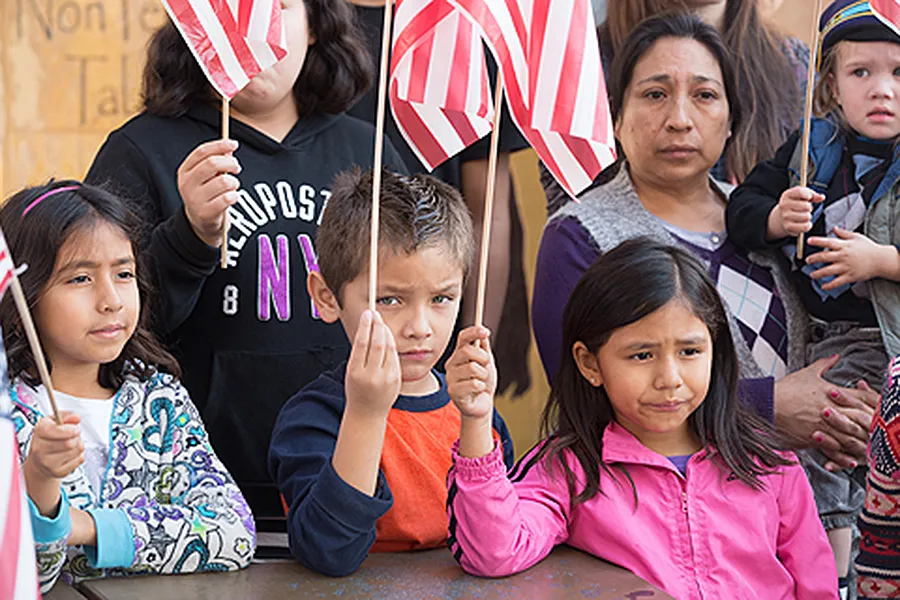
Decision to axe US migration program endangers minors, bishops warn

November 11, 2017 CNA Daily News 4

Washington D.C., Nov 11, 2017 / 06:04 am (CNA/EWTN News).- The Trump administration’s ending of a program that helped reunite Central American minors with their parents in the U.S. has drawn strong objections from the U.S. bishops.

The administration decided to end refugee processing in Honduras, El Salvador, and Guatemala for those who apply for U.S. entry through the Central American Minors program. The program had allowed some parents legally present in the U.S. to request a refugee resettlement interview for their children and other family members like the child’s other parent, a caregiver, or a grandchild, ABC News reports.

“This decision of the administration unnecessarily casts aside a proven and safe alternative to irregular and dangerous migration for Central American children,” said Bishop Joe Vasquez of Austin, head of the U.S. bishops’ Committee on Migration. Terminating the entire program will “neither promote safety for these children nor help our government regulate migration,” he said Nov. 9.

“Pope Francis has called on us to protect migrant children, noting that ‘among migrants, children constitute the most vulnerable group’,” the bishop continued.

The Central American Minors program was established in 2014, at the height of the surge of unaccompanied migrant children coming to the U.S.-Mexico border from Central America, primarily El Salvador, Guatemala, and Honduras.

There were about 14,000 applications to the program, with 8,000 having been processed. A total of 3,328 children and family members were admitted as refugees and parolees. Another 6,000 people’s applications are still under consideration.     

Vasquez offered prayers for those affected.

“We continue to pray and express our support for parents who endure anxiety and emotional hardship knowing their children will continue to languish in violence; and to the children themselves, who will not be able to reunite and embrace their parents,” he said.

A U.S. State Department official told ABC News the program was ended “as part of the overall U.S. government review of the U.S. Refugee Admissions Program” for fiscal year 2018.

Some critics of the program said many applicants did not meet the legal definition of a refugee because they were fleeing violent conflict, but not persecution of some kind.

Vasquez said the program, which had previously included both refugee and parole options, should have been maintained “precisely because it provided a legal and organized way for children to migrate to the United States and reunify with families.”

Vasquez cited the August decision to end the program’s parole option for Central American migrants. That decision caused “heartbreaking family separation for families who have learned that their child has no safe means of arriving to the U.S.”

Ending the overall program will “sadly perpetuate more of the same family breakdown,” he said.

The bishop was “deeply disappointed” that the administration decided to terminate the program in its entirety. He said it was “especially troubling” to have a short cutoff date for accepting applications to the program.

There was barely a day’s advance notice to those who provide services, he said.

The State Department recently ended temporary protected status for Nicaraguans, meaning about 2,500 Nicaraguans must leave before January 2019 or face deportation. Many of them have been living in the U.S. for years and have children. Protected status for Hondurans has been extended another six months.

[…]

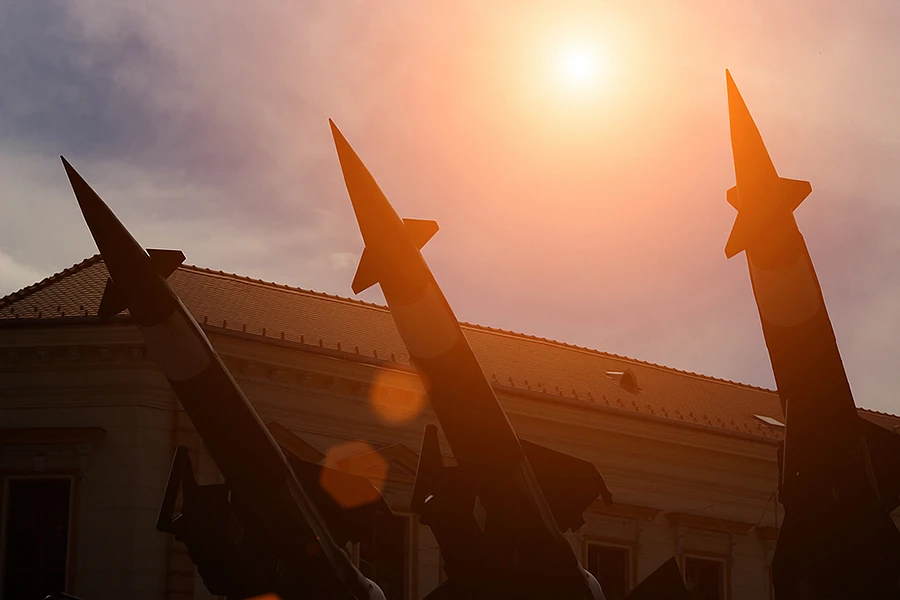
Vatican, secular leaders: Global action needed to prevent ‘nuclear holocaust’

November 10, 2017 CNA Daily News 1

Vatican City, Nov 10, 2017 / 12:16 pm (CNA/EWTN News).- On Friday, leading Vatican and secular diplomats urged world leaders to freeze investment into nuclear arms production, and to instead fund peace and development initiatives.

“Every day we are bombarded with bad news about the atrocities that we humans can do, harming each other and nature, about the increasing drumbeat of a possible nuclear conflagration and the fact that humanity stands on the precipice of a nuclear holocaust,” Cardinal Peter Turkson said Nov. 10.

Fears over a potential global catastrophe are rising to a level not seen since the days of the Cuban Missile Crisis, he said.

Ongoing discussion about nuclear weapons is “critical,” Turkson said, adding that the decisions made by global leaders about peace and war in the coming months and years “will have profound consequences for the very future of humanity and our planet.”

Head of the Vatican’s dicastery for Integral Human Development, Turkson gave the opening keynote speech at a Nov. 10-11 conference on nuclear disarmament that his department is organizing.

He noted that the conference overlaps with U.S. President Donald Trump’s visit to Asia – which includes stops in South Korea, China, Vietnam and the Philippines – as the U.S. faces heightened tensions with North Korea.

The Vatican conference has been in the works for several years, and was not intentionally planned to overlap with Trump’s Asia visit. The timing, the cardinal jested, is a coincidence that could be seen as an act of “divine providence.”

The two-day symposium on nuclear disarmament is the first global gathering to address the topic since the Treaty on the Prohibition of Nuclear Weapons was passed in New York on July 7. Prior to the treaty, nuclear arms were the only weapons of mass destruction not explicitly banned by any international document.

The treaty passed with 122 votes in favor, with Singapore being the only abstention. However, 69 countries – all the nuclear weapon states and NATO members apart from the Netherlands – did not take part in the vote.

In addition to Cardinal Turkson and Vatican Secretary of State Cardinal Pietro Parolin, who also spoke in the opening panel, other participants in the summit include Masako Wada, one of the last survivors of the Hiroshima nuclear attack, 11 Nobel Peace Laureates, representatives from the U. N. and NATO, diplomats from Russia, the United States, South Korea, and Iran, weapons experts and foundation leaders.

Representatives of bishops’ conferences and other Christian organizations are also attending, including a delegation of professors and students from U.S. and Russian universities.

In comments to journalists on the opening day of the event, Beatrice Fihn, Executive Director of the International Campaign to Abolish Nuclear Weapons (ICAN), said that despite elevated tensions, the signing of the July treaty is a sign of hope, showing that the majority of countries in the world reject nuclear weapons.

In 2017, Fihn’s organization was awarded the Nobel Peace Prize in recognition of its work drawing attention to the humanitarian consequences of nuclear weapons, and for its effort to achieve the treaty.

Fihn said she believes it is possible to have a world without nuclear weapons. “We built these weapons (and) we can take them apart,” she said, adding that the world has given up certain chemical and biological weapons in the past.

Izumi Nakamitsu, U.N. High Representative for Disarmament Affairs, said the U.N. is grateful to both Pope Francis and the Holy See for organizing the conference.

“Any gathering of world leaders and civil society actors and governments to discuss ways to pursue a nuclear weapons-free zone will be very helpful for the cause of U.N. disarmament activities,” she said, and voiced eagerness to discuss what can practically be done to eradicate nuclear weapons.

Nakamitsu said the U.N. believes the only solution to the North Korean nuclear crisis is a political one, and that talks on disarmament, arms control and non-proliferation create much-needed “breathing space” for trying to find these political solutions.

“So we’re not giving up at all on disarmament, but quite the contrary, because the situation is very difficult, we think disarmament discussions are more important.”

Cardinals Turkson and Parolin both emphasized the need for an integral development aimed at promoting human dignity and the common good as the solution to current nuclear tensions.

Quoting former U.S. President Dwight Eisenhower’s 1953 speech after the death of Soviet leader Joseph Stalin, Turkson said “every gun that is made, every warship launched, every rocket fired signifies, in the final sense, a theft from those who hunger and are not fed, those who are cold and are not clothed.”

International peace and stability, Cardinal Turkson said, cannot be based on “a false sense of security, on the threat of mutual destruction or total annihilation, or on simply maintaining a balance of power.”

Rather, he said, peace must be built on justice, development, respect for human rights, the care of creation, participation in public life, mutual trust, support of peaceful institutions, access to education and health, dialogue and solidarity.

Cardinal Parolin echoed these ideas, emphasizing the role of education and dialogue in creating “a culture of life and peace based on the dignity of the human being and the primacy of the law.”

He added that “only a concerted effort on the part of all nations will stop these senseless rivalries and promote fruitful, friendly dialogue between nations.”

In a Nov. 10 statement addressed to Pope Francis on the occasion of the conference, five of the 11 Nobel Prize Laureates participating in the conference said they hope the event will help launch “a new international legal regulation and further stigmatize those weapons and the states that so far refuse to give them up.”

They praised the joint role of civil society, religious communities and various international organizations and states in advancing the Treaty on the Prohibition of Nuclear Weapons, which aims to put an end to weapons “that are capable of obliterating life as we know it in the blink of an eye.”

An “inclusive and equitable” international security system which leaves no country feeling that they must depend on nuclear arms is needed, they said, and stressed the necessity to ask oneself “what ethical and moral human beings can possibly believe that it is fine to give machines the ability to kill humans.”

In order to avoid an “impending third revolution in warfare,” the weapons must be eliminated before they ever make it to battle, they said.

And this requites prioritizing the human person over the creation of wealth and realizing that “real security comes from placing the focus on meeting the needs of individuals and communities – human security and promoting the common good.”

Signatories included Professer Mohamed El Baradei; Mrs. Mairead Maguire; Professor Adolfo Perez Esquivel; Professor Jody Williams, and Professor Muhammad Yunus.

In comments to journalists Nov. 10, Yunus, who is from Bangladesh, said Pope Francis’ message on peace and nuclear disarmament is critical. The Pope’s voice, he said, “is respected all over the world, and when he says something, people listen.”


[…]