
Gallup, N.M., Jun 29, 2017 / 02:06 pm (CNA/EWTN News).- The Diocese of Gallup, New Mexico added three names earlier this year to its list of workers against whom there are credible allegations of sexual abuse of a minor, as part of the diocesan commitment to transparency and youth protection.
The local Church is also holding healing services in many of its parishes across New Mexico and Arizona, in which Bishop James Wall listens to and prays with any who wish to do so, as they seek healing from sexual abuse.
The three new names on the list of credibly accused are Brother Mark Schornack, OFM, who served at parishes in the Gallup diocese between 1952 and 1984, and who is now deceased; Fr. Ephraim Beltramea, OFM, who served at St. Francis parish in Gallup from 1970 to 1973; and Fr. Diego Mazon, OFM, who served in parishes of the diocese between 1977 and 2003.
Emails sent by CNA to representatives of the Our Lady of Guadalupe Province of the Order of Friars Minor inquiring about Fr. Beltramea and Fr. Mazon were not acknowledged.
Bishop Wall spoke to CNA recently about the Diocese of Gallup’s efforts at child protection, the need to find healing, and the central role that transparency plays in the life of the Church.
“We use transparency so much as a buzzword,” he reflected. “I think transparency’s important because all things must be brought into the light; things shouldn’t remain in the darkness.”
“In the past I think we’ve learned from some our mistakes, and some of that had to do with shielding those who committed abuses, or sometimes maybe turning a blind eye, or allowing people to remain in ministry – and I don’t think that’s a good practice, because that doesn’t really protect young people, vulnerable adults. It doesn’t allow for them to have a safe place to encounter the living Christ.”
Transparency means “showing our policies, our procedures, what we’re doing,” he said, so that “everything is brought into the light, so there’s nothing that’s hidden.”
April’s inclusion of three new names brings the list of those who have worked in the Gallup diocese who have been deemed by the diocese to have credible accusations of sexual abuse of a minor against them to a total of 34.
Most of them (21) were diocesan priests. Another 11 were priests or brothers of religious communities, including the Order of Friars Minor, the Claretians, the Missionaries of the Precious Blood, and the Crosier Fathers. There was also one seminarian and one lay CCD teacher.
Some two-thirds of the credibly accused (22) are deceased.
Bishop Wall explained that when the diocese receives an allegation of sex abuse of a minor, it undertakes an investigation, or has an outside investigator look into it. The investigator brings its findings to a review board, which makes recommendations to the diocese.
“Through that process, if we discover that the allegation is credible, then we will post that name on the diocesan website, as well as let the parishes where this person has served know.”
He added that the investigation is done because “we always have to make sure that we’re protecting everyone’s rights involved in this, being sensitive to everyone: the person bringing the accusation forward, as well as the accused,” noting that “the legal system is innocent until proven guilty.”
If the credibly accused person is a cleric, “immediately their faculties are withdrawn and they’re informed that they are not to function or present themselves as a cleric in the Church.”
The bishop added that their case can be sent to the Congregation for the Doctrine of the Faith, where they can be assessed various penalties, such as dismissal from the clerical state.
When the credibly accused person is a member of a religious community, “the expectation is that (their community) take the lead,” Bishop Wall explained, though the diocese does work closely with the religious community throughout the process.
The Gallup diocese’s list of credibly accused was first made in December 2014, and its recent update reflects the fact that “sometimes we don’t have enough information on a particular case; we might not have enough information to investigate it, and then deem it credible.”
“If at a later date more information does come to us, so that we are able to investigate it, and then we are able to deem it credible, then we immediately put it on our list of credibly accused,” the bishop said. “So it all has to deal with the information that we have.”
The diocese’s list reflects any local Church workers who have been credibly accused of sexual abuse of a minor, whether while they were in ministry in Gallup or in another diocese. It also shows when and where they ministered within the diocese, whether or not the alleged abuse was carried out at those times and places.
Those who have been credibly accused were in ministry between the 1930s and the 2010s. There was a sharp rise of those in ministry in the 1950s, with a peak in the 1960s. Many of the credibly accused were also in ministry in the 1970s and ’80s. The numbers fell in the 1990s and 2000s.
There was a sole case since Bishop Wall was named Bishop of Gallup in 2009: Fr. Timothy Conlon, a member of the Crosier Fathers. He served in two Arizona parishes from 2011 to 2013 before the diocese was informed by his religious community of an allegation of sexual abuse against him.
The bishop said the Church is now “really in the forefront of making sure that we provide a safe environment for our young people, and vulnerable adults as well,” with its screening of potential ministers leadings its efforts.
He cited the use of psychological screening and testing, and the fact that “our interview process is much, much more extensive than it was” in past times. Moreover, the Gallup diocese trains its volunteers, employees, students and clerics in child safety, and has a mandatory background check.
“We try to put in as many safety procedures as possible,” he said.
Reflecting on the spike of credibly accused clerics in the 1950s and ’60s, Bishop Wall said that while there were a number of contributing factors, he believes that chief among them was the sexual revolution and “the groundwork [which] was already being laid prior to that.”
“But then again, these were bad people who did bad things to people; and these people should never have been placed in the positions to violate the trust, to violate these young people.”
In response to the crisis of sexual abuse, the Diocese of Gallup has also held healing services in parishes across its territory, in which Bishop Wall listens to and prays with survivors of sexual abuse, regardless of who their abuser was.
“It provides an opportunity not only to come together to pray, to pray for healing, but also gives an opportunity for anyone, and I stress that – anyone – who is a survivor of sexual abuse to meet with me,” the bishop explained.
“So we could have someone who is a survivor of sexual abuse by a worker of the Church, or someone who’s a survivor of sexual abuse not by a worker of the Church, it could be family or friends, whatever the case might be … that’s what the Church is about, it’s what our ministry is about: offering the healing of Christ, so we provide that opportunity as well.”
Communities across the diocese have responded differently to the healing services, which began in November 2016.
In some places, Bishop Wall said, there is “a pretty good sized group that comes, and people who will want to meet with me individually afterwards; some people will bring family members in with them, they feel a little more comfortable, and some people just come to pray – you don’t have to be a survivor of sexual abuse to come and pray.”
Healing services are scheduled at different communities in the diocese through March 2018.
While acknowledging that “it is difficult,” Bishop Wall also affirmed that “I think it’s necessary, and it’s a good thing, to allow people to come and sit and talk, and kind of, really unload their burden. Especially for someone who was abused by a worker of the Church, I think it’s important for the bishop, who’s the shepherd of the diocese, to sit with the person, to talk with the person, pray with them, apologize. I think that’s one of the most important things were able to do in this.”
“These healing services, difficult though they are, provide a great opportunity for survivors of sexual abuse, whether at the hands of workers of the Church or someone else … to come before the Lord and find healing in the Lord,” the bishop concluded.
Survivors of sexual abuse are also afforded an opportunity “to pray, too, and also I think to realize they’re not alone, because I think many times if someone is a survivor of sexual abuse, sometimes they feel like they’re alone. And I think coming together with others, and the Church welcoming and inviting them to come together, it lets them feel that they’re not alone, they’re not isolated, there are people that are there for them, the Church is there for them.”
 […]
[…]


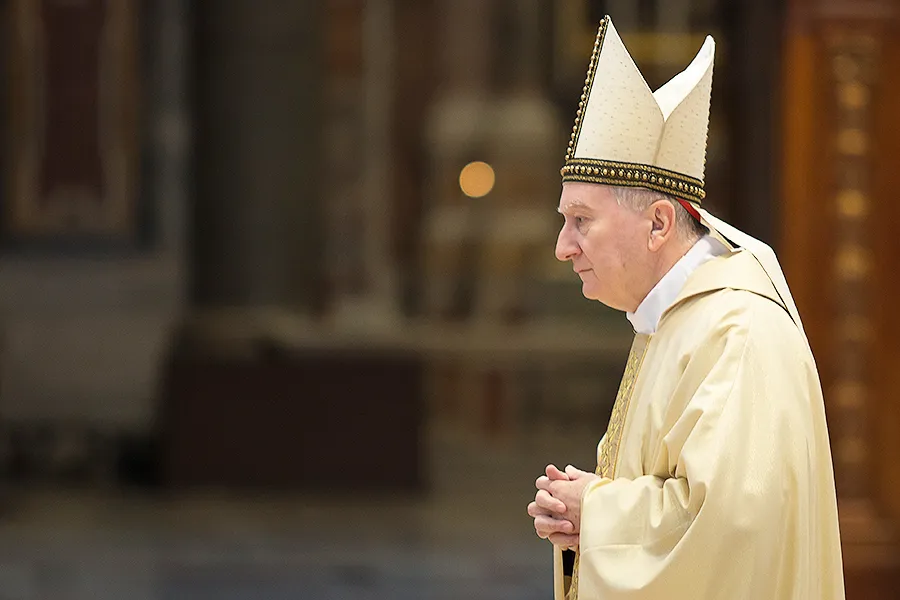

“May the fire of God’s love inspire you as a body to make wise decisions free of all partisan spirit,” he added.
One truly wise decision which the U.S. bishops can make at their plenary assembly is the election of Archbishop Joseph Naumann (the Archbishop of Kansas City (Kansas)) as the head of the USCCB Office of Pro-Life Activities, and NOT Cardinal Blase Cupich (the Archbishop of Chicago), who does not hold a wick, much less a candle, to the first head of the USCCB pro-life office back in the 1970s (namely, Cardinal John Patrick Cody, the then-Archbishop of Chicago).
Another wise decision which the U.S. bishops can come to in their plenary assembly is to make NO revisions or alterations in the current English translation of the Ordinary Form of the Mass – the one which we have been blessed with for almost 6 years, and counting – or in the rubrics. Sometimes, doing nothing is better than doing something which is harmful; this is one of those times. It isn’t broken; don’t “fix” it.
(However, it would be a quite wise decision to order that the Lectionaries be revised, suppressing the execrable, stilted, wildly inaccurate, laden-with-inclusive-language New American Bible (2006 revised edition) translation and replacing it with either the Ronald Knox translation of the Bible (which would be quite in keeping with the language of the ordinary and the propers of the current Mass translation) or the Navarre Bible translation. But I’m not holding my breath…..)
Yet another wise decision which the U.S. bishops can come to in their plenary assembly is a clear and unequivocal statement that “Amoris Laetitia” must be interpreted in continuity with the long line of Magisterial teachings of the Catholic Church, including “Humanae Vitae,” “Familiaris Consortio,” the Theology of the Body, and “Veritatis Splendor.” (I know, I know: I’m not holding my breath, waiting for that one, either…..)
And it would be quite wise for the USCCB to, as a group, denounce the false teachings spread by a certain Jesuit priest who shall remain nameless here – and by his friends, supporters, sycophants, bootlickers, fellow-travelers, and “useful idiots.”
One hopes that Cardinal Parolin will also remind the U.S. bishops of their duty, without exception, to preach, teach, and defend the eternal and unchanging truths of the Catholic faith, particularly those U.S. bishops (we know who they are, and so do they) who obstinately and obdurately refuse to do so, and instead pervert and falsify the Catholic faith.
First let me say there are many bishops within the USCCB that are aware of the division over AL, its misleading premises, and some with the moral conviction to openly address these issues and some even critical of the Pontiff. Nonetheless the Conference is tightly managed in subservience to this Pontiff the response to Fr Weinandy a prime example. It’s easy to criticize persons in authority and having had experience in management things do look different from top down. Though I learned while all ethical issues cannot should be addressed [in a Govt setting] the important ones must. This is where the Conference has failed. The USCCB remains focused on social issues the primarily the enduring legacy of Saul Alinsky. They highlight Prejudice, Immigration, Family last. Nothing referencing the personal moral breakdown of the practice of Catholicism in America. Evangelization is not appealing to most non Catholics simply because we’ve become strikingly secular humanist following the Pontiff’s agenda and before him Alinsky and his close assoc Bernadine. The Church itself requires evangelization. If the “Fire of God’s Love” mentioned by Parolin were to inflame the Hierarchy they would be converted. What a wonderful thing that would be.