The devastating but little-noticed DRC refugee crisis
December 8, 2017 CNA Daily News 2

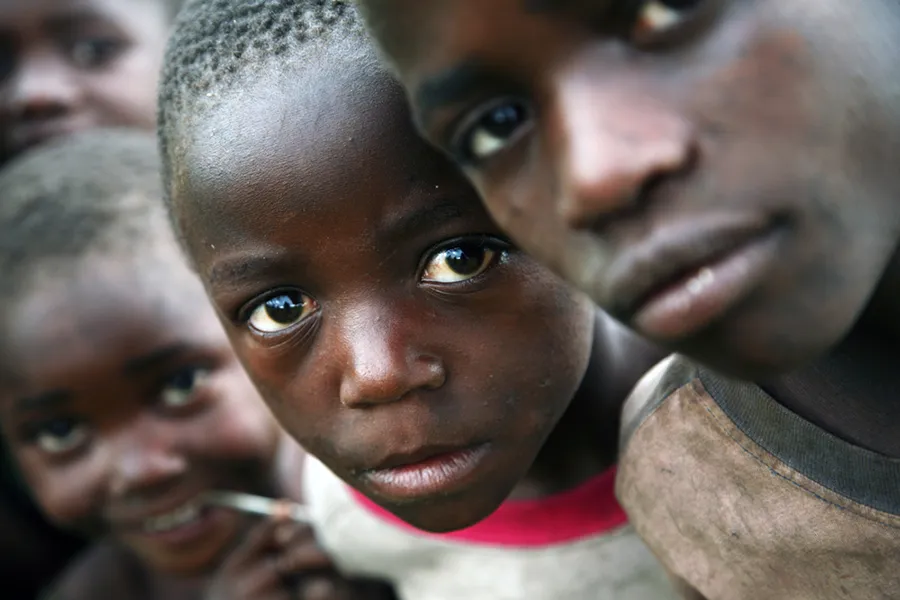
Kinshasa, Democratic Republic of the Congo, Dec 8, 2017 / 03:49 pm (CNA/EWTN News).- Every day, thousands of people in the Democratic Republic of the Congo are forced to flee their homes.

In recent months, violent clashes have escalated, creating a massive refugee crisis that has gone largely unnoticed in much of the Western world.

“Political and ethnic tensions have forced millions of Congolese to leave their homes in the past year alone. The vast majority of these people are internally displaced within the country, while a minority have become refugees upon fleeing to neighboring countries,” said Amakala Constantin Sodio, the Kinshasa-based Catholic Relief Services country representative in the Democratic Republic of the Congo and Congo-Brazzaville.

Sodio told CNA Dec. 8 there has been a “rapid escalation” of conflicts in the regions of Kasaï, Tanganyika and South Kivu in 2016 and 2017. This has put 4.3 million people into a crisis situation, facing emergency levels of food insecurity.

More than 1.7 million people have fled their homes this year alone. The U.N. has classed the country refugee situation as Level 3, equal to Syria, Iraq and Yemen in its humanitarian need.

The situation is far from stabilizing. At least 14 U.N. peacekeepers and five Congolese soldiers were killed in an attack in North Kivu province Thursday night, believed to have been carried out by a rebel group.
 
“It’s a mega-crisis. The scale of people fleeing violence is off the charts, outpacing Syria, Yemen and Iraq,” said Ulrika Blom, the country director for the Norwegian Refugee Council, according to the BBC.

“If we fail to step up now, mass hunger will spread and people will die. We are in a race against time,” Blom added.

New armed conflicts, an intensification of current conflicts, and the delay in elections has helped drive the crisis, according to a report from the Internal Displacement Monitoring Centre.

Lambert Mende, the country’s minister of information, disputed the report and said that displaced people number less than 1 million. He said displaced people were in fact returning from nearby countries, the BBC reports.

About 5,500 Congolese people flee their homes each day, the report said. There are 4 million displaced people in the country and over 7 million who lack adequate food.

The average life expectancy in the country is under 60 years old, and more than 75 percent of the population lives on less than $2 per day.

Amid the current crisis, Catholic Relief Services aims to provide a rapid response to aid at-risk communities.

“With an initial focus on emergency response, CRS also carries out development programs focused on health, hygiene, nutrition, and agricultural interventions,” Sodio said. “CRS’ local partnerships and staff presence across the country ensures our ability to rapidly start up projects and reach people in remote areas.”

The Catholic relief agency has 182 staffers in the country and aided 1.3 million people with $27 million in resources programming in 2017, in collaboration with its partners.

The humanitarian emergency is complex and there are no simple solutions, Sodio said.

“Improvements to the quality of life of people displaced will happen slowly as countrywide efforts are made to strengthen local systems, so they may safely return home to rebuild dignified lives,” he said.

CRS has been in the country since 1961 and has maintained a continuous presence since 1993.

Sodio cited the words of Barbara Forbes, a DRC-based International Development Fellow at Catholic Relief Services, who noted that many Congolese refugees are expected to be among the 45,000 people resettled in the U.S. in 2018.

“Personally meeting refugees in the community is a great way for Americans to maintain perspective on this issue,” Forbes said.

“Americans can help these refugees thrive by offering them jobs and volunteering to drive them to medical appointments or explain their household bills,” she added. One refugee in the U.S. had told her of her dreams to go to college on a basketball scholarship and study law.

Such personal connections with refugees make clear the importance of advocacy for increased acceptance of refugee resettlement in the U.S., according to Forbes.
 

[…]

In US, abortion rates reach new low

December 8, 2017 CNA Daily News 0

Washington D.C., Dec 8, 2017 / 02:00 pm (CNA).- A report from the U.S. Center for Disease Control and Prevention (CDC) found that abortion rates in the country are at a historic low since the nationwide legalization of abortion in 1973.

According to t… […]

Pope Francis says Our Father is poorly translated

December 8, 2017 CNA Daily News 6

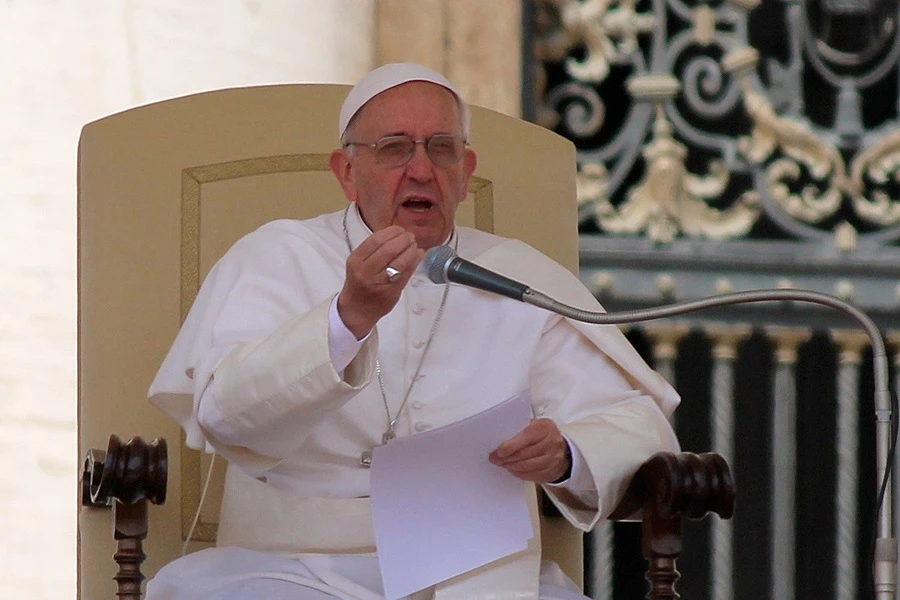
Vatican City, Dec 8, 2017 / 10:40 am (CNA/EWTN News).- In a video series for Italian television network TV2000, Pope Francis said that “lead us not into temptation” is a poorly translated line of the Our Father.

“This is not a good translation,” the Pope said in the video, published Dec. 6. “I am the one who falls, it’s not (God) who pushes me toward temptation to see how I fall. A father doesn’t do this, a father helps us to get up right away.”

He noted that this line was recently re-translated in the French version of the prayer to read “do not let me fall into temptation.”

The Latin version of the prayer, the authoritative version in the Catholic Church, reads “ne nos inducas in tentationem.”

The Pope said that the one who leads people into temptation “is Satan; that is the work of Satan.” He said that the essence of that line in the prayer is like telling God: “when Satan leads me into temptation, please, give me your hand. Give me your hand.”

Just as Jesus gave Peter his hand to help him out of the water when he began to sink, the prayer also asks God to “give me your hand so that I don’t drown,” Pope Francis said.

The Pope made his comments in the seventh part of the “Our Father” television series being aired by Italian television network TV2000.

Filmed in collaboration with the Vatican’s Secretariat for Communications, the series consists of nine question-and-answer sessions with Pope Francis and Fr. Marco Pozza, a theologian and a prison chaplain in the northern Italian city of Padua.

In each of the sessions, Fr. Pozza asks the Pope about a different line in the Our Father prayer, and the Pope offers his insights. A preview of the series was presented at the Vatican’s Film Library by Msgr. Dario Edoardo Vigano, head of the Secretariat for Communications.

The show also led to the publication of a book titled “Our Father,” which was released by the Vatican Publishing House and Italian publisher Rizzoli Nov. 23, and is based on Pozza’s conversations with the Pope in the video series.

Each of the first eight episodes of the series begin with an excerpt from conversation between the Pope and Pozza, which is followed by a second conversation between Pozza and another guest. The final episode will consist of the priest’s entire conversation with Pope Francis.

In his question to Pope Francis on the line “lead us not into temptation,” Pozza noted that many people have asked him how God can lead someone into temptation, and questioned what the phrase actually intends to say.

The question is one of the reasons the French bishops decided to make a request for a new translation of the Our Father that they believe conveys the meaning more clearly.

According to the French episcopal conference, the decision to make the change was accepted by the Congregation for Divine Worship and the Discipline of the Sacraments in June 2013.

The new translation, released Dec. 3 to mark the first day of Advent and the beginning of the new liturgical year, now reads “ne nous laisse pas entrer en tentation,” meaning, “do not let us fall into temptation,” versus the former “ne nous soumets pas à la tentation,” or “lead us not into temptation.”

The Pope’s remarks do not change the translations of liturgical texts. Such a change would begin with a resolution by an episcopal conference in English-speaking countries.

In a previous episode of the “Our Father” series, Pope Francis said “it takes courage” to recite the prayer, because it means calling on someone else and truly believing that “God is the Father who accompanies me, forgives me, gives me bread, is attentive to everything I ask, and dresses me better than wildflowers.”

“To believe is a great risk,” and means daring to make the leap of faith, he said. Because of this, “praying together is so beautiful: because we help each other to dare.”

[…]

Nearly 80 prisoners baptized in Argentina

December 7, 2017 CNA Daily News 0

San Isidro, Argentina, Dec 8, 2017 / 12:26 am (ACI Prensa).- Seventy-eight prisoners were baptized, confirmed, and received their First Holy Communion in an Argentine prison Dec. 1.

The inmates are entering the Catholic Church after working with the D… […]

NM bishop prays for student victims of school shooting

December 7, 2017 CNA Daily News 0

Gallup, N.M., Dec 7, 2017 / 04:00 pm (CNA/EWTN News).- Two students at Aztec High School in Aztec, N.M., were killed in a shooting Thursday morning, and the local bishop has prayed for the victims and the community.

“St. Paul tells us in Romans 12:21 ‘Do not be overcome by evil, but overcome evil with good.’ In the coming days, many survivors and families will also be facing the fear and psychological effects that inevitably follow any tragedy. Please join me in offering prayers for the students and families,” Bishop James Wall of Gallup said Dec. 7.

“Please also join me in offering our support to the community of Aztec. We mourn the loss of life with you.”

The diocese is holding a prayer vigil at 4:30 this afternoon at St. Joseph parish in Aztec, about 120 miles northeast of Gallup.

The shooter is also dead. According to local outlet KRQE News 13, no other injuries have been reported, and the school has been evacuated.

Nearby schools, including those in Bloomfield, were put on lockdown as a precaution.

Please pray for the students, families, and community of Aztec. https://t.co/U0vhWduhN4

— Diocese of Gallup (@DioceseofGallup) December 7, 2017

[…]