Vatican conference highlights role of laity in addressing modern challenges

December 11, 2017 CNA Daily News 1

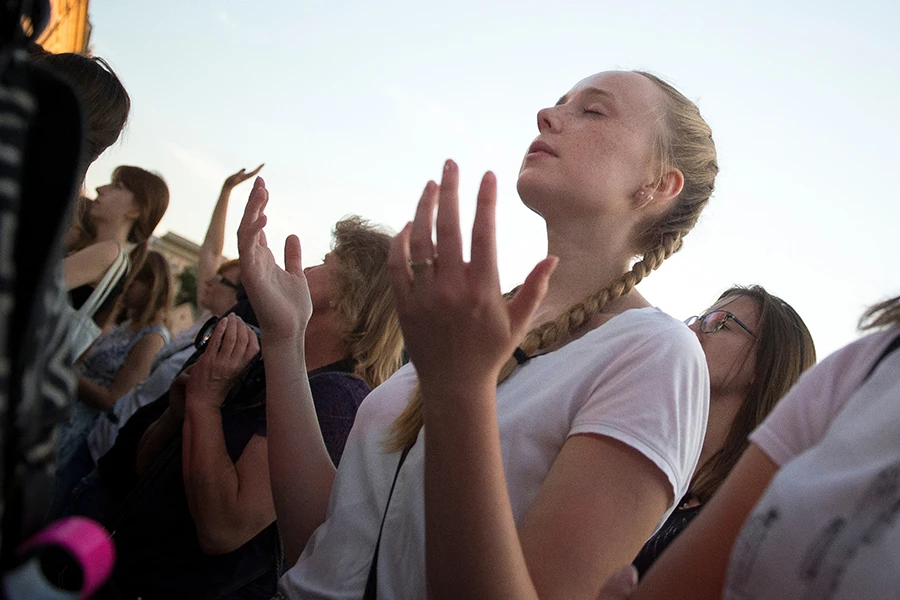
Vatican City, Dec 11, 2017 / 03:12 pm (CNA/EWTN News).- Leading lay experts and top Vatican officials have joined forces this week to talk about how they can collaborate in addressing key areas of modern concern, placing a special emphasis on the role of laypeople.

“Even before the (Second) Vatican Council, the conviction of the Church was that lay involvement in certain spheres of life, particularly political and social, was absolutely indispensable,” Archbishop Paul Gallagher told CNA Dec. 11.

The importance of the laity “is quite clear even more today,” he said, explaining that without their activity and social and political advocacy, the Church would lose its voice.

“It is absolutely key, crucial, for the future of the Church’s engagement with society that laypeople should be prepared to do this, should be courageous in doing it, and should have this great will to bring the voice of Christ now in the political sphere and social sphere, on a local level and an international level,” he said.

“I think they can do a great service to the Church and to the world in this way,” he said, adding that “any form of engagement” is encouraged.

Msgr. Gallagher, Vatican Secretary for Relations with States, spoke before celebrating Mass on the opening night of a Dec. 11-13 conference organized by the Forum of Catholic-inspired NGOs, titled “Promoters of Humanity in a Transforming World.”

The conference, which drew a slew of representatives from various NGOs around the world, including non-Catholics, focused on how Catholic-inspired organizations can help safeguard core values such as family and religious freedom, and ensure the that a proper integral human development is achieved in the context of a rapidly changing global society.

In his speech for the conference, Gallagher said the Holy See and Catholic-inspired NGOs can work together to achieve “the ideal of human fraternity and a means for its greater realization.”

He stressed that the Holy See isn’t “controlling” the forum, but that rather, the members and leaders of the NGOs are the real protagonists, since they bring “real life experiences and expertise” to the table through their work.

Among those “protagonists” present for the conference was Helen Alvare, a professor of family law, law and religion, and property law at Antonin Scalia Law School, George Mason University. She is also the cofounder of the “Women Speak for Themselves” organization, the president of “Reconnect Media” non-profit communications group, and an adviser to the U.S. Conference of Catholic Bishops.  

In comments to CNA, Alvare also stressed the importance of the role of laity, specifically women and the poor, in advocating key issues in the Church, especially in regards to the family.

Through the organizations she is involved with, Alvare focuses on giving voice to people on the grassroots level and empowering them to have a greater role in the push for both religious freedom and the family values lost in the sexual revolution. The hope is to show that questions on sexuality “cannot be separated from issues about economic well-being and poverty and human happiness.”

Pope Francis has been a leading voice advocating for women and the poor, Alvare said.  However, while the Pope has set “a wonderful tone” on these issues, she believes that “one of the signs of the times is that it cannot come from top down in the Church.”

“No matter how lovely a tone Pope Francis sets on empowering women and the poor, when the subject matter turns to sex, marriage and parenting, the powers that be don’t want to hear from him or the Church in any level,” she said.

Rather, the argument needs to come from those who have supposedly been empowered by the sexual revolution – laity, and especially lay women.

When the Church hierarchy joins forces with laity and religious on the ground, they can have a powerful effect, Alvare said, and this includes reaching the people taken in by the agenda of the sexual revolution.

Speaking of the partnership the Holy See can have with NGOs and the people who run them, Gallagher in his speech highlighted several key areas of collaboration, the first being to advance the 2030 sustainable development goals, which Pope Francis has called “an important sign of hope” and which in large part are aimed at ending poverty, protecting the environment, and promoting education.

He also pointed to the issues of forced migration and displacement resulting in “unprecedented population shifts,” giving specific mention to the 2018 U.N. global compacts on migration and refugees.

Other major areas of concern, he said, are climate change and the promotion of an integral human ecology; the freedom of thought, conscience and religion, which includes concern for religious discrimination and persecution; and freedom of expression, as well as the freedom to convert.

While the global landscape in light of these issues might seem “immense and complex,” Gallagher said it is also promising, because the efforts that appear to be small are capable of “developing and achieving ends for the benefit of the common good of all.”

In a brief Q&A after his talk, Gallagher encouraged members of NGOs to be active and involved in the debate on relevant issues in their competence, keeping the papal representatives in the loop on the discussion and seeking advice or input from the Holy See when needed.

“Part of the thing about autonomy, is one shouldn’t be waiting for instructions,” he said. “It’s about working together, its about collaborative ministry together,” he said, adding that it’s not about “a voice coming from on high saying, ‘Do a,b,c’.”  

Responding to a question on his advice for Catholic doctors and medical personnel who work with Catholic-inspired medical organizations, Gallagher said the most important traits needed today are “great courage and sacrifice.”

Part of this courage also means exercising the right to follow their conscience. “We expect you to assert the rights of your conscience and that of your more vulnerable colleagues,” he said, adding that the role of the conscience for those working in the medical field right now “is absolutely fundamental.”

[…]

Why ‘Silence Breakers’ are key in any abuse crisis

December 10, 2017 CNA Daily News 1

Denver, Colo., Dec 10, 2017 / 04:01 pm (CNA/EWTN News).- This week, TIME Magazine announced a group of women and men as their collective Person of the Year.

What do these people have in common? They are what TIME called “The Silence Breakers” – people who have blown the whistle on sexual assault and abuse within the workplace, largely in the industries of film, politics, and media.

In recent months an avalanche of abuse allegations have been brought to light against powerful figures, starting most notably with a piece in the New York Times in which several women accused Hollywood producer Harvey Weinstein of sexual assault. This sparked a flood of men and women coming forward with other allegations of abuse against numerous people in positions of power.

“These silence breakers have started a revolution of refusal, gathering strength by the day, and in the past two months alone, their collective anger has spurred immediate and shocking results: nearly every day, CEOs have been fired, moguls toppled, icons disgraced. In some cases, criminal charges have been brought,” TIME reported.

Not long ago, the Catholic Church in the United States was reeling from its own sex abuse crisis. In the early 2000s, reporters at the Boston Globe broke the story of a former priest who was accused of molesting more than 100 boys over 30 years, which led to a large-scale uncovering of thousands more allegations of abuse in dioceses throughout the country.

Since then, the Church has taken care to provide numerous resources to such victims, and develop robust child protection policies.

Edward Mechmann, director of public policy and the safe environment office for the Archdiocese of New York, told CNA that the “silence breakers” who came forward and continue to come forward with accusations of abuse by clergy and Church personnel are key in maintaining a safe environment in the Church.

“I think the one thing we have to make sure we understand is who the whistleblowers are, and for the most part, the whistleblowers are victims,” Mechmann said.

“As much as the outside observers like the Boston Globe and the media in general contributed to our awareness of the scope of the problem, we would really be nowhere unless we had some of these courageous victims coming forward, because without them, we would have many more men in service who are victimizers,” he added.

It is especially important that victims come forward in order to protect others from abuse, he noted, because in some cases, abusers have victimized numerous people over the span many years.

Recently, the Church has seen victims coming forward “much more willingly now, because they see that we’re serious, they see that we’re not going to victimize them again, and they see concrete results” such as accused persons being removed from ministry, he said.

“The first and most important thing we do is we listen to them, and I can’t tell you how important that is,” Mechmann said.

“So many people that come in to see us are afraid, they’ve been victimized, they’re afraid they’re going to be victimized again, and just the fact that we listen to them is just an enormously healing thing,” he said.

Besides listening to victims, Mechmann said the Church also provides support through counseling and through talking with victims about the Church’s internal processes for dealing with cases of abuse.

“And we stay in contact with them, if they want to stay in contact with us, we walk with them,” he added.

Dr. Benjamin Keyes, a Catholic psychologist and Director for the Center for Trauma and Resiliency Studies at Divine Mercy University, told CNA that supporting and encouraging victims who come forward is of the utmost importance.

“There’s a whole lot of relief that someone has finally heard the story…they’re no longer isolated with the information, and how well they fare afterwards really depends on what happens around them,” he said. “Are they supported, are there people in their network, whether it’s family, friends, or co-workers, that really understand and really support them in the courage that it takes to do this?”

Sometimes it can takes months or even years for victims of abuse to break the silence on what happened to them, Keyes said, because there is usually “a lot of embarrassment, a lot of shame involved, and most people, women in particular, don’t want to expose that to the public or to others, even to those who are close to (them),” he said.

The fear of retaliation or retribution is also something that can keep victims from coming forward, especially if the abuse came from someone who is in a position of power over the victim, Keyes noted.

For these reasons, victims need encouragement and support from the Church in order to feel comfortable coming forward.

“The Church can be supportive, especially in the parishes, (by) making it safe for (whistleblowers) to be who they are, by acknowledging the courage that it took for them to do that, and to be supportive vocally within the body of the Church so that people hear that the Church is supporting it,” he said.

Supporting victims also involves “making sure that they stay networked into not only the activities that they’ve been involved with, but that they stay networked into the body of the Church, so that they don’t walk away,” he added.

The parish priest, as well as members of the parish community, are especially key in making victims feel welcomed and supported, he noted, which can be done simply by including them and befriending them.

“We’re taught in the Bible to love and to love unconditionally, and this is part of that,” Keyes said.

“It’s embracing the broken places and binding up the suffering and reaching out to the broken-hearted, and we’re called as Christians, not just as counselors, to do that,” he added.

Since the sex abuse crisis in the Church in the United States, the bishops have put into place numerous policies and practices to protect victims, and especially children from sexual abuse, including the United States Conference of Catholic Bishops’ Charter for Child and Youth Protection, which calls for an annual audit and report of all the dioceses in the country.

The Church has also implemented safe environment trainings that call for a zero-tolerance policy of abuse in Church environments.

“I think a lot of what’s happening is really good,” Mechmann said, regarding the silence breakers in media and politics who have recently come forward.

“Maybe the world as a whole could learn a little bit from the way that we have handled this, in terms of creating a clear corporate culture of zero tolerance. Transparency is at the heart of what we’ve done, and I hope that some of these other industries can do the same.”

[…]

Vatican voices concern over Trump’s Jerusalem move

December 10, 2017 CNA Daily News 2

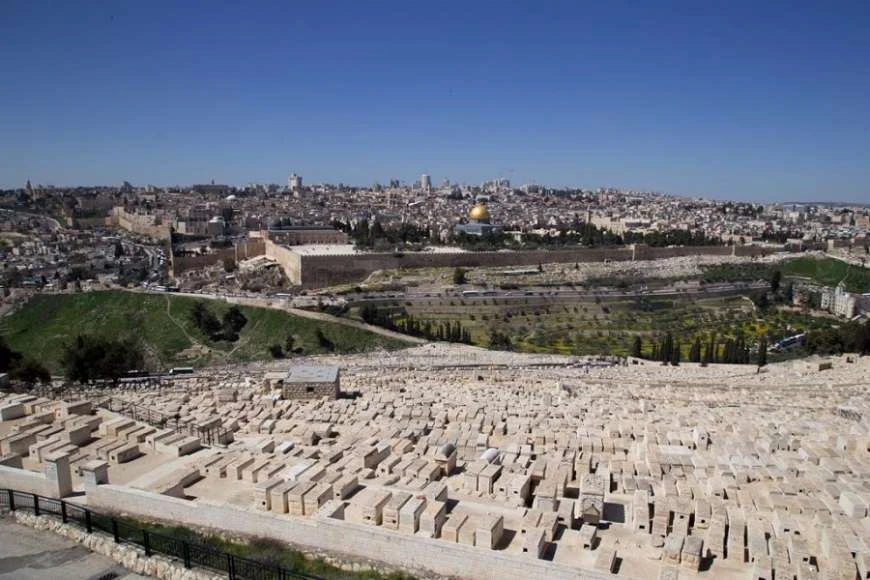
Vatican City, Dec 10, 2017 / 09:34 am (CNA/EWTN News).- Following U.S. President Donald Trump’s Dec. 6 notice that he will be moving the U.S. embassy in Israel to Jerusalem, the Holy See has expressed its concern for recent violent outbreaks and urged leaders to promote peace and security. 

A Vatican communique Dec. 10 pointed to concerns for peace and security in Jerusalem and reiterated its belief that “only a negotiated solution between Israelis and Palestinians can bring a stable and lasting peace,” as well as “guarantee the peaceful co-existence of two states within internationally recognized borders.”

The brief statement was published just days after the news broke that President Trump would recognize Jerusalem as the capital of Israel and move the U.S. embassy from Tel Aviv to Jerusalem – a widely controversial decision that has provoked a mixed reaction from the international community.

The Vatican said it is watching the development of the situation closely, especially in Jerusalem, which is a “Sacred city for Christians, Jews and Muslims from all over the world.”

The statement also reiterated the Holy See’s position on the importance of maintaining the status quo in Jerusalem, as per the repeated requests of the international community, and the hierarchies of the Catholic and Christian communities of the Holy Land.

Renewing an appeal made by Pope Francis during his general audience on Dec. 6, the statement reiterated the Pope’s “fervent prayers” for national leaders, that they be committed to promoting peace, justice and security and averting “a new spiral of violence” in the nation.

Israel has traditionally always recognized Jerusalem as its capital. However, Palestinians claim that the eastern portion of the city is the capital of the future Palestinian state. In recognizing Jerusalem as Israel’s capital, the U.S. is the first country to do so since the state was established in 1948.

Debate on the issue is in many ways the crux of the conflict between Israel and Palestine, which is backed by Arab leaders, including Saudi Arabia, and the wider Islamic world.

According to the 1993 Israel-Palestinian peace accords, the final status of Jerusalem is to be discussed in the late stages of peace talks. Israeli sovereignty over Jerusalem has never been recognized by the international community, and all countries with diplomatic relations have their embassies in Tel Aviv.

More than 30 Palestinians have been injured in clashes across the West Bank and the Gaza Strip amid protests against Trump’s decision.

The position of the U.N. on the Jerusalem issue is that East Jerusalem is occupied Palestinian territory, and that the city should eventually become the capital of the two states of Israel and Palestine.

The Vatican has long supported a two-state solution to the Israel-Palestinian conflict, and on a diplomatic level recognizes and refers to both “the State of Israel” and “the State of Palestine.”

[…]

US bishops call for solidarity with migrants on Our Lady of Guadalupe’s feast day

December 9, 2017 CNA Daily News 3

Washington D.C., Dec 9, 2017 / 03:29 pm (CNA/EWTN News).- The U.S. bishops are encouraging Catholics to observe the upcoming Feast of Our Lady of Guadalupe as a day of solidarity with immigrants.

In the nation’s capital, a 12:10 p.m. Mass at St. Peter’s Church will mark the Dec. 12 feast day. The Mass will be celebrated by Auxiliary Bishop Mario Dorsonville of Washington, D.C.

Additionally, more than 55 events – including prayers services, Masses, and processions – will be held throughout the U.S. this month. These events, the bishops’ conference said, will honor Our Lady of Guadalupe and will “seek to honor the accomplishments, hopes, fears, and needs of all families who have come to the U.S. seeking a better life.”

“As we enter the Advent season and Christmas approaches, we are reminded of the unique role and importance of Our Lady of Guadalupe, a unifier and peacebuilder for communities,” said Bishop Joe S. Vásquez of Austin, chairman of the migration committee at the U.S. Conference of Catholic Bishops.

“We honor her role as protectress of families, including those families separated and far from home,” he said in a Dec. 7 statement.

The conference is also offering resources for parishes looking to accompany migrants, including Our Lady of Guadalupe prayer cards and informational material. Other suggestions include ways to incorporate the intentions of the migrant community in parish prayer services, social media sharing, and efforts to support government policies such Deferred Action on Childhood Arrivals.

Our Lady of Guadalupe, patroness of the Americas and the unborn, appeared to St. Juan Diego on the Hill of Tepeyac in Mexico City in 1531, during a time of conflict between the Spanish and the indigenous peoples.

Our Lady took the appearance of a pregnant native woman, wore clothing in the style of the indigenous community, and spoke to Juan Diego in the native language of Nahuatl.

She asked Juan Deigo to appeal to the local bishop to build a church on the site of the apparition, stating she wanted a place where she could reveal to the people the compassion of her son. Initially turned away by the bishop, Diego returned to site asking Our Lady for a sign to prove the authenticity of her message.

She instructed him to gather the Castilian roses that he found blooming on the hillside, despite the fact that it was winter, and present them to the Spanish bishop. Juan Diego filled his cloak – known as a tilma – with the flowers. When he presented them to the bishop, he found that an image of Our Lady was miraculously imprinted upon his tilma.

Today, nearly 500 years later, the bishops said, we should still remember Mary’s words to Juan Diego: “Let your face and heart not be troubled, don’t be afraid … Am I not here who am your mother?”

The bishops’ statement said many immigrants from the Americas have relied on Our Lady of Guadalupe’s intercession for safety during their migrant journey. The statement included a prayer requesting her protection over the most vulnerable.


[…]

Due to violence, Mexican diocese avoids Christmas Masses at high-risk times

December 9, 2017 CNA Daily News 1

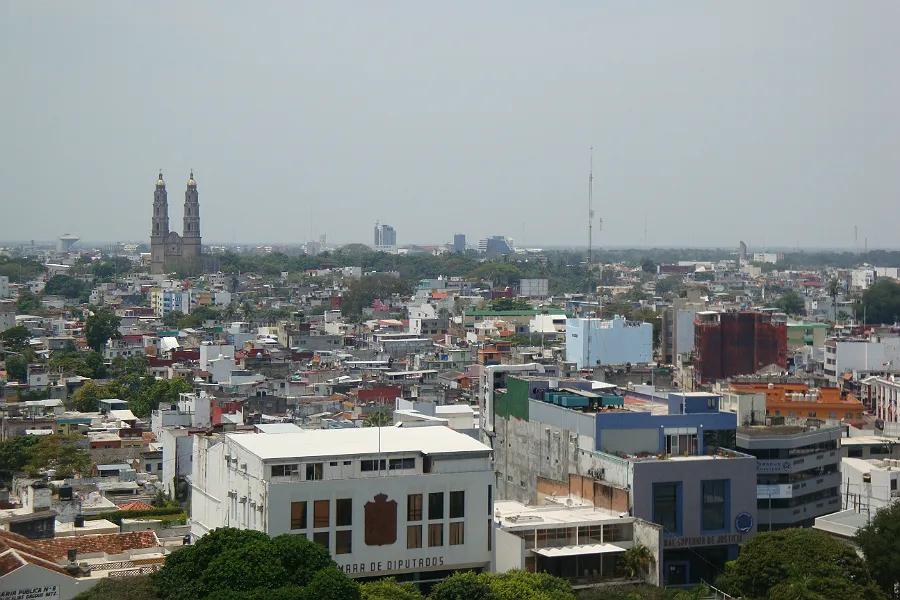
Villahermosa, Mexico, Dec 9, 2017 / 06:08 am (ACI Prensa).- A diocese in one of Mexico’s most violence-ridden states has indicated it will avoid scheduling Masses for Christmas and its octave at “high risk” times. It has also asked the state’s police to protect parishioners.

“With respect to the problem of insecurity, for the most part the established schedule has been kept, but we are trying to avoid scheduling certain times that could be high risk,” Fr. José Luis Compeán Rueda, vicar general of the Diocese of Tabasco, said at a Dec. 3 press conference in Villahermosa, capital of the Mexican state of Tabasco.

El Heraldo de Tabasco reported that Fr. Compean said he had met with the head of Tabasco’s Department of Public Safety, Jorge Aguirre Carbajal, to talk about the problem of the lack of public safety and said that “they will take appropriate steps as needed.”

“We hope the different state or municipal authorities will take corresponding measures to provide protection, not exclusively to the Church, but to all of society,” he said.

Fr. Compeán noted that during the year end festivities crime increases because people are getting paid Christmas bonuses and buying Christmas presents.

A September report prepared by the Tabasco Citizens’ Observatory revealed that in 2017 Tabasco occupied first place in the nation in kidnappings per capita.

“The State of Tabasco held first place in five categories of crime: kidnapping, aggravated robbery, robbery of businesses, holdups of passersby and livestock rustling” the director of Analysis and Statistics of the Tabasco Citizens’ Observatory, Julia Arrivillaga, told Televisa.

The Catholic Multimedia Center released a report in August showing that Tabasco is one of the most dangerous states for priests, and that Mexico is the most violent country for priests in Latin America.


This article was originally published by our sister agency, ACI Prensa. It has been translated and adapted by CNA.

[…]

With prayer and aid, Catholics rally around California wildfire victims

December 8, 2017 CNA Daily News 1

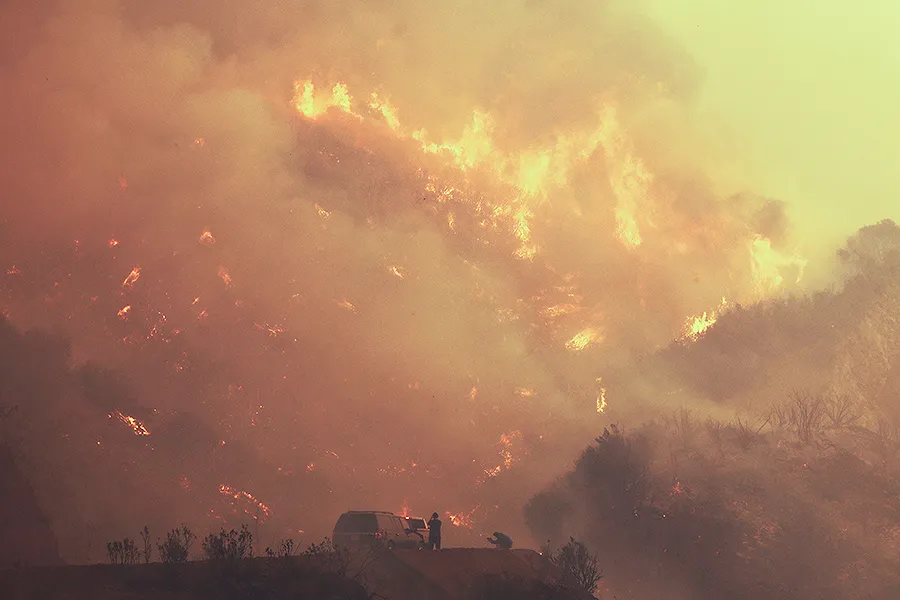
Ventura, Calif., Dec 8, 2017 / 04:45 pm (CNA/EWTN News).- The massive wildfires of California have drawn calls for prayer and assistance from the U.S. bishops, as Catholic Charities affiliates in the state work to aid victims.

“I am sure all the faithful join me in saying: we stand ready to help in the recovery,” Cardinal Daniel DiNardo of Galveston-Houston, president of the U.S. bishops’ conference, said Dec. 8.

Dan Grimm, Santa Barbara/Ventura regional director for Catholic Charities of Los Angeles, also called for prayers.

“We are praying for a quick end to this ‘trial by fire’ but so grateful for the generosity of so many coming to the aid of their brothers and sisters in Christ,” he told CNA.

Six fires currently affect the state, having burned nearly 160,000 acres. About 190,000 people have been forced from their homes as over 5,700 firefighters combat the flames.

The worst blaze, the Thomas Fire, started late Monday near Santa Paula, Calif.  It has burned 132,000 acres, about 206 square miles. In its first day, it spread at a rate of one acre per second.

Wind gusts are expected to continue to fan the flames through Sunday, CNN reports.

Calling for prayer, Cardinal DiNardo noted that on the Feast of the Immaculate Conception, Catholics “commit ourselves to the loving protection of Mary the Mother of God and patroness of America.”

“Let us remember, especially, her sons and daughters in danger from the terrible wildfires in California, both those whose homes are in the fire’s path and those courageous first responders and firefighters who are putting their lives at risk,” he said.

Grimm reflected on the response to the wildfires.

“The effect of the wildfires has been devastating, but people are responding with faith and generosity even before the flames have stopped, helping those displaced temporarily or permanently with food, water, clothing, bedding and other personal necessities,” he said.
“Catholic Charities has been one of the collection points for this great outpouring of generosity and we’re working extra to receive, store and distribute while taking care of our regular clients, both working low-income and homeless people,” he continued.

Grimm said the Red Cross and local cities have been “great” at running evacuation centers and first response operations.

“Now we are helping people as they regroup, return to clean up and protect their homes, and deal with lack of power, heat, safe water and adequate food,” the Catholic Charities official said.

The Catholic Charities of Los Angeles website, at catholiccharitiesla.org, is collecting funds to aid relief.

Catholic Charities’ Ventura Community Services Center is accepting in-kind donations for the victims of the Ventura County fire, while Catholic Charities’ Guadalupe Community Center is taking in-kind donations for victims of the Sylmar/Santa Clarita fire.

Grimm said the Ventura center in the course of one day received food, clothing and personal items that filled the client reception room. These donated goods are planned to be moved to a temporary distribution center in Casita Springs, staffed by Boy Scouts, so that residents in need may have easier access to them.

“As those whose homes were partially or completely destroyed seek to restart their lives, Catholic Charities is helping to find short-term housing,” he said.

The charities’ Santa Barbara thrift store will provide low- or no-cost furniture, clothing and household goods. The archdiocese’s Cardinal McIntyre Fund and a special fund for victims will help address uninsured housing repair and replacement costs.

Cardinal DiNardo made specific prayer recommendations, saying: “Please find a moment today, whether after Mass or while gathered as a family around the Advent wreath, to pray a Rosary in gratitude for Mary’s gifts to humanity and entrusting to her protection our sisters and brothers in the fire’s path.”


[…]