No Picture
News Briefs

Digital rosary discovered to be hackable, Vatican says it has fixed bugs

October 21, 2019 CNA Daily News 2

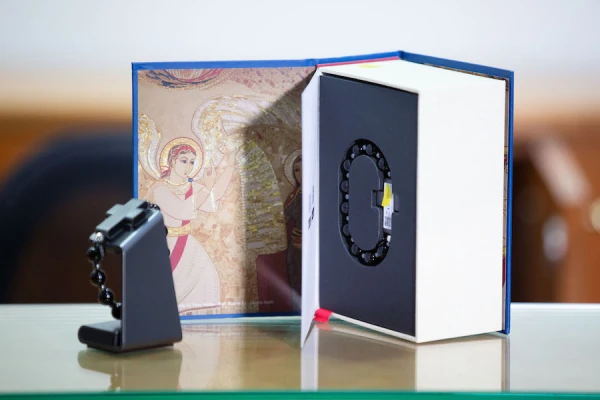
Vatican City, Oct 21, 2019 / 07:40 pm (CNA).- Shortly after the new “smart rosary” bracelet was released last week, the Vatican discovered an easy route for hackers to retrieve a user’s personal information. The issue has since been fixed.

Launched on Oct. 15, the device is called an eRosary and allows users to track their prayers, find spiritual resources, and connect with an online prayer community.

A few days after its release, Fidus Information Security, a cyber security consulting service, discovered the device’s weak safety measures, which could have allowed hackers to gain access to a user’s personal information such as their phone number, date of birth, gender, and height.

“One of our researchers decided to check out the code, and in just 10 minutes found some glaring issues,” Andrew Mabbitt, founder of Fidus, told The Register tech site.

According to Fidus, the most glaring concern was a glitch that would allow a hacker to access a user’s password – a four-digit PIN – without connecting to the user’s email. The application uses API calls to talk to its backend system. Upon request for a user’s email address, the system would send over a readable text of the user’s PIN through the API.

Father Frédéric Fornos, international director for the Pope’s Worldwide Prayer Network, told The Register that Vatican coders were placed on the problem immediately after he heard about the issue on Oct. 17. Since then, the issue has been corrected.

According to The Register, Fidus also found that, because there are unlimited password guesses, hackers would be able to retrieve the pin number by “brute forcing” – a means to retrieve hidden information through excessive trial and error. However, a Vatican spokesperson said this issue has also been resolved.

The eRosary was launched under the Pope’s Worldwide Prayer Network and developed by the Taiwan-based tech company GadgTek Inc.

The Bluetooth device in the bracelet connects to Click to Pray, a phone app on iOS or Android that reminds people to pray. It also includes reflections, campaigns, and an electronic bulletin board, where users may request or find prayer intentions.

The eRosary activates when the user makes a sign of the cross. It tracks the user’s progress and, in connection with the user’s phone, provides visual aids and audio reflections on the mysteries of the rosary.

The device is available on Amazon.it for 99 euros, roughly $109.

According to an Oct. 15 press release from Click to Pray, the eRosary is an opportunity to connect young people together in prayer.

“Aimed at the peripheral frontiers of the digital world where the young people dwell, the Click To Pray eRosary serves as a technology-based pedagogy to teach the young how to pray the Rosary, how to pray it for peace, how to contemplate the Gospel,” the press release said.


[…]

No Picture
News Briefs

Abortion legalized in N Ireland, after deadlock in devolved legislature

October 21, 2019 CNA Daily News 0

Belfast, Northern Ireland, Oct 21, 2019 / 05:20 pm (CNA).- Northern Ireland’s devolved legislature failed Monday to block a change to the region’s law imposed by the British parliament. As a result, both abortion and same-sex marriage will now be legal in the region.

Same-sex marriages are expected to begin taking place in Northern Ireland by February 2020, while the new abortion law is set to take effect by April 2020.

Previously, abortion was legally permitted in Northern Ireland only if the mother’s life was at risk or if there was risk of permanent, serious damage to her mental or physical health.

The British parliament passed the Northern Ireland (Executive Formation etc) Act 2019 in July, with amendments legalizing abortion and same-sex marriage.

That act took effect Oct. 22 because the Northern Ireland Assembly, which has been suspended the past two years due to a dispute between the two major governing parties, was not able to do business by Oct. 21.

Pro-life members of the Northern Ireland Assembly, largely comprised of members of the Democratic Unionist Party (DUP), recalled the assembly Monday for the first time since January 2017 in order to block the relaxed abortion restrictions. The DUP favors union with the UK and is known to be a right-of-center political party on many issues.

Arlene Foster, the DUP leader, told The Guardian that she hoped the recall would allow assembly members to debate the issue at the local level, and would allow those opposed to the changes officially to voice their opposition.

However, in order for the assembly to make any binding changes, the election of a speaker of the assembly with cross-party support was required. This proved impossible when the nationalist Social Democratic Labour Party walked out of the Oct. 21 meeting, the BBC reported. The assembly also would have needed to form an executive (similar to an administration), which could also not be done without cross-party presence and support.

Members of the assembly from Sinn Fein, a left-of-center nationalist party, as well as the Green Party and People Before Profit did not participate in the Oct. 21 session.

Incumbent speaker Robin Newton, a member of the DUP, also went against party leader Foster and refused to suspend normal assembly rules to allow for the introduction of the Defence of the Unborn Child Bill 2019, a DUP initiative that, had it passed by midnight, could have blocked the new abortion law.

Foster called it a “shameful day” for Northern Ireland, according to the BBC.

Mary Lou McDonald, leader of Sinn Féin, celebrated the “decriminalisation of women that will take effect from midnight,” the BBC reported.

Abortion has been legal in the rest of the United Kingdom up to 24 weeks since 1967, and it was legalized in the Republic of Ireland in 2018. Same-sex marriage has been legal in the rest of the UK since 2014.

Pressure to legalize abortion in Northern Ireland increased after a 2018 referendum legalized abortion in the Republic of Ireland.

Bills to legalize abortion in cases of fatal fetal abnormality, rape, or incest failed in the Northern Ireland Assembly in 2016.

In September, religious leaders of Northern Ireland called on Ireland Secretary Julian Smith to reconvene the local legislative assembly in order to block the new liberalizing abortion laws.

“Our Northern Ireland political parties have it in their own hands to do something about this,” the religious leaders said in a Sept. 30 joint statement.

“There is no evidence that these [legal] changes reflect the will of the people affected by them, as they were not consulted. They go far beyond the ‘hard cases’ some have been talking about,” the statement added.

Signatories of the statement included leaders of the Catholic Church, the Church of Ireland, Methodist Church in Ireland, Presbyterian Church in Ireland, and the Irish Council of Churches.

The Northern Ireland Catholic bishops’ conference previously condemned the move by the British Parliament as an “unprecedented” use of authority in the region.

Earlier this month, the High Court in Belfast had ruled that the region’s ban on the abortion of unborn children with fatal abnormalities violated the UK’s human rights commitments.

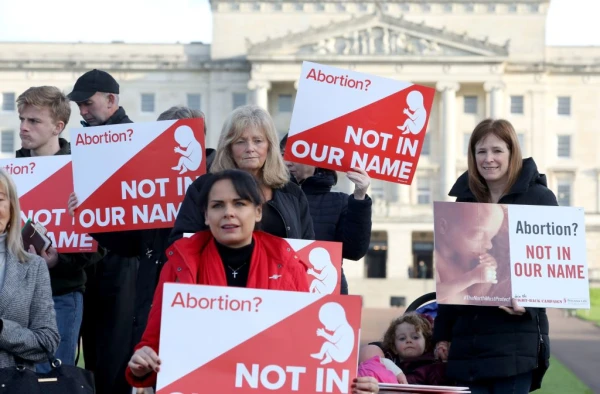
In September, tens of thousands of people took to the streets of Belfast to protest the impending change to abortion restrictions in the region.

[…]

No Picture
News Briefs

Amazonian ‘Way of the Cross’ prayed during Vatican’s Amazon synod

October 20, 2019 CNA Daily News 5

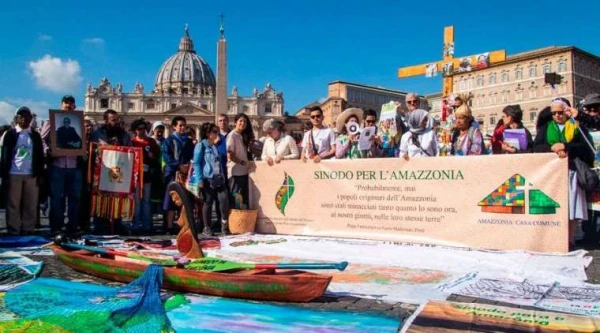
Vatican City, Oct 20, 2019 / 06:30 pm (CNA).- An “Amazonian Stations of the Cross” was prayed outside the Vatican Saturday, organized as part of a set of semi-official events connected to the Vatican’s Synod of Bishops on the Amazon.


Imágenes del Via Crucis Panamazónico #SinodoAmazonico #sinododelaamazonia pic.twitter.com/XVu27S3O8g

— Walter Sánchez Silva (@WSanchezSilva) October 19, 2019


The “Via Crucis Amazonico” Oct. 19 was held as part of the “Casa Comune” project, an initiative promoting more than 115 events hosted by a loose network of groups, connected in varying degrees to the Catholic Church.

Among the organizations involved in the project are an advocacy organization backed by bishops’ conferences in Latin America; two aid and development organizations of the German bishops’ conference; and a Brussels-based confederation of social justice groups.


Algunas imágenes del Via Crucis Panamazónico esta mañana en el Vaticano #SinodoAmazonico #SinododelaAmazonia pic.twitter.com/x3CeO2u2bB

— Walter Sánchez Silva (@WSanchezSilva) October 19, 2019


The Saturday Stations of the Cross were attended by people indigenous to the Amazon region and their supporters, along with religious, priests, and bishops participating in the synod on the Amazon, an Oct. 6-27 Vatican meeting of bishops called to discuss the Church’s pastoral ministry in the Amazon region.

Among the participating bishops were Cardinal Pedro Barreto, Archbishop of Huancayo and vice president of the Ecclesial Network of Panama (REPAM) – the principal organizer of the Casa Comune project, along with Bishop Roque Paloschi , Archbishop of Porto Velho and president of the Indigenous Missionary Council (CIMI) – another one of the organizations sponsoring the Casa Comune initiative.

The Stations of the Cross, like most of the events organized by the Casa Comune project, included both traditional Christian symbols and the use of symbols and images derived from the culture of indigeneous Amazonian groups.


Via Crucis Amazónico este sábado en el Vaticano #SinodoAmazonico #sinododelaamazonia pic.twitter.com/ZsJLBMPXSF

— Walter Sánchez Silva (@WSanchezSilva) October 19, 2019


The Way of the Cross began near the Castel Sant’Angelo, roughly one kilometer from St. Peter’s Square, and concluded outside St. Peter’s Basilica.

Participants carried objects symbolic of Amazonian culture, among them a large canoe, bowls with food, indigenous musical instruments, along with the controversial, and now familiar, image of a naked pregnant woman, which has been described variously as a Marian image, as an indigenous religious symbol of Pachamama, or Mother Easter, or as a symbol of life.

As the stations began, participants placed on the ground the canoe, the image of the woman, and photographs of the “martyrs of the Amazon,” among whom was Saint Oscar Romero, the only one of the persons represented who has been canonized by the Catholic Church.


Via Crucis Panamazónico #SinodoAmazonico #sinododelaamazonia pic.twitter.com/gZEvREObT1

— Walter Sánchez Silva (@WSanchezSilva) October 19, 2019


The other persons identified as “Amazonian martyrs” were Sister Cleusa Coelho, Marçal de Souza, Josimo Morales, Fr. Vicente Cañas, Sister Inés Arango, Galdino Pataxó, Fr. Alcides Jiménez, Sister Dorothy Stang, Msgr. Alejandro Labaka, Fr. Ezequiel Ramín, Father Rodolfo Lunkenbein, Father Simao Bororo and Chico Mendes.

After initial chants, the meaning of the celebration was explained: “Remember the martyrs of the way, the lives given by the Kingdom of life. We also remember our lives, the joys and hopes that brought us here, and the sadness and anguish of our people of Panamazonía and the earth. ”

Then, the smoke of some plants that burned in a bowl was spread among the attendees with a feather.

After this initial ceremony, the “Way of the Cross” itself began with its 14 stations, plus an added 15th station dedicated to the resurrection. A large wooden cross, in which a rosary and photographs of the martyrs were nailed, headed the entourage.

The 14 stations were adapted from the traditional Stations of the Cross, and each station was accompanied by a phrase or theme: “human rights,” “the great projects of ‘development’ in the Amazon Basin,” “reconciliation,” “encounter,” “the cultures of Panamazonía,” ” a call for all,” “ the destruction of nature,” and others.

At the end of each station, a different person read a brief reflection. Among the messages that were conveted was thatt “Mother Earth weeps for the excessive exploitation that is committed in the 9 countries of the Panamazonía.”

Forgiveness was also requested “for the mistakes made as a Church and as humanity; especially through of the abuses of colonization, the systematic violence to human rights and the ethnocide carried out of so many peoples throughout the continent.”

One reflection warned that “scientists and environmentalists presage darkness and shadows of death for our land if we do not stop the indiscriminate use of resources.” Therefore, “the call as Church is to announce the Gospel of Jesus and denounce the abuses that Sister Mother Earth experiences.”


Imágenes del Via Crucis Panamazónico realizado hoy en el Vaticano #SinodoAmazonico #sinododelaamazonia pic.twitter.com/dBA6JDGWua

— Walter Sánchez Silva (@WSanchezSilva) October 19, 2019


Upon arriving at St. Peter’s Square, while meditating on the final station, some participants lay on the ground, upon the photographs of the so-called martyrs of the Amazon, pretending to be dead. At the end of the 15th station, dedicated to the Resurrection, the people lying on the ground rose, conveying resurrection from the dead, and raising their hands to heaven in thanksgiving.

Finally, one woman’s face was painted with Amazonian signs, and adorned her with a crown of feathers, and then raised overhead in a canoe, amid songs and applause from participants.


A version of this story was first reported by ACI Prensa, CNA’s Spanish-language news partner. It has been translated and adapted by CNA.

[…]