

 By
By The “Front Royal Statement” by Catholic educators, bishops, and practitioners proposed “seven cardinal principles” for Catholic K-12 schools.

In light of a decades-long trend of parish school closures, leading Catholic educators are calling for a return to Catholic principles.
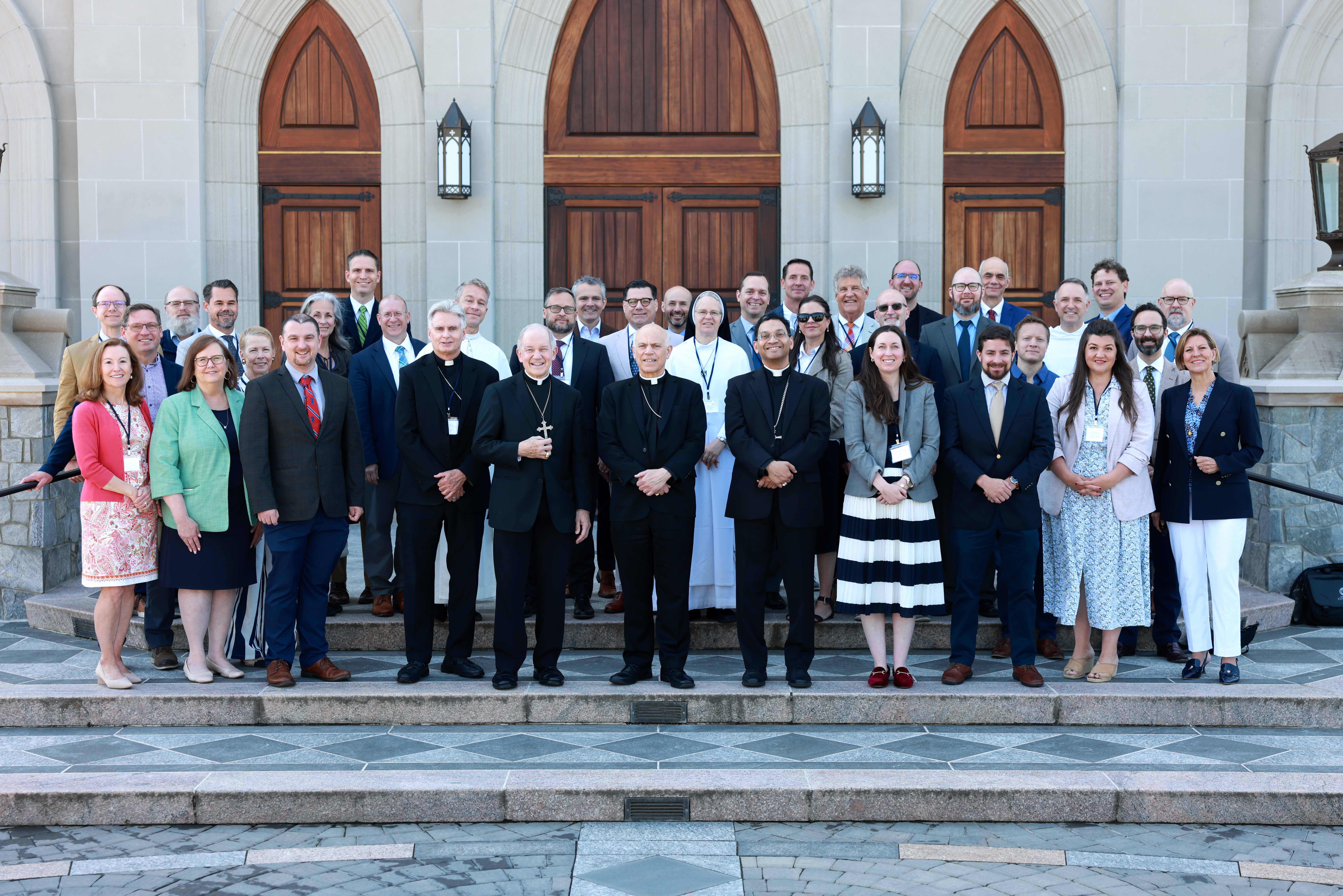
Catholic bishops, higher education leaders, scholars, and superintendents gathered for the Front Royal Education Summit at Christendom College in Front Royal, Virginia, at the end of May where they developed the statement together.
“We must reexamine the curriculum, pedagogy, and culture of our schools,” says the “Front Royal Statement” by Catholic educators, bishops, and practitioners.
The statement provides guidance for Catholic education, detailing “seven cardinal principles” for Catholic K-12 schools.
Several Catholic bishops signed the letter: Bishop James Conley of Lincoln, Nebraska; Archbishop Salvatore Cordileone of San Francisco; Bishop Thomas Daly of Spokane, Washington; Bishop Earl Fernandes of Columbus, Ohio; and Bishop Thomas John Paprocki of Springfield, Illinois.
The statement’s 45 signatures include Society of G.K. Chesterton President Dale Ahlquist; Ethics and Public Policy Center President Ryan Anderson; President George Harne of Christendom College; and others involved in Catholic education.
Preventing Catholic schools from disappearing
Educators voiced concern for the “steady decline” of Catholic schools.
An average of 100 Catholic schools have closed per year for 60 years, according to the letter.
“Today, only 6,000 Catholic schools remain, serving fewer than 1.7 million students, despite significant growth in the overall Catholic population,” the statement said. “If this trend continues for another 60 years, parochial schools will largely disappear, and Catholic education will survive primarily in home schools and small co-ops.”
“Yet Catholic schools remain indispensable,” the statement continued. “Nowhere else do we have so many hours each week to form a sacramental imagination in young people, present salvation history comprehensively, and help them grasp the immensity of the incarnation and redemption of Jesus Christ.”
Catholic parish schools were originally founded en masse to preserve the faith of Catholic children in light of public schools “steeped in Protestant culture,” according to the statement.
“Today, we face a different but equally grave crisis: soaring rates of disaffiliation among young Catholics, driven by a culture of skepticism and materialism that undermines faith and the Church’s moral teachings,” the statement said.
“Declining enrollment, rising costs, a shortage of well-formed teachers and leaders, the reluctance of some pastors to maintain Catholic schools, and the inability of many families to afford a Catholic education, despite their desire for one, only make the crisis more acute,” the statement continued.
Education for human flourishing
Conley, known for his work in Catholic education, wrote the introduction for the seven principles, saying that they “articulate and condense this great tradition of Catholic educational philosophy and practice and attempt to capture the essence of the renewal of Catholic education now sweeping the Church in the United States.”
The seven principles are: the supernatural end of education; the nature and dignity of the human person; what children deserve, the rights of parents, and the duties of the state; the ecclesial responsibility of bishops and priests; the formation and responsibilities of teachers and leaders; the integrity and order of the curriculum; and the transmission of a living Catholic culture.
The principles are intended “to carry forward that rich tradition while addressing the urgent needs of Catholic primary and secondary schools today,” according to Conley.
“[T]he Church has continually reminded the world that education is ordered toward the full flourishing of the human being, culminating in the supernatural vision of God,” Conley wrote.
“We pray that these seven principles will provide a shared foundation to unify the various streams of educational renewal now underway in Catholic schools and to inspire a supernatural vision that guides the true integral formation of the whole child,” Conley said.
If you value the news and views Catholic World Report provides, please consider donating to support our efforts. Your contribution will help us continue to make CWR available to all readers worldwide for free, without a subscription. Thank you for your generosity!
Click here for more information on donating to CWR. Click here to sign up for our newsletter.

Leave a Reply