

 By
By When a Benedictine College senior was dying from cancer, the collegeʼs president, along with 30 students, traveled to his home to give him a graduation ceremony.
Outside the packed school chapel, Benedictine College students continued to gather, kneeling on the ground to pray for Alex Lynch.
On the night of May 8, the news had spread across the campus that Lynch, a Benedictine student suffering from cancer, had died.
A college senior, Lynch had just had his graduation ceremony. He didn’t walk the stage, however; instead, the college president went to him.
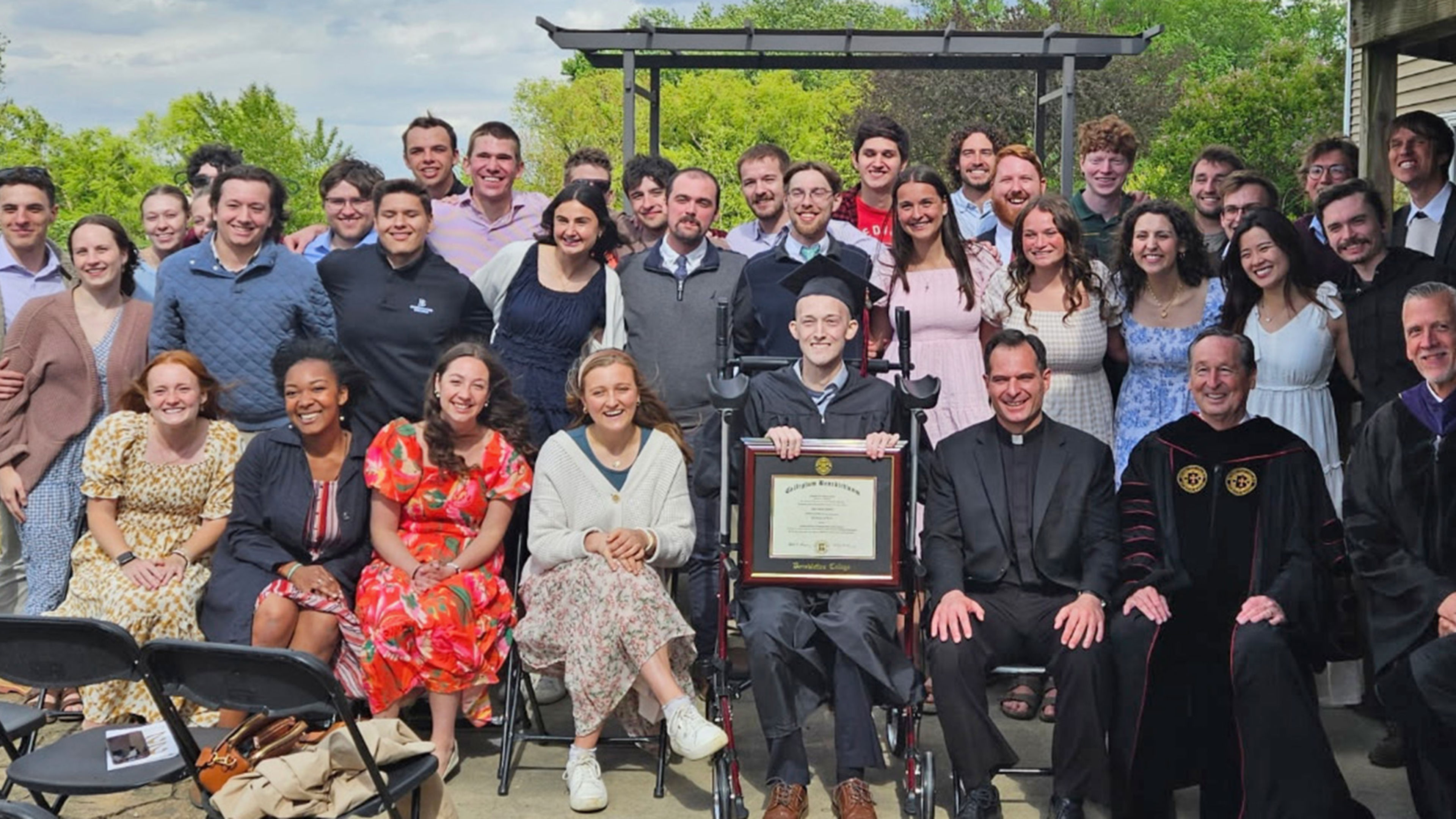
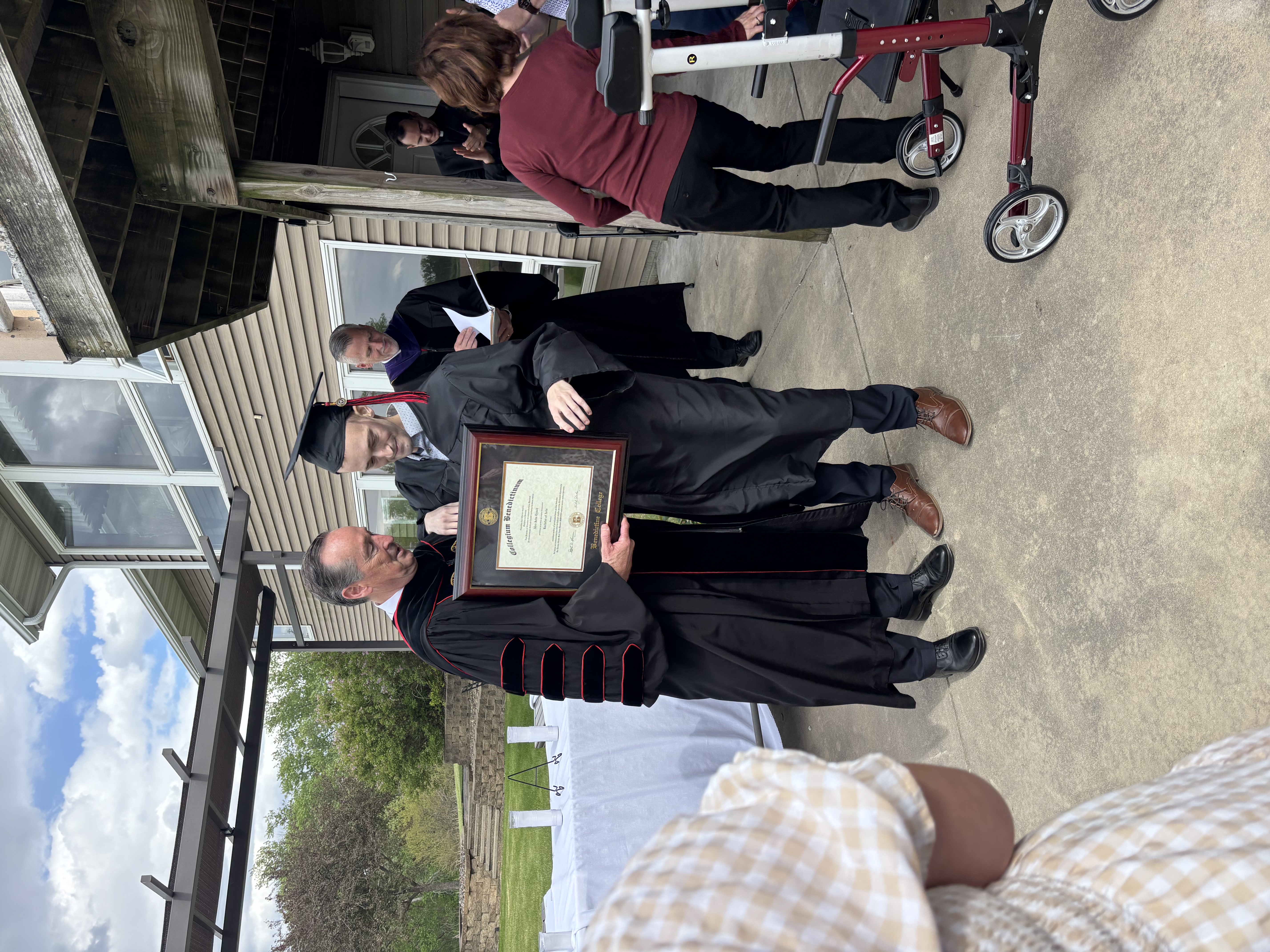
On May 7, Benedictine College President Stephen Minnis traveled from the school in Atchison, Kansas, to Lynch’s family home in Indianola, Iowa, along with 30 Benedictine students for Lynch’s personal baccalaureate Mass and graduation ceremony.
“Graduation is a powerful moment for these students,” Minnis told EWTN News. “They have worked so hard for it, including their whole primary and secondary education.”
“I want to make that moment special for every student,” he said. “It’s a moment that is powerful for me too — I pray a Hail Mary for every student by name when they come and when they graduate, but I have prayed especially for Alex.”
“It just took an extra step in his case, but I didn’t want to miss his big moment,” Minnis said.
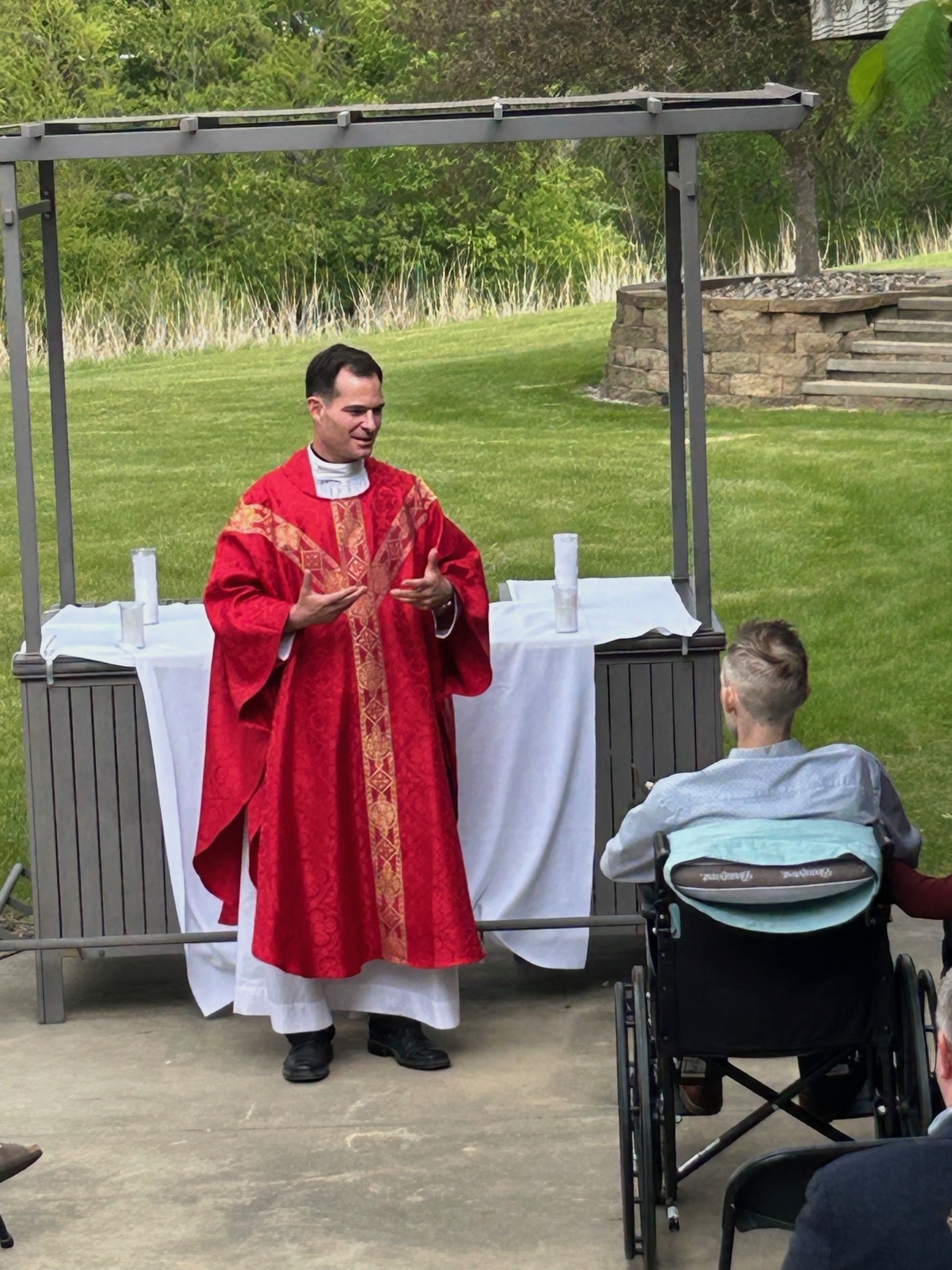
Father Ryan Richardson, Benedictine Collegeʼs chaplain, told EWTN News he spoke “directly to Alex” in his homily, detailing how Lynch lived out the fruits of the Holy Spirit while at school.
“He radiated the Holy Spirit and the love of Christ,” Richardson said. “Alex often said that his desire was that others see Christ in him. He definitely accomplished that.”
Finnegan Ritchie, a close friend of Lynch’s, was among the 30 students who attended the ceremony.
“We were both worried that it was going to be unreasonably long,” Ritchie said in an interview with EWTN News. “Entertaining people is exhausting. But Alex was able to sit and stand at will; he had a lot of grit.”
“After the ceremony, he had a little graduation party and greeted his family and friends,” Ritchie said. “It was wonderful to see how everyone came together to bring food, drinks, and tables for the occasion. People were catching up with each other and treating it like any other grad party.”
Ritchie said goodbye to Lynch in the evening, “around 5:30 p.m.”
“It was very difficult to leave him,” Ritchie said.
On May 8, less than a day after his home graduation ceremony, Lynch died. It was late in the evening on a Friday night. Off-campus parties stopped. Students gathered in the chapel, again, this time to pray for a friend who had passed away.
“Students left parties and gathered spontaneously in our adoration chapel,” Minnis said. “It was filled until late that night. It was an overwhelming response.”
The following day, Benedictine held a Mass on campus in his memory.
Students traveled from all over the country for Lynch’s funeral at St. Thomas Aquinas Parish in Indianola, Iowa, on May 14, nearly filling the pews in the church.
“He made such an impact,” Minnis said. “The way he lived and the way he died will change these students for years.”
Yellow pins and applause
On Saturday, May 16, just over a week after Lynch died, Benedictine’s official graduation took place. The crowd was peppered with students wearing yellow pins, which they wore, Richardson said, “to remember Alex.”
While at Benedictine, Lynch was a resident adviser (RA) on campus. He played intramural sports, was active with FOCUS, and sang in the choir at Mass.
“The best way I can describe Alex is that he was faith-filled,” Richardson said. “Faith in Christ was the foundation of his life and his faith in Christ spilled over into all his relationships.”
“[Lynch] had a friendship with the Holy Spirit that was alive and active,” the chaplain continued.
“He loved people sincerely and intensely,” he said. “Even in the midst of his illness he would often look me in the eye and intentionally ask how I was doing and how he could pray for me.”
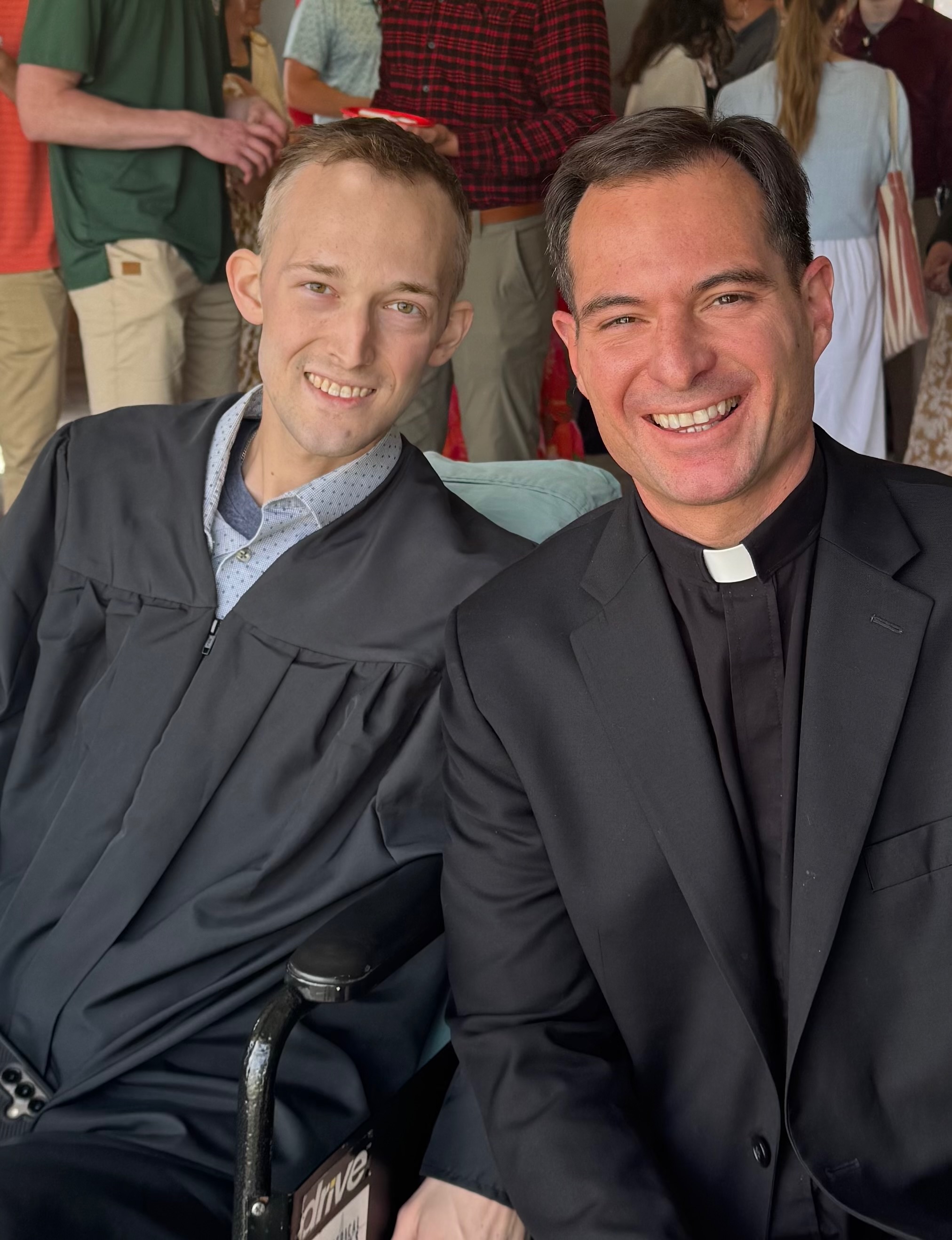
“We have grieved as a community,” Richardson said.
“Since Alex’s passing, though, I think many of us have transitioned from sadness to peace,” he continued. “In his death Alex showed us what it means to truly live and what it means to live the faith to the end.”
Lynchʼs friend Jack Figge, a recent Benedictine graduate and a Catholic journalist, wrote a tribute to Lynch in Benedictineʼs school publication.
“I spent three days with Alex at the beginning of the week he passed away. It’s a series of days I will never forget because Alex lived out what it meant to be a suffering servant,” Figge told EWTN News.
“He never complained about the pain he was in; he was so generous with his time making sure that everybody who wanted to see him could,” Figge recalled. “Whenever you walked in, the first question he asked was ‘How are you?’”
“Even in the midst of being close to death, he remained joyful, laughing, and cracking jokes,” Figge continued. “On the day of his graduation, so many people wanted to say goodbye and he was clearly tired. But he sat and talked with everybody for hours, making sure he had a moment with everybody.”
In the last week of his life, Lynch visited his parish to pray a Holy Hour.
He died reciting his baptismal promises — promises made by Catholics at baptism and renewed at the Easter Vigil.
Benedictine students and faculty remembered Lynch at the schoolʼs graduation ceremony, where Lynch’s parents walked the stage in his place.
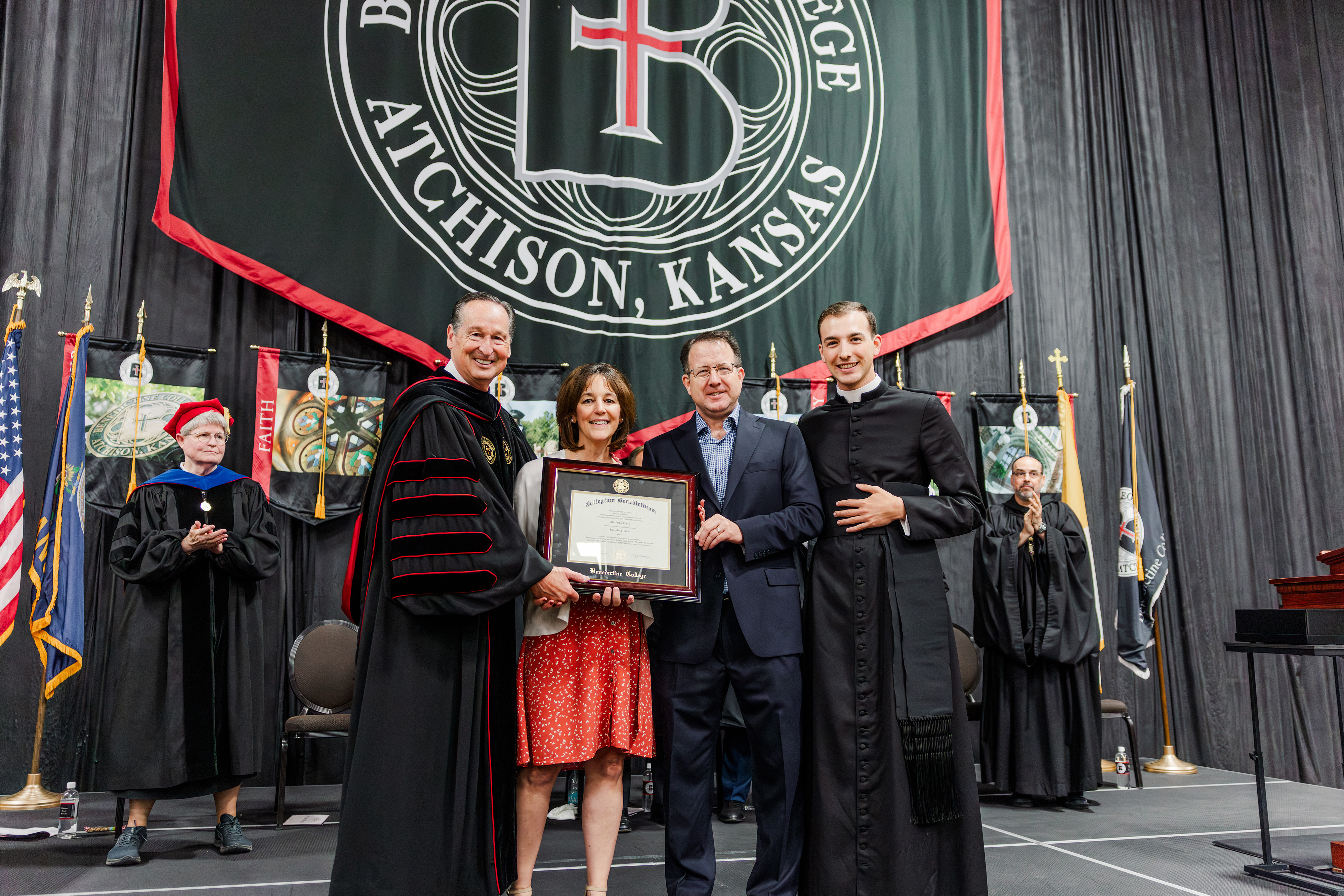
“It was truly fitting to have Alex’s family with us at graduation,” Richardson said. “The resounding applause they received was a tribute to the impact that Alex had on each of us and the legacy he has left at Benedictine College.”
Shaved heads and a walk down the aisle
When Lynch discovered he would lose his hair from chemotherapy, 30 of his friends at Benedictine shaved their heads, Ritchie recalled.
“We did it to be funny, but we also wanted to present ourselves as Alexʼs friends,” Ritchie said. “He and I, along with many others, had spiritual conversations often — we wanted to do college well. We wanted to know what our purpose in life was and how to go about getting it.”
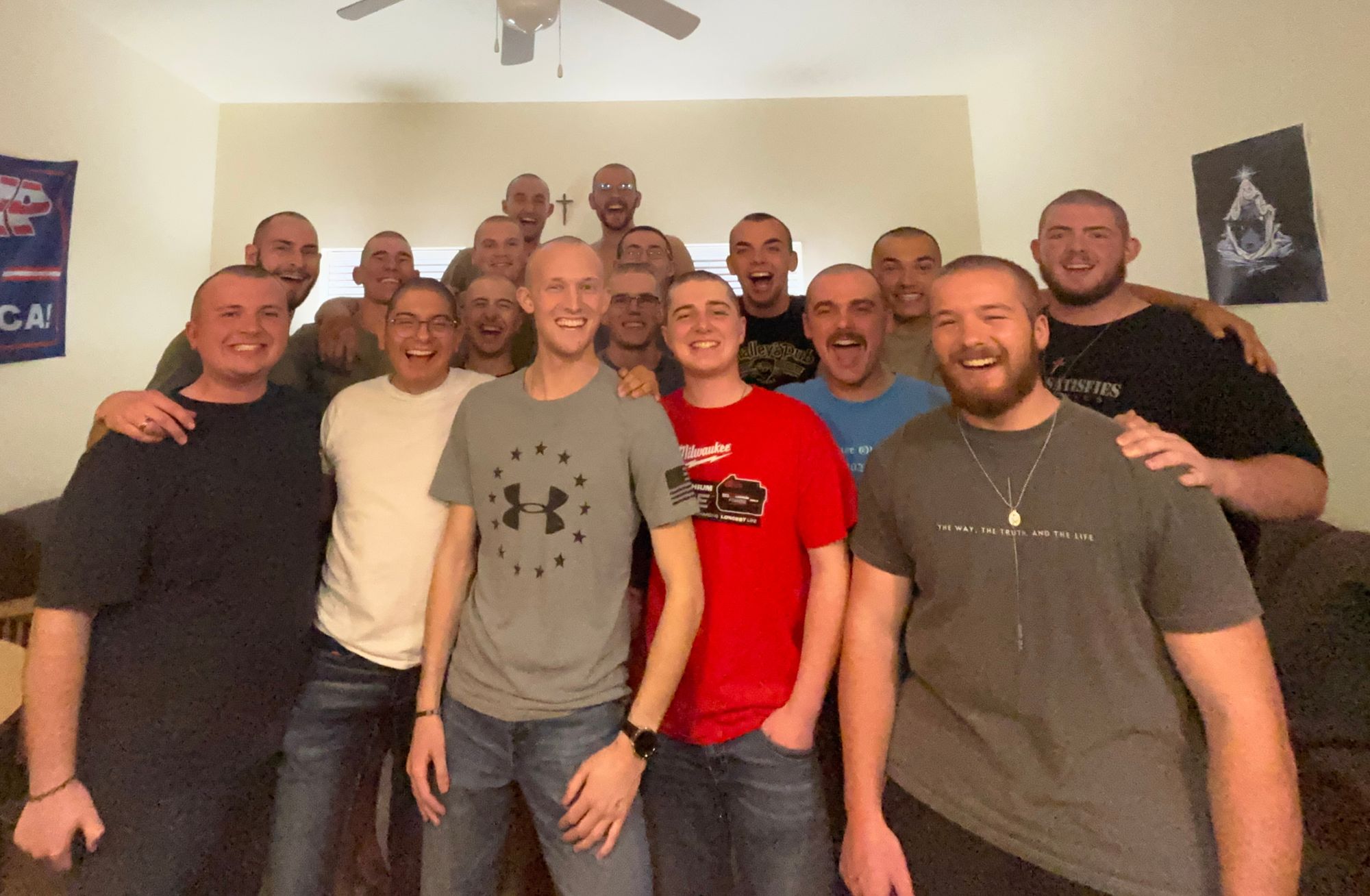
“At the end of the day, we wanted to be virtuous; it was the way to a happier life on earth and an even more perfect one in the next life,” Ritchie said.
“Alex sought to see God in everyone he met in order to love them well. We rarely talked about his disease; I figured he wanted to let go of it while he was with people,” he said.
“He loved the quiet; he enjoyed eating breakfast at the door to St. Joseph Hall and seeing people he loved walk by,” Ritchie continued. “I was always struck by his take on things, since death was a real threat for him; it put my life in perspective. He taught me that I have a lot to be grateful for, and that it is best to take action now than wait until later.”
In one of their last conversations, Lynch told his friend he had learned from him as well. “Iʼm honored to have been taught by him,“ Ritchie said. ”Iʼm even more honored to have taught him something. I think we just wanted to seek God together.”
Earlier this year, Lynch walked down the aisle as a groomsman at the wedding of one of his best friends, Ben Shonka, who recently served as a pallbearer at Lynchʼs funeral.
“Alex was a goofy man; he loved his faith and loved to have fun,” Shonka, also a Benedictine graduate, told EWTN News. “He made every moment count whether he was with friends or whoever.”
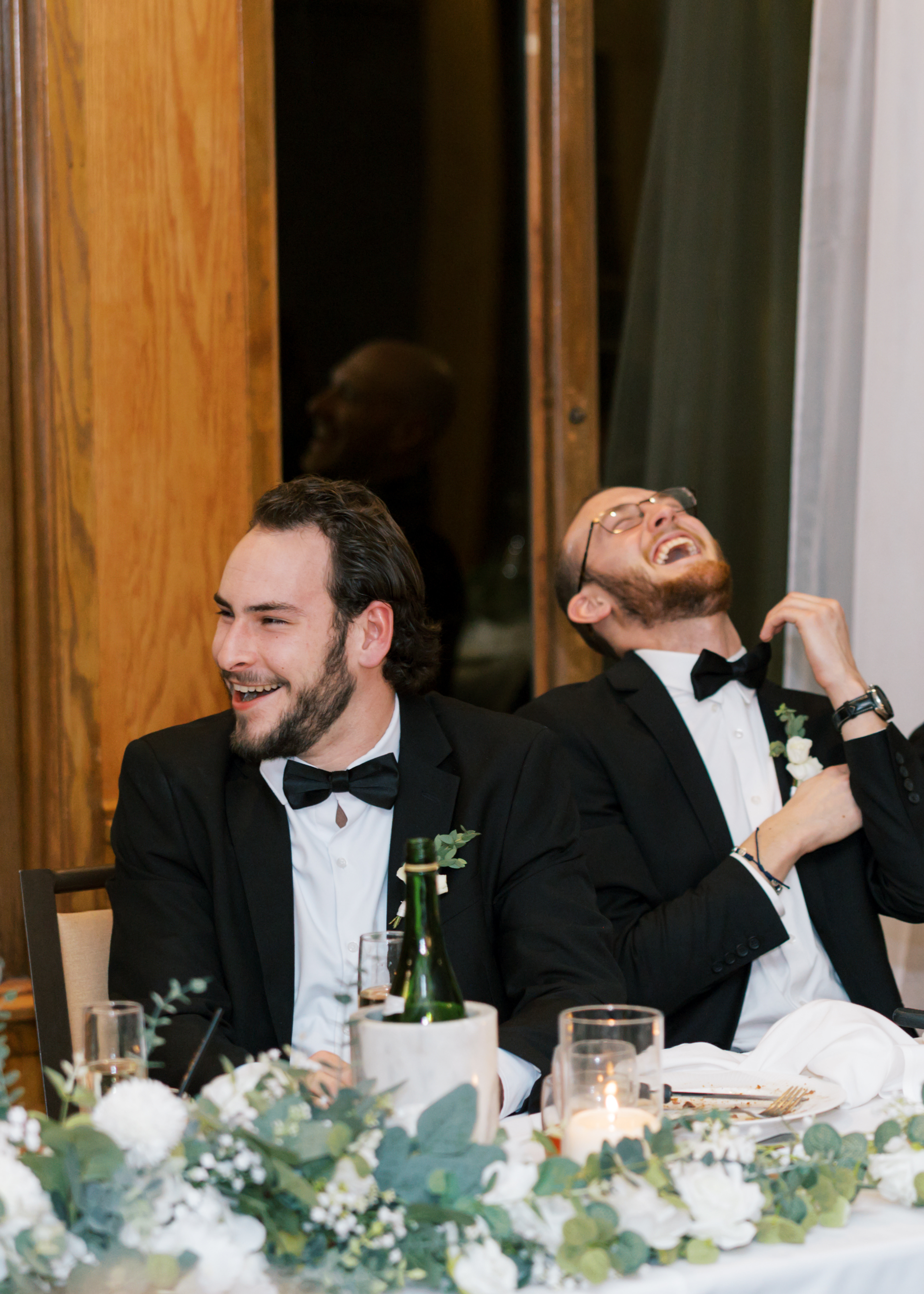
“He was one of the groomsmen in my wedding because he was one of the best men in my life,” Shonka said. “He really showed me what masculinity could look like at our age.”
“He was so intentional in everything he did,” Shonka recalled. “He knew everyone’s name and would always greet them accordingly. He would always be down to talk whenever. He lived a life of prayer, often going to Mass and adoration.”
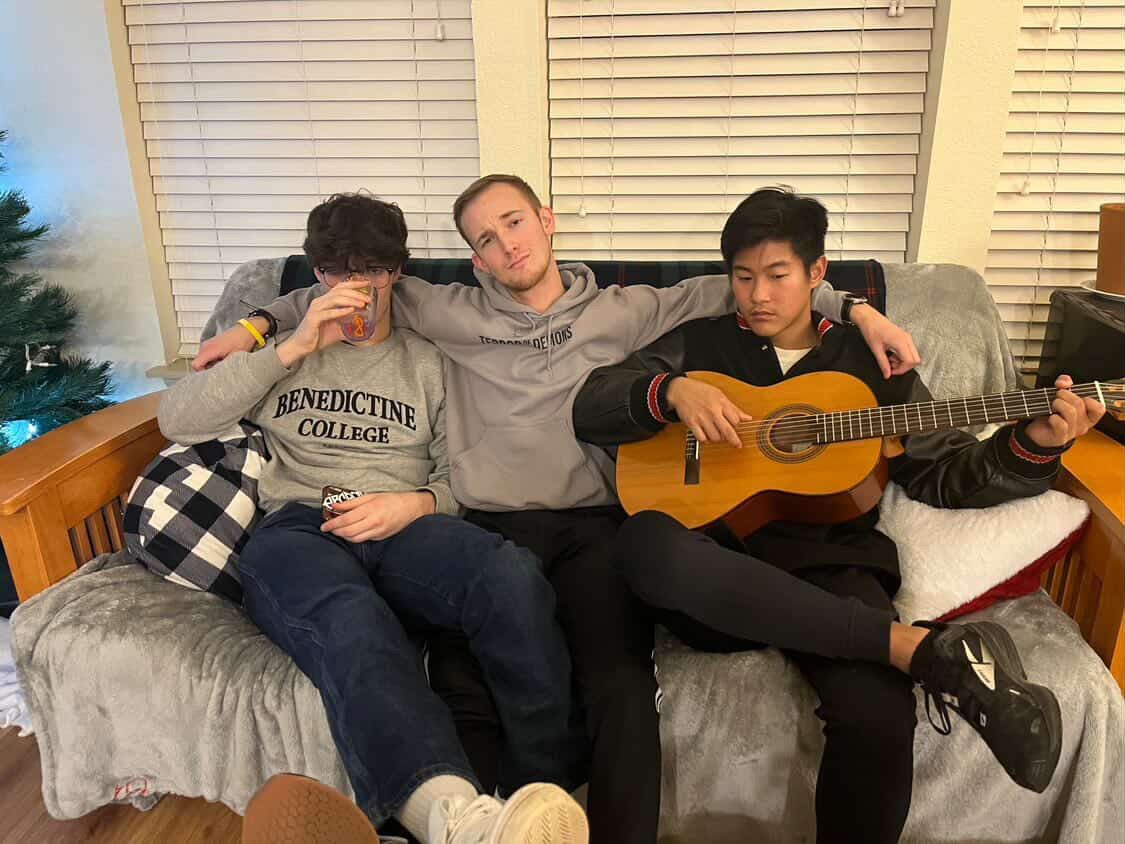
After Lynch’s death, Shonka’s wife observed that Lynch had walked down the aisle as a groomsman at their wedding and now her husband had carried Lynch “down the aisle as a pallbearer to his final resting place.”
The college president noted the impact Lynch had on both students and himself.
“I think the students saw him as a representative of the best of what they are and a model to aspire to,” Minnis said. “I see him that way, too.”
If you value the news and views Catholic World Report provides, please consider donating to support our efforts. Your contribution will help us continue to make CWR available to all readers worldwide for free, without a subscription. Thank you for your generosity!
Click here for more information on donating to CWR. Click here to sign up for our newsletter.

Nice
Long live the memory of the inspiring life of Alex Lynch. RIP.
May his soul, and the souls of all the faithful departed, through the mercy of God, rest in peace. Amen!