No Picture
News Briefs

Former finance director sues Jackson diocese

October 22, 2019 CNA Daily News 0

Jackson, Miss., Oct 22, 2019 / 06:01 pm (CNA).- The Diocese of Jackson and its ordinary, Bishop Joseph Kopacz, are being sued by the diocese’s former director of finance, who says he was unjustly fired last year.

Arie “Aad” Mattheus … […]

No Picture
News Briefs

Australian government limits scope of report on anti-discrimination laws

October 22, 2019 CNA Daily News 0

Canberra, Australia, Oct 22, 2019 / 03:18 pm (CNA).- A hearing of the Australian Senate was told Tuesday that the government had narrowed the purview of an independent inquiry into the effect of anti-discrimination laws on religious schools and organizations.

The government had asked the Australian Law Reform Commission in April to report on how to balance competing claims of religious freedom rights and LGBT rights. In recent years, Australia has seen debate over religious freedom with respect to the seal of the confessional, hiring decisions, and same-sex marriage.

Sarah Derrington, president of the ALRC, told a Senate hearing Oct. 22 that the government had in August limited the commission’s field of inquiry and delayed its report.

“The terms of reference as originally drafted were quite narrow in any event but they are narrower again,” she said, according to the AAP.

The ALRC was to have published a discussion paper on its findings in November, but the government directed that it be pushed back at least eight months.

It was also told to confine its recommendation to laws other than the religious discrimination bill, and ensure that legislation on sex discrimination and employment are consistent with the bill.

Derrington said that as a result, she has paused the commission’s inquiry.

The religious discrimination bill is intended make it unlawful to discriminate against people on the ground of their religious belief or activity; establish a religious freedom commissioner at the Australian Human Rights Commission; and amend existing laws regarding religious freedom, including marriage and charities law, and objects clauses in anti-discrimination law.

The coalition government, which is led by the Liberal Party and includes the National Party, wants to make religious belief and activity a protected class, like race or sex. It also hopes to ensure that groups rejecting same-sex marriage are not stripped of their charitable status.

The bill has faced criticism from both religious groups and LGBT advocates.

Freedom for Faith, a Christian legal think tank, said in September that the bill would have unintended consequences, and urged that it be re-drafted before it is passed.

Among its objections to the bill was that “it does not make much sense to create new exemptions in legislation at the same time as two organisations that report to the Attorney are busily working to reduce or eliminate them,” in reference to the work of the ALRC and the Australian Human Rights Commission.

The Australian bishops’ conference has said that while the religious discrimination bill shows promise, it does not do enough to safeguard religious freedom.

[…]

No Picture
News Briefs

Who writes the Amazon synod’s final report?

October 22, 2019 CNA Daily News 1

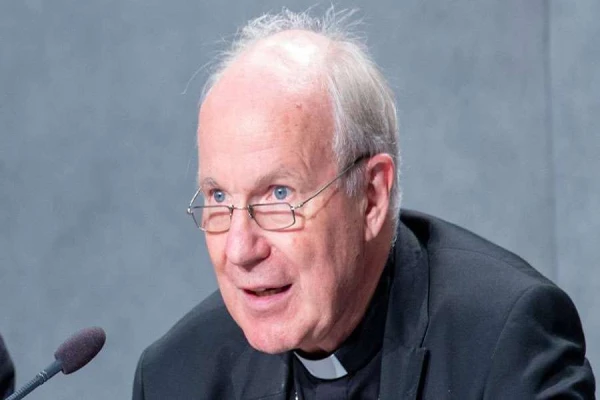
Vatican City, Oct 22, 2019 / 02:10 pm (CNA).- Cardinal Christoph Schönborn explained Monday that the final document at the Vatican’s Synod of Bishops on the Amazon will be written principally by a team chaired by the synod’s Relator General, Brazilian Cardinal Claudio Hummes.

“The word ‘drafting committee’ is not very clear, in fact, the drafts are from the principal relator and his team. The role of the drafting committee is to give immediate approval of the work the relators do. So we, the drafting committee, don’t write the text,” the Austrian archbishop said at a press conference held October 21 in the Vatican press room.

Matteo Bruni, director of the Vatican’s press office, told ACI Prensa, CNA’s Spanish language news partner, that Hummes and the synod’s “special secretaries” are principally responsible for the text of the final report.

“The relator and the special secretaries prepare the draft of the document based on the reports from the ‘small groups’ and the contributions of the participants during the general sessions.  In doing this they are assisted by the ‘experts,’ included on the list of the Synod participants which was published before the synod began,”

The roles played by various contributors in the drafting process is not entirely clear.

Bishop Erwim Kräutler, emeritus heard of Brazil’s Xingu diocese, told ACI Prensa this week that Hummes, who chairs the drafting team, has not yet read the existing draft of the final document, suggesting it has been principally compiled by “special secretaries” participating in the synod, and by experts and other collaborators.

On Oct. 21, theologian Fr. José Oscar Beozzo told ACI Digital, CNA’s Portguse language news partner, that he was busy “helping with drafting the text” and needed to cancel a scheduled interview.

Beozzo is a well-known proponent of liberation theology in Latin America, a theological approach that has been the subject of several corrections and criticisms by the Vatican’s doctrinal offices.

On Oct. 22, Beozzo told ACI Digital that “the drafting of the document is the  responsibility of the bishops, experts, consultants that are in the synod hall. I’m on the outside.”

He added that some Brazilian bishops had asked him to pray the Office of the Martyrs in the Church of Santa Maria in Traspontina during his free time.

 The Vatican’s Synod of Bishops on the Amazon is an Oct. 6-27 meeting on the Church’s pastoral and social ministry in the Amazon region, which spans nine countries in South America.

The synod is considering the nature of evangelization in the region, as well as the proposals of married priests in the region and commission women to serve as deacons, and is expected to issue a final report this week, which will constitute a set of recommendations for the consideration of Pope Francis.

A version of this story was first published by ACI Prensa, CNA’s Spanish-language news partner. It has been translated and adapted by CNA.


[…]

No Picture
News Briefs

Venerable Stefan Wyszynski to be beatified in June

October 22, 2019 CNA Daily News 0

Warsaw, Poland, Oct 22, 2019 / 11:22 am (CNA).- Venerable Stefan Wyszyński, Archbishop of Gniezno and Warsaw from 1948 to 1981, will be beatified in Warsaw June 7, 2020, the city’s archbishop announced Monday.

“We have to put the main emphasis on his spirituality, because we know a lot more about Cardinal Wyszyński as a statesman and someone who defended man, the Church, and his homeland,” Cardinal Kazimierz Nycz of Warsaw said Oct. 21.

The beatification will take place in Warsaw’s Piłsudski Square.

“Cardinal Wyszyński was the rock around which Polish Catholicism rallied during the worst periods of communist oppression,” George Weigel told CNA Oct. 22.

Wyszyński “also designed the ‘Great Novena,’ the re-catechesis of the entire country between 1957 and 1966, which laid the religious and moral foundations on which the Solidarity movement was later built,” he said.

Wyszyński was instrumental in the appointment of Karol Wojtyla as Archbishop of Krakow in 1964.

“Wyszyński and Wojtyla had different visions of the Church – Wojtyla was much more the man of Vatican II – but as Archbishop of Kracow Wojtyla was completely loyal to Wyszyński, never letting the communists play divide-and-conquer,” Weigel said.

“And there is no doubt that Wojtyla shared Wyszyński’s view that the Vatican ‘Ostpolitik’ strategy of accommodating communist regimes was serious foolishness,” he added.

Wyszyński is credited with helping to conserve Christianity in Poland during communist rule.

He was placed under house arrest by communist authorities for three years for refusing to punish priests active in the Polish resistance against the government.

“The fear of an apostle is the first ally of his enemies,” Wyszyński wrote in his notes while under arrest. “The lack of courage is the beginning of defeat for a bishop,” he wrote.

The Vatican announced approval of a miracle attributed to Wyszynski’s intercession Oct. 3.

The miracle involved the healing of a 19 year-old woman from thyroid cancer in 1989. After the young woman received the incurable diagnosis, a group of Polish nuns began praying for her healing through the intercession of Cardinal Wyszyński, who had died of abdominal cancer in 1981.

Born in the village of Zuzela in what was then the Russian Empire in 1901, Wyszyński was ordained a priest of the Diocese of Włocławek at age 24, celebrating his first Mass at the Jasna Gora Shrine in Czestochowa. He served as a military chaplain during the Warsaw uprising against the Germans in 1944, and was made Bishop of Lublin in 1946.

In 1948 he was appointed Archbishop of  Gniezno and Warsaw, and he was elevated to cardinal in 1953.

Wyszynski died 15 days after Pope John Paul II was shot in an assassination attempt in 1981. Unable to attend the funeral, John Paul II wrote in a letter to the people of Poland, “Meditate particularly on the figure of the unforgettable primate, Cardinal Stefan Wyszynski of venerated memory, his person, his teaching, his role in such a difficult period of our history.”

[…]

No Picture
News Briefs

Vatican’s asset manager says Holy See is not going broke

October 22, 2019 CNA Daily News 0

Vatican City, Oct 22, 2019 / 10:00 am (CNA).- The head of the Vatican’s sovereign asset management body has insisted that the Holy See is not headed for financial “collapse.”

Bishop Nunzio Galantino made the comments in response to a book published on Monday by Italian journalist Gianluigi Nuzzi, which claims that the Holy See is facing a serious cash shortage, and may soon be unable to meet its ordinary operating expenses.

“There is no threat of collapse or default here. There is only the need for a spending review. And that is what we’re doing. I can prove it to you with numbers,” Galantino said on Oct. 22.

Galantino is head of the Administration for the Patrimony of the Apostolic See (APSA), which oversees the Vatican’s real estate holdings and other sovereign assets.

“The current situation of the administration of the Holy See is no different from what happens in any family or even in the nations of the different continents. At a certain point one looks at what one spends, considers the revenue that comes in, and tries to adjust expenses accordingly.”

Nuzzi’s book, “Universal Judgment,” claims to be based on some 3,000 pages of confidential documents leaked to him. He reports that annual donations to the Holy See have fallen sharply, by as much as 40% over the last three years – from 100 million euros to 60 million. At the same time, he also says that the Holy See’s property portfolio failed to register a profit last year, the first time ever. The cumulative effect, Nuzzi claims, is an urgent liquidity crisis in the Vatican’s operating finances.

Speaking in response to the book’s publication, Galatino said that no such crisis exists.

“In fact,” he said on Tuesday while claiming that “the ordinary management of the APSA in 2018 closed with a profit of over 22 million euros.”

Galatino said that any reported loss was due to “an extraordinary intervention aimed at saving the operation of a Catholic hospital and the jobs of its employees.”

Nuzzi also claimed that cardinals and high-ranking Vatican officials were operating secret or numbered personal accounts through APSA. A review of the book in the Italian newspaper La Republica quotes Vatican financial investigators as concluding that “the false bottom in Vatican finances is practically non-eliminable.”

Galantino flatly refuted the allegations, saying Tuesday that “I confirm and repeat: APSA has no secret or encrypted accounts. Anyone is welcome to prove the contrary. At APSA, there are also no accounts of physical or juridical persons, except for the dicasteries of the Holy See, related institutions, and the Governorate.”

In an apparent response to recent reports of various Vatican financial deals, including real estate speculation through a Luxembourg-based investment company, the bishop said that management of Vatican assets for a profit is essential to the Holy See’s operations.

“A state that has no taxes or public debt has only two ways to live. Either it invests its own resources to produce an income, or it relies on the contributions of the faithful, even those made to Peter’s Pence,” he said. “Many want the Church to have nothing and then, in any case, to provide fair pay for its workers, as well as to respond to the many needs, first of all those of the poor. It’s obvious that it can’t be like that.”

Galatino conceded that there was a need for a “spending review” but said that this was already underway.

“There is no need for alarmism about the hypothetical default. Rather, we are talking about an entity that is realizing it needs to contain expenses. This happens in any good family or in any serious state”.

The reference by Galatino to an “extraordinary intervention” by APSA appears to be a reference to reports that APSA had written off 30 million of a 50 million euro loan to the Istituto Dermopatico dell’Immacolata, a scandal and corruption hit hospital formerly owned by the Congregation of the Sons of the Immaculate Conception and bought out of government bankruptcy administration by a foundation co-owned by the order and the Vatican Secretariat of State in .

The purchase of the hospital by the non-profit Fondazione Luigi Maria Monti was intended to rescue the hospital from closure and stabilize its operations after years of financial scandals leading to between 400-800 million euros of debt, forcing it into state-administered insolvency.

The hospital was at the center of a public disagreement between the Vatican and the American-based Papal Foundation, which was asked in 2016 to make a grant of $25 million to the hospital to ease liquidity problems.

After the foundation approved the grant in December 2017, an initial $8 million was sent to the Vatican. Subsequently the grant came under intense scrutiny and then opposition from lay trustees and benefactors, who claimed that the size and purpose of the grant was outside of the foundations scope of operations, and that the board had been misled about the financial state of the hospital.

The grant request was later withdrawn by the Holy See at the request of Cardinal Wuerl, who had led the presentation of the plan to the board.

[…]