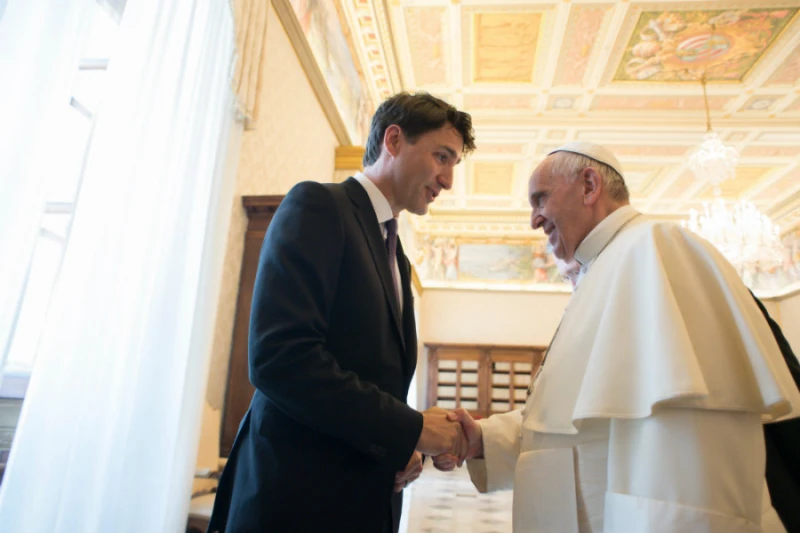
 Pope Francis meets with Canadian Prime Minister Justin Trudeau at the Vatican on May 29, 2017. / © L’Osservatore Romano.
Rome Newsroom, Jul 23, 2022 / 08:15 am (CNA).
The 37th Apostolic Journey of Pope Francis, which will take him to Canada from July 24-30, is a “penitential pilgrimage”: The Holy Father will “meet and embrace the indigenous peoples”, and he will apologize for the role of the Church in a system guilty of deadly neglect, suffering and abuse.
In doing so, the pope may also set in motion another process of healing and reconciliation: a normalization of the Holy See’s relationship with the government of Canada.
A key moment, preparing the portentous papal pilgrimage to Canada, took place in the Vatican on May 29, 2017.
On that day, Canada’s Prime Minister Justin Trudeau extended an invitation to Pope Francis to visit the country, during which time he could bring the Church’s apology for harm done to indigenous people in the mid-19th through 20th centuries.
The Truth and Reconciliation Commission, which ran from 2008-2015, concluded that thousands of children died whilst attending “Indian Residential Schools”, and called for action on 94 points.
Of these, four were directed at the Church. The were published in the section “Church apologies and reconciliation”.
In it, the commission called on Pope Francis “to issue an apology to Survivors, their families, and communities for the Roman Catholic Church’s role in the spiritual, cultural, emotional, physical, and sexual abuse of First Nations, Inuit, and Métis children in Catholic-run residential schools.”
The commission worked out its suggestions for healing and reconciliation by drawing on voluminous reports about the legacy of the residential schools system. Assessing these, including the question of responsibilities in what was perpetrated in those schools, turned out to be far more complex than many expected.
A government program run by Christian churches
The “Indian residential schools” system was a network of boarding schools created by the Canadian federal government in the 19th century. It was mainly supported by government funds and supervised by government officials
The system existed from 1833 to 1996, when the last of these schools was closed. The schools were run by several Christian denominations, including some Catholic dioceses and religious communities.
These schools did not simply provide education to children of First Nations, Inuit, and Métis peoples. In reality, they served to provide a program of assimilation, carried out against a population often mistakenly perceived as an “obstacle” to the nation’s “progress”.
The Canadian Bishops’ Conference explained on its website that this system had a burdensome human cost: “While many alumni and school staff have spoken positively about their experiences in some schools, many others today say of much more painful memories and legacies, such as the prohibition of Aboriginal languages and cultural practices, as well as cases of emotional abuse, physical and even sexual. “
The involvement of the Catholic Church
About 16 out of 70 Canadian dioceses have been associated with residential schools, in addition to about forty of a hundred or so religious communities in Canada.
The Canadian Bishops’ Conference acknowledged in a November 1993 brief for the Royal Commission on Aboriginal People that “the various types of abuse experienced in some residential schools have led us to a profound examination of conscience in the Church.”
Since the 1990s, the Catholic Bishops’ Conference of Canada and orders such as the Jesuits offered apology statements such as this one on the bishops’ official website.
The response also included the establishment of a $30 million national pledge made by Canadian Bishops in September 2021.
Similarly, the Holy See has increasingly come to terms with this chapter of the Church’s history in Canada.
Pope John Paul II visited in 1984 and 1987. On both occasions, he met indigenous people, exalting their culture and the renewal brought to them by Christianity.
Benedict XVI met with Phil Fontaine, Great Chief of the Assembly of the First Nations of Canada, at the end of the general audience on Apr. 29, 2009.
He “recalled that since the earliest days of her presence in Canada, the Church, particularly through her missionary personnel, has closely accompanied the indigenous peoples.” Referring to residential schools, Benedict XVI expressed “his sorrow at the anguish caused by the deplorable conduct of some members of the Church, and he offered his sympathy and prayerful solidarity.”
An early whistleblower and a recent warning
At the turn of the 20th century, Peter Henderson Bryce, a public health official and physician, was the first to report about unsanitary conditions in residential schools in Canada. He gathered all the information he could and then, in 1907, published his findings — according to which about a quarter of the indigenous children in residential schools had died of tuberculosis.
Bryce also pointed to the wider question of discrimination, noting that health funds for average citizens of Ottawa were about three times higher than those for First Nations peoples.
Government policies, in other words, had caused the deaths of many indigenous children.
Following attempts by government officials to silence him, Bryce published, at his expense, a small booklet on the issue, titled The Story of a National Crime.
Writing about “myth versus evidence”, Mark DeWolf noted in a 2018 essay — published by public policy think tank FCPP — that “cultural repression, abuse of all kinds, forceful incarceration and even avoidable deaths did happen, and a system that should have done much more to avoid these things should be justly condemned.”
He concluded that the residential schools system was bad and “a deeply flawed attempt to accomplish two main objectives: to give native children education and training that would help them survive economically and socially in a white man’s world, and to eradicate those aspects of native culture that would hold them back from achieving those goals.”
At the same time, pointing to low attendance numbers and other aspects of the system, DeWolf warned of making the residential schools “a scapegoat for 200 years of land appropriation, cultural invasion, deprivation, marginalization, and demoralization.”
Otherwise, little would be done to stop and reverse bad policies and practices today.
This point is pertinent, irrespective of whether one agrees with DeWolf otherwise: A 2019 Canadian Human Rights Court ruling established that between 2006 and 2017, the government had removed between 40,000 to 80,000 indigenous children from their families and deprived them of social services. In addition, the ruling sentenced Canada to pay $40,000 to each victim for discriminatory conduct. The government appealed the ruling, without success.
To further add to the complexity, critics have raised questions about irresponsible media reporting when the discovery of what was first described as unmarked graves on the grounds of the former Kamloops Indian Residential made international news.
On June 24, 2021, it was first announced that 751 unmarked graves had been discovered at the site of a former school. Leaders emphasized that the discovery was of unmarked graves, and not a “mass grave site.”
Nonetheless, following the news, some Catholic churches in Canada were vandalized or found ablaze.
A gesture with consequences – and an open question
Pope Francis decided to apologize for the Catholic Church’s role and assume responsibility, neither commenting on the issue of sometimes questionable media coverage, nor pursuing the question of just how responsible the Church was within the wider historical context.
In short, this visit is a great act of goodwill by the pope, and one that intends to heal and reconcile.
This may also apply to relations between Canada and the Holy See, as these have been strained for a while. The issue of the “Indian residential schools” system was likely one of the reasons.
Currently, Canada has not formally appointed an ambassador to the Holy See. There is a chargée d’Affaires, Paul Gibbard. He took the position in the year 2021, after three years of vacancy. The last Canadian ambassador to the Holy See was Dennis Savoie, who was in office from 2014 to 2018.
This Papal trip might help to somewhat normalize relations, and the position of Gibbard might be upgraded to that of an ambassador. However, after the visit, the full reality and extent of the residential schools system still needs to be fully brought to light — and not just with a view to the role of the Church.
[…]


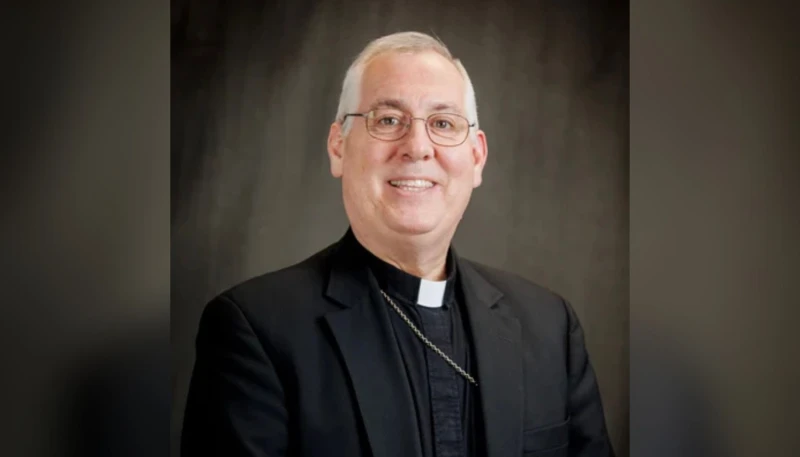



“O’Connell said he saw the discussion of denial of Communion to certain public figures as focusing too heavily on abortion, to the detriment of other issues.”
Yet another apostate bishop for the US Church. What a shame. Albany deserves better. Before Scharfenburger, there was Bishop Hubbard who got married in a civil ceremony. Perhaps someday the Church will return to the Catholic faith.
Well suited to follow the Francis I, Cdl Cupich, Leo XIV lineage. Where will accommodation take us if not the devaluation of the very reason we’re called to priesthood. To witness to what Christ and the Apostles taught.
The disappointment is confirmed with every passing day.
Bishop O’Connell is a highly intelligent man who works well with people. His canon law background and personal humility will be important in the very difficult work awaiting him in Albany. I am a bit surprised that he accepted the nomination. He’s a very self-effacing fellow. To brand him an apostate is ludicrous and beyond uncharitable.
Very simply: He insufficiently appreciates the gravity of abortion and the sanctity of the Eucharist. Who cares that he has a degree in Canon Law?
At a time when dioceses everywhere are being distilled into fewer parishes (Boston losing one third of its 126 parishes), what better time to teach the Eucharistic nature of the Catholic Church? As contrasted with the Lutheran redefinition as a confederation of “communities” with local leaders and rooted only in gospel values (while the Gospels witness, instead, directly to Jesus Christ as the Incarnation).
But, Pope Benedict clarified two different and concurrent abuses of the Eucharist:
FIRST: “In fact, the terminological shift from ‘Church’ to ‘community’ reveals more convincingly, perhaps, than is revealed anywhere else the inner process of the Reformation’s transposition of the structure of faith. For Luther, Church means community, whereas the Church as ‘successio,’ as the unity of binding tradition in a sacramental and personal form, loses for him here theological content. At best, she becomes an instrument, and organization […]; the organized and sacrally clothed obstacle to the ‘gospel’ (by which he means, not the four Gospels or the Bible as such, but the message of justification as the central concept of Holy Scripture).”
[In contrast with some literature from the Orthodox Churches, Benedict retained both a Eucharistic and a juridical Church. Yes, in each celebration of the Eucharist, the local assembly] “has the whole Lord; in the sacrament, it thus has also the whole Church and IS the whole Church. The Church is wholly present in the eucharistic assembly, that is, in every local assembly; to this, the ‘universal Church’ can add nothing more, for there is nothing ‘more’ than the eucharistic assembly.”
But SECOND: “To celebrate the Eucharist means to enter into union with the universal Church [!]—that is, with the one Lord and his one Body […] The outward sign that one cannot manipulate the Eucharist at will and that it belongs to the universal Church is the ‘successio apostolica’ [Apostolic Succession]: it means that no group can constitute itself a church but ‘becomes’ a church only by being received as such by the universal Church [….] Catholicity…is a central inner dimension of the very mystery of the Eucharist” (“Catholicity as the Formal Principle of Christianity” in “Principles of Catholic Theology”, Ignatius, 1987).
Reorganized parishes must not become community lifeboats. Might it be that rather than a Francis II, Pope Leo XIV is navigating doubly troubled waters? Yes, catastrophic moral issues (pro-abortion politicians presenting themselves for Communion), but also the risk of disrupted local parishes (not communities) drifting further from the Apostolic Succession—without which we have no universal Eucharist. Local pastors are, firstly, extensions of their bishops.
SUMMARY: About the Church within the Eucharist, and the Eucharist within the Church—as a canon lawyer, is Leo intent on maintaining unity instead of the “mess” inherited from Francis? The Albany appointment is also a canon lawyer.
Wishing Bishop the Reverend Mark O’Connell and his flock divine blessings.