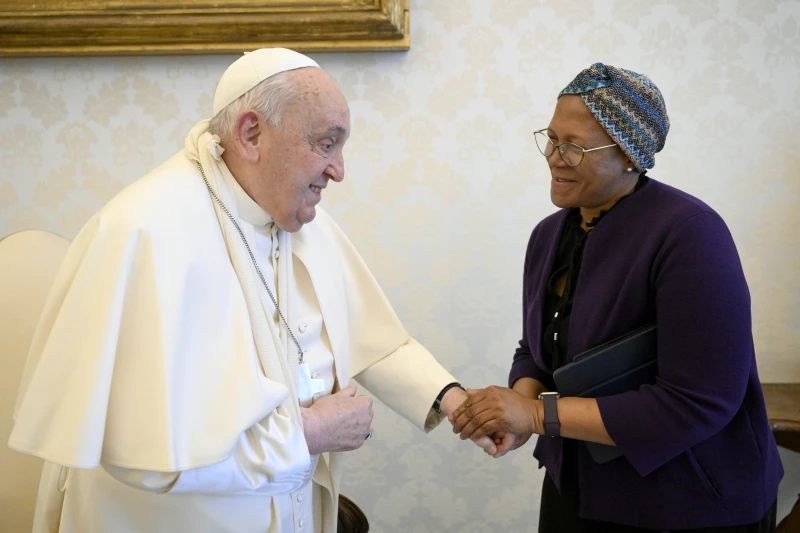
Pope Francis’ arm, tied up in a white sling, was visible in photos taken on the morning of Jan. 16, 2025, in the apostolic palace during his scheduled audiences. / Credit: Vatican Media
Vatican City, Jan 16, 2025 / 08:30 am (CNA).
The Vatican said Thursday that Pope Francis had suffered a “contusion” on his right forearm after falling at his residence that same morning.
While the arm was not fractured in the accident, it was braced “as a precautionary measure,” the brief communication said.
Pope Francis’ arm, tied up in a white sling, was visible in photos taken on the morning of Jan. 16 in the apostolic palace during his scheduled audiences.
The 88-year-old pope was also mildly injured in a fall in December. According to Vatican spokesman Matteo Bruni, on the morning of Dec. 6, 2024, Francis hit his chin on his nightstand, causing a large hematoma on the lower right side of his cheek.
Francis was also sick with a cold right before Christmas.
The illness and both falls did not stop the pontiff from keeping his as usual busy schedule.
On the morning of Jan. 16, he met with the Bektashi Islamic leader of Tirana, Albania, His Grace Haji Dede Edmond Brahimaj; Nosipho Nausca-Jean Jezile, chairwoman of the World Food Security Committee; Alvaro Lario, president of the International Fund for Agricultural Development; Archbishop-elect Alberto Torriani of Crotone-Santa Severina; and a group of Argentine priests studying in Rome.
Pope Francis has increasingly shown his age in recent years, as he now almost always uses a wheelchair to move around and has occasional problems with breathlessness. At Christmas Eve Mass in St. Peter’s Basilica on Dec. 24, 2024, he could be seen wearing what appeared to be hearing devices.
In 2017, Pope Francis also suffered a fall while visiting the South American country of Colombia. He slipped and hit his cheek and eyebrow on the popemobile while reaching to greet a child.
If you value the news and views Catholic World Report provides, please consider donating to support our efforts. Your contribution will help us continue to make CWR available to all readers worldwide for free, without a subscription. Thank you for your generosity!
Click here for more information on donating to CWR. Click here to sign up for our newsletter.
Pope Francis presides over the funeral Mass for Pope Emeritus Benedict XVI in St. Peter’s Square on Jan. 5, 2023. / Vatican Media
Rome Newsroom, Jan 15, 2023 / 11:00 am (CNA).
It was widely anticipated that a major reform of the Diocese of Rome was coming, as Pope Francis has been thinking about it for some time.
But no one expected it to come when it did: On Jan. 6, one day after the funeral of Francis’ predecessor as Bishop of Rome, Pope Emeritus Benedict XVI.
With the reform, Pope Francis firmly took over the reins of the vicariate, or hierarchy, of the diocese. Everything is centralized, and everything must pass, at least formally, under the control of the pontiff.
Cardinal Angelo de Donatis, the pope’s vicar for the diocese, sees his role deeply diminished. The diocese’s auxiliary bishops strengthen their direct link with the pope. In the end, the pope has made it clear that he is the one who also formally presides over the Episcopal Council, a new body established as an “expression of synodality.”
Cardinal Angelo De Donatis. . Daniel Ibanez/CNA
The backstory
Before going into some details of the new decree, however, some background is necessary.
The last reform of the structure of the Vicariate of Rome was outlined by John Paul II in 1908, with the apostolic constitution Ecclesia In Urbe. For the new reform, Pope Francis copied and pasted several passages from that document. In some cases, these have been minimally rewritten to emphasize some details instead of others. In other cases, greater changes were made but these do little to alter the basic substance of things.
The reform presents two general characteristics of Pope Francis’ way of legislating: using councils or commissions and requiring those bodies to report directly to him.
It is clear that the pope is the bishop of Rome and that the pope’s vicar for the diocese is his auxiliary. Pope Francis, however, in this case, goes further, including with the constitution a decree that directly defines the areas of competence of the auxiliary bishops.
Pope Francis shows, in this way, a willingness to exercise greater personal control over everything that happens in the vicariate. At the same time, this choice also testifies to a “break” in the relationship of trust with his vicar, Cardinal de Donatsi.
Although Francis called de Donatis to preach retreats to the Roman Curia in 2014, he was never the pope’s candidate to succeed Cardinal Vallini as vicar. That was Cardinal Paolo Lojudice.
Pope Francis, however, wanted to first consult the parish priests of Rome, 80% of whom preferred de Donatis. It was impossible, therefore, for the pope not to listen to them. He appointed De Donatis vicar (and cardinal) and made Lojudice archbishop of the prestigious Diocese of Siena, and a cardinal, as well.
Last May, at the general assembly of the Italian Episcopal Conference, it seemed clear that Pope Francis preferred the appointment of Cardinal Lojudice as the new president of the CEI.
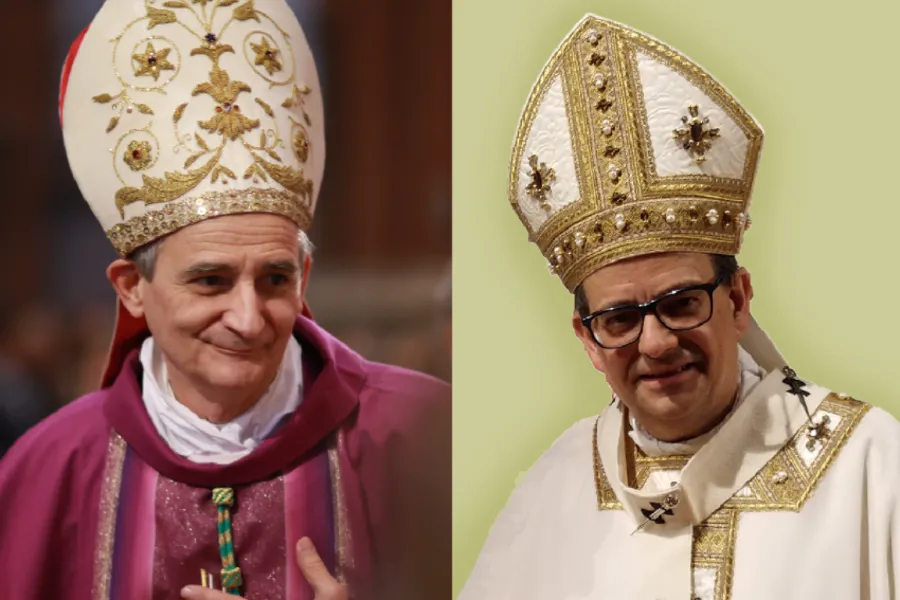
Cardinal Matteo Zuppi and Cardinal Augusto Paolo Lojudice. Francesco Pierantoni via Wikimedia (CC BY 2.0)/Pufui PcPifpef via Wikimedia (CC BY-SA 4.0).
The plan was to appoint Lojudice vicar of the Diocese of Rome to succeed Cardinal de Donatis, who had finished his five-year term, which would then have made Lojudice the primary contact person for the pope both in Rome and among the Italian bishops. De Donatis would have been appointed the new Penitentiary in place of Cardinal Mauro Piacenza, who has now turned 78.
The Italian bishops, however, preferred Cardinal Matteo Zuppi, archbishop of Bologna, who was not unwelcome to Pope Francis.
Lojudice didn’t become vicar for the Rome Diocese, either, as everyone assumed would happen. Meanwhile, the relationship of trust between de Donatis and the pope seemed to have been interrupted in 2020, when, at the beginning of the lockdown for COVID-19, de Donatis decided to close the churches of Rome. When Pope Francis later highlighted the inadvisability of closing churches, de Donatis withdrew the decree but announced that every decision had been made in agreement with the pope. There also have been other moments of friction in recent years.
The pope, however, now seems intent on changing the vicar this year when de Donatis’ mandate expires. An indication of this is the fact that in the decree in which the Pope defines the area and pastoral competencies of the auxiliary bishops, de Donatis is not mentioned as vicar. One might take his presence for granted, of course, but the general interpretation is that the change will be made.
What’s new
What are the novelties introduced by Pope Francis? First, the figure of the prelate general secretary disappears, while the vicegerente (or the deputy of the vicar) manages the offices of the General Secretariat. The prelate secretary also had the function of the moderator of the Curia. In this case, everything is entrusted to the vicegerente, who thus sees his functions and weight increase.
The pope chose the vicegerente from among the auxiliary bishops, and in this case, Baldassare Reina was selected. Bishop Reina does not come from the Diocese of Rome but was called from Agrigento. The pope’s logic is to break possible power chains by bringing in fresh and foreign forces.
The choice of a new parish priest is entrusted to a lengthy procedure which must then, in any case, be submitted to the pope, who acts as the true and proper bishop of Rome without relying on the vicar, who is left with the appointment of assistant parish priests.
Article 20 of the Constitution requests a report for each candidate for the priesthood or diaconate to be submitted before ordination. Also, in this case, the candidates must be presented by the cardinal vicar to the pope, and only after obtaining the Episcopal Council’s consent. Therefore, the vicar seems to be practically a commissariat: He does not choose the candidates but submits them to the pope and can submit them only after the Episcopal Council has endorsed the choice.
The council is defined as the “first organ of Synodality” and must meet “at least three times a month,” presided over by the pope. Only in the absence of the pope can the cardinal vicar preside over the council, which is made up of the vicegerent and the auxiliary bishops. However, the pope wants to receive “the agenda for each meeting as soon as possible.”
Finally, there is also the establishment of an Independent Supervisory Commission. This will have a regulation that must be “approved by the Pope” and six members appointed by the pope who can remain in office for a maximum of two five-year terms.
The service for the protection of minors and vulnerable people is also added, which “reports to the Episcopal Council, through the auxiliary bishop appointed by me,” the pope has decreed.
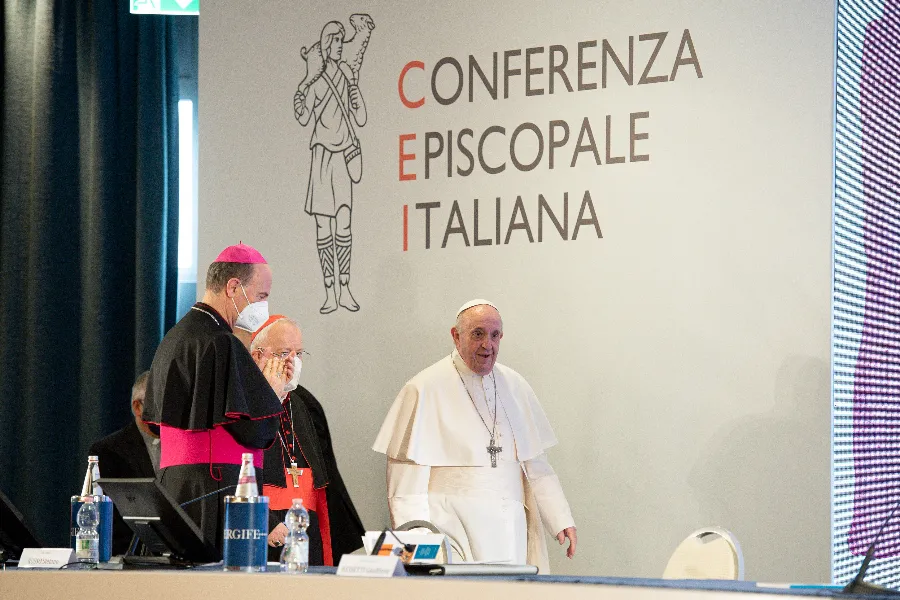
Pope Francis attends the Italian bishops’ plenary assembly in Rome on May 24, 2021. Vatican Media.
The effects of the reform
The constitution also redistributes the areas and offices of the Vicariate’s Curia, and the accompanying decree gives each auxiliary bishop a specific task.
Beyond the reorganization, it should be noted how the pope enters into action as the actual bishop of Rome. Everything must pass through the decisions of the pope, while before, the cardinal vicar enjoyed trust and discretion. For the first time, however, the pope’s vicar is defined as an “auxiliary.” He is, therefore, an auxiliary among the auxiliaries, with a considerable reduction in his weight.
With this centralization, Pope Francis probably wants to overcome the risk of having “abuses” within the Vicariate.
It is worth remembering that in June 2021, Pope Francis ordered an inspection of the Vicariate itself. It was an audit entrusted to the Auditor General of the Holy See, Alessandro Cassinis Righini. It was the first time the Vicariate sifted through the accounting books, registers, and cooperative societies.
However, the Pope, as a matter of practice, has sent an inspection to all the dicasteries of the Curia every time there is a reform or a new mandate. The review, therefore, already predicted the change of pace in the Vicariate, one that has led Pope Francis to be increasingly alone in command.
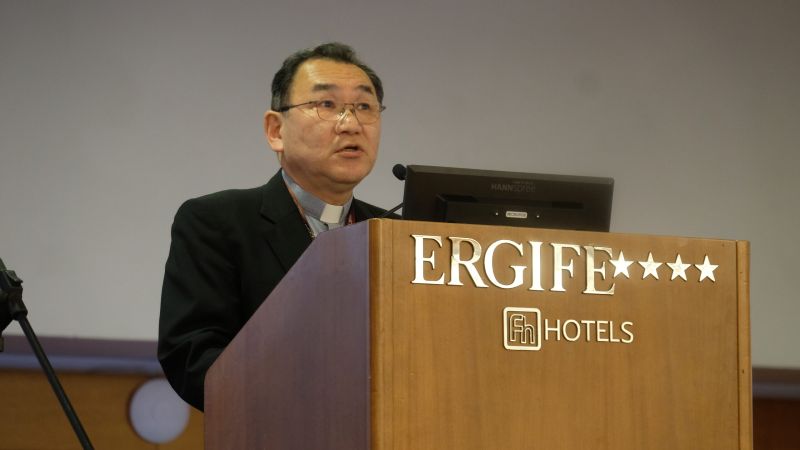
Archbishop Tarcisius Isao Kikuchi of Tokyo was elected president of Caritas Internationalis during the Vatican-based confederation of national charities’ General Assembly on May 11-16, 2023. / Courtesy of Caritas Internationalis
Rome Newsroom, May 15, 2023 / 10:45 am (CNA).
Archbishop Tarcisius Isao Kikuchi has been elected as the new president of Caritas Internationalis, the second-largest humanitarian aid organization in the world after the Red Cross.
The Catholic archbishop of Tokyo was Japan’s first missionary priest in Africa, where he first volunteered at a Caritas refugee camp, the start of 30 years of service with the Catholic charitable organization.
More than 400 delegates taking part in Caritas Internationalis’ 22nd General Assembly in Rome May 11-16 elected Kikuchi to serve a four-year term. The body must still elect a secretary general.
“Caritas must be on the front lines to welcome, accompany, serve and defend the poor and vulnerable,” Kikuchi, 64, said in his speech to the assembly.
“This mission must be sustained and be the focus of the members of the Confederation, and I would like to be the one, together with the secretary general, to lead the entire organization to fulfill this important mission of the Church. We are all invited to walk together.”
As president of Caritas Internationalis, Kikuchi will lead a confederation of more than 160 Catholic charities operating in 200 countries and territories. He succeeds Cardinal Luis Antonio Tagle, who has served as Caritas’ president since 2019.
Japan’s first missionary priest in Africa
After he was ordained a priest in 1986 with the Society of the Divine Word, also known as the Divine Word Missionaries, Kikuchi was sent to serve as a missionary priest in rural Ghana for eight years.
“I was sent to a ‘bush’ parish, deep in the bush, without electricity, without water. … And that was really an important experience for me and that helped create my identity, I suppose,” Kikuchi said in an interview with Vatican Radio on May 14.
He witnessed extreme poverty with “many people … dying without proper medication” and the spread of HIV-AIDS, but he was struck by how people supported each other and how that created hope.
After his work in Ghana, Kikuchi returned to Africa in 1995 as a Caritas volunteer at a refugee camp in Bukavu, Zaire, which took in hundreds of thousands of refugees during the Rwandan genocide.
Kikuchi recalls that the Rwandan refugees “had no food, no clothing, no shelter, and people were in need of everything.”
He said: “The second time I went to the camp, I met some of the leaders and asked them what they needed. And I was expecting the leader to tell me that ‘we need food, we need education, we need medication, we need shelter’ — or something like that. … But rather than that, he said, ‘Father, you come from Japan. So, when you go back to Japan, tell them that we are still here: We are all forgotten.’ And that really shocked me.”
“After that experience, I met so many people in different areas, in different countries struck by disaster, or people in war-torn or conflict areas. I heard the same story and the same cry again and again, that ‘we are forgotten; we are forgotten’. So, this is the real mission of Caritas: to help people know they are not forgotten. We want to be with them.”
Kikuchi became the executive director of Caritas Japan in 1999 and was appointed as a bishop by John Paul II in 2004.
He went on to serve as the president of Caritas Japan from 2007 to 2022, also participating as a member of the Caritas Internationalis Executive Committee from 1999 to 2004 and leading Caritas Asia as its president from 2011 to 2019.
Pope Francis appointed Kikuchi as archbishop of Tokyo in 2017 and he currently serves as the president of the Japanese bishops’ conference and the secretary general of the Federation of Asian Bishops’ Conferences.
Pope’s reform of Caritas
The Japanese archbishop takes the helm of the Church’s charitable arm as it is going through a critical period of reform, six months after Pope Francis dismissed its top leaders.
Pope Francis issued a decree in November that removed the organization’s administration and stated that Caritas would undergo a review “to improve its management rules and procedures — even if financial matters were managed well and fundraising objectives regularly achieved — and thereby better serve its member charities around the world.”
A press release issued at the time said there was no finding of any misappropriation of funds or sexual abuse but cited deficiencies in Caritas’ “management and procedures, seriously prejudicing team spirit and staff morale.”
A provisional administration, led by a former Bain Capital management expert, has run the global organization ever since.
“It is not only that we are an NGO, but we are much more than that. We are a Catholic Church organization, and the institute of the service of the Church,” Kikuchi said.
“So, that means that Caritas is supposed to be a witness of the love of God. What we do is not only provide food or materials or any kind of assistance, but rather we want to be witnesses of the love of God to show people that this is how God loves all people.”
Vatican City, May 13, 2018 / 06:20 am (CNA/EWTN News).- After multiple bombings at churches in Indonesia left 11 dead dozens more injured, Pope Francis prayed for the repose of the souls of those who died and asked God to bring an end to hatred and violence.
“I am particularly close to the dear people of Indonesia, in a special way to the Christian communities of the city of Surabaya who have been strongly hit by the serious attack against places of worship,” the pope said May 13.
He offered his prayer for the victims and their relatives, and asked pilgrims to pray with him for “the God of peace to stop these violent acts, and that in the heart of all may be found space not for hatred or violence, but for reconciliation and fraternity.”
The pope’s appeal came after 11 people were killed and at least 40 injured in three separate May 13 suicide bombings in Surabaya, Indonesia’s second largest city, which took place at churches as worshipers were gathered for Sunday services.
According to BBC News, the first explosion took place between services at Santa Maria Catholic Church around 7:30a.m. local time and involved a motorbike. The second blast took place at a Pentecostal church, and at a third location, witnesses say the attack was carried out by one or more veiled women who came into a church with children.
Sunday’s attacks were the deadliest the country has seen since 2005, when suicide bombings in Bali killed 20 people.
No one has yet claimed responsibility for the attacks, which took place within minutes of each other, however, according to ABC News, police have determined that the attacks were each carried out by members of the same family who had been radicalized by ISIS in Syria before moving to Indonesia.
More than 90 percent of Indonesians are Muslim, however, there are a large number of Christians, Hindus and Buddhists in the country.
In his reflection on the day’s readings, which spoke of Jesus’ ascension into heaven, Pope Francis noted how on one hand the text directs the reader to heaven, while on the other it reminds Catholics of the Church’s mission on earth.
Jesus’ ascension, then, serves as a reminder to both look to heaven, and also to be attentive to the task the Risen Lord has entrusted to his disciples.
This mission, Francis said, is “a boundless mission – that is, literally without limits – which overcomes human strength.”
“It really seems too daring that Jesus entrusts the task to a small group of simple men without great intellectual abilities!” he said, noting that despite this fact and despite the powers of the world, they were able to bring Jesus’ message to “every corner of the world.”
However, this task “can only be realized with the strength that God himself grants to the apostles,” the pope said, adding that light of this, Jesus in the Gospel assures them that their mission will be sustained by the Holy Spirit, telling them that they will receive the “strength of the Holy Spirit” and will bear witness to him throughout the world.
This mission was passed on and continues to this day, Francis said, explaining that each person, by virtue of their baptism, has the ability to announce the Gospel.
“The Ascension of the Lord into heaven, while inaugurating a new form of the presence of Jesus in the midst of us, asks us to have open eyes and open hearts to encounter him, to serve him and to bear witness to others.
And to do this means being men and women of the ascension, who look for Christ in the signs of modern times and who bring his message of salvation to everyone, above all the poor, Francis said.
Just as the Risen Christ sent his apostles out with the strength of the Holy Spirit, “today he is also sending us, with the same strength, to propose concrete and visible signs of hope,” he said.
After his address, Pope Francis greeted pilgrims present from different countries and associations. He also noted how Sunday marked the World Day of Social Communications, and prayed that journalists and those who work in media would “seek the truth of the news, contributing to a more peaceful and just society.”
It’s difficult for an 88 year old man to hold down a job like Supreme Pontiff. Francis does well, but at what point will he consider retirement like Pope Benedict?
For centuries, Popes did not step down. They died in harness. Benedict retired when he still appeared pretty good. I understand that he really wanted to retire to Bavaria and write, but he took the job out of a sense of duty. At what point will Francis step down?





It’s difficult for an 88 year old man to hold down a job like Supreme Pontiff. Francis does well, but at what point will he consider retirement like Pope Benedict?
For centuries, Popes did not step down. They died in harness. Benedict retired when he still appeared pretty good. I understand that he really wanted to retire to Bavaria and write, but he took the job out of a sense of duty. At what point will Francis step down?