
Denver, Colo., Jun 11, 2018 / 07:00 pm (CNA).- The bishops of the United States will meet in Fort Lauderdale, Fla, this week, less than one mile from A1A-Beachfront Avenue, the Florida road made famous by a 1974 Jimmy Buffett album, and the peerless 1990 Vanilla Ice single “Ice, Ice Baby.”
The United States Conference of Catholic Bishops conducts two meeting annually- the fall meeting is held in Baltimore, while the spring meeting rotates through conference centers and hotels across the country.
The spring meeting’s agenda is typically light; in fact the meeting is replaced by a retreat every three years.
There are exceptions to the light spring load – last year’s meeting, for example, featured a fiercely-debated vote on the bishops’ religious liberty advocacy. Most famously, the spring meeting of 2002 served as the launching-point for the US bishops’ response to the Church’s burgeoning sexual abuse crisis.
While most of the expected agenda in Fort Lauderdale is a mix of updates, housekeeping items, or votes unlikely to be contentious, two items up for discussion are worth your careful attention.
First, the housekeeping and updates: the bishops will discuss a forthcoming document regarding the pastoral care of Pacific Islander and Asian Catholics, along with the progress of the V National Encuentro, a process of parish, diocesan, and regional meetings for Hispanic Catholics, which will culminate in September with a national meeting held in Texas, and the upcoming Vatican synod on young people, faith, and vocational discernment. The bishops will also vote on new translations of certain sections of the Liturgy of the Hours, the prayer book prayed daily by priests, deacons, and religious brothers and sisters.
According to several sources, the bishops will vote on the publication of short letters, prayers and videos to accompany Forming Consciences for Faithful Citizenship– the bishops’ 2007 guide to voting and political life.
Faithful Citizenship has been the subject of criticism in recent years, and some have called for a significant reworking of the text, even though it was last revised only three years ago, in 2015. New revisions would likely involve a working group of bishops and USCCB staff members, consultation with experts from academia and political life, and a process of nearly two years. More important, further revisions would likely require the bishops to engage directly in serious debate about political subjects on which they are divided.
The contentious 2016 debate over the bishops’ religious liberty committee pointed to sharp disagreement over the political issues the USCCB has prioritized, and over an approach to political engagement that some see as excessively partisan. Revising Faithful Citizenship would open a direct, public debate about those issues, which could end in gridlock. Sources close to the USCCB have told CNA that many bishops hope to avoid that debate.
It seems more likely the bishops will approve the publication of short statements and videos on political life, using Faithful Citizenship as a kind-of base text from which to work, at least for the foreseeable future.
There are two issues likely to spark some debate in Fort Lauderdale- new installments in long-standing discussions about sexual abuse and Catholic healthcare. The USCCB has announced that the bishops will debate proposed revisions to two documents: the Charter for the Protection of Children andYoung People, the Church’s guiding document on sexual abuse, and the Ethical and Religious Directives, which govern Catholic hospitals and healthcare providers.
The Charter for the Protection of Children and Young People, first issued in 2002, was revised in 2005 and again in 2011. A new revision process began in 2013. Over the past five years, bishops, consultants, the independent National Review Board, and other interested parties have offered suggestions for the document. Though major edits are not expected, debate over the revised text will be the first time the bishops publicly discuss clerical sexual abuse since controversy erupted over Pope Francis’ handling of a sexual abuse crisis in Chile, and since the #MeToo movement burst into international consciousness.
It should be mentioned that the USCCB’s 2017 report on Charter compliance notes that allegations of clerical sexual abuse “decreased significantly” last year, and that the National Review Board said that “the commitment and efforts of the bishops stands out as a model to be emulated by other institutions” working to address the problem of sexual abuse.
Still, some bishops have told CNA they’re concerned about “audit creep”- a name some use to describe the concern that annual Charter compliance audits have become increasingly invasive in recent years, attempting to expand the scope of audits beyond their original purpose. Others have asked whether the document calls for enough screening and formation of seminarians and diaconal candidates before they are ordained, especially with regard to chaste sexuality.
Discussion about the document, if it raises those issues, could be interesting. Child protection is not an issue of ideological division among the bishops- but each of them has the experience of meeting with victims, overseeing background checks and prevention training, engaging with priests accused of malfeasance, and working with the independent compliance auditors who evaluate diocesan practices. Their perspectives about what’s working- and what’s not- will certainly be worth watching.
On the healthcare front, the bishops are expected to debate revisions to the Ethical and Religious Directives that pertain to institutional collaboration between Catholic and non-Catholic hospitals. One-in-six acute care hospital beds in the United States is in a Catholic hospital. Catholic healthcare systems, through mergers, have become among the largest healthcare providers in the nation, and though they’re overseen by a Vatican congregation and local bishops, they straddle the fence between more typical Catholic apostolates and billion-dollar corporations.
Catholic healthcare is big business in the United States, and overseeing hospitals can be a challenge for bishops, who usually have less money and personnel than the hospitals in their dioceses. Some critics have said that understanding Catholic healthcare systems in the United States, and trying to govern them, has been an even bigger challenge for the Vatican.
As Catholic hospital systems merge with, or acquire, non-Catholic hospitals, ethical questions have become increasingly complicated. New sections of the Ethical and Religious Directives are expected to address those collaborative relationships.
Sources close to the process have told CNA that the document’s revisions aim to clarify the role of bishops and the Vatican in evaluating healthcare partnerships, and to clarify the limitations on partnering with institutions that perform abortions, sterilizations, gender reassignment surgery, etc. At issue will be whether those clarifications offer enough to gain support from bishops concerned about the influence of the “contraceptive mentality” and “gender ideology” in Catholic healthcare, and from those who want to ensure that bishops are empowered to exercise real oversight of the hospitals in their territory.
The past few months have seen the US bishops addressing controversies at the Vatican, vigorous advocacy on immigration and religious liberty issues, and a tenuous and unpredictable relationship with the Trump Administration. Their meeting in Fort Lauderdale will not be without some excitement, but the agenda might also provide them a chance to breathe, take in the sun, and visit the famous- or, if Vanilla Ice is to be believed, infamous- Beachfront Avenue.
 […]
[…]


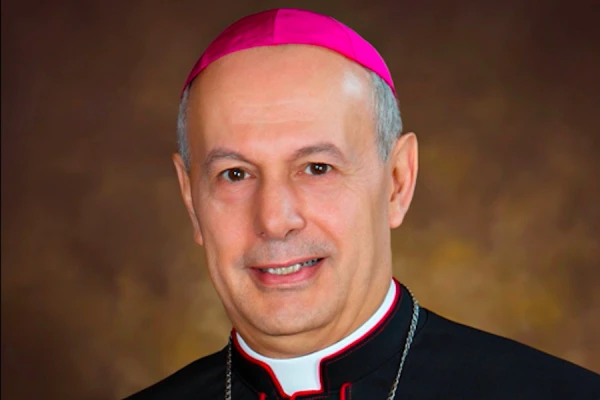

Archbishop Caccia: “underlined that complete disarmament needed to begin ‘with a renunciation of defense strategies that blur the distinction between nuclear and conventional weapons’ [and] ‘if it is IMMORAL [“if”] to threaten to use nuclear weapons for purposes of deterrence, it is even worse to intend to use them as just another instrument of war, as some nuclear doctrines propose,’ the archbishop said…”
In 1982 Pope John Paul II addressed to the Second Special Session of the United Nations dedicated to disarmament (“Negotiation: The Only Realistic Solution to the Continuing Threat of War”): “In current conditions ‘deterrence’ based on balance, certainly not as an end in itself but as a step on the way toward a progressive disarmament, may still be judged MORALLY ACCEPTABLE” (p. 10). In 1965 the Second Vatican Council had stated that the Church has “admiration” for those who individually forego violence—without harm to others, but also asserted the right and duty for defense, and accepted “deterrence” if this was a step toward nuclear disarmament, and therefore in the end stopped short of demanding a “freeze” in ownership of weapon arsenals (Gaudium et Spes, nn. 78-82).
Aside from the still-extravagant number of remaining warheads (down to 13,400 from 70,300) is the new threat posed by rogue states armed with only a few such warheads. So, deterrence as still a “prudential judgment” rather than as “immoral”? And, just as some “defense strategies (that) blur the distinction between nuclear and conventional weapons” SO TOO can renunciation of deterrence “blur the distinction” between self-defense and unilateral nuclear disarmament or now rogue-state nuclear blackmail.
So, yes to Archbishop Caccia call for: “…concerted diplomatic activity, [with] the participation of ALL Nuclear-Weapon-Possessing States in negotiations to establish ceilings, if not reductions, regarding their nuclear weapons.”
Really? Is this guy kidding?? In fact is, the threat of nuclear war has brought the world a RELATIVE peace since the end of WWII. Unlike the North Koreans who occasionally THREATEN to use nukes, we in the US HAVE used them out of necessity, to prevent the greater evil of even more deaths in a conventional war invasion. Our enemies know that if need be, we will use them again. Yes, negotiate as long as possible if some positive outcome is in sight. If not, in the end you must opt to defend your citizens. What religious men fail to take into account about war in the REAL world, is that the enemies of the US are often men with NO sense of morality at all, who kill blindly for NO reason. . Stalin, Mao, Hitler, others of their conscience-free ilk, do not bind themselves to any moral calculations. When your enemy is an amoral person with NO regard for how many are killed when they initiate and pursue goals of war, you handcuff yourself and doom your people to death when you wrestle with philosophic questions of how many angels dance on the head of a pin. That is the reality.
Human beings are not monsters. Threats and coercive measures give us a primitive look in these modern times. It is high time we say good-bye to those clumsy little ways.