



Pentecost has come and gone. On some liturgical calendars, the time is called “Sundays After Pentecost” or some variation. Most Latin Rite Catholics call it “Ordinary Time,” a designation not widely liked—how can any time be merely “ordinary” that follows Christ’s bestowal of the Holy Spirit?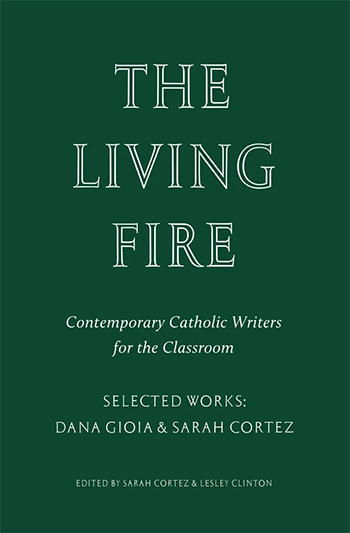
The gift of the Spirit in the Church is the reason for the growth of the Church in the world and the growth of each member’s soul. The gift of the Spirit at Pentecost was no mere one-time miracle event involving whooshing wind, tongues of fire in the air, and miraculous abilities to speak languages the Twelve didn’t learn growing up. Far from it! It was the gift of the Spirit of God predicted by the prophets to rest on the world. God had told the prophet Joel that He “will pour out my spirit on all flesh; your sons and your daughters shall prophesy, your old men shall dream dreams, and your young men shall see visions” (Joel 2:29).
Modern Christians are often embarrassed by the idea of prophecies, visions, and dreams. They are, however, an ineradicable part of the Christian life if it is to be authentic. What is it to prophesy but to speak forth the words of God the Word, Who has poured out His Spirit into each of us? What are the dreams and visions but more vivid glimpses into the reality that stands behind, under, and within all the reality we see around us?
For the one filled with God’s Spirit, every single thing is ablaze with a fire coming from within and beyond the deepest regions of its own being, for God is both immanent and transcendent to His own creations. Far from being a dismal moralistic vision of life, Christian faith is inherently mystical and sacramental. Many would call it poetic.
St. John Henry Newman was one who did. In his essay “Poetry, with reference to Aristotle’s Poetics,” Newman described this Spirit-filled way of seeing as “a poetical view of things,” which it is our “duty” to cultivate:
we are bid to colour all things with hues of faith, to see a Divine meaning in every event, and a superhuman tendency. Even our friends around are invested with unearthly brightness—no longer imperfect men, but beings taken into Divine favour, stamped with His seal, and in training for future happiness.
How might we cultivate this poetical vision? Too often, we pass by the bush that is burning without either taking off our shoes or kneeling. We distracted creatures must learn to really look at the world and to do so with both our natural eyes and the eyes of faith. We must soak up Scripture, pray, use our intellects, and exercise the powers of our imagination.
While all the above might provoke a hearty “amen,” saying that we should practice reading poetry itself is more likely to induce embarrassed silence or even a bit of grumbling from all too many Catholics. “I don’t get poetry” is a lament too often heard. And yet, if we are to take seriously the command to become deeper in Scripture, learning to read poetry is a must. As poet Dana Gioia observed in his 2022 essay “Christianity and Poetry,” about one third of Scripture is written in verse—a very appropriate fact because “verse is the idiom for the revelation of mystery.” Gioia went on to explain that the biblical authors (and thus God!) chose to communicate via “emotional, imaginative, and experiential meaning—all the ways in which humans understand this world and imagine the next.”
How do we teach people to take in this language that many find so difficult? The answer is to get kids early, reading to them nursery rhymes, poetry, and the Psalms from the get-go. As they get older, it is important to teach them how to read with profit. I have taken Gioia’s words from the biography of Gioia in Sarah Cortez and Lesley Clinton’s volume of selected poetry of Gioia and Cortez herself that forms the first volume of their series The Living Fire: Contemporary Catholic Writers for the Classroom. The other two published volumes are instructional guides to help high school teachers teach the poems in the first volume.
Cortez and Clinton’s collection includes brief biographies of each author along with ten poems apiece from Gioia’s and Cortez’s work. Gioia is more well-known than Cortez. The former General Foods executive whose poetry and essays started to draw serious attention in the 1990s, was able to become a full-time writer. He won the American Book Award in 2002, was named chairman of the National Endowment for the Arts from 2003 to 2009, and was made California Poet Laureate in 2015. He has become a kind of elder statesman in the world of poetry and Catholic letters.
Though not as famous, Sarah Cortez is worth knowing. The founder of the successful Houston-based Catholic Literary Arts organization, which hosts speakers, sponsors contests, and puts on a variety of programs and events to help people from all backgrounds, young and old, develop their own literary gifts, has a fascinating background. Like Gioia, she studied classical languages early and also had a business career. After teaching in Catholic high schools, she worked in corporate accounting before pursuing two dreams: writing and police work. As the volume’s biography puts it, “she left her gleaming downtown corner office and highly paid corporate job for the grimy world of street felons, tow trucks, and bulky Crown Vics careening in hot pursuit on Code One calls.” She has been a reserve officer for many decades as her writing, editing, and speaking career grew.
Both poets approach their work with a Catholic both/and. There is no artificial separation between art and faith. If they are repentant sinners, they are unrepentant Catholics. The poems are presented in five lessons of two poems each, which have titles suggesting the literary, philosophical, or spiritual themes that might be explored. Thus, teachers can teach pairs of poems under themes such as “How Sound Incarnates Meaning” and “The Power of Beauty” (Gioia) or “The Mystery of Salvation” and “God’s Call to Love Unconditionally” (Cortez).
The above might make the selections seem “pious” in the sense that they look to the bright side of things. While the light we see in God’s light is emphasized, so too are the shadows. The poet-cop Cortez’s poems include ones about death (“Dog Remembers Night”) and the dysfunction of urban life (“On Some Streets”). Yet, even these more difficult topics are treated in the context of eternity and the love that bids us “to walk with others, to serve them, and to presume they mean well.”
For each poem, there are questions provided that ask both spiritual and artistic questions. Gioia’s “The Burning Ladder,” part of the lesson on “Answering God’s Invitation,” imagines the patriarch Jacob’s sleeping through the vision of angels ascending and descending as a kind of failure of action on his part: “Gravity/always greater than desire.” Questions include ones about “why…we often hesitate to respond” to God’s call as well as how “line length” can “contribute meaning in a poem.”
The two volumes with lesson plans include those questions included in the first volume but much more. As Cortez and Clinton write in their preface to the unit plans for Gioia, teachers “will likely find more material than you can cover in a single class session” and should incorporate “whichever of the resources and activities you feel will best meet your course’s learning objectives.” While these unit plan volumes include plenty of context, technical poetry terms and definitions, analysis of the poems, and activities, the authors urge teachers of poetry “to prioritize enjoyment when encountering any poem with your students.”
To that end, many of the activities suggested are likely to be enjoyable. For instance, Cortez and Clinton suggest having students pound their desks on weak syllables and stomp the floor on strong syllables to get the feel for iambic meter. And assignment possibilities in the volumes include having students create poems, essays, monologues, posters, and even videos that will help them learn to love the poems, techniques, and theological truths they are encountering.
Whether in Catholic or home schools, teachers who want to do more in-depth work with poetry this fall should get these volumes. Not only are the poems chosen well, but the thoughtful way of presenting them shows the editors’ deep experience. Lesley Clinton, like Cortez, is a veteran. Since Cortez taught in a girls’ school and Clinton teaches at the all-male Strake Jesuit in Houston, their experiences make them sensitive to both sexes and to the teenage mind in general.
The Living Fire gives a perfect demonstration of a way to approach poetry that includes technique, substance, and rigor without sacrificing fun, delight, and the deeper desires of the soul to see the world as enflamed and illumined by the fire of the Holy Spirit—even in “Ordinary Time.”
The Living Fire: Contemporary Catholic Writers for the Classroom
Edited by Sarah Cortez and Lesley Clinton
Three volumes: Selected Works: Dana Gioia & Sarah Cortez (89 pages); Instructional Unit Plan: Dana Gioia (79 pages); Instructional Unit Plan: Sarah Cortez (77 pages).
Wiseblood Books, 2025
(Note: This review is reprinted with permission from The Catholic Servant.)
If you value the news and views Catholic World Report provides, please consider donating to support our efforts. Your contribution will help us continue to make CWR available to all readers worldwide for free, without a subscription. Thank you for your generosity!
Click here for more information on donating to CWR. Click here to sign up for our newsletter.

As an ex teacher of English, I applaud teaching poetry to students of all ages and abilities. I like the idea of a how-to book.
That said, is it not perhaps a bit philistine for two poets–aka accountant/aka cop–to pen a primer using their own poems as exemplars? Why not expand the sensible field to show Dickinson’s humility or Whitman’s exuberance? Would a few lines from the likes of Dante, Shakespeare, Chaucer, Pope or Milton spoil a good catholic sampler?
Gerard Manly Hopkins 🤔
Absolutely Mr. Gerard.
Francis Thompson,also.
The most beautiful book I own is “THE CHRISTIAN YEAR Thoughts In Verse for Sundays and Holy Days(1869)”. I carry it to mass and while the choir sings their weekly pop songs, I turn off my hearing aids and read the day’s mass in verse. Of course it’s based on the true liturgical calendar but I find room in the Novus schedule. It’s sad we’re in a world where the incredibly vulgar song, the winner of 21 national awards, sung by Cardi B, Slap my wet (vagina) can be recited by so many school children but not a single poem of literature. And thinly veiled criticisms about the books authors, or the complaints about not including the old favorites show that we are far behind in capturing the imagination of any future poets. It’s hard to admit, but rap is the only poetry that sells today. Lets pray that the book finds the intended audience and they discover poetry.
The weakest man I know is the man I see in the mirror, But it’s okay to be inferior when you know Christ is superior” Braille in Beautiful Eulogy’s “Omnipotent”
It might be easier for Catholic children to enjoy poetry if they still found elevated language in the Mass and in translations of the Old and New Testaments. Unfortunately, they won’t.