

 By
By Bishop Paolo Liu Honggang is the third bishop ordained in China in two months and the sixth episcopal consecration during Leo’s pontificate amid implementation of the Vatican-Beijing agreement.
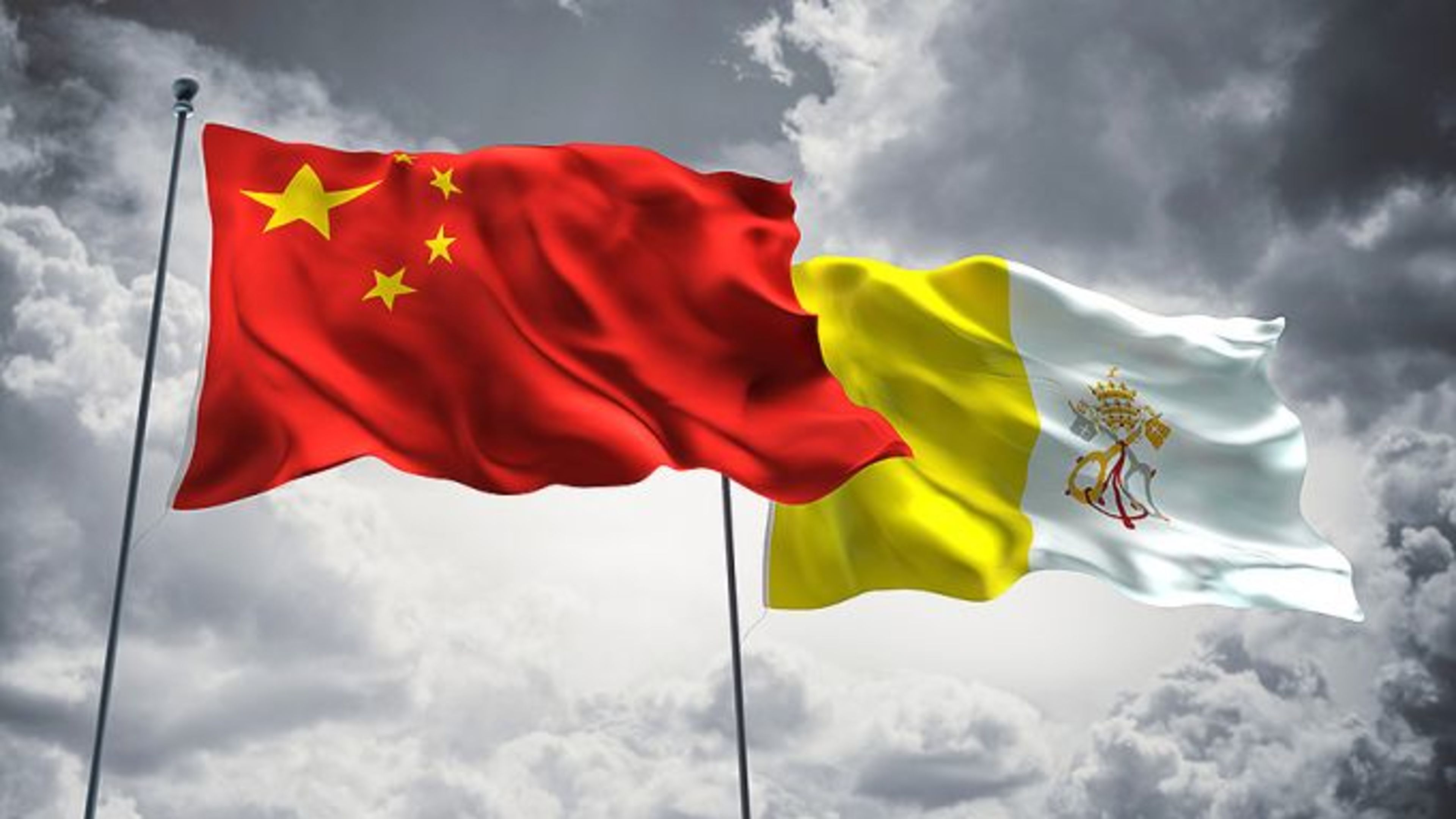
Father Paolo Liu Honggang was ordained bishop of the Diocese of Datong in China’s Shanxi province on Monday.
The Holy See said Pope Leo XIV appointed Liu bishop of Datong on Aug. 10 after approving his candidacy under the mechanisms established by the Vatican’s agreement with Beijing on the appointment of bishops.
The ordination is the third episcopal consecration in China in just two months and the sixth to take place during Leo’s pontificate, although not all six episcopal appointments originated under the current pope.
One of the six prelates had already been ordained a bishop in 2017, while two others were initially selected unilaterally by Chinese authorities during the sede vacante between the death of Pope Francis and the election of Leo. The new pope subsequently approved their appointments.
A life of pastoral service
Liu was born Nov. 2, 1970, in Wufuying village near Taiyuan, the capital of Shanxi province.
He began his priestly formation at the Fenyang seminary, where he studied from 1988 to 1992. He later attended the National Seminary in Beijing from 1992 to 1996, earning a bachelor’s degree in theology.
He was ordained a priest for the Diocese of Datong on Nov. 24, 1996.
Following his ordination, Liu served as pastor of Zhangguantun from December 1996 to 1999, Xubao from 2000 to 2003, and Xihehe from 2003 to 2005.
He had served as diocesan administrator of Datong since March 15, 2005.
Appointments under Leo XIV
The process leading to Liu’s appointment and episcopal ordination took place entirely during Leo’s pontificate, providing another sign that the pope intends to continue dialogue between Rome and Beijing.
Several episcopal appointments and recognitions have taken place in China since Leo’s election.
On June 11, 2025, the Vatican announced the Chinese government’s civil recognition and installation of Bishop Giuseppe Lin Yuntuan as auxiliary bishop of Fuzhou in Fujian province.
Lin, however, was not ordained a bishop during Leo’s pontificate, having received episcopal ordination in 2017. Pope Leo XIV appointed him auxiliary bishop of Fuzhou on June 5, 2025, before Chinese authorities granted him civil recognition.
On July 8, 2025, Leo suppressed the Dioceses of Xuanhua and Xiwanzi, which had been established by Pope Pius XII in 1946, and erected the new Diocese of Zhangjiakou as a suffragan see of Beijing.
Two months later, on Sept. 10, Father Giuseppe Wang Zhengui, whom the pope had appointed to lead the new diocese, was ordained a bishop.
In 2026, Father Francesco Saverio Duan Yongkun was ordained coadjutor bishop of Bameng in the Inner Mongolia Autonomous Region after Leo appointed him on June 15 under the Provisional Agreement between the Holy See and the People’s Republic of China.
The pope also appointed Father Giuseppe Chang Yanfeng on June 15. Chang was subsequently ordained bishop of Chifeng, another diocese in Inner Mongolia.
Tensions during the sede vacante
Chinese authorities unilaterally selected two bishops during the sede vacante following Pope Francis’ death, including one for a diocese already headed by a bishop recognized by the Holy See.
Father Ignatius Wu Jianlin was ordained auxiliary bishop of Shanghai on Oct. 15, 2025, after Pope Leo XIV formally appointed him to the post on Aug. 11.
Chinese authorities had previously announced Wu’s election by an assembly of priests and laypeople on April 28, during the sede vacante.
The Holy See’s later announcement revealed that Leo had approved the nomination Aug. 11. Although the appointment was not immediately made public, the Vatican announcement indicated that the case was ultimately brought within the framework of the Holy See-China agreement.
Francis Li Jianlin was likewise ordained bishop of the Apostolic Prefecture of Xinxiang in Henan province on Dec. 5, 2025, after Leo formally appointed him Aug. 11.
Li was the second bishop whose candidacy had been advanced by Chinese authorities during the sede vacante.
17 bishops ordained under Vatican-China agreement
With Liu’s ordination, 17 Catholic bishops have now been ordained in China under the Provisional Agreement first signed between the Holy See and China during Pope Francis’ pontificate.
The bilateral agreement, first signed in 2018, regulates the process for selecting and recognizing Catholic bishops in China.
The Holy See and China have not maintained formal diplomatic relations since 1951, following the communist takeover under Mao Zedong. Chinese Catholics subsequently became divided between the state-controlled Chinese Catholic Patriotic Association and an underground Catholic community that remained loyal to Rome.
The full text of the agreement has never been made public.
It was renewed every two years until 2024, when the two sides extended it for four years, through 2028.
According to publicly known elements of the agreement, the pope retains the final authority over episcopal appointments in China, including the ability to reject candidates proposed by Beijing. The Holy See, meanwhile, has agreed not to make episcopal appointments without prior consultation with the Chinese government.
This story was first published by ACI Prensa, the Spanish-language sister service of EWTN News. It has been translated and adapted by EWTN News English.
If you value the news and views Catholic World Report provides, please consider donating to support our efforts. Your contribution will help us continue to make CWR available to all readers worldwide for free, without a subscription. Thank you for your generosity!
Click here for more information on donating to CWR. Click here to sign up for our newsletter.

Leave a Reply