


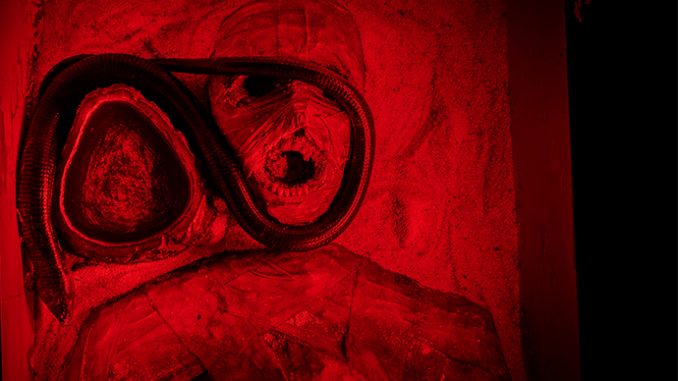
One of the most perduring themes of Halloween is the exotic mystery of ancient Egypt: cryptic hieroglyphics shrouding deadly secrets, cursed tombs of pharaohs, mummies that come to life. It’s a curious and ironic twist, given that tomb inscriptions were aimed at safeguarding the dead, not as a curse; mummification was intended to preserve the body for the afterlife, not terrify those who might stumble upon them. And yet what may be scariest about ancient Egypt as it pertains to All Hallows Eve—the ancient Christian holiday of honoring saints, martyrs, and all the faithful departed — is the terrible exploitative character of pre-Christian Egypt.
In truth, it is the Catholic Church that took a frightening fact—the eventual end of our short life, which will soon be forgotten by most—and gave our deaths a true dignity, by providing a way for all people, regardless of wealth or social status, to be remembered and honored.
A dim, dehumanized, and haunted world
Though there is much scholarly debate over the pyramids and other great monuments to the ancient Egyptians, it seems almost certain that much of the labor to build them was coerced as part of a massive state-organized system of thousands of workers. From one century to the next, pharaohs used these building projects to compete with those who had gone before in order to demonstrate their power, wealth, religious authority, and ability to command their empire’s resources.
It was, writes the prolific British scholar and archeologist Guy de la Bédoyère in his new book Brief Lives of the Ancient World: Rulers, Rebels and Robbers, a means to demonstrate “the concept of absolute monarchical power.” The evidence from one workers’ cemetery indicates that workers “suffered dangerous, brutal, and short lives, experiencing serious injury and malnutrition.” Many of them were little more than children.
Laboring on a great Egyptian building project would have been inglorious, back-breaking labor, but at least it was better than being an enemy of the Egyptians. Bédoyère describes a pharaoh, Amenhotep, who seized two cities in the Levant and then threw their populations into a ditch. While burning them alive, the pharaoh kept vigil through the night in honor of the god Amun. Another, Rameses II, employed thousands of workers, many of them slaves captured in war or seized as tribute to quarry and transit stone. “This was Bronze Age absolutism at its best.” Unless you were a pharaoh or a prominent member of his court, you left no legacy, apart from the building projects on which you labored on behalf of another who cared not a spittle for you.
In an ironic display of what this civilization prized, pharaohs themselves became tomb raiders as Egypt’s power waned. “It is possible, even likely, that some of the kings knowingly had the tombs of their predecessors entered to provide the necessary materials so that they could be buried in the style and pomp they expected.” For the ancient Egyptians, life was about power and wealth and communicating that legacy beyond your earthly life; unless you were among the kingdom’s elites, there was no legacy to leave, and even if you were, that legacy might very well be bespoiled by future generations!
Greek, Jewish, and Christian civilizations changed what it meant to be human
The sudden shift when Bédoyère’s book gets to the Greeks is akin to daybreak. Herodotus of Halicarnassus, for example, was decreed the “father of history” by Cicero for seeking to provide extensive details about historical events, including the customs and cultures of the ancient world. With the exception of Alexander the Great, most of the Greeks we know today are not political leaders, but writers and philosophers, men such as Socrates, Plato, Aristotle, Sophocles (even the Athenian statesman Pericles was himself a great rhetorician). Rather than attempting to leave a legacy through building projects and expansionist wars, the Greeks celebrated the pursuit of knowledge, accessible to all.
The Jews, of course, also knew something about the dark terrors of Egypt from visceral personal experience. Undoubtedly informed in part by those generations of servitude, the Jewish Scriptures communicated a recognition of the dignity of all people: “He who oppresses a poor man insults his Maker, but he who is kind to the needy honors him,” (Prov 14:31). “The LORD makes poor and makes rich; he brings low, he also exalts. He raises up the poor from the dust; he lifts the needy from the ash heap” (1 Sam 2:7-8). The God of the Jews was a God who not only saved his chosen people from bondage in Egypt, but who cared about the needs and desires of everyone, not only the rich and powerful.
The Christian Faith wedded these Greek and Jewish traits, evidenced in the New Testament communicating ancient, biblical truths in the language of Greek philosophy and even explicitly honoring the writings of Greek thinkers (c.f. Acts 17:28, Titus 1:12, 1 Cor. 15:33). It’s little wonder that, given the Church’s recognition of all people bearing the imago dei and being included in God’s eternal salvific plan, the new religion witnessed explosive growth among all social classes and people groups across the Roman Empire.
Jesus was celebrated as a king, but not for conquering lands or erecting marvelous palaces, but for exemplifying perfect virtue and a willingness to submit to an ignominious death on a Roman cross for the sake of others. Afterwards, His followers declared that He rose from the dead. They would also, they believed, be resurrected one day.
Halloween aids us in honoring the dead
Thus did the Catholic Church refashion the meaning of life and death.
No longer would millions labor in darkness and oppression for the sake of others, with their lives amounting to nothing more than an opportunity to be exploited by the powerful. Through faith in Christ, Christians could not only find dignity and value, but even be memorialized as saints and martyrs, their souls prayed for and their relics honored by the Church.
Bodies were buried rather than cremated, Christians waiting in eager expectation for the resurrection when the soul would be reunited with the body. “You have filled the whole world with tombs and sepulchres,” complained the fourth-century emperor Julian the Apostate in his anti-Christian polemic Against the Galileans. Eunapius of Sardis (c. 345–after 414) similarly contemptuously censured Christians for honoring the bones and skulls of their dead.
Ironically enough, it is many of these aspects that now characterize our conception of Halloween. Trick-or-treating stems from “souling,” an old custom of going door-to-door and asking for treats in exchange for praying for the dead. Tombstones and candles remind us of the faithful departed. And bones and skulls are displayed in public. Though we correlate such things with something scary, they are, in truth, a means for us to remember and honor the dead, a day for everyone who has gone. For example, when I visited Peru, I prayed in a basilica before the skull of St. Rose of Lima!
For Catholics, walking amongst tombs or praying before the bones of saints is a source of piety and spiritual comfort, not something to fear. What’s truly scary, in contrast, is what the world looked like before Christianity provided, regardless of one’s wealth or power, a means to be remembered and even venerated.
As the stories of ancient Egypt show, ours was once a dark, bitter world, in which the many labored and died in obscurity to satisfy the proud vanity of the few. And how many of all those hundreds of pharaohs can you name from memory?
If you value the news and views Catholic World Report provides, please consider donating to support our efforts. Your contribution will help us continue to make CWR available to all readers worldwide for free, without a subscription. Thank you for your generosity!
Click here for more information on donating to CWR. Click here to sign up for our newsletter.



Leave a Reply