

 By
Nicaragua currently has nine active bishops, four of whom are in exile.
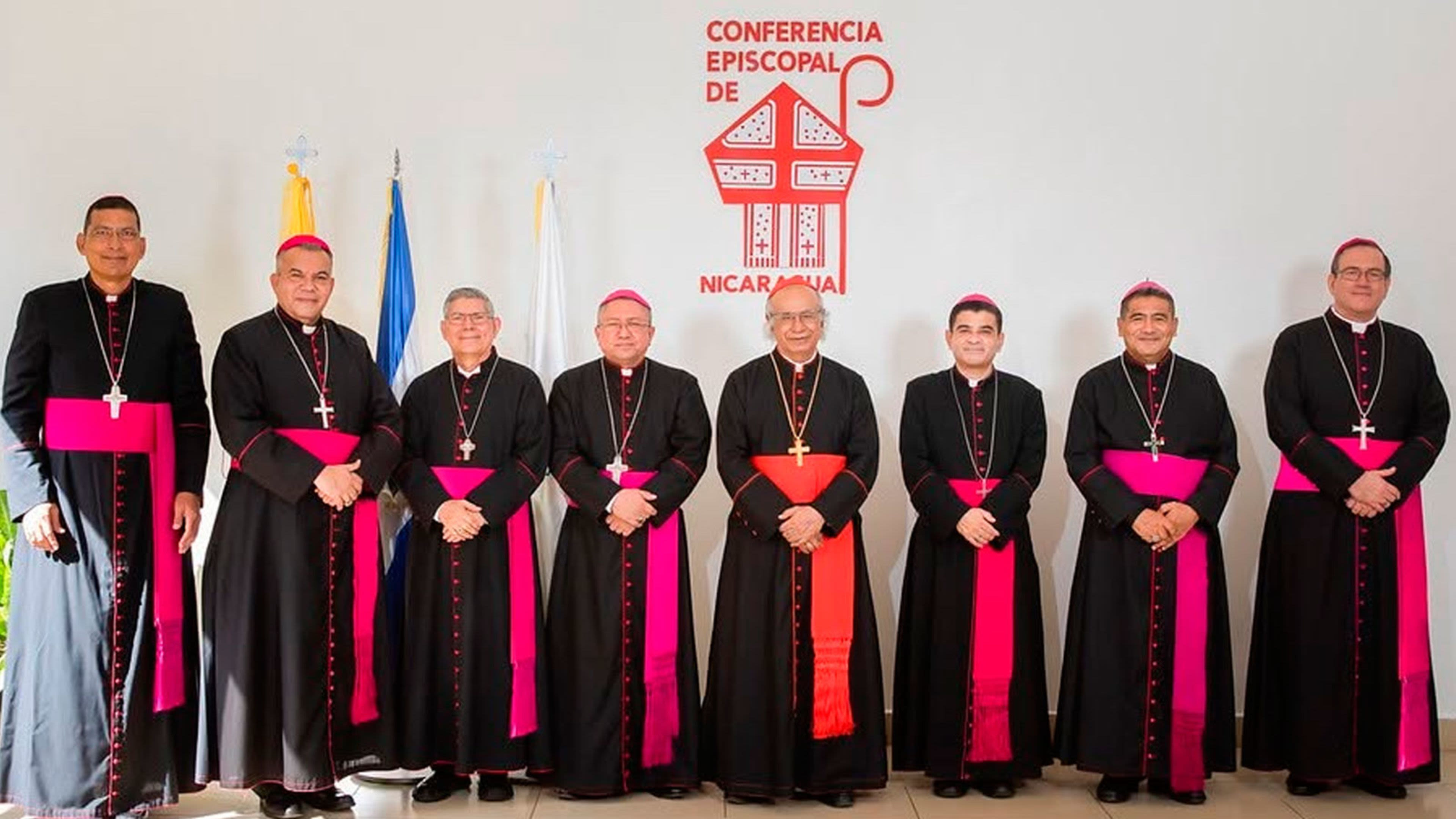
The president of the Nicaraguan Bishops’ Conference, Bishop Carlos Enrique Herrera Gutiérrez, announced that the Holy See has postponed the ad limina visit of the Central American country’s bishops, citing a lack of “appropriate conditions” for the Nicaraguan prelates.
“The Holy See has postponed it until next year with no specific date set as of yet because the appropriate conditions do not exist for the bishops who are members of the episcopal conference,” explained the prelate, who also serves as the bishop of Jinotega, in a statement to EWTN News Español, the Spanish-language sister service of EWTN News.
The “ad limina apostolorum” visit (“to the threshold of the apostles”) is a visit made to the Vatican by bishops from around the world, organized by country and occurring every five years to report to the various dicasteries on the situation in their respective dioceses. These visits conclude with an audience with the pope, who recently met separately with the bishops from Honduras and Panama.
Herrera, who has been in exile since November 2024 after being expelled by the dictatorship of President Daniel Ortega and his wife and vice president, Rosario Murillo, in Nicaragua, participated in a recent meeting regarding the apostolic exhortation Amoris Laetitia, which brought together the presidents of bishops’ conferences from around the world. In that context, the Nicaraguan prelate was able to meet personally with Pope Leo XIV on Oct. 12.
‘We would be left without shepherds’
When asked about the suspension of the ad limina visit, a priest currently serving in Nicaragua, who requested anonymity to avoid reprisals from the regime, told EWTN News Español that there is a factor “related to the reality, the context in which we live here in Nicaragua, that must be taken into account: [the bishops] can’t leave, and the fear is real. If someone leaves [to go to Rome], it‘s possible they might not be allowed to return.”
“Imagine if all the bishops currently in the country were to leave, and the government suddenly decided not to allow them back in — we would be left without a single bishop. Therefore, it’s a matter of prudence not to go on the ad limina visit, because we would be left without shepherds here in the Church” of Nicaragua, he added.
“In any case, the Nicaraguan Bishops’ Conference was already represented there, in a sense, through its president, Bishop Herrera,” the priest said.
Another Nicaraguan priest in exile, who also requested anonymity for the safety of his family and friends in Nicaragua, concurred, stating that “the bishops did indeed have the visit scheduled, but there are two factors at play: government pressure against them and the fear of being stuck outside the country.”
Nicaragua currently has nine active bishops, four of whom are in exile: Herrera; Bishop Silvio Báez, auxiliary bishop of Managua, who was forced to leave the country in 2019 for being critical of the dictatorship; Bishop Isidoro Mora of Siuna; and Bishop Rolando Álvarez of Matagalpa and apostolic administrator of Estelí. The latter two were expelled from the country in January 2024.
The dictatorship maintains a ban on the ordination of deacons and priests in the dioceses of Jinotega, Siuna, Matagalpa, and Estelí, where bishops are not present.
Furthermore, Bishop Abelardo Mata, the 80-year-old bishop emeritus of Estelí, has become the latest target of the dictatorship in recent months. He was arrested for praying for the persecuted Church in Nicaragua and confined to his home in Tisma (Masaya district), from which he is apparently not allowed to leave.
Dictatorship doesnʼt allow any mention of ‘bishops in exile’
Martha Patricia Molina, author of the report “Nicaragua: A Persecuted Church,” which documents thousands of attacks by the dictatorship against the Catholic Church since 2018, told EWTN News Español that, according to her sources, “the visit was suspended because the relationship between the Church and the Nicaraguan dictatorship is undergoing serious problems, and for that reason, it was not considered appropriate to carry it out.”
Molina also noted that the last ad limina visit by the bishops of Nicaragua took place nine years ago in 2017 and that “given the current context in which the Church in Nicaragua finds itself, it’s impossible for the bishops to meet especially when the dictatorship doesn’t even allow the names of the exiled bishops to be mentioned.”
“If the bishops currently in Nicaragua were to travel, they would be denied reentry into the country. I believe the Holy See is aware of this situation and chose not to take that risk,” she emphasized. Molina described this as a “prudent” decision, given the “severe conditions of religious persecution that our Church in Nicaragua is facing.”
The Holy See Press Office has not yet responded to an inquiry from EWTN News Español regarding the suspension of the ad limina visit by the Nicaraguan episcopate.
This story was first published by EWTN News Español, the Spanish-language sister service of EWTN News. It has been translated and adapted by EWTN News English.
If you value the news and views Catholic World Report provides, please consider donating to support our efforts. Your contribution will help us continue to make CWR available to all readers worldwide for free, without a subscription. Thank you for your generosity!
Click here for more information on donating to CWR. Click here to sign up for our newsletter.

Leave a Reply