

Many legal scholars and other experts strongly disagreed with the bishops’ claim that excluding noncitizens from the census means they are not persons.
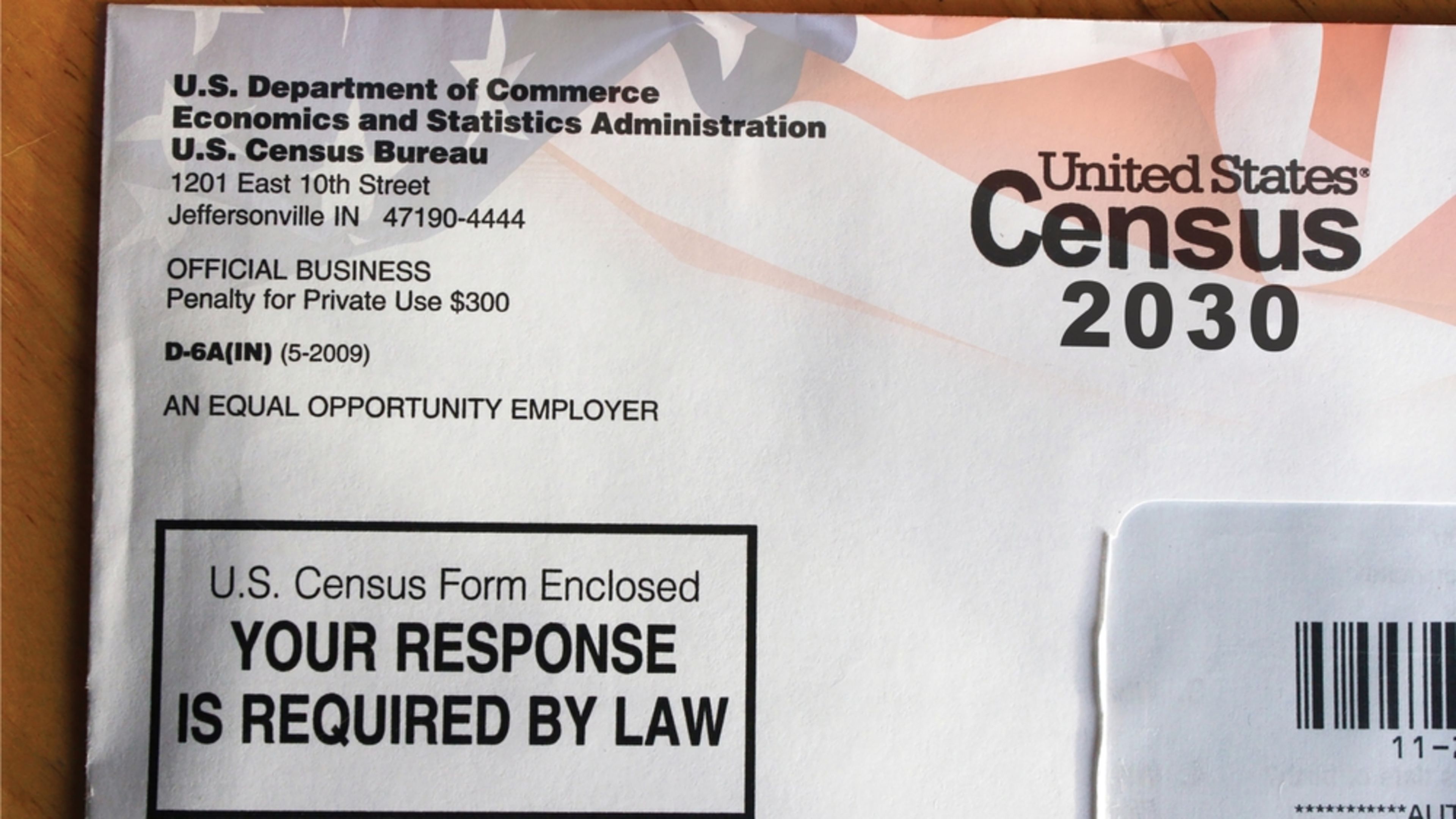
The U.S. bishops’ opposition to proposed rule changes affecting the 2030 census has sparked criticism from U.S. historians and scholars, especially concerning the assertion that excluding noncitizens in the census count denies their personhood.
According to the U.S. Census Bureau, the proposed rule changes would remove demographic questions about race, ethnicity, and sexual orientation, and would count for congressional apportionment only citizens and lawful permanent residents.
The proposal says “illegal aliens (among others) should not be included in the apportionment count, as they are not true inhabitants, members of the body politic, or persons with a ‘usual residence’ in the United States.”
In an Oct. 20 letter submitted to Department of Commerce Secretary Howard Lutnick, among other points, the U.S. Conference of Catholic Bishops’ general counsel argued that excluding noncitizens from the apportionment count “is effectively to deny they are ‘persons.’” They wrote that this “denial of personhood recalls the ‘overtly sinful and gravely unjust’ Three-Fifths Compromise.”
The Three-fifths Compromise was the political deal reached at the 1787 U.S. Constitutional Convention that held the nascent Union together. It set a formula for apportioning seats in the U.S. House of Representatives, which is determined by each state’s population: free persons, including free Black people, counted fully, and “all other persons” (the enslaved population) counted as three-fifths.
Legal scholars and other experts strongly disagreed with the bishops’ comparison.
Historian Susan Hanssen of the University of Dallas told EWTN News she thinks the bishops’ reference to the Three-fifths Compromise is “an egregious mis-reading of American history.”
“That compromise did not aim at the denial of the personhood of slaves,” she argued, pointing to the compromiseʼs text, which consistently calls both free and enslaved people “persons.”
She said the compromise was intended to mitigate “the power of the slave-owning states in the national government, refusing to award them greater political weight based on subjugated populations without a voice or vote.”
Hanssen said the Census Bureau’s aims regarding the proposed changes are similarly aimed at mitigating political power, arguing that the bureau is refusing “to grant political clout to states that allow a larger number of undocumented illegal workers to be used for labor without the protection of the law.”
David Upham, a constitutional law scholar whose work focuses heavily on the 14th Amendment — which established citizenship rights, including the rights to due process and equal protection under the law, particularly for recently freed slaves — told EWTN News that the proposed rule changes do not mean noncitizens are not persons. He called the bishops’ interpretation of persons an “overstatement.”
“If that’s the case, every human being not being counted in the census is not a person,” he said, noting that the principal purpose of the census is to count people in order to determine the allocation of political power in the U.S. House of Representatives, whose members are supposed to be selected by the citizens.
“The question really is, besides bona fide citizens, what other human beings within the state’s border are counted as members of the people,” he said, and noted the president has the constitutional authority to address the question.
“The executive branch has substantial authority to determine whether an individual who isn’t a citizen” should be counted in the census for the purpose of political representation, he said.
“I think the danger the Trump administration is seeking to redress is that those states most enthusiastic about encouraging unlawful migrants will, as result of their disinterest in enforcing federal law, receive more votes in Congress and the electoral college,” he said.
Harvard Law School constitutional law professor Adrian Vermeule wrote in a post on X: “The analogy to slavery is utterly absurd unless the USCCB believes that all distinctions based on citizenship are unjust.”
“With all due respect, ‘personhood’ is not a magical trump card that overrides the basic principles of the republican form of government,” he wrote. “One cannot conclude from the bare fact of personhood that anyone and everyone has a right to be counted in the census, to vote, or to stand for office.”
“Why exactly should noncitizens with no status be counted for the apportionment of seats in the representative body?” he asked. He suggested the bishops’ public comment “really should be withdrawn” and expressing that he hopes “cooler heads prevail.”
Scholars at prominent think tanks weighed in on social media regarding the bishops’ personhood argument.
Mike Fragoso of the Ethics and Public Policy Center called the bishops “unserious,” while Jay W. Richards, vice president of social and domestic policy and senior fellow at the Heritage Foundation, called the bishops’ position “absurd” on X.
Andrew Arthur, a former immigration judge and fellow at the Center for Immigration Studies, told EWTN News that “our inherent recognition as persons — personhood — does not come from the governmentʼs census as to who is in the country.”
“As Catholics, we believe that unborn children are people,” he continued, “but the bishops do not extend their logic to demand that the unborn be counted in the census notwithstanding the fact that a killing that results in the death of a pregnant mother is, in many places, considered to be two murders. Why not?”
The proposed rule changes, published Sept. 10, are open to public comment until Nov. 2. The U.S. bishops did not respond to requests for comment on the backlash.
If you value the news and views Catholic World Report provides, please consider donating to support our efforts. Your contribution will help us continue to make CWR available to all readers worldwide for free, without a subscription. Thank you for your generosity!
Click here for more information on donating to CWR. Click here to sign up for our newsletter.

Leave a Reply