

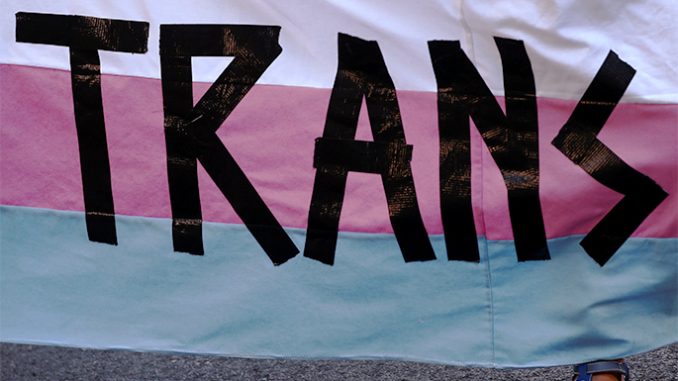
For more than a decade, the United States and much of the Western world witnessed a dramatic rise in transgender identification, especially among female adolescents and young adults. The speed, the scale, and the demographic concentration of this shift were unprecedented. Between 2013 and 2023, referrals to gender clinics in the U.K. rose twenty‑fold or more in some regions; Sweden’s Astrid Lindgren Children’s Hospital reported an annual doubling of cases for several years; Australia saw referrals jump from 18 in 2012 to 200 in 2017. In the United States, elite campuses such as Brown University reported a 793 percent increase in LGBTQ+ identification since 2010, with the steepest growth in the newest identity categories.
These patterns were not evenly distributed across geography or age. They clustered—tightly—around specific social environments: elite schools, progressive cities, online communities, and peer groups.
The Church’s fidelity in the face of social contagion
It is no longer possible to deny that the most plausible explanation for this pattern is social contagion. Not contagion in the medical sense, but in the sociological one: the spread of ideas, identities, and behaviors through imitation, visibility, and the desire for belonging. When a new identity becomes highly visible and socially rewarded, it becomes easier for others—especially adolescents—to imagine it as a meaningful framework for understanding their own distress.
Throughout it all, the Catholic Church was one of the few sources of reason—an institution willing to say what much of our culture rejects: that the human person is a unity of body and soul, and that the body is not a mistake to be corrected but a gift to be received. While nearly every institution—from medicine to media to education—has capitulated to the claim that a person can “change” his or her sex, the Church continued to proclaim the biological and theological truth that sex is not self‑created or socially assigned.
This is not a position of hostility but of fidelity. It is faithfulness to the created order and faithfulness to the belief that truth ultimately liberates rather than harms. The Church stood almost alone in insisting that compassion cannot require the denial of reality.
This is not an argument about sincerity. The young people swept up in the social contagion at their schools or online peer groups who adopted transgender identities over the past decade were not “pretending” anything. They were interpreting their experiences through the most available and culturally powerful script. And for a time, that script was everywhere: on TikTok, in classrooms, in friend groups, in media coverage, and in the political sphere.
The transgender identity became a widely shared cultural template for explaining discomfort, anxiety, or alienation—especially among adolescent girls, who historically have been more susceptible to socially transmitted forms of distress, from eating disorders to self‑harm.
The trend is reversing
But after a decade of expansion, the trend is now reversing.
A new data analysis titled The Decline of Trans and Queer Identity among Young Americans, by Professor Eric Kaufman, a political scientist at the University of Buckingham in the UK, demonstrated dramatic changes in transgender identity. While based in the United Kingdom, Kaufman analyzed data from the United States collected in 2025 through three sources: a survey administered by the Foundation for Individual Rights and Expression (FIRE), 2025 student surveys from Brown University, as well as data from a 2025 survey at Andover Phillips Academy.
In his analysis, Kaufman found that both trans and queer identification have fallen sharply among young Americans during the past two years. FIRE had surveyed over 60,000 undergraduates on college campuses throughout the country and found that about 3.6 percent of college students identified as “non-binary.” That figure was 5.2 percent in 2024, and 6.8 percent in 2022 and in 2023.
In effect, the number of non-binary students has been halved in just two years. The decline is even more pronounced in elite educational environments—precisely the settings where the earlier surge was most concentrated. At Andover Phillips Academy, 9.2 percent of students identified as neither male nor female in 2023. In 2025, that number had fell to only 3 percent. Brown University showed a similar pattern: 5 percent of students identified as non‑binary in 2022 and 2023, but by 2025, that share had fallen to only 2.6%.
These sharp declines in transgender or non-binary identification among both adults and young people mark a turning point in the cultural arc described earlier.
But the question remains: what is driving this reversal? If social contagion helped drive the rise, what is driving the fall? Two forces stand out.
The visibility of de-transitioners
For years, “de-transitioners”—those who reverse course after medical or social transition—were nearly invisible. Many feared stigma, backlash, or accusations of betrayal. But in the last several years, their stories have become impossible to ignore.
Young adults—here and abroad—who transitioned as minors are now filing lawsuits against doctors, hospitals, and therapists, alleging that they were rushed into irreversible medical interventions without adequate psychological evaluation. These lawsuits, now appearing in multiple states, have reshaped the conversation that transition is not always the right answer and that the medical system may have been too quick to affirm rather than explore underlying distress.
For a generation raised to believe that transition was a one‑way path to authenticity, the emergence of de-transitioners has created a counter‑script—one that complicates the earlier certainty.
Social contagion works in both directions. When the dominant cultural story shifts from “transition is liberating” to “transition can cause harm if misapplied,” the social contagion that once propelled the movement begins to dissipate. Adolescents who might once have interpreted their discomfort through the lens of gender now see alternative explanations modeled for them: trauma, anxiety, autism, depression, social pressure, or ordinary adolescent confusion.
High‑profile violent incidents
A second factor contributing to the decline is more controversial, but cannot be ignored. There have been several high‑profile violent incidents involving perpetrators who identified as transgender or nonbinary.
These cases—including the transgender perpetrator who shot school children while they were attending Mass in a Catholic Church in Minneapolis, and the transgender shooter at the Christian Covenant School in Nashville, as well as the transgender perpetrator at STEM School Highlands Ranch in Colorado—are rare, but they have been increasing. The media reported that the suspected assassin of Charlie Kirk was in a romantic relationship with a transgendered partner, Nicholas Roske, the 26-year-old man convicted of attempting to assassinate Supreme Court Justice Brett Kavanaugh, identified as transgendered—and called himself “Sophie”—but was sentenced to eight years in a male-only prison.
In the age of social media, rare events can have a powerful cultural impact. When a school shooter, mass attacker, or attempted assassin identifies as transgender, the story spreads instantly and becomes part of the public imagination and perception. In earlier years, the transgender movement benefited from a narrative of vulnerability. Transgender individuals were framed primarily as victims of violence, discrimination, and marginalization. They were viewed as innocent individuals who needed protection.
But when even a small number of perpetrators emerge from a group previously understood only as victims, the cultural meaning of the identity shifts, and the transgender identity itself becomes less mimetically attractive. No one wants to imitate a flawed cultural narrative once it loses its moral clarity and starts looking complicated and compromised.
This is not about blaming a group for the actions of individuals. It is about understanding how social contagion operates. Identities spread when they are associated with prestige or moral clarity. They contract when they become associated with controversy or risk. The visibility of violent incidents—however statistically rare—has introduced a new emotional charge into the cultural conversation, one that dampened the earlier enthusiasm.
Time for honesty
The flattening of the curve of the spike of social contagion of gender transitioning is most visible in the same places where it once escalated the most quickly: elite campuses, progressive cities, and online communities. The cultural prestige that once surrounded transgender identity—bolstered by celebrity transitions and media celebration—has begun to wane. The script is no longer transgressive and no longer the cutting edge of identity politics.
Without that cultural energy, the contagion loses momentum. This means that the truth of Catholic teachings on sex and gender is validated. No one can honestly believe that the extraordinary spike in gender identity disorders in adolescents over the past decade can be explained by biology. Social forces played a central role in the rise, and they are now playing a central role in the decline.
The challenge ahead is to create a cultural environment where adolescents are neither swept up into identity waves nor shamed for exploring who they are. That requires acknowledging the role of social contagion honestly. It requires listening to de-transitioners without weaponizing their stories. And it requires recognizing that cultural scripts—whether affirming or cautionary—shape young people far more powerfully than we often admit.
The transgender moment is not ending because people have suddenly become less compassionate and understanding. It is ending because the cultural conditions that once made it compelling have changed. The truth is breaking through the once-dominant narrative. Social contagion promoted the movement, and social contagion is now letting it go.
If you value the news and views Catholic World Report provides, please consider donating to support our efforts. Your contribution will help us continue to make CWR available to all readers worldwide for free, without a subscription. Thank you for your generosity!
Click here for more information on donating to CWR. Click here to sign up for our newsletter.

In the opening paragraph we learn that Brown University saw a blue-ribbon uptick in LGBTQ-ism since 2010…But surely the institution is not complicit!
In 2016 Brown offered a most competitive safe-space room featuring “cookies, coloring books, bubbles, Play-Doh [not Plato], calming music, pillows, blankets, and a video of frolicking puppies” (New York Times, 2016). With all these essential accessories in the capital budget, no wonder college tuitions are up…$71,700 at Brown for 2025-2026!
I have a lot of respect for Dr. Hendershott, and what she reports is indeed very good news, but she completely leaves out of her discussion what is likely a large contributor to the phenomena: the reality of the demonic and the fact that demons have access to human souls and minds and suggest, prod and orchestrate many evil things. Pope Francis more that once during the height of the craze said that transgenderism was diabolical.
Indeed. The Father of Lies can be expected to contribute to a belief that is a lie. He was a murderer from the beginning, so it’s no surprise he’d be involved in maiming healthy bodies.
That doesn’t necessarily mean he was primarily working on people with gender dysphoria. Those without any such mental disorder were often teaching the classes, making the laws, and performing the surgeries. Or remaining silent.
Matt Walsh — not someone with whom I automatically agree on everything — has pointed out that in their denial that the spike in young people identifying as transgender is a social contagion, trans-activists have painted themselves into a corner. They insist that such young people have always been there, but a transphobic environment forced them into silence and denial; now, however, that they are coming forward, we need puberty blockers and hormones and “gender-affirming” care and surgeries, or we’ll see a plethora of teen suicides. BUT if such youth have always been there, without the “benefit” of puberty blockers, hormones, gender-affirming care, and surgeries, we should have been up to our elbows in teen suicides, yet we weren’t. This might suggest that the spike, mercifully on its way down, was indeed a social contagion, as Prof. Hendershott states.
I’ve a feeling that I read this excellent article yesterday!
Can we talk about the social contagion of angry, violent, entitled men and boys next? And how it’s not ok for men to scream at their wives/girlfriends in public or private? Or stonewall, scream, slap, or spit at them when they don’t get what they want in the bedroom? Or have violent outbusts when their sports team loses or they fail in a video game? Or the men who think their feelings and emotional issues far outweigh everyone else’s around them and they’re somehow the ones who are victims in every situation? The men who take the smallest criticism as a personal attack and then launch into a campaign of emotional, verbal, or physical terror against the person who said even the slightest critical thing against them? Can we address the issue with men who take out everything that happens to them at work out on their families at home? Or the men who have full on temper tantrums doing tasks like assembling a book shelf because assembly isn’t “instantly easy”? Maybe you can also talk about the men who are cold and overly critical of their families. The ones who restrict their wives from going out by themselves, from having friends, from being close to family? The men who refuse to grow up or marry or be remotely decent to the people around them? Or the men who do marry and believe that being married entitles them to have unfettered access to the bodies of their wives 24/7? I would say that is a far worse social contagion that is having a bigger impact on women, children, and society at large than the transgender lgbtqrswxyz social contagions ever will.
Please seek counseling.
Deflection.
Hardly. A public forum is not an appropriate place to disclose your poor judgment and bad decisions as they relate to your relationships.
Projection.
Over generalization, Nocole. Need to change your friends! 😂
Well that’s an astounding exhibition of hate.
Where do you live honey? And what sort of people do you hang out with? My late husband was NONE of the things that you described. EVER. In fact I would say what you wrote is a clear example of the male bashing which has become so much a part of the “thinking” on the left. Then of course they wonder why men won’t vote for them. I grew up in NYC, a tough place, and have known some women who would most certainly NOT qualify as little Bo Peep. No sex has a monopoly on goodness or evil. Lets stop pretending that all men are uneducated cave men and all women are just darlings.
Nicole, I think you’re describing the narcissistic personality disorder, and it does seem to be spreading like wildfire (or like a social contagion). People who haven’t had to deal with it couldn’t really understand what you’re talking about. I would add that it manifests itself in women as well as men. Still, it’s a whole other topic, and I don’t think it impacts or invalidates what Professor Hendershott says here.
Hello Professor Hendershott,
Thanks for the article; good news is always welcome.
Of course, just because the trans hysteria has cooled doesn’t mean that the changes it has implemented will all be rolled back. Consider that the gay movement is no longer the Current Thing, but precious little of the cultural damage it did back in the 90’s and early 2000’s will be repaired anytime soon. The revolution always moves on to a fresh new cause while we are still busy coping to the last one.
Still, I agree that we should take any opportunity we have to push the conversation in a more wholesome direction. In addition to the reasons you mention, the last line of the Steve Sailer article below leads me to wonder if there is another reason for the decline in trans hysteria. Maybe parents have become a little more cautious about their children’s access to smartphones?
https://www.takimag.com/article/poison-mutilate-and-sterilize/
We as Catholics can hope, and pray these surveys correctly reflect the sharp downfall of transgenderism. Although other surveys differ. Example:
“Stable Transgender Baselines: Broad national demographic studies—such as the comprehensive August 2025 updates from the Williams Institute at UCLA School of Law—indicate that the overall population of adults identifying strictly as transgender men or transgender women has remained relatively steady and consistent over recent years. Critics argue that some researchers are weaponizing drops in fluid youth identities to falsely claim that binary transgender people are disappearing” (Williams Institute courtesy Google AI).
Google AI also shows statistical patterns consistent with this essay. Time will likely tell.
It seems you can always find a “study “ to prove your point!
These studies apparently obtain their samples through self-reporting. Some people accept that method of sampling, others do not as, for instance, only the interested will report.
While you are correct that the UCLA Williams Center is refusing to acknowledge the dramatic declines in transgender identification for YOUNG people, the data on declines in trans identification for young people are undeniable. One cannot deny the fact that transgender clinics are closing all over the UK and Sweden and other parts of Europe. Many hospitals here in the United States have shut down their transgender clinics also – the social contagion effect is diminishing for young people as it is no longer transgressive to be trans in high school or college. Many are de-transitioning and even more are avoiding the entire movement.
Thank you, Anne. Always welcome and appreciate your writings.
Certainly encouraged by your findings. But also fully agree that the continuing challenge will be to create the right cultural environment going forward. Which will be a tough challenge indeed if the Mandami socialists, for whom transgenderism is an article of faith, succeed in taking over the Democratic Party and even the electorate given the the Republican Party’s weakness as we approach the midterms.
Praying that the Church will speak the truth boldly on this defining issue.
“Mandami socialists, for whom transgenderism is an article of faith,”
Socialism is not a religion. There are no “articles of faith” involved.
Transgenderism is more than a social contagion. It is moral by nature and has a spiritual basis. While Author Henderschott is correct, that the emotional, physical repercussions are a deterrent, the inclination toward sexual perversity is likely to continue in other forms.
Nevertheless the medical industry that developed around promoting transgender mutilation has apparently lost their golden goose.
Besides social contagion among peers don’t overlook the example of celebrities: the former Bruce Jenner, the former Ellen Page, and various Hollywood stars’ children. Oprah’s segment on the “pregnant man” was something one couldn’t ever unsee. (Be assured that I never watched Oprah but I remember the ad for that show.)
I hope the decline/pause in transing is real but the forces that drove it are still powerful. The ultimate goal of gender radicals is for all people to be “gender fluid” with identification potentially fluctuating by the hour. The original LGBT group keeps fragmenting into ever smaller categories: you can’t tell tell deviants without a scorecard. The very concept of “normalcy” is in their crosshairs.
Socialism is a non-theistic religion. It has virtues and vices, prophets, saints and sinners, a canon and a Nirvana.
Sensitive much?
I believe you are referring to the MAGA cult.
Perhaps in your next emetic response, you can offer an intelligent, relevant rejoinder, perhaps based on facts.
But thank you for offering us a fine example of the Tu quoque fallacy.
I’m thinking you and Nicole should get together.
You are referring accurately to the MAGA cult.
The leading candidate for CWR VI chimes in with more argumentum ad hominen.
At a dinner gathering last night family and friends, the Pope came up in conversation as was inevitable. The overall feeling for Leo is positive here and it was remarked that he brings a quiet vibrancy and confidence into his Pontificate. There was some difference of opinion over Francis and whether Leo was “doing like Francis”; to which I said one of the problems every Pope faces is that he is surrounded by many different voices and it is not possible to reconcile them all at the given time or at all.
I was asked directly what I thought of Francis; to which I said I found it hard keeping up with his interventions and making immediate sense or his proposals, I am sure that for most people they wouldn’t have been making it their daily concern.
That in addition we got a lot that could be seen afterward to have been filtered in the media, there was a persistent temptation to jump to conclusion and Francis didn’t factor with this too well for anyone’s sake. Then again he once quoted Benedict as a reference in a manner misleading and he didn’t correct the record.
Feeling for Francis is high but I think it is in minority, very exuberant nonetheless. It could be for these that Pope Leo might come over as less interesting. In the same quarter it was remarked that Francis “kept them on the defensive and did the job of shaking things up as was long needed”; as usual that would mean anything and it never rests with me a well-reasoned recommendation of the particular or general all left unidentified!
Who says it? To what are they referring? Why they never elaborate? Why is that “always right” when it is remarked?
Francis’ “field hospital” charge has some favour. I did not comment then but reflecting on it in the aftermath today, I would say that classing the whole mission of the Church purely in such terms seems contrary to Revelation, maturity in faith, specific realities or events.
I am posting these notes in Hendershott’s article to make a point about the social contagion. I would say all parents there and the future parents, were very concerned about the grave situations unfolding with transgender, the negative even bitter and focus on ordinary life and ordinary family life held suspect, the burgeoning attack on the Bible in Canada, EU and UK, the imprisoning of parents in Brazil and these kinds of related matters.
Spoken explicitly last evening – Yes, there is a mass of people who are immersed in their own forms of ignorance and mental convolutions. Yet at the same time there is an orchestration going on that is exploiting them that has to be addressed. Amassing everybody in group formations does what.
May I mention this now -I didn’t last night; Pope Francis’ teachings haven’t shown a meaningful articulation of the morass and would lend confusion to charting a path through it or around it and could even pit otherwise complementary “field hospital teams” against one another.
‘ The ambassador said Leo also spoke about his frustration with the way every papal gesture can be attacked or interpreted through the lens of the United States.
Burch said the pope’s July 4 visit to Lampedusa was not intended as an attack on the United States. ‘
https://www.catholicworldreport.com/2026/07/07/u-s-ambassador-describes-july-4-dinner-with-pope-leo-xiv/
https://www.catholicworldreport.com/2015/07/17/the-hyperbolic-and-exhausting-papacy-of-francis/
https://www.catholicworldreport.com/2013/09/11/faith-non-believers-and-conscience-pope-francis-letter-to-the-editor/
I like this article from Anne on a certain level; one of her better ones — and she is a good author.
My only critique is that (most of) the people here are too nice and tend to overthink things.
A simpler explanation could be framed like this: “It seems like some of the dumbest generation in history realized just how stupid some of their ideas were and changed their mind on one of the most obvious examples.”
See? Did that hurt? It’s actually very beneficial to speak “the obvious” PLAINLY without worrying about hurting people’s feelings. You can’t REALLY tell the truth unless you do it just like that: Treating stupid ideas with respect GIVES them a dignity they don’t deserve and fools some onlookers into affording these ideas value they don’t deserve.
After a while, it’s just maddening for sane people to deal with.
Dear Carl Olson based on what is portended we will not be able to quote old articles freely in the new CWR website.
‘ But we can change the momentum in this fight. It starts by taking control of the conversation, and not being controlled by buzz words that are purely diversionary.
We can begin by shifting the discussion away from the abused word “marriage” and focusing on the word “matrimony,” which implies a bond that creates motherhood. ‘
https://www.catholicworldreport.com/2015/08/13/the-challenge-of-defending-the-normal/