Actor, director, screenwriter, and producer Emilio Estevez talks with Raymond Arroyo in a May 11, 2023, interview on “The World Over with Raymond Arroyo.” / Credit: The World Over/YouTube
CNA Newsroom, May 18, 2023 / 06:00 am (CNA).
If you miss… […]
Readings: • Acts 1:1-11 • Psa 47:2-3, 6-7, 8-9 • Eph 1:17-23 • Matt 28:16-20 Pope Saint Leo the Great (c. 400-461), in a sermon on the Ascension, wrote: Since then Christ’s Ascension is our […]
May 18, 2023 marks the 103rd anniversary of the birth of Pope St. John Paul II, who served as Archbishop of Krakow from 1964 to 1978. Much has been written about the Polish pope’s saintliness, […]
The Ascension of Jesus Christ, related in the Gospels of Mark and Luke and referred to throughout the New Testament, can be taken as something of an awkward anecdote in the Catholic canon. “And when […]
Both the extent and the limitations of the Supreme Court’s power are visible in a pending case raising the question of how far employers must go to accommodate employees’ religion. Underlying this dispute—yet obviously unreachable […]
The Ascension of Jesus Christ. Giotto di Bondone, 1305. public domain. / null
CNA Newsroom, May 17, 2023 / 16:30 pm (CNA).
Tomorrow is Ascension Thursday, the day the Church marks 40 days since Jesus’ resurrection and the day he ascended into h… […]
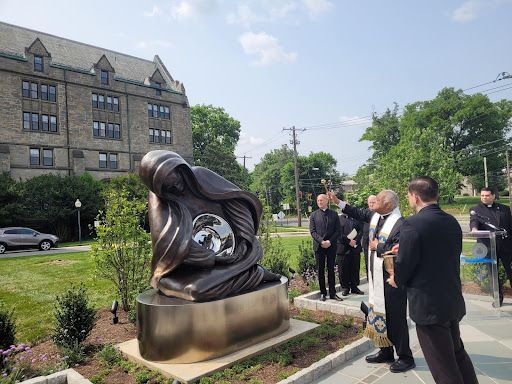
Cardinal Wilton Gregory of the Archdiocese of Washington, D.C., blesses the newly unveiled “National Life Monument” on the campus of The Catholic University of America’s Theological College on May 17, 2023. / Peter Pinedo|CNA
Washington D.C., May 17, 2023 / 15:58 pm (CNA).
The new “National Life Monument,” a larger-than-life bronze sculpture depicting the Blessed Virgin Mary pregnant with the Christ Child, was unveiled and dedicated today on the campus of The Catholic University of America’s Theological College in Washington, D.C.
According to the Canadian artist Timothy Paul Schmalz, the statue, titled “Advent,” is meant to be a symbol of beauty, a celebration of new life, and a bold pro-life statement in the nation’s capital.
Schmalz was present at the dedication ceremony along with the archbishop of Washington, Cardinal Wilton Gregory, and Canadian Cardinal Marc Ouellet. Gregory prayed over the monument, giving a special blessing to the statue and those present for the dedication.
Gregory praised the monument, saying, “Advent, as a pregnant Madonna, transcends bronze, revealing a deeper significance, deeper truths of God and of us, and his love for each of us, graced as we are in his image and likeness.”
The statue is entirely bronze except for the Blessed Virgin’s womb, which is made of reflective stainless steel. The Virgin Mother lovingly cradles her womb in which Jesus is depicted as an unborn baby. Our Lady is portrayed with a serene and peaceful countenance as she holds the Christ Child in her womb. The steel, which Schmalz describes as a “mystical material,” forms a type of halo around the unborn Christ Child.
“Advent: The National Life Monument,” a larger-than-life bronze statue by Canadian Catholic artist Timothy Paul Schmalz, depicts the Blessed Virgin Mary pregnant with an unborn baby Jesus. Peter Pinedo|CNA
“The hope with this sculpture is bringing a permanent, physical symbol that says ‘yes’ to life, that says life is great,” Schmalz told CNA. “To have it here in the nation’s capital is making a powerful statement. It’s saying that we have to celebrate all human life, and all human life is splendid and wonderful, and it’s mystical.”
Crafting a pro-life sculpture was something like solving a riddle, Schmalz said. For years he pondered how to create something that would send a bold pro-life message that wasn’t just “about the horror of abortion.”
“The idea is very difficult within a culture that, as Pope John Paul II said, we’re in a culture of death,” Schmalz said. “So, to put a sculpture called life in the center of Washington, D.C., is in a sense a peaceful weapon to persuade.”
By placing the monument in a high-traffic, public setting in Washington, D.C., Schmalz hopes his statue will not just “preach to the choir” but also touch the hearts of nonbelievers and even those who may be abortion supporters.
“Ideally, I’ll have people coming across here that might be ambiguous about their ideas of abortion, but they will come take a look at this and they will say, ‘You know, I have to say, that sculpture is beautiful,’ and if they’re saying the sculpture is beautiful, what it’s expressing is also beautiful,” Schmalz said. “If it touches one person, I think it’s done its job.”
To Schmalz, each sculpture he makes is a form of prayer that serves a specific function. As a Catholic artist, he believes that the work of faithful artists is about creating “visible ambassadors” of the faith to witness “in a culture that’s trying to remove Christianity.”
When it comes to his Life Monument, Schmalz’s depiction of the Madonna as a young, pregnant woman sends a very intentional message.
“If you look at the amount of positive life symbols out there, like even paintings of pregnant women or a new family, they’re becoming rare,” Schmalz said. “I’ve noticed over the last decade or so that we’re seeing less babies, less baby carriages, and less symbols around that. Our culture used to be filled with it. But now it’s becoming absolutely minimalized.”
This cultural shift, Schmalz believes, has led many young women to believe that having a child is something negative to be dreaded. The result of this anti-life mindset, Schmalz said, is having a devastating impact on society.
“Pope Francis said we’ve got to stop having pets and start having babies,” Schmalz said. “Elon Musk was basically suggesting the same thing, that we’re going to be in serious trouble if we don’t have babies.”
“We have to celebrate human life and that’s what this sculpture is saying,” Schmalz explained.
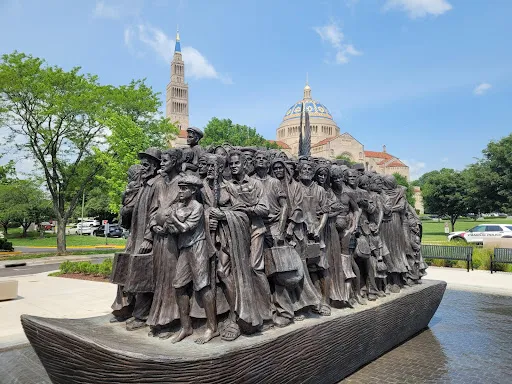
Schmalz is one of the most renowned Catholic artists of today. His work is displayed across the world from his “Angels Unawares” piece displaying immigrants at the Vatican to his “Homeless Jesus” in the Holy Land to a multitude of other works, religious and nonreligious, in the U.S. and beyond.
A smaller version of the National Life Monument is also on display in Rome’s Church of San Marcello al Corso. According to the statue’s website, Schmalz has plans to place life-sized copies of the National Life Monument in every state across the U.S.
“Angels Unawares,” another work by Schmalz on The Catholic University of America’s campus, depicts 140 immigrants. Peter Pinedo|CNA
A second casting of Schmalz’s “Angels Unawares,” pictured above, is also on display on Catholic University’s campus.
Father Daniel Moore, provincial superior of the U.S. Society of St. Sulpice, who presided over the dedication ceremony, explained that he hopes Schmalz’s statues will help people realize the sacredness of life and the obligation to help pregnant women, mothers, and those in need.
Schmalz, Moore said, “is using his gift of sculpting, his artistry much like the masons did when they built the great cathedrals, and then the stained glass within the cathedrals. They have become ways of communicating God’s message to us, God’s love to us, the story of how much we are cherished by God.”
The Los Angeles Dodgers had planned to give an award to a group of gay and transgender drag performers who mock the Catholic faith. / YouTube/Los Angeles Dodgers June 4, 2022, YouTube/60 Second Docs Dec. 27, 2021
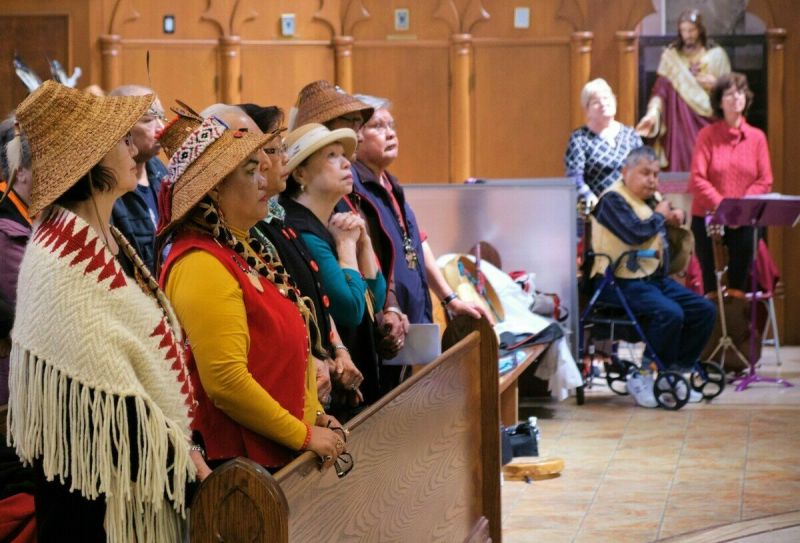
Members of the Sts’ailes First Nation at Holy Rosary Cathedral last year for the first Mass to integrate a First Nation language. A Cardus report presents the voices of Indigenous Canadians speaking about their faith and distinguishing it from the traditional spirituality they’re often associated with. / Photo courtesy Nicholas Elbers, 2022
Vancouver, Canada, May 17, 2023 / 14:15 pm (CNA).
A groundbreaking report published by the Ottawa-based Cardus Institute has given voice to Indigenous Canadians who are frustrated by secular society’s unawareness of — or unwillingness to accept — the fact that almost half of them are Christian.
“I find that insulting to Indigenous people’s intelligence and freedom,” Catholic priest Father Cristino Bouvette said of the prejudice he regularly encounters.
Bouvette, who has mixed Cree-Métis and Italian heritage and now serves as vicar for vocations and Young Adults in the Diocese of Calgary, was one of 12 individuals interviewed by Cardus for the report “Indigenous Voices of Faith.”
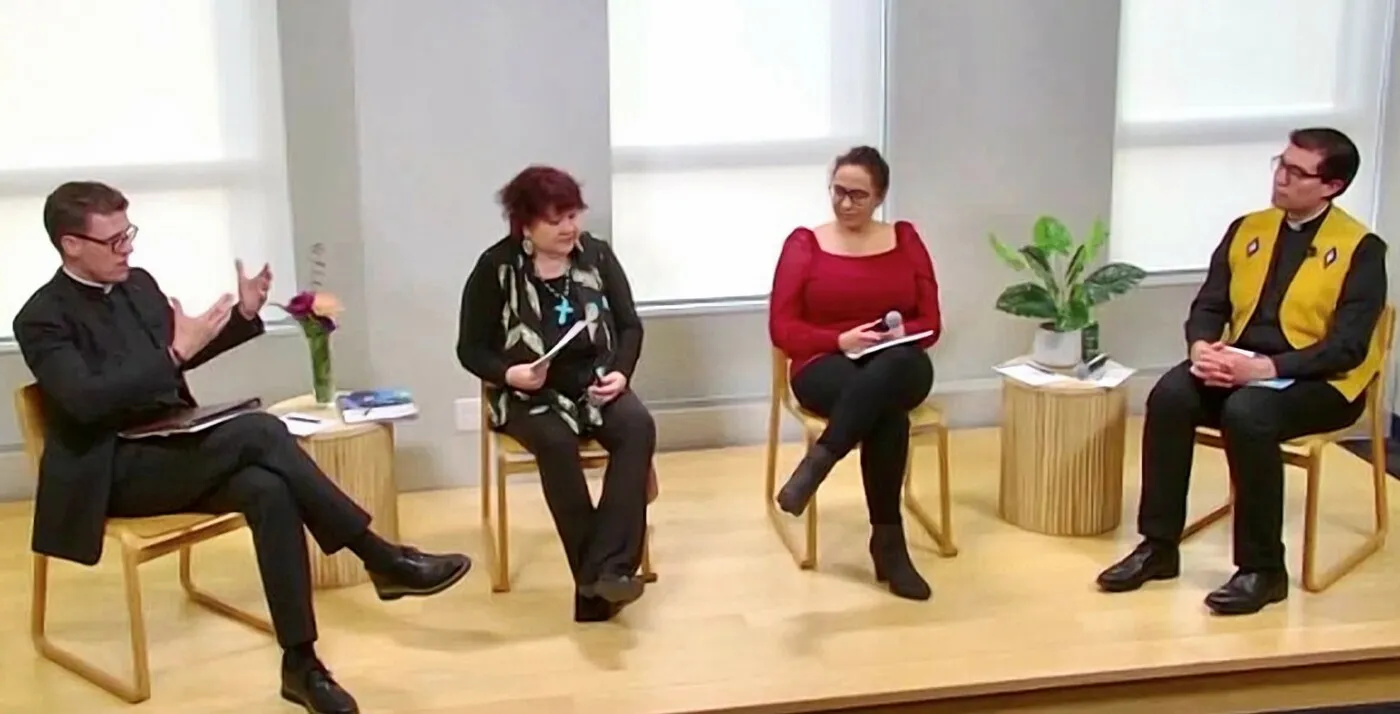
Father Deacon Andrew Bennett, left, leads a post-production discussion by Indigenous Voices of Faith participants. Photo courtesy of Cardus
Prejudice against Indigenous Christians has become so strong, even inside some Indigenous communities, “that Indigenous Christians in this country right now are living in the time of new martyrdom,” Bouvette said.
Although that martyrdom may not cost them their lives, “they are ostracized and humiliated sometimes within their own communities if they openly express their Christian or Catholic faith.”
Statistics Canada reported last year that the 2021 census found that 850,000, or 47%, of Canada’s 1.8-million Indigenous people identify as Christian and that more than a quarter of the total report they are Catholic. Only 73,000, or 4%, of Indigenous people said they adhere to traditional Indigenous spiritual beliefs.
In a new report, Cardus wants to “amplify the voices of Indigenous Canadians speaking for themselves about their religious commitments, which sometimes clash with the typical public presentation of Indigenous spirituality.” Photo courtesy of Cardus
Ukrainian Catholic Deacon Andrew Bennett, program director for Cardus Faith Communities, conducted the interviews for the think tank last fall. He published his report in March at a time when Canadian mainstream media and many political leaders continued to stir division and prejudice through misleading commentary about abandoned cemeteries at Indian Residential Schools.
The purpose of the report, he writes, “is to affirm and to shed light on the religious freedom of Indigenous peoples to hold the beliefs and engage in the practices that they choose and to contextualize their faith within their own cultures.”
Too often, however, “the public narrative implies, or boldly declares, that there’s a fundamental incompatibility between Indigenous Canadians and Christianity or other faiths,” Bennett said. “[M]any Indigenous Canadians strongly disagree with those narratives.”
Father Bouvette is clearly one of those.
“We did not have Christian faith imposed upon us because of [my Indigenous grandmother’s] time in the residential school or her father’s time in the trade school that he was sent to,” Bouvette said. “No, it was because our family freely chose to receive the saving message of Jesus Christ and lived it and had continued to pass it down.”
Bouvette said his “grandmother was not tricked into becoming something that she didn’t want to be, and then tricked into staying that way for 99 years and 11 months of her life. She was a Christian from the day of her birth, and she remained a Christian until the day of her death. And so that was not by the consequence of some imposition.”
Nevertheless, Canadians continue to labor under a prejudice holding the opposite view. “I do believe that probably the majority of Canadians at this time, out of some mistaken notion of guilt for whatever their cultural or ethnic background is, think they are somehow responsible for Indigenous people having had something thrust upon them that they didn’t want,” Bouvette said.
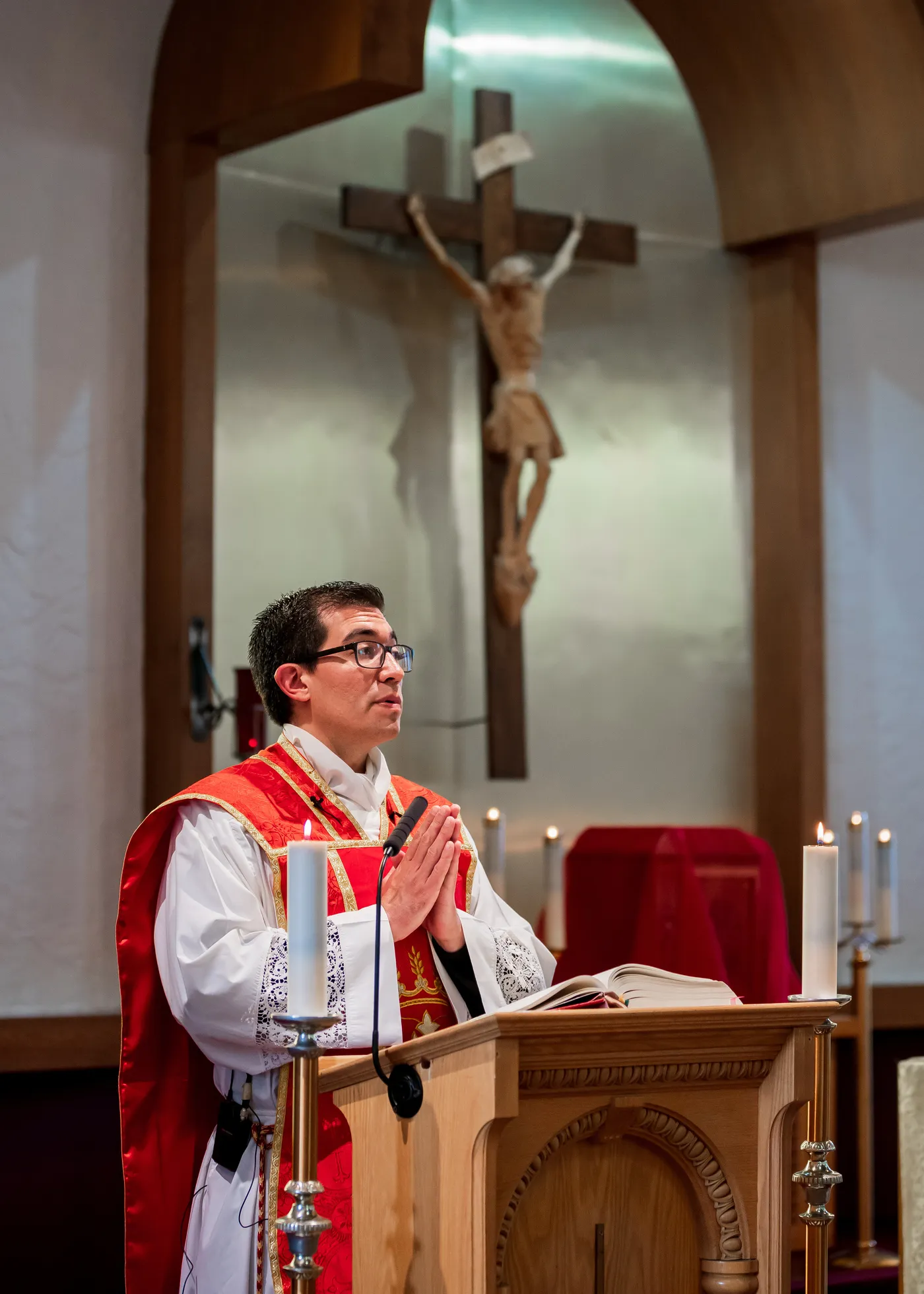
“We did not have Christian faith imposed upon us,” Father Cristino Bouvette says in a Cardus report on Indigenous faith. Photo courtesy of Cardus
“But I would say, give us a little more credit than that and assume that if there is an Indigenous person who continues to persevere in the Christian faith it is because they want to, because they understand why they have chosen to in the first place, and they remain committed to it. We should be respectful of that.”
The executive director of the Catholic Civil Rights League, Christian Elia, agrees and says society should grant Indigenous Catholics the respect and personal agency that is due all Canadians.
“Firstly, I am not an Indigenous person, so I cannot speak for our Indigenous brothers and sisters, but neither can non-Indigenous secularists who choose to ignore that Indigenous people in Canada continue to self-identify as Christian, the majority of these Catholic,” Elia said in an interview with The B.C. Catholic.
He said his organization has heard from many Indigenous Catholics who are “growing weary of the ongoing assumption that somehow they have been coerced into the faith, that it is inconceivable that they wish to be Catholic. This condescending attitude must stop.”
Deacon Rennie Nahanee, who serves at St. Paul’s Indian Church in North Vancouver, was another of the 12 whom Bennett interviewed. A cradle Catholic and member of the Squamish First Nation, Deacon Nahanee said there is nothing incompatible with being both an authentic Indigenous person and a Catholic.
“I’m pretty sure we had a belief in the Creator even before the missionaries came to British Columbia,” he said. “And our feelings, our thoughts about creation, the way that we lived and carried out our everyday lives, and the way that we helped to preserve the land and the animals that we used for food, our spirituality and our culture, were similar to the spirituality of the Catholic Church.”
“I believe that’s why our people accepted it. I don’t think anybody can separate themselves from God, even though they say so.”
Interviewed later by The B.C. Catholic, Nahanee said he is not bothered by the sort of prejudice outlined by Bouvette. “People are going to say or do what they want,” he said.
Voices of Indigenous Christianity
Bennett, program director of Cardus Faith Communities, interviewed 12 Indigenous Canadians, most of them Christian, about their religious commitments, “which often clash with the typical public presentation of Indigenous spirituality.” Here is a selection of some of their comments:
Tal James of the Penelakut First Nation in Nanaimo spoke about the relationship between Indigenous culture and his Christian faith:
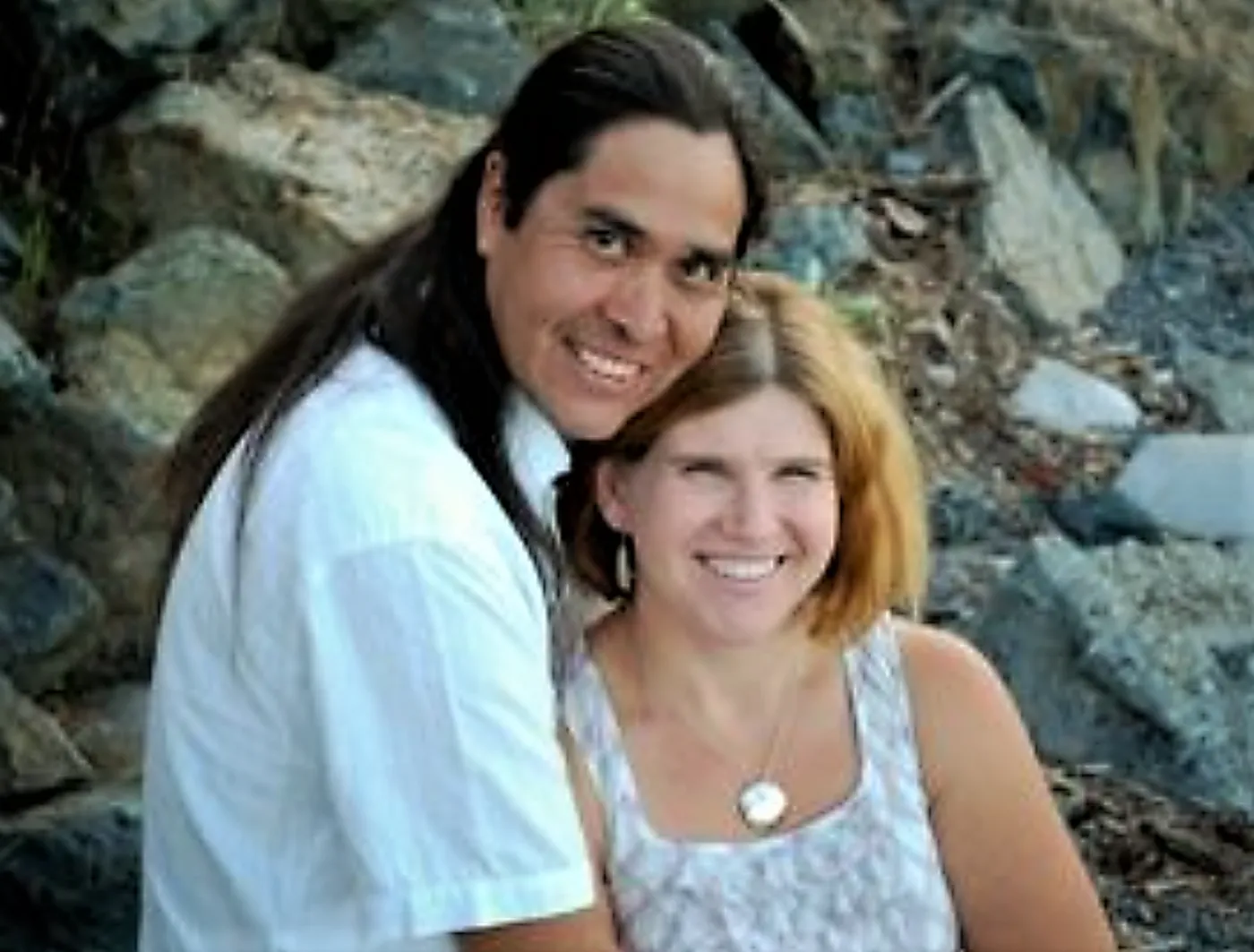
Tal James and wife Christina. Photo courtesy of Project 620 – James Ministry
“I think … that our [Indigenous] cultures were complete, and in Jesus they’re more complete. I think that’s a big thing and a big step for a lot of us. You’re going to have a lot of non-Indigenous people look at you and question your actions based on your Aboriginal heritage. Don’t take that to heart. They’re the ignorant ones who don’t want you to flourish. Those of you who are Christians, First Nations Christians, you come to the table with the same gifting that non-Aboriginal people have. For them to say, ‘We want to make room for you at the table,’ correct them. You are already at the table, and encourage them to step back and allow your gifts to flourish. Because it’s one in the same spirit.”
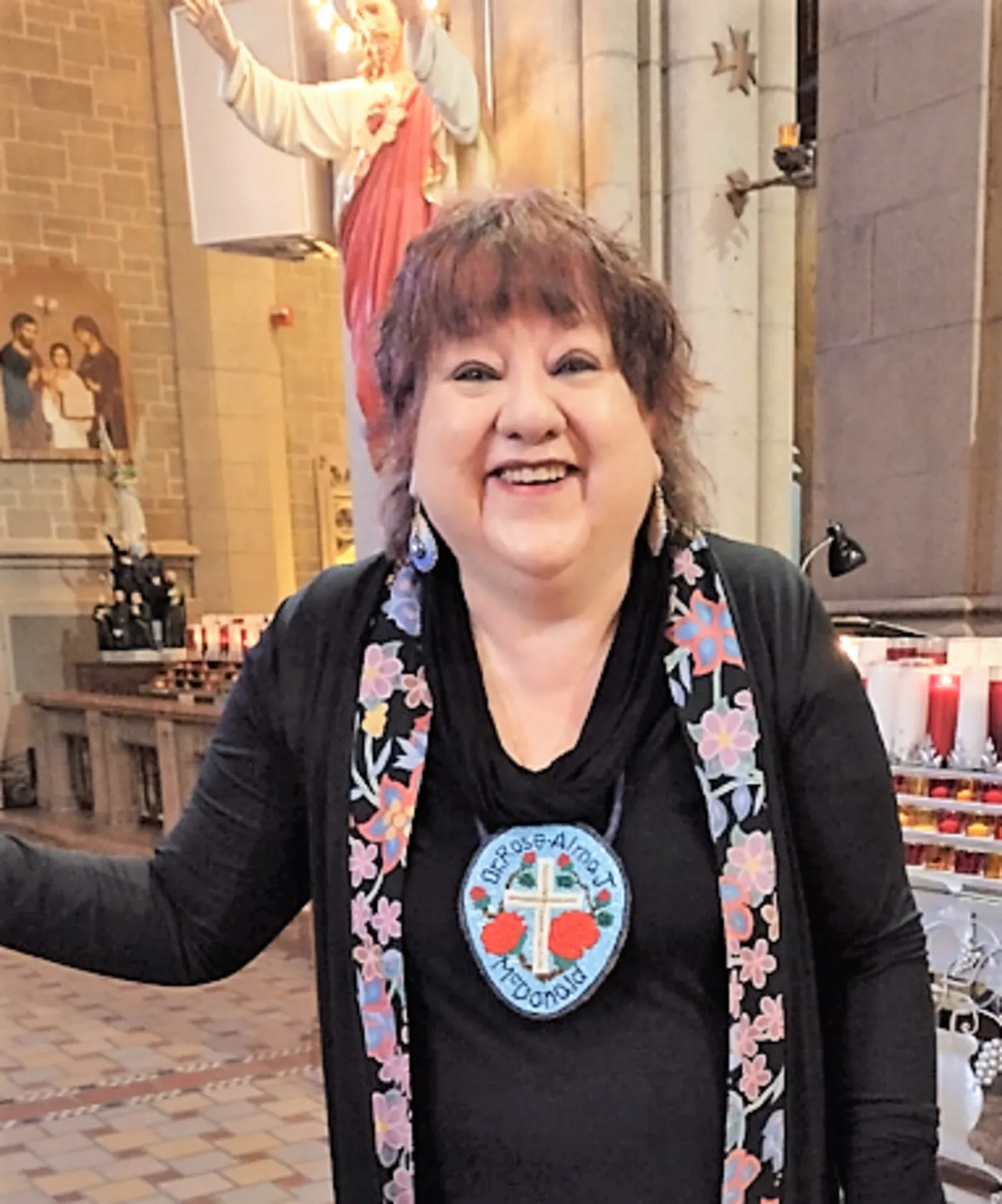
Rose-Alma McDonald, a Mohawk from Akwesasne, which borders New York, Ontario, and Quebec, talked about re-embracing her Catholic faith:
Rose-Alma McDonald. Photo courtesy of Cardus
“I surprised everybody, including myself, in terms of embracing Catholicism after 20 years away. So I’ve had a few epiphanies in the sense that this is why my mother made me do so much in the church growing up. When I’m working, volunteering, and doing stuff in the church, I remember that. I keep remembering I’m Catholic and I’m still Catholic. I will stay Catholic because of the way I was raised.”
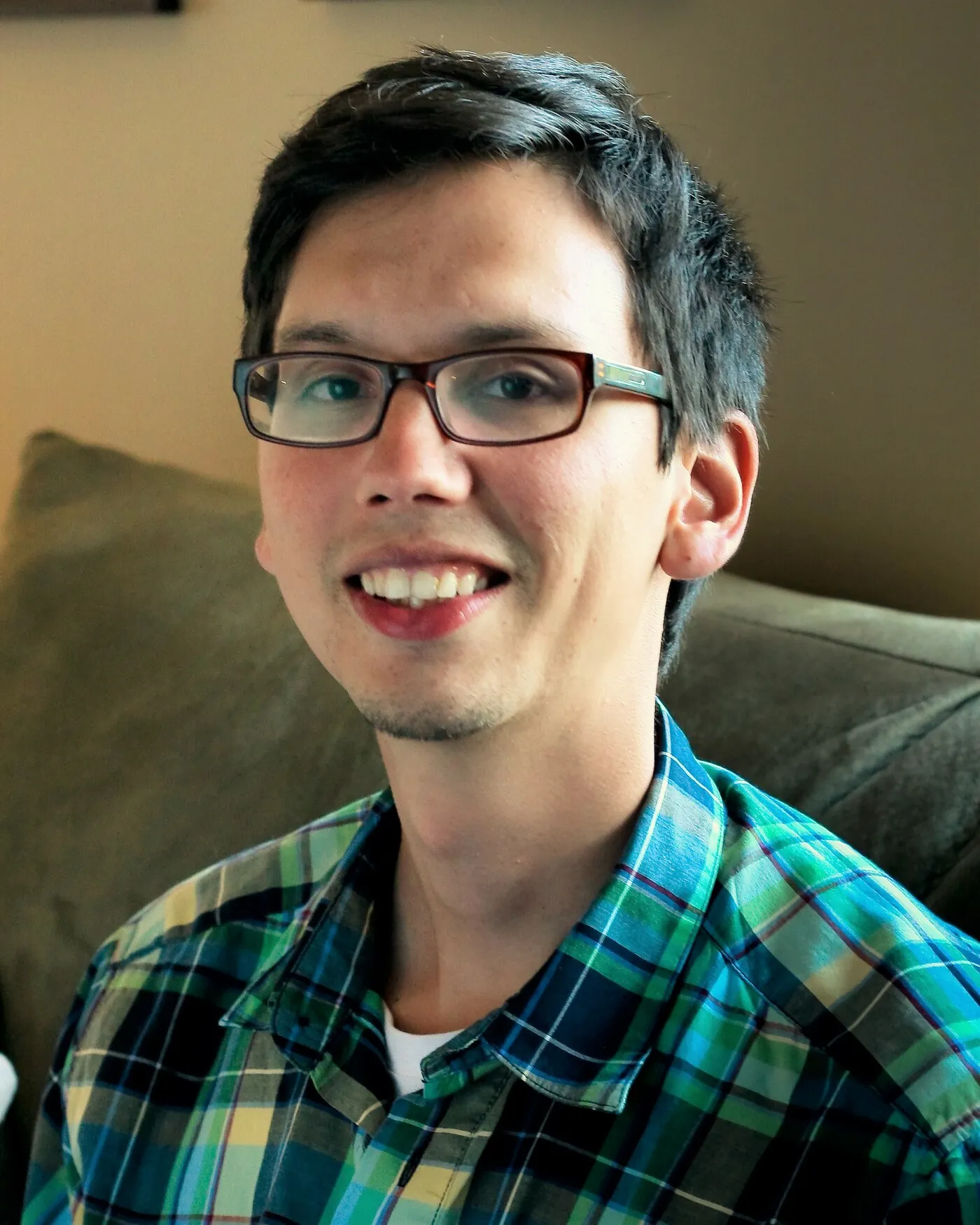
Jeff Decontie, a Mohawk from the Algonquin First Nations who lives in Ottawa, talked about being a person of faith in a secular world:
Jeff Decontie. Photo courtesy of Cardus
“Secular worldviews can sort of eat up everything around them and accept a whole wide range of beliefs at the same time. For example, you have the prevailing scientific thinking alongside New Age believers, and people in society just accept this, saying, ‘Oh, whatever it is you believe in, all religions lead to the same thing.’ No one questions it. How can these contradictions coexist? … Then we ask an [Indigenous] elder to lead prayer? Any other religion would be a no-no, but you can ask for an elder who’s going to pray a generic prayer to some generic Creator, and it’s not going to ruffle any feathers. I think that’s the danger of secular thought creeping into Canada: It goes unnoticed, it’s perceived as neutral, but at the same time it’s welcoming a whole wide range of beliefs. And it doesn’t just influence Indigenous thought. It’s influencing Christianity.”
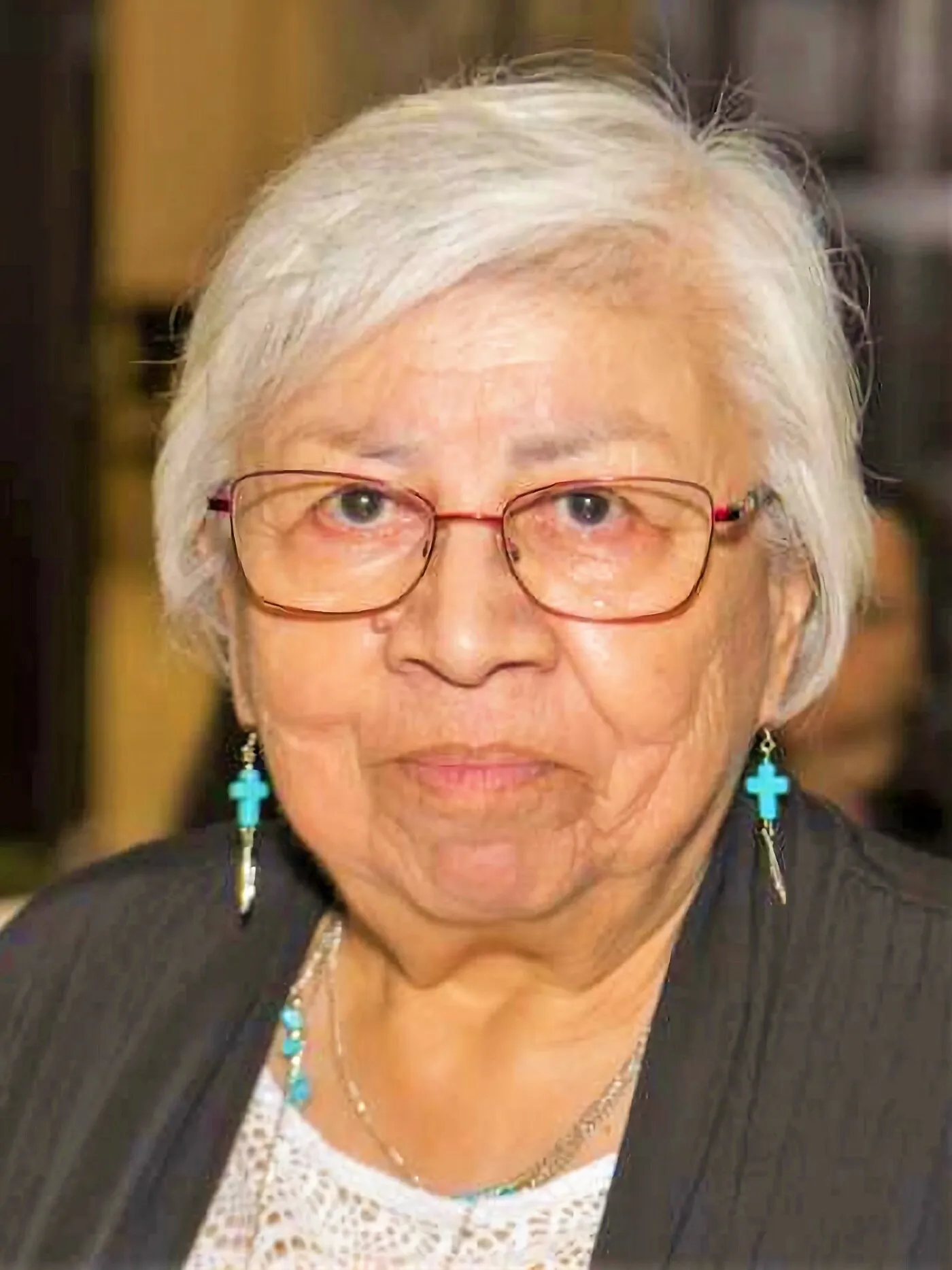
Rosella Kinoshameg, a member of the Wikwemikong Reserve on Manitoulin Island in Ontario, spoke about being Indigenous and Catholic:
Rosella Kinoshameg. Photo courtesy of the Catholic Register
“Well, I can’t change being Indigenous. That’s something that is me. I can’t change that. But to believe in the things that I was taught, the traditional things, the way of life and the meanings of these things, and then in a church, well, those things help one another and they make me feel stronger.”
This article was originally published May 10, 2023, in The B.C. Catholic, a weekly publication serving the Catholic community in British Columbia, Canada, and is reprinted here on CNA with permission.
ACI Prensa Staff, May 17, 2023 / 13:25 pm (CNA).
Following the publication of a report by the Spanish newspaper El País that documented the serial sexual abuse of 89 victims committed in Bolivia by a Jesuit priest, new a… […]