

Pope Leo XIV’s first encyclical, Magnifica humanitas (MH), has received considerable attention, including from sources not ordinarily interested in papal documents. The reason is understandable, given the attention it gives to Artificial Intelligence (AI). Pope Leo argues that AI may prove as consequential for humanity as the industrial revolution was at the turn of the twentieth century. Even among those who may not yet share that judgment, AI has become a source of fascination, anxiety, and societal preoccupation.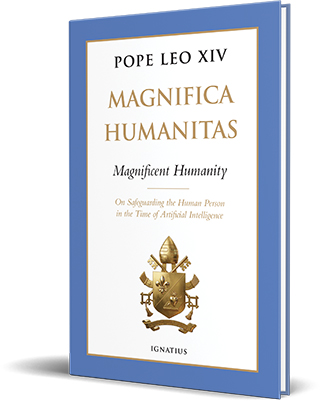
This encyclical is, as several commentators have suggested, best understood as an important contribution to the Church’s social doctrine, particularly as Leo applies it to a society increasingly shaped by artificial intelligence and other emerging technologies, many of which will see significantly accelerated advances driven by advances in AI capabilities. I agree with those who suggest MH should first be read as an application of social teaching to contemporary issues before reading it as a document on AI. To reverse this priority risks misunderstanding both the purpose of the document and the broader vision guiding Leo’s treatment of AI.
Nevertheless, MH already reveals two central concerns likely to shape Leo’s pontificate. Like many of his predecessors, Leo reveals a deepening concern over the deteriorating state of modern society and, especially, its fragmented understanding of the human person. MH represents a further development and application of Catholic social doctrine to the conditions created by artificial intelligence and the broader technocratic paradigm. Leo’s concern is more than what technology might do. He is more concerned with what man may cease to become if technological power increasingly obscures man’s capacity to ask the fundamental questions concerning truth, freedom, love, meaning, and ultimately God.
MH also expresses particular concern that policymakers, technologists, and ordinary users exercise prudence and moral responsibility in order to minimize the destructive effects that misuse and abuse of AI will certainly inflict upon the human person and society.
A hermeneutic for reading Magnifica humanitas
There are aspects of the document that may eventually require deeper theological consideration. Yet one paragraph in particular is worth attention because it may help illuminate Leo’s broader governing and pastoral instincts as well as provide us with the appropriate hermeneutic for this document. I am thinking about paragraph 25.
I will say at the outset that this paragraph is not central to the encyclical’s primary argument. As I have said, MH is principally concerned with the human person under the conditions created by artificial intelligence, technological power, and what Pope Francis called the “technocratic paradigm.” In this broader concern, Leo XIV stands in unmistakable continuity with Francis. Yet, both are in clear continuity with their predecessors on these matters, at least back to St. John Paul II. Indeed, Francis is cited approximately 76 times, John Paul II approximately 56 times, and Benedict XVI at least 21 times.
The significance of paragraph 25 is that it retrieves vocabulary clearly associated with Francis’s pontificate: process, discernment, dialogue, historical development, conflict transformed into harmony, and “time greater than space.” It must be admitted that for some, this vocabulary seemed to correspond, during Francis’s pontificate, with unresolved ecclesial questions and delayed clarifications. The paragraph naturally raises a question: is Leo XIV simply expressing continuity with Francis’s pastoral emphases, or is he also inheriting Francis’s tendency, at times, to rely upon historical process in matters many believe require doctrinal or disciplinary clarification?
Paragraph 25 is therefore important not because it introduces a novel doctrine of conflict, discernment, or historical development. Nor is it the interpretive key to the encyclical itself. Rather, it functions as a revealing lens through which to examine how Leo understands the relationship between truth, providence, historical process, and ecclesial judgment. The paragraph raises legitimate questions about continuity and discontinuity with Francis, but those questions can only be answered by reading it within the broader theological, anthropological, and ecclesiological framework of MH as a whole.
That question requires precision because the alternatives are not dichotomous “process” versus “truth,” nor “accompaniment” versus “leadership.” A Catholic approach to these pastoral principles requires both accompaniment and leadership. The real issue concerns their proper order and prudent application. These terms, which enjoyed considerable prominence during Francis’s pontificate, reflected his particular appropriation of them from Fr. Romano Guardini in particular, as well as others. Because Francis was formed within a Jesuit and Latin American milieu during the very decades in which Fr. Pierre Teilhard de Chardin’s evolutionary and historical vision was being intensely debated, criticized, defended, and gradually absorbed within some quarters of Catholic and especially Jesuit intellectual life, it is reasonable to ask whether some aspects of Francis’s pastoral governance reflected either direct Teilhardian influence or, at least, affinity with the broader developmental ethos that Teilhard helped make plausible.
Pope Francis, Romano Guardini, and the “technocratic paradigm”
Romano Guardini was Italian by birth but became a naturalized German citizen and was ordained as a diocesan priest in Mainz. He was a significant Catholic intellectual influence during the twentieth century. Jorge Bergoglio’s initial interest was Guardini’s thesis that human existence unfolds amid enduring tensions or “polarities”: authority and freedom, individuality and communion, permanence and development. These are not contradictions to be mechanically synthesized. Rather, they are living tensions that must be held together under truth, order, and providence. Guardini was deeply concerned that modern technological civilization was dissolving man’s openness to transcendence by reducing reality to utility, control, and technique.
Guardini’s non-Marxist approach to alienation and conflict was of great interest to Bergoglio, and so the eventual pontiff was sent to do a doctoral dissertation on this aspect of Guardini’s thought. It was quite relevant as a possible alternative to the Marxist Liberation Theology dominant in Latin America in the 1960s and 1970s. Yet, the future Francis was also significantly influenced by Guardini’s critique of the misuse of technology and its negative impacts on the person and society.
Pierre Teilhard de Chardin was a French Jesuit priest with formal theological formation and a doctorate from the Sorbonne in paleontology, professionally active in geology and paleoanthropology. His theological writings proposed a sweeping synthesis of evolution, cosmology, Christology, and history that moved well beyond his formal scientific specialization and raised profound theological questions concerning creation, original sin, providence, and the relationship between revelation and historical development.
While brilliant and insightful, many of his theories were judged by the Holy Office to contain serious doctrinal ambiguities and errors. His thought emphasized humanity and creation gradually moving toward unity and fulfillment in Christ through processes of increasing complexity and consciousness. While aspects of his work can be interpreted compatibly with Catholic theology, critics have long warned that certain readings of Teilhard blur the distinction between providence and historical mechanism, encouraging excessive confidence that history itself naturally converges toward harmony.
Finally, we ought to mention what may broadly be called “correlationist” tendencies in contemporary theology and pastoral practice. In the present discussion, the term refers to a penchant for interpreting doctrine and ecclesial life primarily through their relationship to historical, cultural, and experiential developments. Properly understood, such attentiveness is necessary. The Church accompanies real persons in concrete historical situations, and prudence often requires patience, gradualism in revealing the full truth, and careful discernment. Yet when this ethos becomes exaggerated, it can tempt pastors to delay judgment and revelation of the truth indefinitely under the assumption that historical processes themselves will gradually clarify or resolve tensions.
In some modern forms, especially those influenced by strongly developmental or quasi-Teilhardian views of history, this tendency can approach a practical confidence in historical convergence itself, as though providence operates primarily through the gradual self-resolution of conflict rather than through decisive acts of truth, judgment, conversion, and governance. In its most exaggerated form, this pastoral instinct can drift toward what might be called a “process-as-providence” mentality, in which unresolved tensions are left to historical development under an implicit confidence that time and conflict themselves will gradually produce harmony.
The strongest evidence concerning Francis’s intellectual formation points not primarily toward Teilhard, but toward a Jesuit and European continental tradition shaped by Guardini, Gaston Fessard, Miguel Ángel Fiorito, Alberto Methol Ferré, Amelia Podetti, and related figures. Francis absorbed a style of thinking attentive to tension, discernment, history, people, and pastoral movement. His concern for what he called the “technocratic paradigm” was deeply coherent and substantially Guardinian. He feared a civilization increasingly incapable of asking ultimate questions, increasingly closed to transcendence, increasingly reducing the person to function, efficiency, appetite, and utility. In this regard, Francis’s pontificate possessed a genuine evangelical urgency.
The complex challenge of the Francis pontificate
It must be clearly stated that Francis did not consistently govern according to any pure “process-as-providence” theory. Nor did he simply trust historical conflict to resolve itself without pastoral intervention. In fact, he could act decisively, quickly, and even severely when he judged a matter dangerous to the Church or to human dignity. His treatment of gender ideology, clerical corruption, certain forms of nationalism, environmental exploitation, and especially liturgical traditionalism demonstrates this clearly. It would therefore be inaccurate to portray him simply as passive or unwilling to govern, as would be expected with the extreme forms of correlationism.
The more precise criticism is that his willingness to intervene was asymmetrical. Areas he perceived as manifestations of rigidity, abstraction, exclusion, or ideological legalism often received strong correction. Areas involving doctrinal ambiguity, sacramental confusion, competing episcopal interpretations, or unresolved pastoral tensions were more frequently left to historical and pastoral development. It is principally in these areas that Francis’s critics perceived a troubling asymmetry in his governance. Questions they regarded as involving doctrinal clarity or ecclesial discipline often remained unresolved, while other perceived threats elicited prompt and decisive intervention. Explaining this pattern is not entirely straightforward. One possible explanation is that Francis regarded many of these disputed questions less as doctrinal crises than as manifestations of deeper pastoral and anthropological problems. If so, his preference for accompaniment, discernment, and historical development may have seemed to him a more prudent response than immediate juridical resolution.
Whether this interpretation adequately explains all of Francis’s decisions is difficult to determine. In some cases, however, Francis did more than merely tolerate ambiguity. He contributed to its intensification. The disputed reception of Amoris laetitia concerning the divorced and civilly remarried remains the clearest example. Francis appears to have believed that some tensions should remain pastorally open because premature juridical resolution would obstruct accompaniment and discernment in concrete situations. Similarly, his handling of the German Synodal Way, questions surrounding Fiducia supplicans, and aspects of synodality often suggested a willingness to permit conflictual development so long as he did not perceive an immediate threat requiring decisive intervention.
Yet even here, charity and precision are necessary. Francis likely did not judge these matters primarily as doctrinal crises. Rather, he appears to have interpreted many of them as symptoms of deeper pastoral, anthropological, and evangelical failures already present within modern Catholic life. His suspicion fell heavily upon forms of rigidity that, in his judgment, reduced Christianity to legal abstraction while leaving persons existentially untouched by Christ. Whether this judgment was prudentially correct is a matter that I will leave to others.
The practical effect was that many faithful Catholics experienced his pontificate as uneven, inconsistent, or difficult to interpret. Questions concerning traditional liturgy or perceived ideological rigidity often received immediate and forceful responses. Questions concerning progressive sacramental discipline, doctrinal ambiguity, episcopal contradiction, or contested pastoral applications remained mostly unaddressed or unresolved for his entire pontificate. The resulting atmosphere produced the impression, for many, that conflict and confusion themselves were gradually becoming normalized as modes of ecclesial governance.
A stronger emphasis on doctrinal clarity
We can now return to Leo XIV and paragraph 25 of Magnifica humanitas. The foregoing discussion is therefore not intended to explain Leo through Francis, but to identify the interpretive possibilities that paragraph 25 naturally raises for readers familiar with the previous pontificate. At present, the evidence does not support the conclusion that Leo intends simply to continue Francis’s more controversial governing tendencies. It does support the conclusion that he consciously intends continuity with Francis’s social, anthropological, and evangelical concerns, as well as certain aspects of Francis’s pastoral approach. The choice of specific terms may reflect continuity with categories familiar from Francis’s pontificate. Whatever their origin, Leo accepted them and therefore presumably found within them a meaning compatible with his own theological and pastoral vision.
Even so, these influences can be integrated into an authentically Catholic pastoral approach to ministry. Their practical application, however, remains dependent upon prudential judgments, and different judgments can lead to markedly different pastoral outcomes. The available evidence suggests that Leo intends to continue Francis’s emphasis on accompaniment, discernment, kerygmatic proclamation, and outreach to everyone. Therefore, the more important and difficult question is whether Leo shares Francis’s prudential judgments concerning the relationship between accompaniment, discernment, and doctrinal clarification.
An important consideration is Leo’s own testimony regarding Francis’s influence. In his first major interview as pope, Leo described the papacy in strongly pastoral terms, emphasizing outreach, listening, and appreciation for persons, ‘whoever they are.’ On questions concerning those who identify themselves using the problematic moniker LGBTQ, he explicitly invoked Francis’s “todos, todos, todos” (everyone, everyone, everyone), presenting welcome as rooted in each person’s dignity as created in the image of God.
Yet the same interview also suggests a different prudential inclination. Francis certainly affirmed the Church’s teaching on marriage, sexuality, gender ideology, and the family in a number of venues. The difficulty was that, when addressing audiences he wished especially to welcome, he often left doctrinal limits unstated or understated, perhaps because he judged that premature clarification would cause such persons to dismiss the encounter before receiving the Church’s maternal concern. He did not always appear sufficiently attentive to the understandable inference many would draw—that doctrine could be disregarded when it came to matters of welcome and inclusion.
Leo seems more inclined to keep welcome and doctrinal clarity together in the same communication, even if he expresses the clarity in a deliberately gentle form. Thus, when he says that a change in Church doctrine on sexuality and marriage is highly unlikely in the near future, the formulation is pastorally soft and arguably less precise than one might wish. While emphasizing the Church’s universal openness to persons, Leo simultaneously indicates that accepting the invitation necessarily includes grappling with one’s own situation in light of the Gospel, where some accustomed to Francis’s approach may have expected only the language of welcome. Likewise, his insistence that ritualizing same-sex blessings would go beyond what Francis approved suggests continuity with Francis’s pastoral grammar, but what is new is clarity in his own voice about its authentic application.
Distinctions, principles, and the human person
Leo explicitly affirms Francis’s influence regarding care for the poor, dialogue with history, synodality, technological concerns, and the civilization of love. Yet even here, distinctions are already visible. On synodality, for example, Leo receives Francis’s emphasis upon listening, dialogue, and participation, but appears to be giving it a more definite ecclesiological form. Francis often appeared willing to allow the practical meaning and institutional form of synodality to emerge through process, discernment, and lived ecclesial experience.
Leo, by contrast, seems more inclined to expect synodality’s structure to be determined by the Church’s received ecclesiology: episcopal authority, Petrine primacy, consultation ordered to governance, and mission. In this respect, Leo seems to be accepting Francis’s synodal vocabulary while placing it within a more recognizably episcopal, consultative, and missionary framework. What emerges is ecclesiological specification. The form is increasingly determined by the Church’s prior self-understanding rather than being allowed to emerge principally from the process itself.
The same pattern appears elsewhere. Leo clearly shares Francis’s conviction that modern technological society threatens the human person when it severs power from wisdom and utility from transcendence. The broader structure of MH reflects precisely these concerns. Yet, thus far, Leo has tended to frame them within stable theological, anthropological, and ecclesiological principles. Francis certainly appealed to these principles as well, though the manner in which they governed particular pastoral judgments was often less apparent to his critics.
This observation is important for another reason. Some criticism of MH seems to presume that a document addressed to social, technological, and political questions must foreground explicit soteriological proclamation at every point in order to remain authentically magisterial. That criticism mistakes the character of Catholic social doctrine. The Church can speak to the world about the human person, labor, technology, economics, culture, and political order without reducing herself to sociology. Indeed, in a post-Christian culture, such teaching can serve a necessary evangelical task by recovering the human questions to which Christ alone is the full answer. Leo’s concern for humanity is therefore not an alternative to Christology, but one of its social and anthropological implications.
Nevertheless, Leo does explicitly ground his social teaching in the human person as image of the Triune God, returns in the conclusion to the mystery of the Word made flesh, and presents ecclesial communion in Christ as essential to the spirituality needed for this moment. MH is therefore not a reduction of the Magisterium to sociology. Its social analysis is governed by theological anthropology.
An encyclical with pre-evangelical focus
Joseph Cardinal Ratzinger’s reflections on the new evangelization can also be helpful here. He repeatedly argued that a culture that has lost the moral, anthropological, and metaphysical assumptions once supplied by Christianity will often be unable to hear the Gospel in its fullness. Before many people can understand the answer, they must first recover the question. Indeed, a culture that has lost the Christian understanding of the human person will increasingly lose its capacity to understand why redemption is needed at all. In such circumstances, the Church’s task includes restoring truths about the human person, freedom, reason, conscience, creation, and the common good. Ratzinger understood this work as a form of pre-evangelization: preparing the cultural and intellectual conditions necessary for a fuller reception of the Gospel.
For this reason, a social encyclical aiming at all people of good will, especially when there is reason to believe there will be wide openness to it, can legitimately attend to pre-evangelical concerns. When it reopens the fundamental human questions obscured by a technocratic culture, it prepares the ground for more explicit proclamation. This may help explain why MH has attracted attention far beyond ordinary Catholic audiences. It speaks to anxieties that many recognize, even when they cannot yet identify their deepest cause.
This point is especially important because paragraph 25 is not the interpretive key to the encyclical. The governing framework is the document’s theological anthropology, itself grounded in the Trinitarian, Christological, and ecclesial vision that structures the encyclical from beginning to end. Leo’s concern for artificial intelligence, technological power, labor, economics, and political life arises from a prior vision of the human person, and that anthropology itself is ultimately grounded in truths concerning creation, Christ, and the destiny of man in communion with God.
Detached from that framework, MH can easily be mistaken for sophisticated social analysis. Read within that framework, it becomes clear that the document’s social teaching is an application of theology rather than a substitute for it. Paragraph 25’s language about process and conflict thus appears within a broader argument repeatedly grounded in enduring truths, moral judgment, and rigorous discernment. Leo repeatedly invokes Catholic social doctrine not as an evolving process detached from truth, but as the application of permanent principles to changing historical conditions.
This distinction becomes clearer when one examines the encyclical’s broader movement. Leo appears increasingly inclined to place process beneath prior theological, anthropological, and ecclesiological truths. He does not seem to treat historical development as the principal determinant of ecclesial or social form. Rather, development, discernment, and social change are repeatedly situated beneath truths concerning the human person, moral order, and the Church’s mission. He warns repeatedly that technological and social developments can deform humanity when severed from truth, wisdom, and moral order.
The document’s anthropology is sober rather than optimistic. Human limitation is treated as intrinsic to creaturehood rather than as a defect awaiting technological transcendence. In this respect, Leo appears substantially closer to Augustine and Guardini than to any naïve historical progressivism. Whether this represents a genuine difference from Francis or merely a different mode of expressing similar instincts cannot yet be determined. Vocabulary alone cannot settle the question. The decisive evidence will come through governance.
The eventual choices
Several inherited issues from the Francis pontificate will likely become revealing tests. The German Synodal Way, unresolved tensions surrounding Amoris laetitia, the future interpretation of Fiducia supplicans, relations with the SSPX, and the practical structure of synodality itself all involve questions where Leo will eventually need to choose among clarification, managed patience, or continued ambiguity.
The evidence thus far suggests neither rupture nor simple continuation. Leo appears less inclined than Francis to interpret doctrinal clarification itself as a potential manifestation of rigidity. Yet he also appears unwilling simply to repudiate Francis’s pastoral inclinations or social concerns. The most plausible current reading is therefore one of continuity accompanied by clarification, ecclesiological specification, and stabilization. Leo appears willing to preserve Francis’s broader social, anthropological, and evangelical concerns while placing them within firmer doctrinal, juridical, and anthropological boundaries. In this respect, continuity may ultimately take the form not of expansion, but of clarification and consolidation.
Whether this proves true will depend on whether Leo treats patience as a prudential mode ordered toward eventual clarity, or whether patience itself gradually becomes a principle capable of indefinitely sustaining unresolved tensions. Christian patience is never mere suspension. God governs history patiently, but He governs it toward judgment, illumination, repentance, and communion in truth. Christ accompanies the disciples on the road to Emmaus patiently and gradually, but His accompaniment is always ordered toward truth. Yet His accompaniment culminates in instruction, correction, recognition, and revelation. He does not merely walk beside them indefinitely while leaving their confusion unresolved.
That is ultimately the standard by which Leo XIV’s continuity with Francis will have to be judged.
If you value the news and views Catholic World Report provides, please consider donating to support our efforts. Your contribution will help us continue to make CWR available to all readers worldwide for free, without a subscription. Thank you for your generosity!
Click here for more information on donating to CWR. Click here to sign up for our newsletter.

Back to the top and the earlier and increasingly dated influence of Teilhard de Chardin…
Three Discernments and a Summary:
FIRST, here’s what Chardin revealed (a revelation!) to Dietrich von Hildebrand (an Augustinian, like Leo!) when asked what he thought about St. Augustine: “Don’t mention that unfortunate man; he spoiled everything by introducing the supernatural” (Appendix, “Trojan Horse in the City of God,” Franciscan Herald Press, 1967).
SECOND, and then there’s the very sympathetic Cardinal de Lubac (a Jesuit, like Francis!) in his “Religion of Teilhard de Chardin” (Image 1968).
DeLubac alludes, however briefly, to Teilhard’s being less than “infallible,” not always “convincing,” and even points to “the inevitable narrowness of his personal point of view”[!]. And this: “the danger of misunderstanding is by no means imaginary” (Teilhard’s actual orthodoxy was not in question). And even this about the difference between real theology and Teilhard as more of a poet: “the closer the thought conforms to the truth of the Universe, itself pure and exuberant poetry, the more the thought too will be a source of poetry, showering poetry on the entranced reader” (Ch. 8, “Scientist, Prophet and Mystic,” and fn. 36, 62). Monism?
THIRD, avoiding rupture with Francis’ sensitivities is one thing, but the better thing is to read, above:
“Leo appears willing to preserve Francis’s broader social, anthropological, and evangelical concerns WHILE placing them within firmer doctrinal, juridical, and anthropological boundaries….” Indeed, it isn’t all about giving endless airtime to comfortably constructed mental polarities— Twiddledee and Twiddledum?
SUMMARY: “Do not be conformed to this world, but be transformed by the renewal of your mind [!], that by testing you may discern what is the will of God, what is good and acceptable and perfect” (Romans 12:2).
Regarding the “dated influence of Theilhard de Chardin,” I think it was the late Joseph Sobran who stated that T de C was the only theologian in Catholic history who went from banned and fashionable to rehabilitated and outmoded, all in one generation.
AI is what has been programmed into it. It has no conscience, heart, or feelings, it is a tool. It can be a wonderful tool if used correctly. Society can not let itself turn into a generation of Startrek’s “Mr. Spock”. We can not allow ourselves to guided mainly by computers, and not God.
Thank you Deacon David for your article. Continuity with Pope Francis is certainly present in Pope Leo but hopefully we’ll see more clarification. Weather one agrees with the Francis papacy or not it was obvious confusion was a big problem.
A clear straight forward leadership would be a Blessing for Pope Leo.
Amen
About the stated need (in Magnificatis Humanae, MH) to update the Just War Doctrine to address the possible use of algorithms in place of the human touch and conscience, is there also a cross-cultural factor to be soberly considered?
Namely, what is the meaning of “forgiveness” in cultures that are non-Christian, or even anti-Christian? First, a quote from MH, then two different views from within and about parts of Islam, then a not-updated (?) commentary dating from the time of the late Ottoman Empire.
FIRST, “Humanity possesses far more effective and capable tools for promoting human life and resolving conflicts, such as dialogue, diplomacy and FORGIVENESS [caps added]. The use of force, violence and weapons reflects a relational poverty that always has disastrous consequences for civilian populations” (MH n. 192).
SECOND, From the Qur’an: “Nothing can prevent men from having faith and seeking forgiveness [!] of their Lord, now that guidance [?] has been revealed to them . . . ” (Q 18:55, also Q 10:35, 45, and Q 47:16, etc.). But, what is the depth of this exterior (?) “guidance” as compared to the Christian understanding of the interior Natural Law and human nature, as then called higher by the merciful nature of the self-disclosing Triune One?
THIRD, so what is “forgiveness” in the Islamic culture, where a behavioral pattern of remembering and forgetting the “guidance” is atoned by tossing stones symbolically at the Ka’ba? Stones tossed today, rather than 16th-century coins tossed into Tetzel’s tin cup of fictive indulgences?
FOURTH, “Falsehood, deception, robbery, murder have no moral quality whatever. There are entirely legitimate when used for the furtherance of the Moslem and even for the furtherance of individual advantage . . . the great mass of the Moslem community is utterly ignorant of what evangelical Christians understand by the sense of sin. Mistakes are to be atoned for by punishment, penance or remission of penalty; FORGIVENESS [caps added] in the Christian sense of the term is almost absolutely unknown” (Rev. Edwin M. Bliss, “Turkey: The Armenian Atrocities,” 1896, p. 61).
Is this not-updated picture still accurate for, say, a few jihadist Islamic states?
SUMMARY: Fully in step with MH about “forgiveness”…with an updated Just War Doctrine, how is Civilization to deal simultaneously with the false religions of both a technocratic anthropology of algorithms and the likely watered-down anthropology of Islam?
American popesplaining under Leo seems to be reaching new lows. This one even tries to whitewash Francis to some extent, which seems to be an emerging trend. Another theme here and by american neo-cons generally is to equate stylistic things- mode of governance, temperament- with substantial matters. Leo, by his own admission now, is continuing and further implementing the substance of Francis’ agenda, though he differs in tone, style, etc. This makes Leo more dangerous, as events aren’t accompanied by the nastiness and such that Francis had, but come with a smooth tone and a smile. When the results are the same the latter don’t matter. We also must remember that Leo doesn’t have to actually do much, but simply allow the novelties to remain.
As to some examples of the above from this piece, we are told that Leo provides “doctrinal clarification.” The supposed examples are anything but, e.g, Leo saying he won’t change doctrine on some issues any time soon. Huh?! What is an utter scandal and admission of heterodoxy is turned around as something good- a pope says that doctrine can change- not develop- and names specific things like women’s ordination, marriage, same-sex attraction. The fact he can’t change them is completely glossed over, along with the added scandal that Leo thinks he could change infallible, definitive teaching. Leo also said that what needs to happen first is to change attitudes before you can try to change doctrine; which seems an open admission of an ideological program. Another example is how Fiducia Supplicans is now inferred to be legitimate and Leo is “clarifying” by making sure people don’t go beyond its parameters. (The author uses the word doctrine in this regard, so is F.S. a matter of Catholic doctrine/is the document a doctrinal one?) The new “clarity” is also not new, as the first “protest” over the German bishops having ritualized blessings was made two years ago under Francis! So, a pope saying that infallible teachings can change is reframed as “clarification” because he said he has no immediate plans to change them, even though he can’t anyway; while the heterodox F. Supplicans is seemingly now legitimate doctrine that Leo is trying to safeguard or properly interpret by having people not go beyond it, as though one level of heterodoxy is okay compared to an even worse one. Did we get so desensitized under Francis that this is the seeming new standard for papal conduct?
Down the line, Leo has either done zero to repudiate anything Francis did or explicitly embraced them, save for a few things pertaining to matters like finances: Fiducia Supplicans, T. Custodes, A. Laetitia, the synodal project that just produced perhaps its worst report ever; he has kept all the same heterodox, corrupt personnel; just about all his appointments as bishops and to the holy see are of heterodox people, etc, etc. And people need to stop the “we need to wait and see” narrative, as though there’s not plenty of evidence of where Leo stands or as though he’ll change what he already confirmed, e.g. that although he’s embraced F. Supplicans twice, it’s not clear what he might do with the issue in the future or that it’s open to future interpretation! Really? It’s unimaginable that an orthodox pope would do nothing to repudiate such a thing for over a year, much less embrace it.
M. Humanaitas is another issue in itself, of course, and more and more truly critical analyses are coming forward, showing it has many serious problems. As a final note, as a reality check on Francis and Leo, and what should be a bombshell story, but has received a virtual blackout in America: the former head of the pontifical academy for life, Archbishop Paglia, openly admitted in a recent interview with an italian outlet- settimana news, so it’s in Italian- that Francis and co. were deliberately trying to undermine various teachings- homosexuality, contraception, divorce and remarriage, moral theology as a whole, especially jpii’s magisterium; while he details the scheme as to how they went about it. He describes it positively of course, not as subversion or the like- that it was to “adapt doctrine to the new times.” Some of the means they used to do so are the same ones now reaffirmed by Leo- the synod, new curriculums at academic institutions like the JPII centers for marriage and family, the make-up and by-laws of the academy for life and other offices of the Roman Curia, the effort to promote the seamless garment error and redefine pro-life issues to include just about anything, the promotion of naturalist, humanist concepts like “fraternity.” Again, a bombshell but the subject of a blackout, and you can see why…
Also to be noted, however, is that Paglia has been conspicuously removed. Regarding the hole-in-the-dike Amoris Lartitia, we should watch for the gathering of reps from national bishops conferences, on this topic, announced for October. Then there’s the new and annual Consistories of Cardinals (next one this month in June)apart from and above the inherited and free-wheeling mongrel synods, and in July the paired and opposite crises of Germania and SSPX, not to mention renewal (or not) of the “provisional agreement” with China. Plus the lavender gangrene at all levels.
From the back bleachers, my notion is to not conclude so soon about the pragmatic zig-zag path through this unprecedented minefield left behind by Francis.
Mr. Beaulieu, actually that is not the case. In fact, that’s another prime example of how american outlets can’t always be trusted these days regarding Leo- Paglia retired after reaching the mandatory age of 80 just prior to Leo coming in. He was not removed and I have come across no factual indications of this or that he was pushed to retire, but only american conservatives and even trads wanting to push that narrative. If you have any fact-based information to the contrary, it would be interesting to see. What also refutes that narrative is that his replacement is the number two man at the academy for life for the entire time Paglia was there, Msgr. Renzo Pegoraro, who supports the same heterodox ideas Paglia and others do, e.g., making public statements questioning the teaching on contraception, assisted suicide, and euthanasia, for instance. This would nonsensically mean Paglia was pushed out only to be replaced by paglia 2.0. The same goes for Paglia’s replacement at Rome’s JPII institute in Rome, a long time Francis stooge. former Vicar general of rome under Francis. The new statutes of the academy under Leo are also even a little worse than under Francis! Again, there is no solid reason whatever why, after a year, Leo could not have at least made some move, any move, to reverse or alter various things; again, to the contrary, he has explicitly embraced them one by one. There’s no way an orthodox pope would act in such a manner- with just the fact that with each passing day the bad things get more entrenched, cause more damage, scandal, etc.
We read somewhere that five prefects of dicasteries are at retirement age this year. (Not sure about that.) We should watch to see if retirement is a useful cover story to avoid being painted as a vindictive new pope.
The worst damage to the Church’s public witness involves playing a waiting game for crackpot priests or prelates to be discredited or retire. How much human tragedy must result from false teaching being tolerated in order to avoid not offending the egos of heretics?
“Which of you, if your son asks for bread, will give him a stone?”
This raises an interesting question, doesn’t it? In stating what you cited, Leo has purported that the pope can change doctrine if he so chooses. We know this is false. But that means that Leo has asserted that all power in heaven and earth has been given to him to change what even Christ Himself declared he was not sent to change: the moral law, which Jesus says will never change. For Leo to be right would have to mean that Leo sees himself not as the successor to St. Peter, but the successor to Christ Himself–someone who is empowered to reject what Christ said could never be overthrown. For Leo to be able to change the moral law (if public attitudes change, of course, which they’re doing everyday) cannot but mean that he believes he is greater than Christ. How else can you interpret it? But if so, then his acceptance of the job of pope would be gravely compromised by a thoroughly defective understanding of the job description. Could this be argued (and determined by the cardinals) to have invalidated his papal appointment ab initio? I’d appreciate some legal opinions on this matter.
Questions to consider.
Does Ai promote human warmness, touch and love for our family and friends.?
Does Ai teach us to use our brains in our work and studies as humans or just give us the answers.
Does Ai help us to be there physically for a more personal touch in all things that we do?
Does Ai draw us spiritually to god in his holy presence.
Does Ai help us to be more close with our family and friends?
Does Ai help us to feel pain, hunger and suffering around us?
Does Ai help us to make decisions according to gods will?
Does Ai help us to be more human and loving in our life and the world?
Things to ponder over.
Does this short term gains lead us all into destruction for the future generations?
A though for reflection.
Amen with 💕.