


Boston, Mass., Apr 4, 2023 / 16:42 pm (CNA)
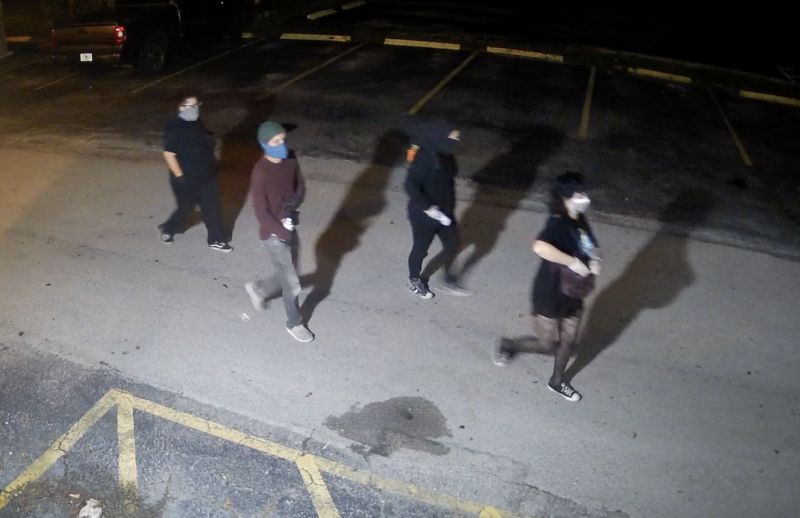
Two more individuals have been indicted for violating the federal Freedom of Access to Clinic Entrances Act (FACE), in connection with a string of pro-abortion attacks against pro-life pregnancy centers in Florida.
The FACE Act prohibits “violent, threatening, damaging, and obstructive conduct intended to injure, intimidate, or interfere with the right to seek, obtain, or provide reproductive health services.”
Earlier this year, the Department of Justice (DOJ) brought FACE Act charges against two Floridians, 27-year-old Caleb Freestone and 23-year-old Amber Smith-Stewart, for spray painting threats on a pro-life clinic in Winter Haven, Florida; an archdiocesan pro-life pregnancy center in Hollywood, Florida; and one of Heartbeat of Miami’s pro-life pregnancy centers in Hialeah, Florida.
Those arrests were the first two reported law enforcement successes against any of the now 60 recorded attacks on American pro-life pregnancy centers. The attacks were part of a wave of extreme pro-abortion violence following a May 2022 report that the Supreme Court would overturn Roe v. Wade. With the new indictment, law enforcement has now brought charges against a total of five people in connection with the attacks against pregnancy centers.
The March 22 indictment alleges that Gabriella Oropesa and Annarella Rivera, along with Freestone and Smith Stewart, spray painted threats on the Archdiocese of Miami’s Hollywood pregnancy center including the message, “If abortions aren’t safe then niether [sic] are you.”
The words “Janes revenge,” and an anarchist symbol were also written outside the South Broward Pregnancy Help Center, located about 45 minutes north of Miami.
“Jane’s Revenge” became a calling card of sorts for dozens of pro-abortion vandals after the May leak from the Supreme Court.
The indictment also alleges that Rivera, Freestone, Smith-Stewart, and “conspirators” vandalized the clinic in Winter Haven by spray painting “YOUR TIME IS UP!!”, “WE’RE COMING for YOU” and “We are everywhere.”
The words “Janes revenge,” and “Jane was here” were also spray painted on the clinic.
The indictment further alleges that Freestone, Oropesa, and “conspirators” spray painted “If abortions aren’t safe the [sic] neither are you” on the clinic in Hialeah.
Additionally, all four defendants face charges of engaging in a “conspiracy against rights” for attempting to prevent employees at pro-life pregnancy centers from providing services, the indictment says.
Rivera, Freestone, and Smith-Stewart could face 12 years in prison, three years of supervised release, and a maximum fine of $350,000. Oropesa could face 10 years in prison, three years of supervised release, and a maximum fine of $250,000.
If you value the news and views Catholic World Report provides, please consider donating to support our efforts. Your contribution will help us continue to make CWR available to all readers worldwide for free, without a subscription. Thank you for your generosity!
Click here for more information on donating to CWR. Click here to sign up for our newsletter.



THE NEW DOBBS DECISION IS ACTUALLY A PRO-CHOICE DECISION
1. It just dawned on me that the Dobbs decision didn’t actually overrule Roe vs. Wade, but in fact upheld and endorsed the central principle of Roe vs. Wade.
2. All the Dobbs decision did is move the abortion CHOICE from the individual pregnant woman to the majority vote of the state legislature (or in some cases, the majority vote of the state supreme court).
3. So, the Dobbs decision is just as much PRO-CHOICE as Roe vs. Wade.
4. The Supreme Court, in Dobbs, including the Catholic Justices such as Brett Kavanaugh and Amy Coney Barrett, actually handed down in Dobbs a Pro-Choice ruling.
5. According to these justices, it is perfectly OK with the U.S. Constitution if the state legislatures (and state voters) of all 50 states vote to allow abortion for all 9 months of pregnancy.
6. These justices completely ignored the 14th Amendment, which says: “No State shall make or enforce any law which shall abridge the privileges or immunities of citizens of the United States; nor shall any State deprive any person of life, liberty, or property, without due process of law; nor deny to any person within its jurisdiction the equal protection of the laws.”
7. So, just like Roe vs. Wade, the Dobbs decision ruled that preborn babies in the womb are not citizens of the USA.
8. If they aren’t citizens, then what are they? Lumps of flesh? Pineapples?
9. So, just was with Roe vs. Wade, the Dobbs decision ruled that preborn babies in the womb are not human beings that are worthy of legal protection from willful killing for the sake of convenience.
10. Those Catholic justices on the Supreme Court should be ashamed of themselves by voting to maintain the Constitutional right to choose abortion (even if the locus of the choice was moved from the pregnant woman to the majority of the voters of each state).
11. As things stand, abortion will probably be legal in most of the USA forever.
12. What a disgrace! What a moral catastrophe!