Columns

Is America good or evil?

October 1, 2020 James Kalb 49

Something about the country makes people ask the question. People who love our country say it is exceptional. Those who don’t might prefer other words. For better or worse, it does seem different in some […]

No Picture
News Briefs

Tennessee’s abortion pill reversal law temporarily blocked

October 1, 2020 CNA Daily News 0

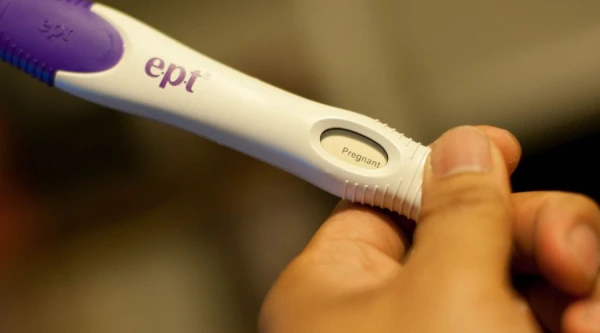
CNA Staff, Oct 1, 2020 / 01:07 pm (CNA).- A federal judge on Tuesday temporarily blocked a Tennessee law that requires doctors to inform patients seeking medical abortion that the procedure could be reversed if the patient acts quickly.

The law, which was signed by Gov. Bill Lee in July, requires abortion providers to notify patients that medical abortions can be reversed; a procedure that is becoming more common among pro-life doctors, but which has not yet been evaluated by the FDA.

Medical abortions made up around 40% of at U.S. abortions in 2017, according to the pro-abortion Guttmacher Institute. The FDA allows the two-pill regimen of mifepristone and misoprostol to be used until 10 weeks gestation.

Tennessee’s law required the physician to offer notification of the possibility of reversal at least 48 hours before the abortion, again in writing after the first pill of the regimen has been administered, and written on “conspicuously” displayed signs in private offices, ambulatory surgical treatment centers, facilities, and clinics that have provided more than 50 abortions in the previous calendar year, CNN reported.

Tennesee’s five abortion clinics, along with Planned Parenthood and the ACLU, filed suit against the law in August.

The federal judge, William Campbell, wrote that he was “unable to assess fully the competing expert opinions as to whether the mandated message is ‘truthful and not misleading,’ in the absence of the experts’ testimony,” but also that the plaintiffs had demonstrated “a strong or substantial likelihood” that the mandate violates the First Amendment.

The judge’s block on the law will last until Oct. 13.

Several other states, including Oklahoma, North Dakota, Arkansas, Kentucky, and Nebraska have passed laws requiring abortion providers to inform patients about abortion pill reversal. A district judge granted a preliminary injunction against North Dakota’s requirement during Sept. 2019. 

In July, a federal judge overruled FDA requirements that women visit with a doctor in-person before they can be prescribed a medical abortion.

Since 2000, the FDA has placed the chemical abortion protocol of mifepristone and misoprostol under its Risk Evaluation and Mitigation Strategy list, requiring it to be prescribed in-person in a hospital, clinic, or medical office. The patient must sign a form acknowledging that she has been adequately informed of the risks.

Pro-abortion groups, however, have pushed for the pill to be dispensed remotely via telemedicine during the coronavirus pandemic, due to apparent difficulties women could face traveling to a clinic in-person.

The first drug, mifepristone, effectively starves the unborn baby by blocking the effects of the hormone progesterone. The second drug, misoprostol, is taken up to two days later and induces labor.

Side effects that women suffer from the pills, such as heavy bleeding, abdominal pain, or severe infections, are usually treated at emergency rooms, which are not required to report the incidents to the FDA.

After the federal judge’s decision, pro-life leaders and senators asked the FDA to remove the abortion pill from the market altogether by classifying it as a public health hazard. Nearly two dozen pro-life leaders said that pro-abortion groups were “using the coronavirus pandemic as a ruse” in their efforts to deregulate the pills.

A 2018 study, published in Issues in Law and Medicine, a peer-reviewed medical journal, examined 261 successful abortion pill reversals, and showed that the reversal success rates were 68 percent with a high-dose oral progesterone protocol and 64 percent with an injected progesterone protocol.

Both procedures significantly improved the 25 percent fetal survival rate if no treatment is offered and a woman simply declines the second pill of a medical abortion. The case study also showed that the progesterone treatments caused no increased risk of birth defects or preterm births due.

The study was authored by Dr. Mary Davenport and Dr. George Delgado, who have been studying the abortion pill reversal procedures since 2009. Delgado also sits on the board of the American Association of Pro-Life Obstetricians and Gynecologists.

The Abortion Pill Rescue Network, which Delgado serves as a medical advisor, has claimed to have saved over 500 babies from abortion. The network is a program of Heartbeat International, a longstanding network of pro-life pregnancy assistance.

The American Congress of Obstetricians and Gynecologists, which tends to oppose abortion regulations, has criticized the scientific claims behind abortion pill reversal.


[…]

No Picture
News Briefs

Judge upholds Colorado’s coronavirus limits on religious gatherings

October 1, 2020 CNA Daily News 0

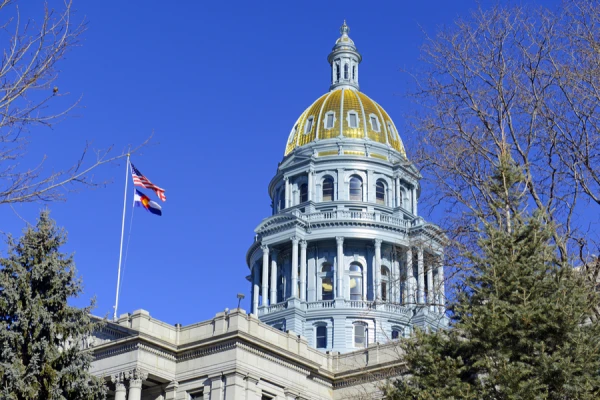
Denver, Colo., Oct 1, 2020 / 12:01 pm (CNA).- A federal judge on Tuesday denied an injunction sought by a Protestant ministry against Colorado’s coronavirus health orders, which limit religious gatherings to 175 persons.

Christine Arguello, a judge of the US District Court for the District of Colorado, wrote Sept. 29 that “numerous courts have considered, and persuasively rejected,” arguments similar to those made by the plaintiff, Andrew Wommack Ministries, and that the suit was thus unlikely to succeed.

“Plaintiff seeks to enjoin public health laws in order to allow it to gather a large group of people during a pandemic. Granting such an injunction would present a high risk of harm to the state of Colorado as well as the public generally,” Arguello concluded.

She added that “The state has the responsibility to mitigate the impact of the COVID-19 virus, which is made more difficult when case numbers increase. The relief Plaintiff requests has the potential to increase case numbers significantly, placing a high burden on the state. Further, Plaintiff would be compromising the health of the public, which could cause the death of an untold number of innocent citizens.”

Liberty Counsel, which is representing the ministry, immediately appealed the ruling.

Matt Staver, founder of Liberty Counsel, commented that “The virus does not discriminate between nonreligious and religious gatherings, but Gov. Jared Polis does. There is no constitutional justification to treat nonreligious gatherings better than religious gatherings. The First Amendment gives preferential treatment to the free exercise of religion. We look forward to presenting arguments to the Court of Appeals.”

Andrew Wommack Ministries was seeking relief to hold a conference meant to start Oct. 5 in Woodland Park, in Teller County about 20 miles northwest of Colorado Springs, and expected to gather at least 600 persons.

A conference held by the group at the beginning of July was linked to a Covid-19 outbreak. The outbreak consists of 24 staff who have tested positive, and 16 attendees. One attendee died, according to the Colorado Department of Public Health and Environment.

Andrew Wommack Ministries’ suit against the public health orders said they restrict its religious activites “if the number in attendance exceeds arbitrarily imposed numerical limitations and capacity limitations that are not imposed on numerous nonreligious gatherings of like kind” and impose “discriminatory and disparate prohibitions on the types of activities that AWMI may engage in at their own facilities, as the orders allow AWMI to feed the hungry, clothe the naked, house the homeless, provide other material social services and necessities of life to an unlimited number of individuals with unlimited volunteers in a single facility, but the Orders prohibit AWMI from engaging in a religious conference, ministry, event, gathering, or service with the same individuals in the same facility.”

The suit also argued that religious events are treated differently from large protests: “while the Governor has unilaterally and significantly restricted the number of individuals permitted to assemble or participate in AWMI’s religious activities, he has excused from such restrictions untold thousands of protesters who have gathered all throughout Colorado cities, with no social distancing, and with no threat of criminal or legal sanction.”

Earlier this year the US Supreme Court, in 5-4 decisions, upheld coronavirus regulations of religious gatherings in both Nevada and California.

On July 24 it upheld Nevada’s regulation that limits attendance at indoor religious services to 50 persons. Some businesses in the state, such as casinos, may admit 50% of their capacity.

Justice Samuel Alito wrote a dissent which was joined by Justices Clarence Thomas and Brett Kavanaugh, while Justice Neil Gorsuch wrote a separate dissent and Kavanaugh added his own thoughts.

Gorsuch’s brief dissent observed that “this is a simple case. Under the Governor’s edict, a 10- screen ‘multiplex’ may host 500 moviegoers at any time. A casino, too, may cater to hundreds at once, with perhaps six people huddled at each craps table here and a similar number gathered around every roulette wheel there. Large numbers and close quarters are fine in such places. But churches, synagogues, and mosques are banned from admitting more than 50 worshippers—no matter how large the building, how distant the individuals, how many wear face masks, no matter the precautions at all.”

“In Nevada, it seems, it is better to be in entertainment than religion. Maybe that is nothing new. But the First Amendment prohibits such obvious discrimination against the exercise of religion. The world we inhabit today, with a pandemic upon us, poses unusual challenges. But there is no world in which the Constitution permits Nevada to favor Caesars Palace over Calvary Chapel,” he wrote.

In May, the court ruled in favor of California’s limits on the number of people who may attend a church service, emphasizing the need to defer to elected officials amid efforts to respond to coronavirus.

On the other hand, a US District Judge in May blocked the North Carolina governor’s order limiting most church services to 10 people or fewer, saying it was a double standard to limit religious services but not similar activities under anti-coronavirus restrictions.


[…]

No Picture
News Briefs

Who was Carlo Acutis? A CNA Explainer

October 1, 2020 CNA Daily News 3

Denver Newsroom, Oct 1, 2020 / 10:28 am (CNA).-  

Carlo Acutis, an Italian teenager who died in 2006, will be beatified Oct. 10 in Assisi.

Acutis, a gamer and computer programmer who loved soccer and the Eucharist, has been the subject of interest around the world. So who was Carlo Acutis? Here’s what you need to know:

Who was Carlo Acutis?

Carlo Acutis was born May 3, 1991, in London, where his parents were working. Just a few months later, his parents, Andrea Acutis and Antonia Salzano, moved to Milan.

As a teenager, Carlo was diagnosed with leukemia. He offered his sufferings for Pope Benedict XVI and for the Church, saying “”I offer all the suffering I will have to suffer for the Lord, for the Pope, and the Church.”

He died on Oct. 12, 2006, and was buried in Assisi, at his request, because of his love for St. Francis of Assisi.

His cause for canonization began in 2013. He was designated “Venerable” in 2018, and will be designated “Blessed” October 10.

So, he was pretty holy, huh?

From a young age, Carlo seemed to have a special love for God, even though his parents weren’t especially devout. His mom said that before Carlo, she went to Mass only for her First Communion, her confirmation, and her wedding.

But as a young child, Carlo loved to pray the rosary. After he made his First Communion, he went to Mass as often as he could, and he made Holy Hours before or after Mass. He went to confession weekly.

He asked his parents to take him on pilgrimages — to the places of the saints, and to the sites of Eucharistic miracles.

There was fruit of Carlos’ devotion in his life. His witness of faith led to a deep conversion in his mom, because, according to the priest promoting his cause for sainthood, he “managed to drag his relatives, his parents to Mass every day. It was not the other way around; it was not his parents bringing the little boy to Mass, but it was he who managed to get himself to Mass and to convince others to receive Communion daily,”

He was known for defending kids at school who got picked on, especially disabled kids. When a friend’s parents were getting a divorce, Carlo made a special effort to include his friend in the Acutis family life.

And he promoted Eucharistic miracles, especially through a website he built to promote them.

On the site, he told people that “the more often we receive the Eucharist, the more we will become like Jesus, so that on this earth we will have a foretaste of heaven.”

When Carlo got sick, his life of faith increased. He was intentional about offering up his suffering for the Church, the pope, and for people who were suffering with illness.

And he was a gamer?

Here’s what we know: Carlo loved playing video games. His console of choice was a Playstation, or possibly a PS2, which was released in 2000, when Carlo was nine. We know he only allowed himself to play games for an hour a week, as a penance and a spiritual discipline, but he wanted to play much more.

Here’s what we don’t know: What games he liked to play. Tony Hawk Pro Skater 2? Gran Turismo 3? We’re pretty curious, and if CNA finds out, we’ll report it.

He was also a programmer, and, as we mentioned, built a website cataloguing and promoting Eucharistic miracles.

Carlo also apparently liked sports and the outdoors. But, well, a lot of saints liked soccer. How many liked playing Kingdom Hearts? (or whatever game he liked to play.)

And was his body incorrupt?

Initially, there were reports that the body of Carlo Acutis was found to be incorrupt.

A spokeswoman for Acutis’ beatification told CNA that the entire body was present when it was exhumed, but “not incorrupt.”

“Today we … see him again in his mortal body. A body that has passed, in the years of burial in Assisi, through the normal process of decay, which is the legacy of the human condition after sin has removed it from God, the source of life. But this mortal body is destined for resurrection,” Archbishop Domenico Sorrentino of Assisi said at a Mass at the opening of the tomb Oct. 1.

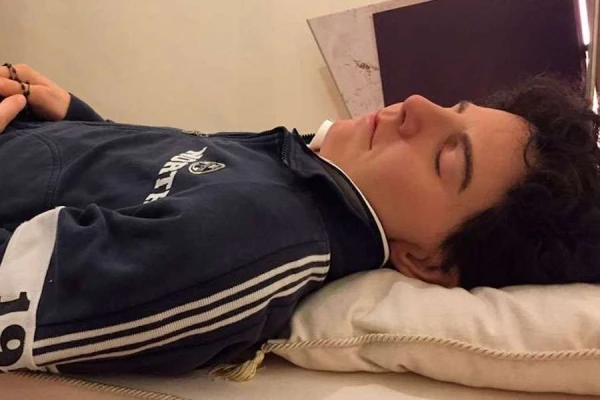
He will, however, lie in repose in a glass tomb where he can be venerated by pilgrims until Oct. 17. He is displayed in jeans and a pair of Nikes, the casual clothes he preferred in life.

And his heart, which can now be considered a relic, will be displayed in a reliquary in the Basilica of St. Francis in Assisi. His mother said that his family had wanted to donate his organs when he died, but were unable to do so because of the leukemia. 


[…]