

 By
By Pope Leo’s catechesis focused on the Second Vatican Councilʼs constitution, “Sacrosanctum Concilium,” a document that transformed the way Catholics celebrate Mass.

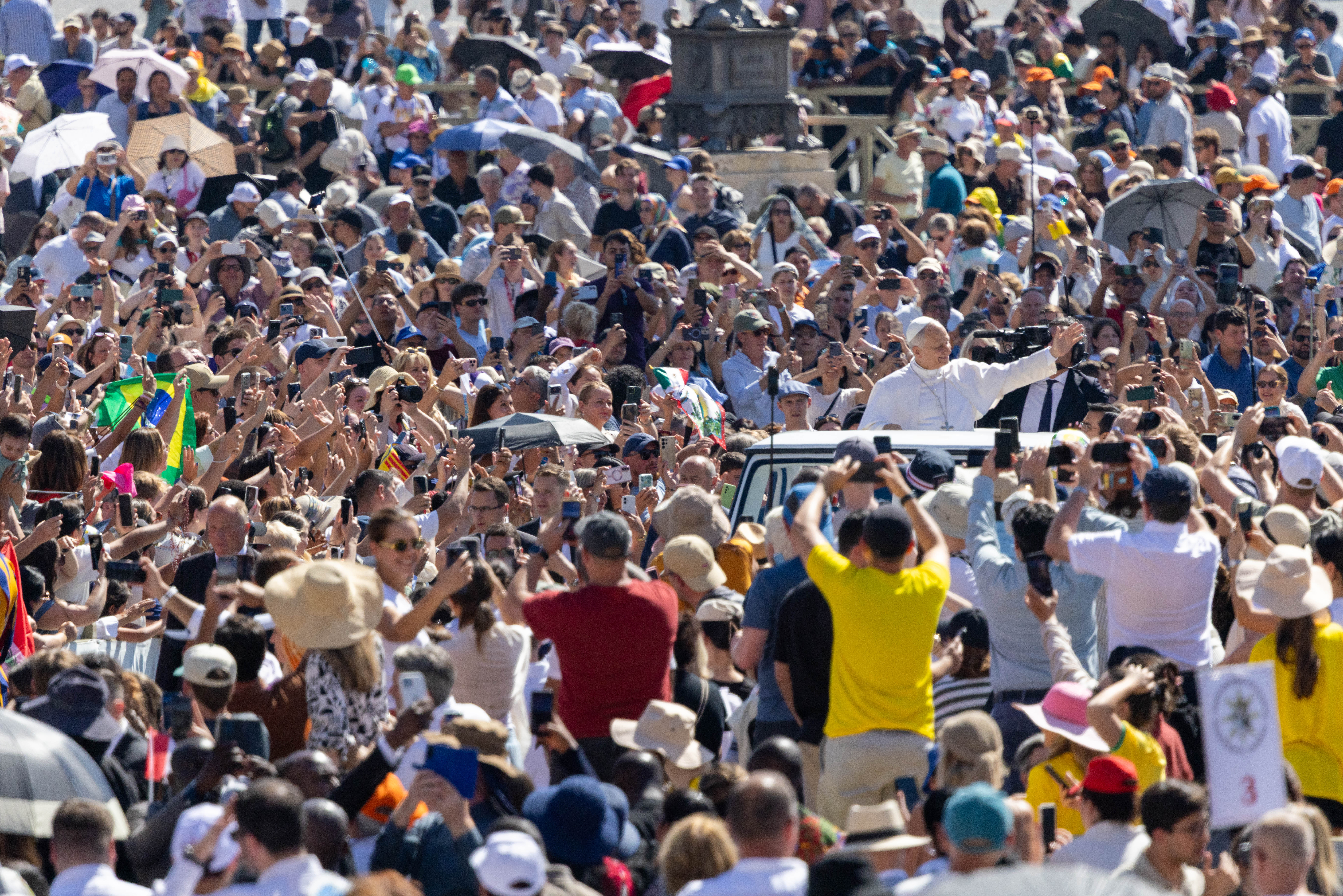
At the general audience on May 27, Pope Leo XIV urged priests to respect the “norms of the liturgy” and not to make changes to the Mass “on their own initiative,” in order to avoid confusing the faithful.
“I encourage all priests to respect the texts and norms of the liturgy with openness, humility, trust in God’s greatness and with sincere fidelity to ecclesial communion,” the pope said in remarks in St. Peterʼs Square.
The Second Vatican Council “affirmed that legitimate progress in the liturgy must also preserve sound tradition, and that certain elements of the liturgy can never change because they are divinely instituted,” he said.
Vatican II’s reform of the Mass
Leo’s catechesis on Wednesday continued his reflections on the magisterium of the Second Vatican Council, focusing on the constitution Sacrosanctum Concilium, promulgated by St. Pope Paul VI on Dec. 4, 1963. It is one of the most important documents to emerge from the council, since it transformed the way Catholics celebrate the Mass.
The pope offered a historical overview of the context in which Vatican II was convened, noting: “At that moment in history, there was a strong sense of the need for a renewal of the ritual forms through which, for centuries, the Church had glorified God and sanctified the Christian people.”
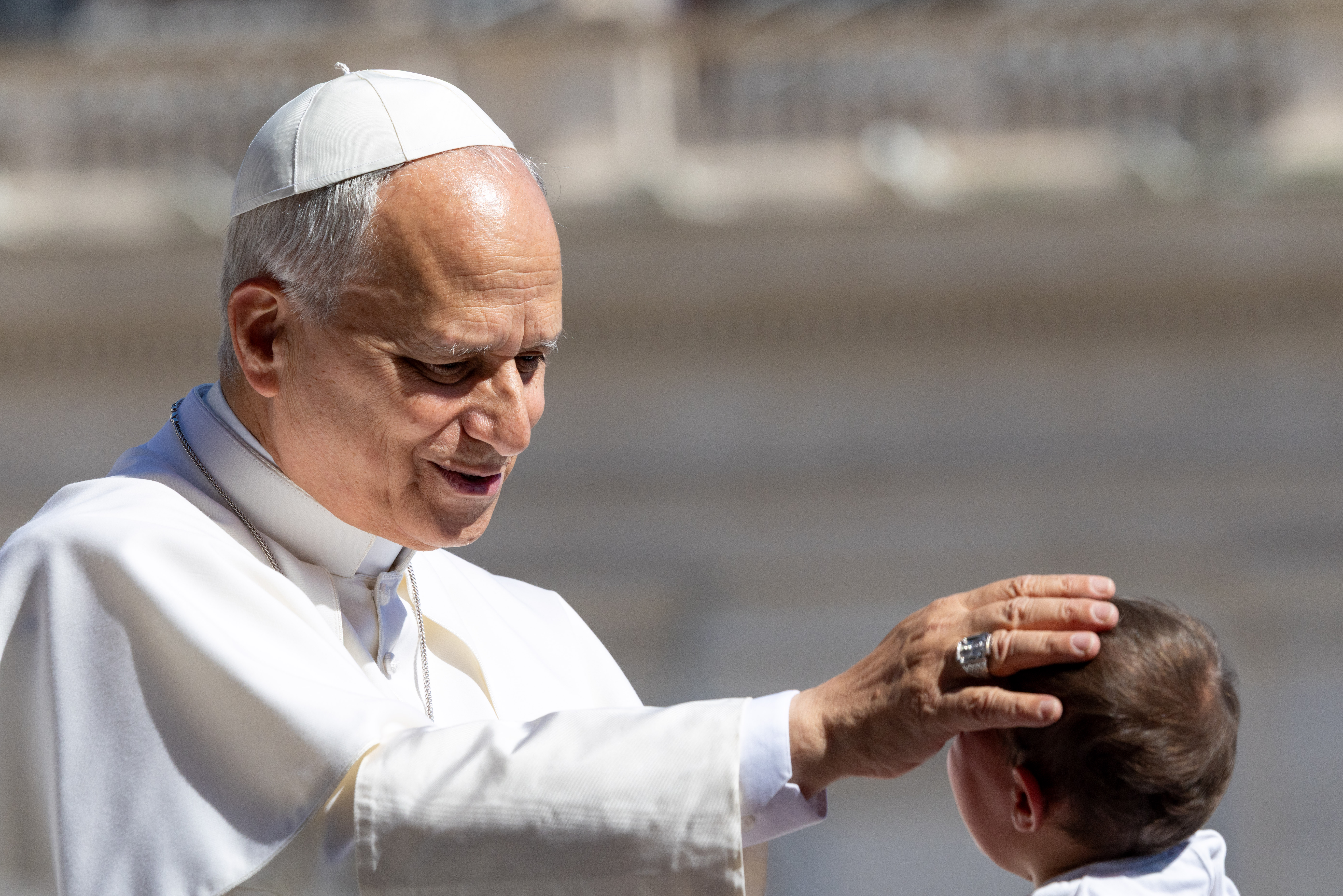
He also underscored that, thanks to the liturgical movement, the conviction had developed — later expressed by St. John Paul II — that “‘a very close and organic bond exists between the renewal of the liturgy and the renewal of the whole life of the Church. The Church not only acts but also expresses herself in the liturgy, lives by the liturgy and draws from the liturgy the strength for her life.’ (Letter Dominicae Cenae, 13)”
The pontiff reflected on Sacrosanctum Concilium, which he said sought “to encourage the access of the faithful to the richness of the gifts of grace dispensed by the sacred liturgy.” The pope highlighted the formula adopted by the council fathers: “That sound tradition may be retained, and yet the way remain open to legitimate progress.”
To deepen this idea, the pope quoted Pope Benedict XVI, who explained that the Council Fathers’ “reform program” sought “a balance between the great liturgical tradition of the past and that of the future.”
Benedict XVI said that “tradition and progress are often clumsily opposed,” but the late pope noted that “actually, the two concepts merge: tradition is a living reality, which therefore includes in itself the principle of development, of progress.”
Leo XIV said that the progress referred to by Sacrosanctum Concilium “in no way compromises ecclesial communion: rather, it seeks to confirm and foster it.”
He emphasized that “changes of this type have taken place constantly over the centuries in order to enable the faithful to participate fruitfully, through ritual actions, in the Paschal Mystery of Christ, the foundation of the Christian faith.”
“For the good of the entire Church, every reform must always be preceded by careful ‘theological, historical and pastoral’ investigation,” the Holy Father said. “The Council Magisterium, in this way, thus calls for the avoidance of confusion amongst the faithful, discouraging anyone from adding, removing or altering anything in liturgical matters on their own initiative.”
The Church’s worship, he added, has been “embodied” in the cultural forms of each age and has been able to influence them and even transform them.
“The liturgy has thus been, for centuries, a driving force for evangelization. Today, this energy must be renewed in continuity with the authentic and living Catholic tradition, that is, in accordance with a dynamic aimed at introducing believers to the fullness of the truth,” he said.
War in Ukraine
In an appeal at the end of the audience, Leo expressed his concern over a recent intensification of the war in Ukraine. The Holy Father said he was entrusting everyone affected by war to the protection of Mary, Queen of Peace.
“I wish to express my solidarity with all those suffering as a result of the recent attacks, which have also targeted civilians,” he said.
“War does not solve problems; it exacerbates them,“ he said. ”It does not build security; it multiplies suffering and hatred. Where missiles and drones fall, hopes are crushed, homes and places of worship are destroyed, and innocent lives are cut short.”
This story was originally published by ACI Prensa, EWTN News’ Spanish-language news partner. It has been translated and adapted by EWTN News English.
If you value the news and views Catholic World Report provides, please consider donating to support our efforts. Your contribution will help us continue to make CWR available to all readers worldwide for free, without a subscription. Thank you for your generosity!
Click here for more information on donating to CWR. Click here to sign up for our newsletter.

Does the Holy Father intend to assert that there should no longer be:
1. Clown Masses
2. Liturgical dance performed by religious sisters
3. Balloon Masses
4. Masses with three, sometimes four homilies
5. Eucharistic ministers flooding the sanctuary before the priest’s partaking of the Eucharist
6. Eucharistic ministers giving blessings to those who approach the altar but will not be receiving Communion
7. Celebrants ad libbing the words of the Canon or substituting language they’d prefer
8. Musical performers positioned at the front of the church causing distractions
9. Lectors who insist on lifting their arms when its time for the responses to Psalms
10. Announcements made during Mass when all the same information is printed in the weekly bulletin
11. The leader of the musical ensemble making comments during Mass as if he or she is the Master of Ceremonies
12. inviting children who have not yet received their 1st Communion to come forward at the end of Mass to receive a Vanilla Wafer cookie because they might feel left out.
13. Children invited to the sanctuary during the Consecration to stand around the altar with one young lad resting his elbows on the altar.
I’m certain everyone here could add to the list. BTW, all things cited have been witnessed firsthand.
About norms of the Liturgy, yours truly remembers that, during the egregious abuses of the 1960s, Pope Paul VI announced 9n 1967 that the Masses remained valid (the word was “valid”) so long as the ambiguous messaging was still interpreted in line with what the Church intends. The ripples continue but much has been mitigated, except for congregational priests who adlib one thingy or another.
I have appreciated these Wednesday catecheses on “Sacrosanctum Concilium” because Pope Leo is recounting to everyone what the document actually said. But, as I asked elsewhere, considering all that has happened between then and now, will there be a followup? Is the next iteration of the Synod on Synodality” going to address what the Holy Father is saying here, including the priest’s responsibility of “exercis[ing] the ministry of liturgical presidency”? From the published English translation:
“I therefore urge all those called to prepare the celebration of the divine mysteries, in particular priests who exercise the ministry of liturgical presidency, to always uphold that respect for the texts and regulations of the liturgy which springs from an inner attitude of openness and trust in God, manifesting humility before His greatness and sincere fidelity to ecclesial communion.”
Consider that the next “iteration” is rebranded as an “ecclesial assembly,” now alongside, or on some matters, even in the shadow of annual Consistories of Cardinals, and the “hierarchical communion” of the Church (Lumen Gentium). Cardinal Grech from Malta knows that he has a new boss.
All will be well. Town hall meetings do have a place within an authentic communio… So, even for the next few years, maybe “time IS greater than space”!
Read the black and do the red. It ain’t that hard.
Following the prescribed rubrics and maintaining proper decorum raises the awareness of the sacred mysteries that are to unfold during the Holy sacrifice of the Mass. Such a composition of place can go a long way in generating the necessary awe and reverence in the celebrant and in the faithful. After all it is a privilege to participate in the commemoration of the life, passion, and death of Jesus Christ during the meaningful celebration of the Holy Eucharist.