No Picture
News Briefs

Portland diocese to engage third-party system for reporting ethics violations

June 25, 2019 CNA Daily News 0

Portland, Maine, Jun 25, 2019 / 11:48 am (CNA).- The Diocese of Portland announced Tuesday it will be using a third-party reporting system for violations of its standards of ethical conduct, such as fraud or harassment.

“Several months ago, after hearing from people around the state, the diocese started the process of establishing this system for individuals to express their concerns in an easily accessible way,” Bishop Robert Deeley of Portland said June 25. “The system is organized to ensure that these reports will be handled in a timely and thorough manner.”

The system will be operated by Red Flag Reporting, an ethics, safety, fraud, and whistleblower hotline based in Akron. According to its website, it was founded “by one of the nation’s largest CPA firms.”

Reports of violations of the diocese’s code of ethics will be made through Red Flag Reporting’s website or telephone hotline. Red Flag will oversee the handling of each complaint by the diocese.

It is not meant to be used for reporting sexual abuse of minors; the Portland diocese indicated that in those cases, civil authorities and its head of professional responsibility should be contacted.

The reporting system could be used to report such ethical violations as fraud, misconduct, safety violations, harassment, or substance abuse at parishes, schools, or the chancery.

Bishop Deeley said that “To ensure transparency and the success of this initiative, the Church needs the committed involvement of the laity. In partnering with Red Flag Reporting, the diocese is offering stronger protections against problematic activity.”

“It is gratifying to report that the protocols already implemented in the Diocese of Portland regarding the safety of children, through the vigilance of both clergy and laity, have helped to make our Church a safer place for all. Since many of the procedures began in 2002, there have been no substantiated allegations of sexual abuse of a minor by a cleric in the Diocese of Portland. We have similar hope for this new system of accountability.”

[…]

No Picture
News Briefs

Doctors promised disabled woman ‘new doll’ after planned forced abortion

June 25, 2019 CNA Daily News 3

London, England, Jun 25, 2019 / 11:02 am (CNA).- Following a decision by the Court of Appeals in England to overturn an order for a forced abortion on a disabled woman, new details have emerged about the case.

Lawyers told the appeal court Monday that doctors had prepared the woman for the enforced abortion by promising her a new doll after the procedure. 

Fiona Paterson, the barrister representing the National Health Service (NHS) hospital trust that cares for the woman, told the appeal court on Monday that doctors had informed the woman that “she would go to sleep” and that “she would have an operation and when she woke up the baby would no longer be in her tummy.” 

To try to placate the woman, who did not wish to undergo the procedure, doctors told her that she would be given a new doll to play with after undergoing the abortion.

Observing that the woman had previously been given a doll, Paterson said that doctors thought “the prospect of a new [doll] might be very appealing to her.”

The woman reportedly has a mental age between six and nine years old, as well as a mood disorder. She was 22 weeks pregnant at the time the case was decided at the Court of Protection on June 21. 

Both the woman, who cannot be named because of privacy restrictions, and her mother are described as being of Nigerian descent, Catholic, and opposed to abortion. 

On Friday, Mrs Justice Nathalie Lieven ruled that an abortion would be the “best interest” of the woman, despite the her own objections and those of her mother (a former midwife) and her social worker. Doctors said they were concerned that the woman would be unable to physically or emotionally handle labor, or the recovery from a cesarean section. 

The court-ordered abortion was overturned on June 24, after the pregnant woman’s mother petitioned the Court of Appeal. The three appeal justices–Justices Richard McCombe, Eleanor King, and Peter Jackson, said they would explain their reasoning for their decision in the future. 

“I have to operate in [her] best interests, not on society’s views of termination,” Lieven said at the time of her original ruling. Lieven had previsouly acted as a legal repreetative for the British Pregnancy Advisory Service, the UK abortion provider, and argued in court that abortion restrictions in Northern Ireland were analogous to “torture.”

The woman’s mother made clear that she would care for her grandchild, but Lieven rejected this argument as she said it would be too complicated and risky for the child, and the potential removal of the child from the woman’s custody would be more traumatic than if she underwent an abortion. 

In her ruling, Lieven said that she did not believe the woman had the ability to understand what being pregnant meant. 

“I think she would like to have a baby in the same way she would like to have a nice doll,” she said. 

The case’s handling has proved controversial. Over 75,000 people signed a petition requesting that the UK’s health secretary intervene. 

A spokesperson for the pro-life group Right To Life UK, Clare McCarthy, welcomed the decision by the appeal court but cautioned that the decision would not protect mothers or children in similar circumstances.

“Unfortunately, we fear that this is not a one-off case,” McCarthy said.

“We are calling on the Department of Health to urgently reveal how many women have been forced to have an abortion in the UK over the last 10 years and make it clear how they will ensure it will not happen again.”

[…]

No Picture
News Briefs

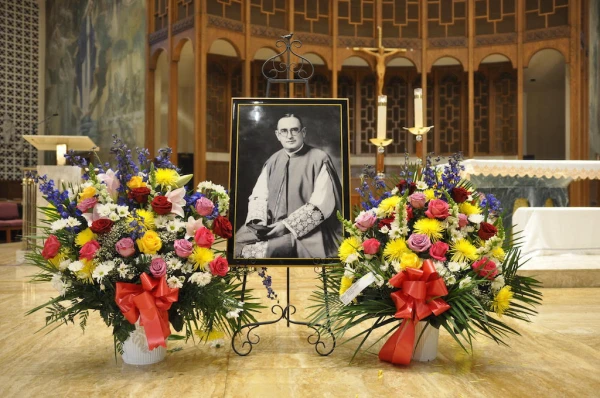
Brooklyn diocese advances sainthood cause of local priest

June 25, 2019 CNA Daily News 0

New York City, N.Y., Jun 25, 2019 / 03:01 am (CNA).- The Bishop of Brooklyn accepted last week the findings of a nine-year diocesan investigation into the life of Monsignor Bernard John Quinn, known for fighting bigotry and serving the African American population, as part of his cause for canonization.

The information will be sent to the Congregation for the Causes of the Saints.

Bishop Nicholas DiMarzio received the findings at a Vespers service at the Immaculate Conception Center in Queens.

Msgr. Quinn “combatted racism and is an inspiration to the priests of this diocese,” Bishop DiMarzio said. “He is a hero who turned things around and gave his life for his people, died an early death, and was a great man.”

Quinn was born in Newark in 1888, and was ordained a priest of the Diocese of Brooklyn in 1912.

In 1922, he established St. Peter Claver parish, Brooklyn’s first church for African American Catholics

Six years later, he established Little Flower Orphanage for African American orphanage in Wading River on Long Island. The building was twice set on fire.

Quinn’s great-niece, Mary Clare Quinn, said: “The family was all very proud of the work he was doing at Little Flower, and we all contributed during the winters and summers, going out there to help. They used to burn crosses at our house in Mineola, even after he was gone, but my family stared fear down.”

Msgr. Paul Jervis, postulator for Quinn’s cause, said the priest “could not separate his sacramental ministry from the social and political realities that denied to people on account of their race, or immigrant status, the opportunities to enjoy the fullness of life as the Lord willed for all humanity.”

“St. Peter Claver Catholic Church became a meeting ground where white Catholics encountered blacks and discovered that they all had a common humanity with the same human problems, and were all in need of the intercession of St. Therese and the pastoral intercession of Monsignor Quinn,” he said.

Quinn died in 1940 at the age of 52.

The diocesan phase of his cause for canonization was opened in June 2010. At that time, Bishop DiMarzio said that Quinn’s ministry “did not end upon his death but has continued to grow and take root in the hearts and souls of the faithful and clergy of this church in New York, which has continually ministered to the poor and oppressed.”

[…]

No Picture
News Briefs

Austrian women’s football team states regret over cancelled game with Vatican club

June 24, 2019 CNA Daily News 1

Vienna, Austria, Jun 24, 2019 / 11:13 pm (CNA).- Vienna’s FC Mariahilf football team has issued a statement of regret after a friendly with the Vatican women’s football team was cancelled Saturday after several FCM members lifted their jerseys whilst the Vatican anthem was playing, displaying painted ovaries and pro-abortion messages.

The Vatican soccer team, who had been invited to Vienna by FCM, decided not to go ahead with the June 22 match.

“The action of the three players was independently organized and carried out,” FCM stated. “We sincerely apologize to the Vatican team’s players and guests from near and far that the game was not played.”

The club noted that “tolerance, diversity, of life forms, and peaceful coexistence are important to us, as we have pointed out with rainbow symbols. We therefore understand the demands and message of our players, but we find the timing of their expression inappropriate and therefore understand the emotion it caused.”

The friendly was scheduled to kick off in the early afternoon in a sports arena in Wien-Simmering. Beforehand, both sides had participated in a prayer service and blessing of the pitch.

Austrian state broadcaster ORF quoted one of the FCM players involved in the protest as saying the activists were “not aware of the consequences of their action in any way and would have liked to play the football match”.

The activists also handed out leaflets to journalists attending the match. These stated that the activists did not assent to the Church’s teaching on abortion and same-sex marriage.

“They were not aware that the timing of the action during the playing of the Vatican anthem and in the presence of the Apostolic Nuncio could be detrimental to the idea of sport and ruin many weeks of preparation”, reported the ORF.

When announcing the upcoming game, the German section of Vatican News reported FCM founder Ernst Lackner as saying he had initially not expected that the Vatican team would really accept the invitation, but that the Archbishop of Vienna, Cardinal Christoph Schönborn, had assured the Vatican team that FC Mariahilf was a serious team that was also strongly committed to charity.

The papal women’s football team had its first appearance in 2018 and immediately received an invitation from FCM, which is currently playing in the Wiener Landesliga, the third highest league in domestic women’s football.

[…]

No Picture
News Briefs

Ecuador march protests abortion, gay marriage

June 24, 2019 CNA Daily News 0

Guayaquil, Ecuador, Jun 24, 2019 / 09:01 pm (CNA).- Tens of thousands took to the streets of Guayaquil, Ecuador on June 22 in support of life, marriage, conscience protections, and parental rights.

Organizers said more than 100,000 people attended the march, which had as its theme, “Respect the Constitution, the family and life.”

The demonstrators demanded the nullification of a ruling by the Constitutional Court of Ecuador which opens the door to redefining marriage. They also voiced their opposition to attempts to legalize abortion, medical marijuana, and sex change operations on minors without parental consent.

The march was organized by several groups defending life and the family, including the Guayaquil Family Network, I’m the One to Educate My Children, Ecuador for the Family, the Young People’s Front of Ecuador, Don’t Mess with my Children, Lawyers for Life, and the National Front for the Family.

In a statement, the organizers charged that a recent ruling from the Constitutional Court, which paves the way for the redefinition of marriage, violates Article 67 of the Constitution, which says, “Marriage is the union between man and woman, to be based on the free consent of the contracting persons and with equal rights, obligations, and legal capacity.”

“The sovereign authority, that is, the Ecuadoran people, is defending its rights and fighting so they don’t keep passing laws attacking the life, health and security of the family, and attacking children, the most vulnerable of beings,” they said.

They also warned that the National Assembly of Ecuador is debating a measure that would legalize abortion in cases of incest, rape, and fetal deformity.

Abortion is currently only legal in the country in cases of the rape of a woman with mental disabilities or when the mother’s life is determined to be at risk.

In addition, leaders of the march argued against a proposal to legalize the cultivation and consumption of medical marijuana, saying that it “puts children and adolescents in real risk of addiction in a State that has not been able control the consumption of other drugs.”

Other proposals that organizers objected to include a surrogacy measure, sex change operations on minors without parental consent, same-sex adoption, and requiring doctors to perform abortions.

The organizers of the march said that they are gathering signatures “to continue fighting until the nullification of these laws is accomplished through a referendum. The marches will continue in the coming days in other cities.”

Another march will be held in Quito, Ecuador’s capital, on June 29.

[…]

No Picture
News Briefs

Corpus Christi comes to the Capitol

June 24, 2019 CNA Daily News 1

Washington D.C., Jun 24, 2019 / 06:00 pm (CNA).- A group of about 350 people, including priests, sisters, and laypersons, processed through Washington, DC on Sunday to celebrate the feast of Corpus Christi. The procession wound past national landmarks … […]

No Picture
News Briefs

In responding to gender theory, ‘forming the formators’ is key, educators say

June 24, 2019 CNA Daily News 1

Washington D.C., Jun 24, 2019 / 05:47 pm (CNA).- Amid a flurry of headlines denouncing the Vatican for releasing a document condemning “gender theory,” theology professors and Catholic educators told CNA that the document will be helpful in setting priorities for Catholic educators going forward, as Catholic schools respond to questions about LGBT issues.

“I love the emphasis on ‘forming the formators’…It’s important for teachers to realize that they’ve got to be able to answer their students’ questions, whether in religious education or teaching in a Catholic school,” Dr. Theresa Farnan, a professor of philosophy at St. Paul Seminary, the minor seminary of the Diocese of Pittsburgh, told CNA.

“You’ve got to be able to answer your students’ questions. Because you might get one shot to answer that question, and that may be it.”

Published at the beginning of “Pride Month,” during which many cities and corporations mark the campaign of LGBT advocacy, the document says that the Church teaches an essential difference between men and woman, ordered in the natural law and essential to the family and human flourishing.

“There is a need to reaffirm the metaphysical roots of sexual difference, as an anthropological refutation of attempts to negate the male-female duality of human nature, from which the family is generated,” the Congregation for Catholic Education wrote June 10, in a document entitled “Male and Female He Created Them.”

“The denial of this duality not only erases the vision of human beings as the fruit of an act of creation but creates the idea of the human person as a sort of abstraction who ‘chooses for himself what his nature is to be’,” the document states.

For Christians working in schools, both religious and secular, the radical individualism of gender theory should be avoided in favor of teaching children “to overcome their individualism and discover, in the light of faith, their specific vocation to live responsibly in a community.”

Dr. Susan Selner-Wright, who holds the Archbishop Chaput Chair in Philosophy at St. John Vianney Seminary in Denver, told CNA that “dialogue” does not, as some may believe, mean the same thing as “compromise” when it comes to talking about these kinds of issues.

“‘Dialogue’ right now, in the culture, basically means everybody’s got a right to their opinion, all opinions are equal, and ‘dialogue’ is just basically cover for never having to disagree with each other. And I think the congregation was just brilliant in explaining what dialogue really is,” Selner-Wright said.

The document also states that many efforts to implement “gender theory” into society shut down any possibility of dialogue from the Christian perspective.

“[Pope] Francis says that the ideologues just want to ‘assert themselves as absolute and unquestionable, even dictating how children should be raised,’ and then that cuts off dialogue…That’s not real dialogue. That’s just people shouting at each other. It’s not a way to go forward and to help people to live well.”

True dialogue, she said, is not just “dropping knowledge” on people, but rather inviting them into a conversation in order to be able to propose reasons to support your point of view.

“I would caution people not to dismiss dialogue as something that always leads to compromise. It shouldn’t. It should lead us to journey together towards the one who is Truth,” she said.

Much of the document is a reiteration of existing Church teaching on gender, but Farnan said she appreciated the document’s points of emphasis on formation of teachers.

“I will say the gamechanger…is the absolute insistence that they have to form all of their teachers, so that every teacher who is in a classroom with a kid can articulate the Church’s teaching on gender,” Farnan said.

The document says that “school managers, teaching staff and personnel all share the responsibility of both guaranteeing delivery of a high-quality service coherent with the Christian principles.”

“The other brilliant thing about the document, I think, is that it shows the utter continuity from John Paul II through Benedict XVI to Francis on this specific issue,” Selner-Wright said.

“People want to say ‘Oh Francis is my guy,’ well, he’s really not if what you’re talking about is transgenderism. He’s been completely clear that [transgender ideology] is bankrupt,” she said.

“I really liked the model that [the document] used: listen, reason, and propose,” Farnan said.

Farnan said she just finished a three-day workshop with members of the “iGen” generation, who have never known a time before the internet. She said the way to connect with members of the iGen is to be able to back claims up with science and to “be able to carefully distinguish between ideology and genuine scientific contribution.”

“The final part of it, which I think is the most important, is to propose Christian anthropology as a way of life,” Farnan explained.

“And honestly, if there’s anything that over the last four decades, five decades, we’ve been failing at as a Church is that we’re not going out and presenting a confidant vision of how Christianity differs from culture. And this is an opportunity to present a pretty stark difference. I think it’s really important.”

“What this document reminds us is that, as educators, we have to make sure that they’re getting a complete understanding of what Christianity has to offer in a very positive way…the authentic way to live a life of fulfillment of the human being.”

Farnan said she will watch with interest as individual dioceses work to implement the contents of the document. She highlighted Fort Wayne-South Bend as an example of a diocese that has been proactive in holding workshops for their teachers, educators, and priests to form them in Christian anthropology so they can answer their students’ questions about gender theory.

Mary Pat Donoghue, executive director of the Secretariat of Catholic Education for the U.S. Conference of Catholic Bishops, told CNA in an interview that she also thinks the document will be useful for ongoing formation of Catholic educators.

“It’s a call for all of us to enter more deeply into an understanding of the Church’s teaching. I think that the document serves that purpose very, very beautifully,” Donoghue said.

“It also, though, has an element encouraging compassionate pastoral response, and I think that is important as well. So on a local level, diocesan level, finding ways to respond and to help schools to respond should these types of situations arise.”

Donoghue echoed Farnan’s point about the importance of “forming the formators.” Individual situations will always vary, she said, but schools faced with challenging situations related to gender theory should always be able to look to the diocesan level for guidance.

“It’s important for our schools to have clear and consistent teaching, certainly around something that’s this important,” she explained.

“It’s also important for our teachers to understand that the Church’s teaching contains the fullness of truth, therefore it’s always going to be the most charitable and the most loving answer. Pairing that with a compassionate person-to-person response I think is the best way forward.”

Bishop Michael Barber of Oakland is the chairman of the Committee on Catholic Education for the U.S. bishops’ conference, and Donoghue said she believes Barber would describe the document as a means to better understand Church teaching about the nature of the human person.

“All human people struggle and bear crosses in many, many different forms, and a person suffering from gender dysphoria bears a very painful cross, and so we certainly don’t stand to condemn or to judge, but to offer care and to bring about the fullness of the teaching to help to liberate that person,” Donoghue said.

Bea Cuasay and Michelle McDaniel contributed to this report.

[…]

No Picture
News Briefs

States move to close child marriage exceptions

June 24, 2019 CNA Daily News 2

Harrisburg, Pa., Jun 24, 2019 / 02:00 pm (CNA).- A growing number of states are considering bans or additional restrictions on child marriages, including in Pennsylvania, where a bill to outlaw child marriages passed the state’s House of Represen… […]