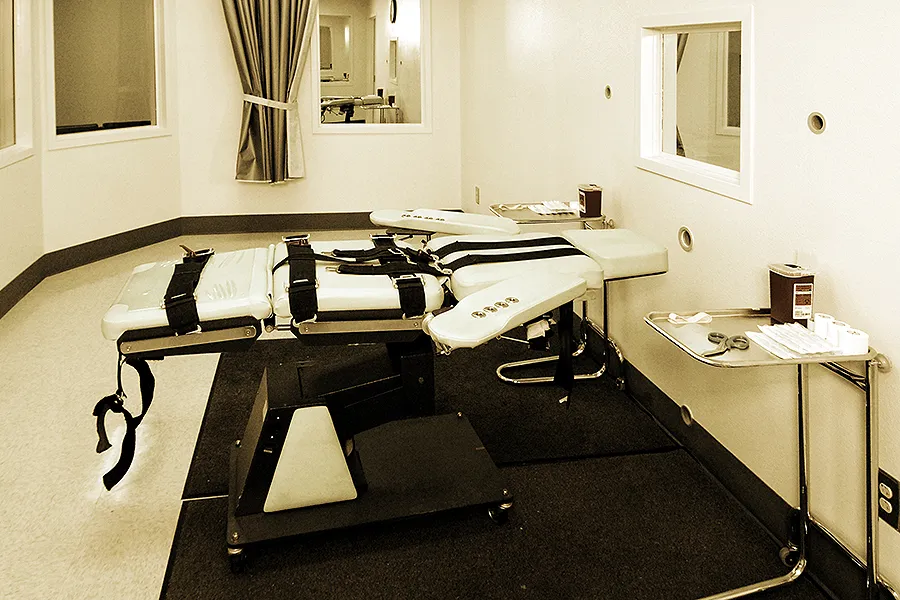
Chicago, Ill., May 16, 2018 / 12:09 am (CNA/EWTN News).- The Catholic Conference of Illinois decried the governor’s call to re-establish the death penalty, which has not been used in the state in nearly 20 years.
“We are distressed and alarmed by Gov. Bruce Rauner’s call for the reinstatement of the death penalty in any way, shape or form,” the conference said in a May 14 statement.
“We are all God’s children, and our first – and primary – right to life must always be protected and unconditional.”
On Monday, Governor Rauner encouraged lawmakers to reinstate capital punishment in Illinois for individuals convicted of mass murder or the death of a police officer.
“Anyone who deliberately kills a law enforcement officer or is a mass murderer deserves the death penalty,” he wrote to the Illinois House of Representatives.
The recommendation came in an amendatory veto message for House Bill 1468, which would require a 72-hour waiting period before an assault weapon is purchased.
The governor cited child safety as his reason for wanting to reintroduce the death penalty. He drew attention to several recent attacks in U.S. schools.
“There is nothing more precious than our children, and they deserve to be safe and cared for at school,” he said.
Last month, an Illinois task force was created to map out a defense against school violence.
Governor Rauner said the death penalty should only be used in cases where an individual is guilty “beyond all doubt” rather than the often-used standard of “beyond a reasonable doubt.” He said this would help avoid wrongful convictions, such as those that contributed to the abolishment of the state’s death penalty.
However, the Catholic Conference rejected the idea of reinstating the death penalty in certain cases “beyond all doubt” instead of “beyond a reasonable doubt,” saying that this distinction “is simply parsing words.”
“You cannot teach killing is wrong by killing.”
The death penalty has not been used in Illinois since 1999. Then-governor George Ryan issued a moratorium on the practice in 2000, following a report in the Chicago Tribune detailing flaws in the state’s capital punishment system.
The report said that the system was “so riddled with faulty evidence, unscrupulous trial tactics and legal incompetence that justice has been forsaken.”
Among other problems, the newspaper pointed to inaccurate juries, incompetent defending lawyers, and unreliable forensic tests. These were among the errors that occurred with 12 wrongfully convicted death row inmates who were later exonerated, the article stated.
Before leaving office in 2003, Governor Ryan commuted the death sentences of more than 160 death row inmates. In 2011, the death penalty was abolished in Illinois by then-governor Pat Quinn.
If you value the news and views Catholic World Report provides, please consider donating to support our efforts. Your contribution will help us continue to make CWR available to all readers worldwide for free, without a subscription. Thank you for your generosity!
Click here for more information on donating to CWR. Click here to sign up for our newsletter.
Denver, Colo., Jun 8, 2019 / 02:52 am (CNA).- This weekend, the Church celebrates Pentecost, one of the most important feast days of the year that concludes the Easter season and celebrates the beginning of the Church.
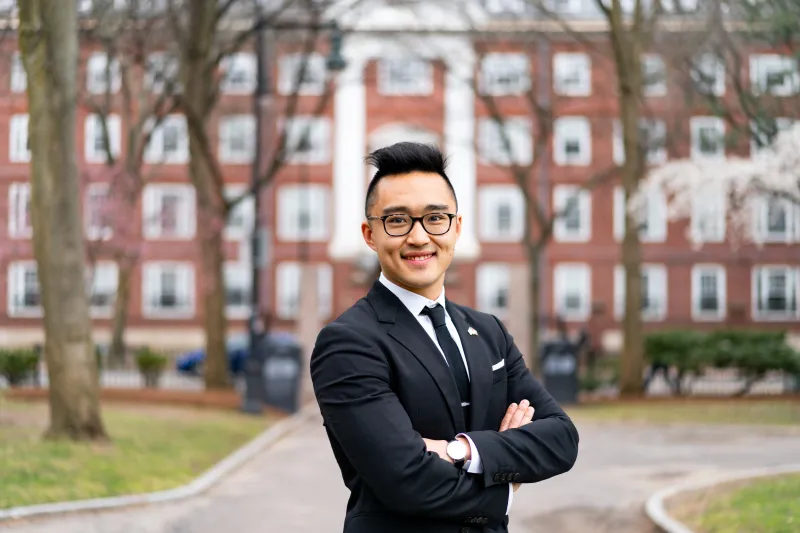
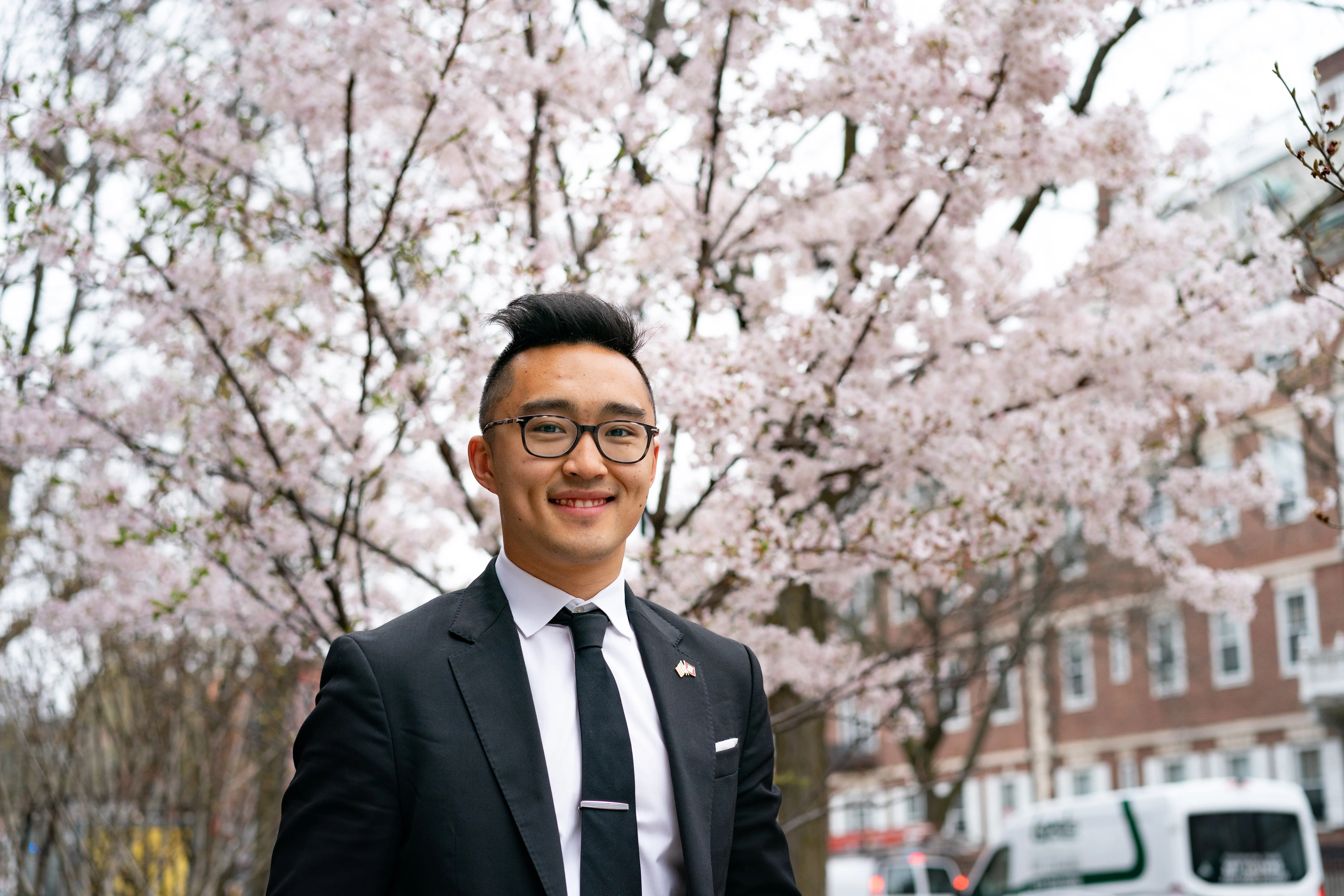
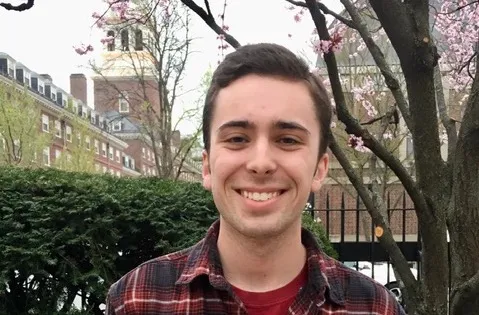
“What’s the Eucharist?” Kent Shi, a 25-year-old Harvard graduate student, asked that question when he attended eucharistic adoration for the first time. The answer put him on a path to conversion. / Julia Monaco | CNA
Cambridge, Massachusetts, Apr 16, 2022 / 09:03 am (CNA).
One convert’s journey to Catholicism began with an invitation to an ice-cream social.
Another says he instantly believed in the Real Presence the moment someone explained what the round object was that everyone was staring at during eucharistic adoration.
For a third, the poems of T.S. Eliot — and a seemingly random encounter with a priest on a public street — led to deeper questions about truth and faith.
Their paths differed but led them to the same destination: St. Paul’s Catholic Church in Cambridge, Massachusetts, where they are among 31 people set to be fully initiated into the Catholic Church during the Easter vigil Mass on Saturday, April 16.
That number of initiates is a record high for St. Paul’s, a nearly century-old Romanesque-style brick church whose bell tower looms over Harvard Square.
A scheduling backlog caused by the COVID-19 pandemic is partly responsible for the size of this year’s group of catechumens (non-baptized) and candidates (baptized non-Catholics.) But Father Patrick J. Fiorillo, the parochial vicar at St. Paul’s, believes there’s more to it than that.
“There’s definitely a significant segment of people who started thinking more deeply about their lives and faith during COVID-19,” Fiorillo said. “So, coming out of Covid has given them the occasion to take the next step and move forward.”
Fiorillo is the undergraduate chaplain for the Harvard Catholic Center, a chaplaincy based at St. Paul’s for undergraduate and graduate students at Harvard University and other academic institutions in the area. This year, 17 of the 31 initiates are Harvard students.
“Everybody assumes that, because this is the Harvard Catholic Center, that everybody here is very smart and therefore has a very highly intellectual orientation towards their faith,” Fiorillo told CNA.
“That is definitely true of some people. But I would say the majority are not here because of intellectually thinking their way into the faith. Some are. But the majority are just kind of ordinary life circumstances, just seeking, questioning the ways of the world, and just trying to get in touch with this desire on their heart for something more,” he said.
Fiorillo says welcoming converts into the Church at the Easter vigil is one of the highlights of his ministry.
“It’s an honor. It gives me hope just seeing all this new life and new faith here. So much in one place,” he said.
“When I tell other people about it, it gives them hope to hear that many young people are still converting to Catholicism, and they’re doing it in a place as secular as Cambridge.”
Prior to the Easter vigil, CNA spoke with five of St. Paul’s newest converts. Here are their stories:
‘This is what I’ve been looking for’
Katie Cabrera, a 19-year-old Harvard freshman, told CNA that she was excited to experience the “transformative power of Christ through his body and blood” at Mass for the first time at the Easter vigil.
A native of Dorchester, Massachusetts, she said she was baptized as a child and comes from a family of Dominican immigrants. Her father, who grew up in an extremely impoverished area, lacked a formal education, but always kept the traditions of the Catholic faith close to him in order to persevere in difficult times.
Her father’s love for her and his Catholic faith deeply inspired Cabrera, and served as an anchor for her faith throughout her life.
Growing up, however, Cabrera attended a non-denominational church with her mother. Because she felt the church’s teachings lacked an emphasis on God’s love and mercy, Cabrera eventually left.
“Even though I Ieft, I always knew that I believed in God,” Cabrera said. “So, I was at a place where I felt kind of lost, because I always had that faith, but I didn’t know what to do with it.”
“There was a void that existed in my heart,” says Katie Cabrera, a Harvard undergraduate student. She discovered what was missing when she started to get involved with the Harvard Catholic Center. Courtesy of Katie Cabrera
After she arrived at Harvard, she accepted a friend’s invitation to attend an ice-cream social at the Harvard Catholic Center — “and that was like, sort of, how it all started,” she told CNA.
Once she was added to the email list for the center’s events, she felt a “calling” that she “really wanted to officially become Catholic” after many difficult years without a faith community.
Catholic doctrine about the sacraments was no hurdle for Cabrera, as she credits Fiorillo with explaining the faith well.
“There was a void that existed in my heart,” she said. “As soon as Father Patrick started teaching about marriage and family, theology of the body, and the sacraments, I was like, ‘This is what I’ve been looking for my whole life.’”
‘What’s the Eucharist?’
“What is that thing on the thing?”
Kent Shi laughs when he recalls how perplexed he was the first time he attended eucharistic adoration at St. Mary’s of the Assumption in Cambridge.
Someone helpfully explained that what Shi was looking at was the Eucharist displayed inside a monstrance.
“What’s the Eucharist?” he wanted to know.
For many non-Catholics considering entering the Catholic Church, the Real Presence can be a major obstacle. But Kent Shi, a Harvard graduate student, says that once the Eucharist was explained to him, he instantly believed. Julia Monaco | CNA
For many non-Catholics considering entering the Catholic Church, the Real Presence can be a major obstacle.
Not Shi. He says that once the Eucharist was explained to him that day, he instantly believed.
Shi, 25, told CNA that he considered himself an agnostic for most of his life, meaning he neither believed nor disbelieved in God.
Between his first and second years as a graduate student in Harvard’s Kennedy School of Government, however, he accepted Christ and started attending services at a Presbyterian church.
One day in the summer of 2021, a crucifix outside St. Paul’s that Shi says he “must have passed multiple times a week for months and never noticed” caught his eye, and deeply moved him.
Shortly after, he accepted a friend’s invitation to attend eucharistic adoration at St. Mary’s even though he “didn’t know what adoration meant.” Unaware of what he was about to walk into, Shi asked a friend what the dress code was for adoration. His friend replied, “Respectful.”
And so, respectfully dressed in a button-down shirt and slacks, Shi sat in the front row with his friend, only a few feet from the monstrance. That’s when the questions began.
It wasn’t long after that encounter that Shi began attending Mass at St. Paul’s and the parish’s RCIA (Rite of Christian Initiation for Adults) program. Shi asked CNA readers to pray for him and his fellow RCIA classmates.
“There’s a lot of prodigal sons and daughters here, so we would very much appreciate that,” he said, “especially me.”
Poetry and art opened the door
For Loren Brown, choosing to attend a secular university like Harvard proved to be “providential.”
The 25-year-old junior from La Center, Washington, said he comes from a “lapsed” Catholic family and wasn’t baptized.
He didn’t think much about the faith until the spring semester of his freshman year, when, he says, Catholic friends of his “began to question my lack of commitment to faith.”
Later, when students were sent home to take classes virtually due to the pandemic, he had time to reflect and began to read some of the books they’d recommended to him. The poetry of T.S. Eliot (his favorite set of poems being “Four Quartets”) and the “Confessions” by St. Augustine, in particular, “pulled me towards the faith,” he said.
Brown describes his conversion as a “gradual process” which backed him into a “logical corner.” But a chance meeting with a priest also played a pivotal role.
One day in the summer of 2021 while walking back to his dormitory he encountered a man wearing a priestly collar outside St. Paul’s Church on busy Mount Auburn Street.
It was Father George Salzmann, O.S.F.S., graduate chaplain of the Harvard Catholic Center.
“He asked me how I was doing, what I was studying, and we immediately found a common interest in St. Augustine,” Brown told CNA.
“You know, there’s this great window of St. Augustine inside St. Paul’s and you should come see it,” Brown remembers the gregarious priest telling him. Salzmann wound up giving Brown a brief tour of the church, which was completed in 1923.
Harvard undergraduate student Loren Brown describes his conversion to Catholicism as a “gradual process” which backed him into a “logical corner.” But a chance meeting with a priest also played a pivotal role. Courtesy of Loren Brown
The next week, Brown found himself sitting in a pew for his first Sunday Mass at St. Paul’s. He hasn’t missed a Sunday since, a routine that ultimately led him to join the RCIA program that fall.
Brown says he now realizes that coming to Harvard was about more than majoring in education.
“What I wanted out of Harvard has completely changed,” he said. “Instead of an education that prepares me for a job or a career, I want one that forms me as a moral being and a human.”
‘I can’t do this alone. Please help me.’
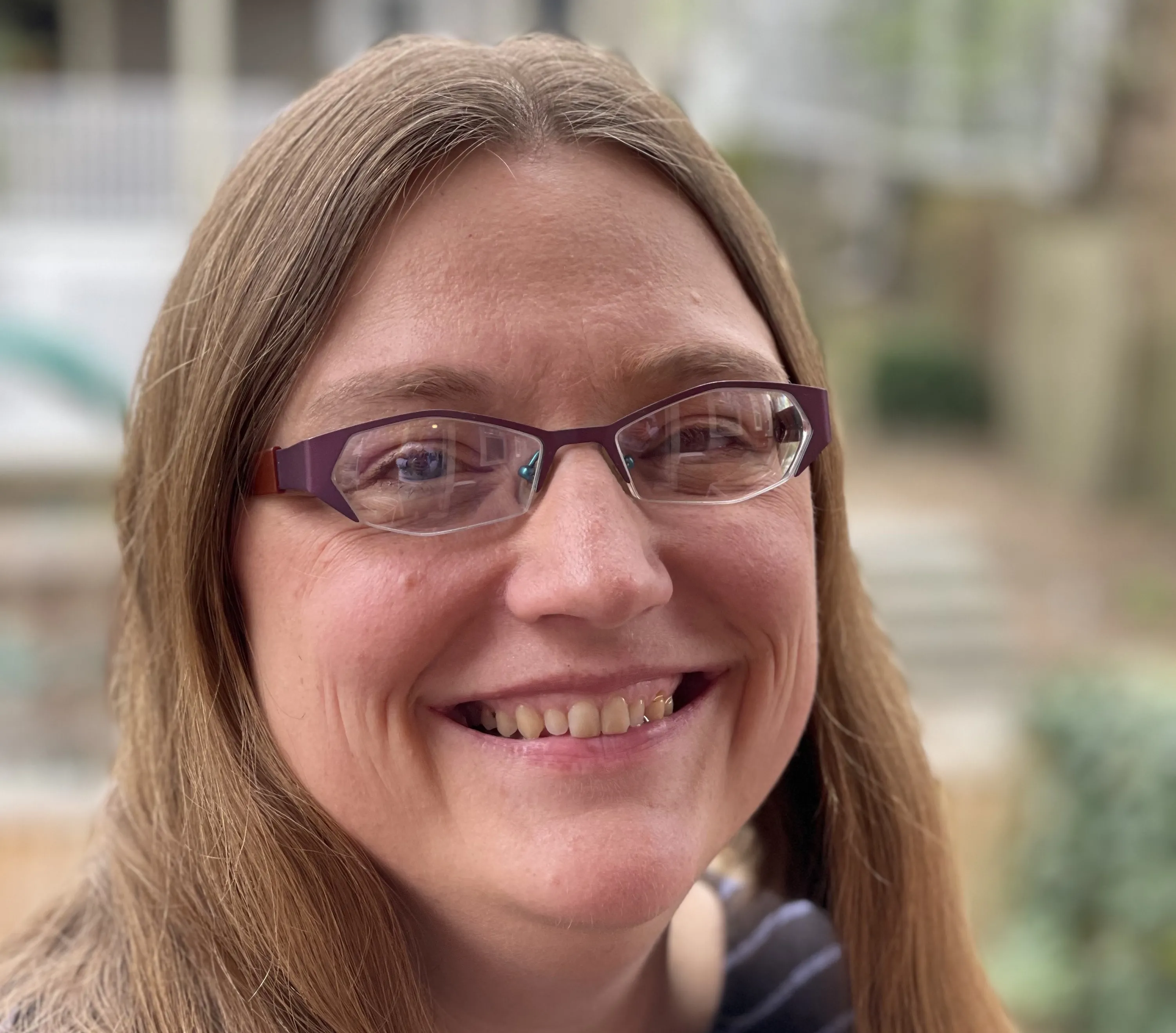
Verena Kaynig-Fittkau, 42, is a German immigrant who came to the U.S. 10 years ago with her husband to do her post-doctoral research in biomedical image processing at Harvard’s engineering school.
The couple settled in Cambridge, where they had their first child. Two subsequent pregnancies ended in miscarriage, however. That second loss was overwhelming for Kaynig-Fittkau, who says she was raised as a “secular Lutheran” without any strong faith.
“It broke me and a lot of my pride and made me realize that I can’t do things by myself,” she told CNA.
She found herself on knees one Thanksgiving, pleading with God. “I can’t do this alone,” she said. “Please help me.”
She says God answered her prayer by introducing her to another mother, who she met at a playground. She was a Christian who later invited Kaynig-Fittkau to attend services at a Presbyterian church in Somerville, Massachusetts.
In that church, there was a lot of emphasis on “faith alone,” she said. But Kaynig-Fittkau, who now works for Adobe and is the mother of two girls, kept questioning if her faith was deep enough.
A YouTube video about the Eucharist by Father Mike Schmitz sent Verena Kaynig-Fittkau on a path toward converting to Catholicism. Courtesy of Verena Kaynig-Fittkau
Then one day she stumbled upon a YouTube video titled “The hour that will change your life,” in which Father Mike Schmitz, a Catholic priest from the Diocese of Duluth, Minnesota, known for his “Bible in a Year” podcast, speaks about the Eucharist.
Intrigued, she began watching similar videos by other Catholic speakers, including Father Casey Cole, O.F.M., Bishop Robert Barron, Matt Fradd, and Scott Hahn, each of whom drew her closer and closer to the Catholic faith.
Familiar with St. Paul’s from her days as a Harvard researcher and lecturer, she decided to attend Mass there one day, and made an appointment before she left to meet with Fiorillo.
When they met, Fiorillo answered all of her questions from what she calls “a list of Protestant problems with Catholicism.” She entered the RCIA program three weeks later.
Recalling her first experience attending eucharistic adoration, she said it felt “utterly weird” to be worshiping what she describes as “this golden sun.”
A conversation with a local Jesuit priest helped her better understand the Eucharist, however. Now she finds that spending time before the Blessed Sacrament is “amazing.”
“I am really, really, really excited for the Easter vigil,” Kaynig-Fittkau said. “I can’t wait, I have a big smile on my face just thinking about it.”
The rosary brought him peace
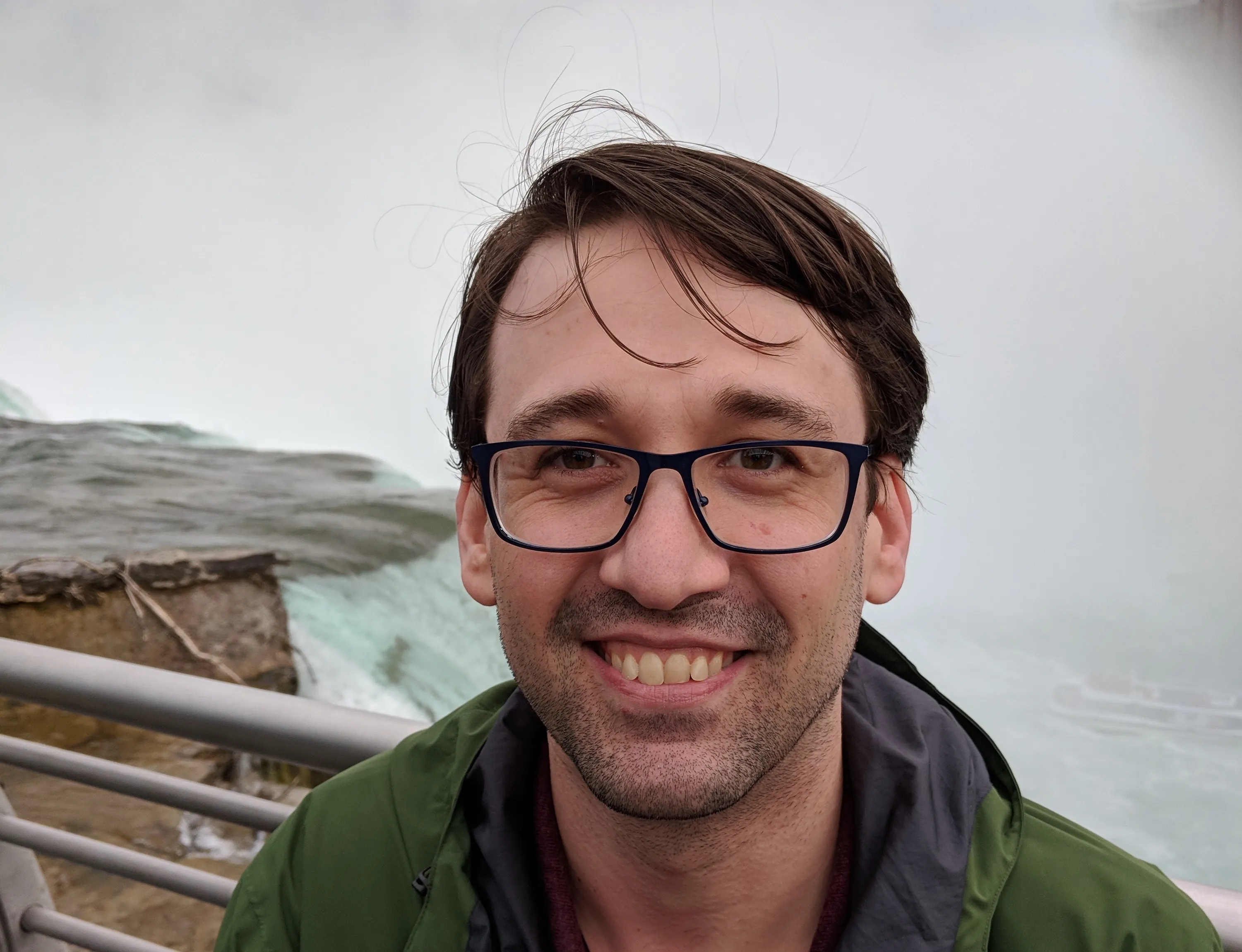
Another catechumen at St. Paul’s this year is Kyle Richard, 37, who lives in the Beacon Hill neighborhood of Boston and works in a technology startup company downtown.
Although he grew up in a culturally Catholic hub in Louisiana, his parents left the Catholic faith and joined a Full Gospel church. Richard said he found the church “intimidating,” which led him eventually to leave Christianity altogether.
When Richard was in his mid-twenties, his father battled pancreatic cancer. Before he died, he expressed a wish to rejoin the Catholic Church. He never did confess his sins to a priest or receive the Anointing of the Sick, Richard recalls sadly. But years later, his non-believing son would remember his father’s yearning to return to the Church.
“I kind of filed that away for a while, but I never really let it go,” he said.
While Kyle Richard’s father was dying from pancreatic cancer, he returned to the Catholic faith, which made a lasting impression on his non-believing son. Courtesy of Kyle Richard
Initially, Richard moved even farther away from the Church. He said he became an atheist who thought that Christianity was simply “something that people used to just soothe themselves.”
Years later, while going through a divorce, he had a change of heart.
Feeling he ought to give Christianity “a fair shot,” he began saying the rosary in hopes of settling his anxiety. The prayer brought him peace, and became a gateway to the Catholic faith.
Before long, he was reading the Bible on the Vatican’s website, downloading prayer apps, and meditating on scripture.
A Google search brought him to St. Paul’s. Joining the RCIA program, he feels, was a continuation of his father’s expressed desire on his deathbed more than a decade ago.
“I think he would be proud, especially because he was born on April 16th and that is the date of the Easter vigil,” he said.
Phoenix, Ariz., Mar 29, 2017 / 11:01 am (National Catholic Register).- When a Phoenix mother lost her eyesight due to a rare medical condition, she feared she would never be able to see her four children again. But then St. Charbel came to her aid.
Dafne Gutierrez suffered from benign intracranial hypertension (BIH), a condition that causes increased pressure in the brain. In 2012, the increased pressure caused her to lose vision in her right eye. Three years later, in November 2015, the Catholic mother lost sight in her left eye, as well.
Phoenix’s local CBS affiliate, KPHO, quoted Gutierrez’s plea to God:
“For me, I was like, ‘Please God, let me see those faces again. Let me be their mother again.’ Because I feel like [my kids] were watching me, taking care of me 24/7.”
For more than a year, Gutierrez struggled to adjust to her disability, which now included occasional seizures, as well as blindness. Then, in January 2016, when Phoenix’s St. Joseph Maronite Church announced that the relics of St. Charbel Makhlouf (also spelled “Sharbel”) would be visiting the church, Gutierrez’s sister encouraged her to visit and to pray for the saint’s intercession.
Although she is not a member of the Maronite rite, Gutierrez visited the church Jan. 16, prayed before the relics, went to confession and was blessed with holy oil by the pastor, Father Wissam Akiki. Gutierrez recalled that, immediately afterward, her body felt “different.”
The following morning, she rose and returned to the church for Sunday Mass. Again, she experienced a different sensation.
And early in the morning Jan. 18, Gutierrez awoke with a searing pain in her eyes. She remembers how much they burned. And when her husband turned on the lights, she said the brightness hurt her eyes. She claimed, at 4 a.m., that she could see shadows; but her husband insisted that was impossible because she was blind. He later described what he called “an odor of burned meat” coming from her nostrils.
According to The Maronite Voice, the newsletter of the Maronite Eparchies of the U.S., “That morning she called her ophthalmologist, and she was evaluated the next day. Her exam showed that she was still legally blind, with abnormal optic nerves. Two days later, she saw a different ophthalmologist, and her vision was a perfect 20/20, with completely normal optic nerves. Subsequently, she saw her original ophthalmologist one week later, and her vision was documented to be normal, with completely normal exam.”
No Medical Explanation
Dr. Anne Borik, a board-certified internal medicine physician who later testified regarding Gutierrez’s healing, was called in by the Church to review the case. Earlier this month, Borik – a member of St. Timothy’s Roman Catholic parish nearby, but who attends St. Joseph Maronite frequently – talked by phone with the Register about her findings. She explained that the brain condition Gutierrez suffered from causes the optic nerve to constrict. Once the optic disc – the spot at which the optic nerve enters the eyeball – is damaged, it’s too late to fix. Because, when the pressure in the brain reaches high levels, as it did in Gutierrez’s case, the optic nerves become strangulated.
“Unfortunately, once the blindness occurs,” said Borik, “it’s irreversible.”
Images of Gutierrez’s optic disc revealed significant damage: “We have pictures,” said Borik, “to confirm that the optic disc was chronically atrophied. There was significant swelling, or papilledema.”
But after Gutierrez’s vision returned, Borik reported, there was no evidence of the aberrations that were evident on earlier images. “In the post-healing pictures,” Borik said, “her optic disc is back to normal. Her vision is completely restored. She has no more seizures. That is why I, as a medical doctor, have no explanation.”
A medical committee, led by Borik, undertook a thorough review of Gutierrez’s medical records, as well as repeated examinations. The committee wrote, “After a thorough physical exam, extensive literature search and review of all medical records, we have no medical explanation and therefore believe this to be a miraculous healing through the intercession of St. Charbel.”
Unexpected Healing Strengthens Faith
Borik is enthusiastic about the healing, telling the National Catholic Register, “It has changed my practice! It has changed how I relate to patients. Now,” she said, referring to her relationship with those entrusted to her care, “prayer is such an important part of what we do.”
Father Wissam Akiki, pastor of St. Joseph Maronite Church, had a devotion to St. Charbel, and he installed a large picture of the saint in the parish shortly after his arrival in 2014. Then, in 2016, he arranged to bring St. Charbel’s relics to his parish as part of a U.S. tour.
Father Akiki remembers when Gutierrez showed up to venerate the relics. Father Akiki approached her. “I heard her confession,” he told the National Catholic Register. “We prayed together, and I said to her daughter, ‘Take care of your mom, and your mom is going to see you soon.’ Then, in only three days, she called the church to report that she could see.”
Father Akiki acknowledged that Gutierrez’s healing has strengthened the faith and changed the face of St. Joseph Maronite Church. “People are coming here to pray, traveling from Germany, Bolivia, Canada, Australia, Jerusalem.”
Following the healing, Father Akiki planned to erect a shrine to St. Charbel at his parish, with a two-ton sculpture of the saint cut from a single stone and imported from Lebanon. The shrine will be open seven days a week, 24 hours a day. Father Akiki expected that the dedication of the shrine March 26 would draw crowds, including Maronite Bishop A. Elias Zaidan, Phoenix Bishop Thomas Olmsted and many local dignitaries.
Bishop Zaidan attributed Gutierrez’s recovery to the intercession of St. Charbel. “May this healing of the sight of Dafne,” he wrote in The Maronite Voice, “be an inspiration for all of us to seek the spiritual sight, in order to recognize the will of God in our lives and to act accordingly.”
Cristofer Pereyra, director of the Hispanic Office of the Phoenix Diocese, told Fox News that Bishop Olmsted spoke with the doctors and reviewed the case. “The bishop wanted to make sure there was no scientific explanation for the miraculous recovery of Dafne’s sight,” Pereyra reported.
The greatest change, of course, has been for Gutierrez and her children. Since her eyesight was restored, Dafne’s life has changed dramatically: She can once again check her children’s homework, watch them at play with friends, and manage her household chores without extra assistance.
Her prayer was answered.
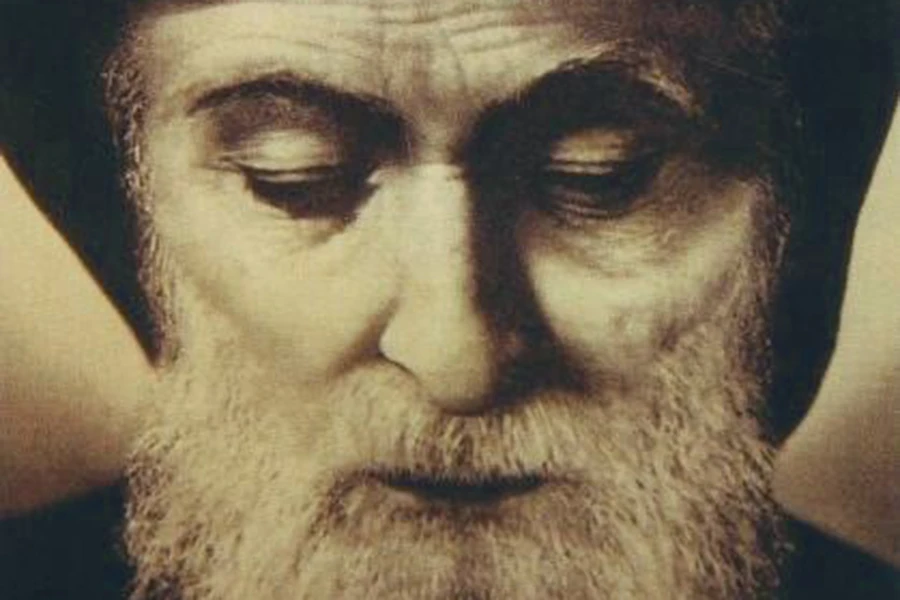
Who Was St. Charbel?
Born Youssef Antoun Makhlouf in the high mountains of northern Lebanon in 1828, St. Charbel (also spelled Sharbel) was the youngest of five children in a poor but religious family. His baptismal name was Joseph; only when he entered a monastery at the age of 23 was he given the name Charbel, after an early martyr. He studied in seminary and was ordained a priest in 1858. For 16 years, Father Charbel lived with his brother priests; theirs was a communal life of prayer and devotion to God.
In 1875, Father Charbel was granted permission to live a hermit’s life. In his rugged cabin, for the next 23 years, he practiced mortification and sacrifice – often wearing a hair shirt, sleeping on the ground, and eating only one meal a day. The Eucharist was the focus of his life. The holy priest celebrated daily Mass at 11 a.m., spending the morning in preparation and the rest of the day in thanksgiving.
Father Charbel was 70 years old when he suffered a seizure while celebrating Mass. A priest assisting him was forced to pry the Eucharist out of his rigid hands. He never regained consciousness; and eight days later, on Christmas Eve in 1898, Father Charbel died. His body was interred in the ground without a coffin and without embalming, according to the monks’ custom, dressed in the full habit of the order.
For the next 45 nights, a most unusual event occurred: According to many local townspeople, an extraordinarily bright light appeared above his tomb, lighting the night sky. Finally, after the mysterious light persisted, officials at the monastery petitioned the ecclesiastical authorities for permission to exhume Charbel’s body. When the grave was opened four months after Charbel’s death, his body was found to be incorrupt. Twenty-eight years after his death, in 1928, and again in 1950, the grave was reopened, and his body was also found to be without decay.
Numerous medical researchers were permitted to examine the remains, and all confirmed that the saint’s body was preserved from decay. For 67 years, the body remained intact, even when left outdoors unprotected for an entire summer – although it consistently gave off a liquid that had the odor of blood. Finally, though, Charbel’s body followed the natural course. When the tomb was again opened at the time of his beatification in 1965, it was found to be decayed, except for the skeleton, which was deep red in color.
The inexplicable restoration of Dafne Gutierrez’s eyesight is not the first healing credited to St. Charbel. Dr. Anne Borik reported that there have been hundreds – perhaps thousands – of miracles attributed to the saint.
Pope Francis is said to have a deep devotion to St. Charbel. Last Christmas, Borik reported, the Holy Father asked to have a relic of St. Charbel sewn into the hem of his vestments.
Words fail me as to the new death penalty position of Bishops who simply don’t memorize scripture…notably Romans 13:4 which the Holy Spirit inspired within the very faulty Roman justice system that had just killed Christ and James….a faulty system that also had life sentences in the mines. Yet as Aquinas noted…Rom.13:4 affirmed execution and war by the state.



Words fail me as to the new death penalty position of Bishops who simply don’t memorize scripture…notably Romans 13:4 which the Holy Spirit inspired within the very faulty Roman justice system that had just killed Christ and James….a faulty system that also had life sentences in the mines. Yet as Aquinas noted…Rom.13:4 affirmed execution and war by the state.